

13 Cutting-Edge Technologies Empowering Patients with ALS, Parkinson’s, and Alzheimer’s to Live Normal Lives

Verily
Hardware and Software Developer in the Health Field
Amyotrophic lateral sclerosis (ALS), Parkinson’s disease, and Alzheimer’s disease have long been three major challenges for neurologists. Coincidentally, these three conditions all fall under the same category, collectively known as neurodegenerative diseases. These diseases are not only incurable but also progressively worsen over time.
Although modern medicine cannot cure these “neurological disorders,” advances in science and technology have yielded effective methods to manage such conditions. Next, VCBeat (WeChat ID: vcbeat) will introduce 13 cutting-edge technologies to readers, exploring how they help patients with amyotrophic lateral sclerosis (ALS), Parkinson’s disease, Alzheimer’s disease, and epilepsy lead normal lives.
Amyotrophic Lateral Sclerosis, i.e.,Amyotrophic Lateral Sclerosis (ALS), is a disease characterized by progressive muscle weakness and atrophy in the limbs, trunk, and other areas due to motor neuron damage. The disease continuously attacks nerve cells in the brain and spinal cord, ultimately leading to death in patients with amyotrophic lateral sclerosis (ALS).
ALS is a devastating disease that gradually strips patients of their ability to function in daily life. In the early stages, as motor neurons die, patients begin to lose control over muscle movement. In later stages, voluntary muscle activity becomes severely impaired, potentially leading to complete paralysis. Currently, although no technology exists to repair motor neurons and allow individuals with ALS to live as normally as healthy people, certain assistive technologies can help them regain some degree of functional independence.
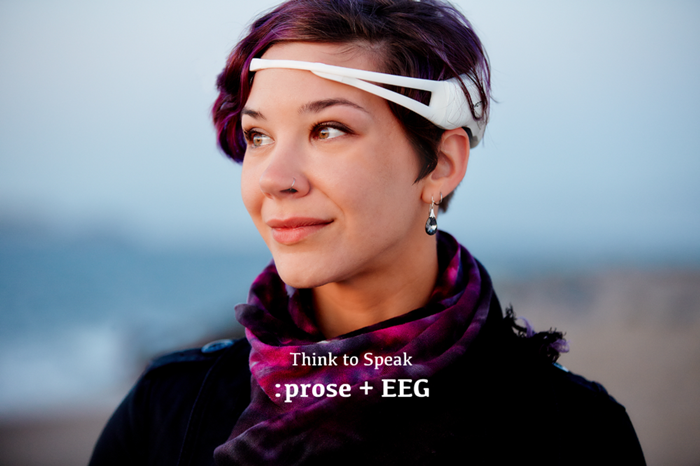
U.S. Startups Dedicated to Sensory CommunicationSmartstonesA newly launched sensory communication tool, comprising an EEG headband and its companion mobile app, Prose. This device enables wearers (such as individuals who are deaf-mute or aphasic) to restore approximately 40% of their communication capacity, allowing them to send text messages or in-app push notifications simply by thinking.
The EEG headband’s built-in brainwave module is responsible for real-time monitoring of the wearer’s emotions and responses, then transmitting the data via Bluetooth to the companion Prose mobile app. The app generates a contextually appropriate phrase based on the user’s current brainwave activity. Furthermore, the wearer can confirm the accuracy of the suggested phrase through simple gesture controls. Additionally, throughout use, the system continuously refines and corrects its outputs, gradually establishing a personalized “communication library” that facilitates smoother interactions over time.
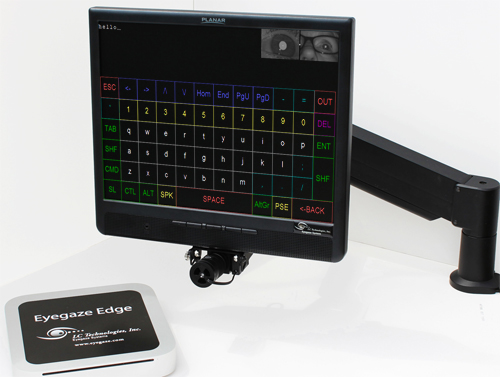
LC Technologies, based in Virginia, USA, has developed the Eyegaze Edge, an eye-controlled communication and control system that enables patients to communicate and interact with the world through eye movements. By looking at control keys or units displayed on the screen, patients can use their gaze to type messages or select pre-programmed phrases to generate speech. The response time for each visual activation of a “key” is typically 0.5 seconds, but users can adjust it according to their individual needs.
Its working principle is as follows: A camera installed beneath the Eyegaze Edge screen monitors the patient’s eyes in real time, capturing eye movements without requiring the patient to wear any devices on their body or head. The system’s sophisticated image-processing software analyzes the footage captured by the camera at a rate of 60 frames per second to determine where the patient’s gaze falls on the screen, thereby enabling text input.
In addition to the alphabetical keyboard, users can customize any image- or text-based keyboard and access features such as Kindle reading, Facebook, web browsing, and television viewing. In other words, with just a glance, even patients with amyotrophic lateral sclerosis (ALS) can easily read novels, watch TV, or browse social networking sites.
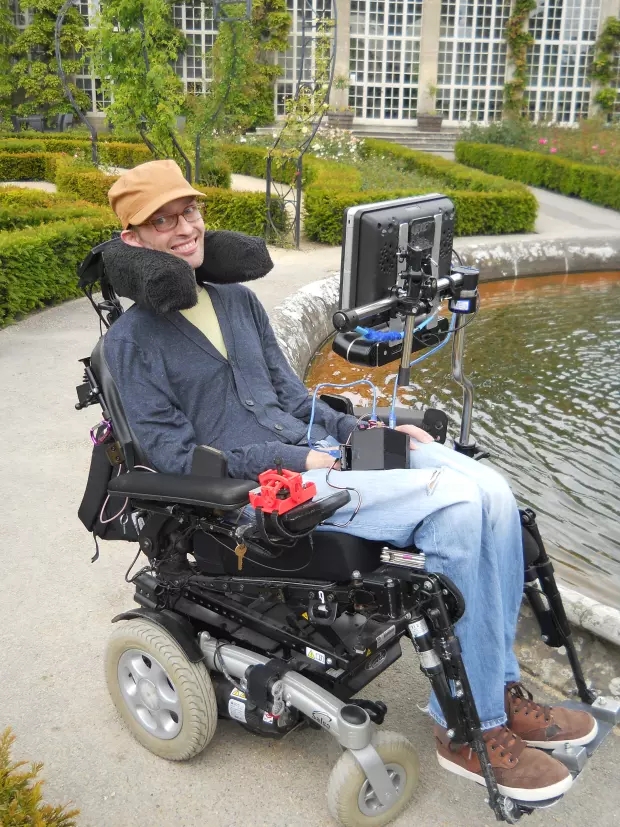
Joyce, an ALS Patient, and His Eye-Controlled Wheelchair
Although Eyegaze Edge is already highly powerful, it remains a software system that can only be used to control computers or smart devices and cannot assist ALS patients in performing any physical actions. To address this, Joyce, an ALS patient from the UK, partnered with filmmaker David Hopkinson to design a 3D-printedEye-Controlled Wheelchair EyedrivomaticThis wheelchair effectively integrates the Eyegaze Edge eye-tracking technology, enabling individuals with quadriplegia to control its movement using their eyes. The eye-controlled wheelchair designed by Joyce won the Grand Prize at the 2015 Hackaday Prize.
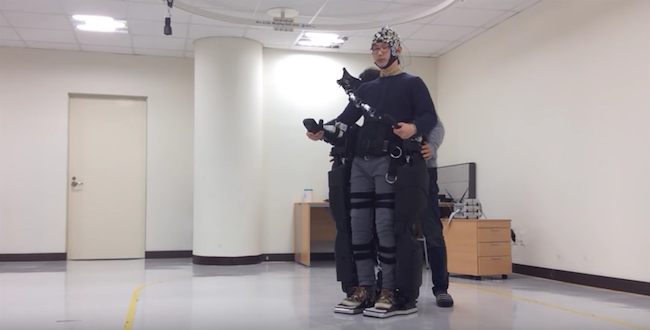
The aforementioned wheelchairs enable patients with amyotrophic lateral sclerosis (ALS) to move, but they cannot help them truly stand up and walk. Researchers from South Korea and Germany have designed a set ofEKSO Brain-Controlled Robotic Exoskeleton, enabling individuals with lower limb paralysis to regain mobility.
This system comprises a mechanical exoskeleton encircling the hips and legs, along with a headgear embedded with numerous electronic components. Through the headgear, the system identifies the user’s electroencephalogram (EEG) signals via the scalp, decodes them into specific movements, and thereby controls the mechanical exoskeleton. In other words, through this combination of brain and machine (i.e.,Brain-Computer Interfacesystem), ALS patients can send motor commands from their brains just like healthy individuals, enabling them to stand up again using robotic exoskeletons.
However, this device currently only assists patients with paraplegia; for ALS patients whose condition has progressed to total paralysis, it may be difficult to rely on this device for mobility. Nevertheless, we have reason to believe that with advancements in science and technology, this device will eventually achieve full-body control capabilities.
Parkinson’s disease (PD) is a common neurodegenerative disorder that predominantly affects older adults around the age of 60. Typical symptoms of Parkinson’s disease include tremors, muscle rigidity, and gait instability. Currently, no medications can effectively halt the progression of the disease. The primary approach to managing the daily lives of patients with Parkinson’s disease is tremor control.
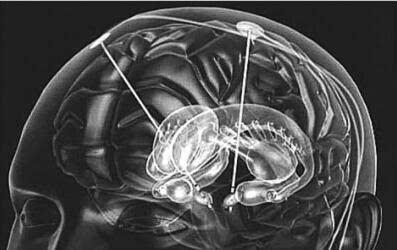
Brain pacemaker, also known asDeep Brain Stimulation (DBS), involves implanting electrodes into specific neural nuclei within the brain to deliver high-frequency electrical stimulation, thereby suppressing abnormal neuronal signals responsible for Parkinson’s disease symptoms and treating or alleviating manifestations such as tremor, rigidity, and bradykinesia.
Deep brain stimulation (DBS) restores motor function and activities of daily living in patients with Parkinson’s disease, achieving an improvement rate of over 80%, and its safety and efficacy are widely recognized both domestically and internationally. Furthermore, through internet-based or wireless remote-control technologies, patients no longer need to visit the hospital in person after surgery; physicians can adjust stimulation parameters remotely using a programmer. With just a single press of a “remote control” button, limb tremors can be instantly alleviated, enabling patients to regain their independence in daily life.
However, it is worth noting that the timing of deep brain stimulation (DBS) implantation is critical. The optimal time for implantation is generally after the onset of motor symptoms; if falls or cognitive impairment occur, the therapeutic window may be lost.

For Parkinson’s patients, involuntary hand tremors make eating a significant challenge. Liftware Level, an anti-tremor spoon launched by Verily, a subsidiary of Google, effectively stabilizes utensils, enabling Parkinson’s patients to eat with greater ease and stability.
Level features built-in advanced motion sensors, an onboard computer, and motors. By detecting the arc and direction of the user’s hand tremors, it drives the motors to adjust the spoon’s angle in real time, keeping the spoon consistently level. As a result, regardless of the severity of the tremor, Level maintains balance instantly to ensure that food does not spill. Reportedly, Level’s electronic stabilization technology can reduce food spilling caused by hand tremors by 70%.
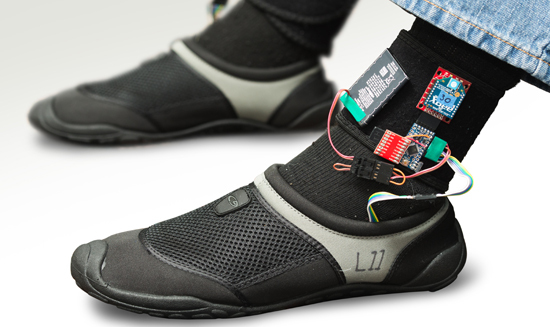
The Parkinson’s shoe, developed by researchers at the University of Delaware, is a footwear device equipped with vibrating insoles controlled by a microcomputer. By modulating the vibration frequency, the device counteracts patients’ involuntary tremors, helping individuals with Parkinson’s disease alleviate walking difficulties, reduce start hesitation (freezing of gait), maintain balance during ambulation, increase walking speed, and improve abnormal gait patterns.
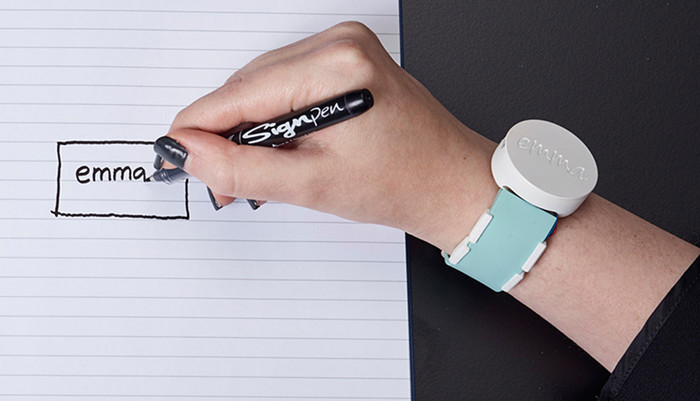
This smartwatch, co-designed by Microsoft researcher Haiyan Zhang and Parkinson’s patient Emma Lawton, alleviates hand tremors in Parkinson’s patients, enabling them to write and draw as normally as healthy individuals.
In patients with Parkinson’s disease, the brain sends extraneous signals to the muscles, creating a chaotic internal feedback loop that triggers muscle panic and results in various involuntary movements; this is the underlying mechanism of tremors. The vibrations delivered by Emma Watch help redirect the patient’s brain to focus more on the wrist wearing the device, thereby reducing neural noise within the brain. This approach is somewhat analogous to injecting white noise into a feedback loop to mitigate the effects of chaos.
Currently, Microsoft developers are investigating the role of sensors and artificial intelligence in detecting complex symptoms. They aim to integrate sensor and AI technologies into future iterations of the Emma watch to detect and monitor symptoms such as tremors and rigidity. This integration may even enable symptom assessment, paving the way for the development of new technologies to manage these symptoms.
Alzheimer’s disease (AD), commonly referred to as senile dementia, is a progressive neurodegenerative disorder with an insidious onset. Clinically, it is characterized by comprehensive dementia manifestations, including memory impairment, aphasia, apraxia, agnosia, visuospatial deficits, executive dysfunction, and changes in personality and behavior. The etiology remains unclear. Current treatment for senile dementia primarily relies on pharmacological interventions; however, given the multifactorial nature of its pathogenesis, medication alone is insufficient.

There is a cognitive impairment syndrome in clinical practice, calledMild Cognitive Impairment (MCI), is an intermediate state between normal aging and dementia. It is difficult to determine whether such patients are at risk of developing Alzheimer's disease through cognitive tests. A group of researchers from Harvard University, Massachusetts General Hospital, and Huazhong University of Science and Technology in China designed a program that integratesFunctional Magnetic Resonance Imaging (fMRI) Brain ScanCombined with extensive clinical data, it can be used to predict Alzheimer's disease.
The Harvard-led research team is attempting to use fMRI scans and deep learning to predict the likelihood of patients with mild cognitive impairment (MCI) progressing to Alzheimer’s disease. fMRI is used to visualize the brain’s electrical signal activity and the connectivity between different brain regions. The team then developed a model capable of interpreting these data.Deep Learning Program, integrating clinical data related to age, sex, and genetic risk factors,to predict whether an individual is at risk of developing Alzheimer's disease.
The accuracy of this method is reportedly as high as 90%; however, any new technology must undergo peer review and extensive testing before it can be truly implemented in clinical practice. In May 2016, the team publicly presented the findings of this study for the first time at the IEEE International Conference on Communications held in Kuala Lumpur, Malaysia.
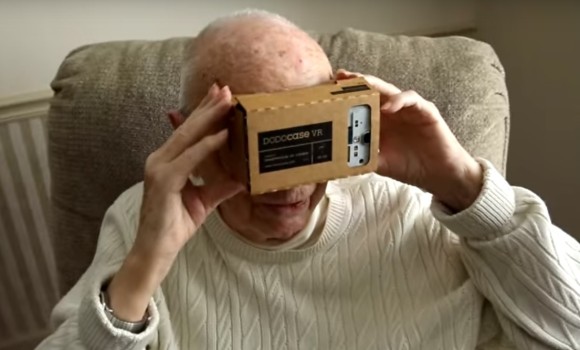
Mercy Health Lifestyle and Volunteer Manager Karren Gooding, two aged care facilities in Melbourne, Australia, were the first to introduce VR technology for the treatment of dementia.
By scheduling a few minutes of virtual reality (VR) activities for patients each day, individuals with Alzheimer’s disease can overcome loneliness and become more willing to communicate with others, while also reawakening forgotten memories in some patients. Medical doctors explain that the immersive nature of VR has a powerful calming effect, which helps patients recall past experiences. Additionally, specially developed VR games create a sensory therapeutic environment for patients with Alzheimer’s disease.
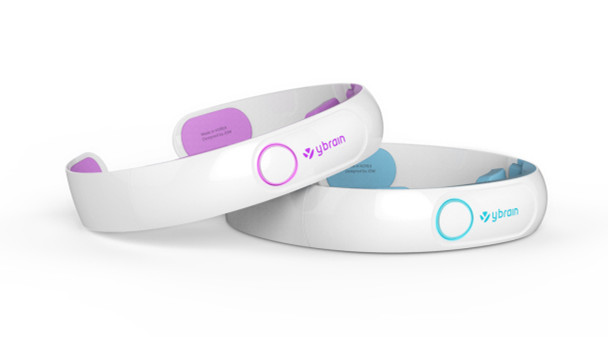
South Korean startup Ybrain launched a smart headband in 2014 for the treatment of Alzheimer’s disease. The headband features built-in sensors that deliver 2-milliampere electrical signals to stimulate brain activity. Patients can effectively alleviate symptoms of Alzheimer’s disease by using the device for 30 minutes daily.
Reportedly, this therapy is superior to pharmacological treatment, demonstrating 20%–30% greater efficacy than oral medications. This innovative smart device enabled Ybrain to secure $3.5 million in funding from Stonebridge Capital for clinical trials and production. Previously, the team stated that clinical trials were underway and that they were seeking certification from the U.S. Food and Drug Administration (FDA) and the Korea Food and Drug Administration (KFDA). However, the official status of the product has not been disclosed.
Epilepsy, commonly known as "goat horn wind" or "goat epilepsy," is a chronic condition characterized by sudden, abnormal electrical discharges from brain neurons, leading to transient cerebral dysfunction. There are approximately 9 million epilepsy patients in China, of whom 5 to 6 million have active epilepsy. Additionally, there are about 400,000 new cases each year. In China, epilepsy has become the second most common neurological disorder, after headache.
Epilepsy is a neurological disorder that is difficult to cure completely. Patients require long-term treatment and regular medication, with a minority needing lifelong pharmacotherapy. If seizures cannot be controlled with medication, surgical intervention becomes necessary, entailing substantial costs. In addition to pharmacological treatment, various technologies are available to assist in the management of epilepsy.
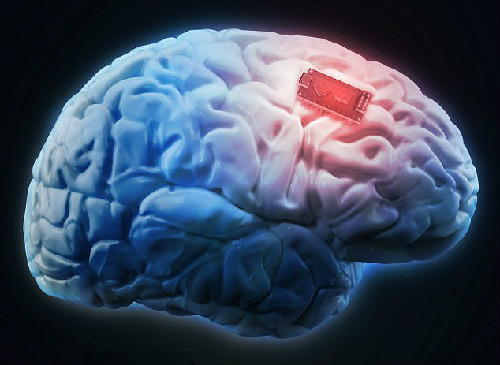
Elon Musk, founder and CEO of Tesla and SpaceX, established a company called Neuralink Corp. to develop advanced implants for treating intractable brain disorders such as epilepsy and major depressive disorder. This implant is a more complex product than the electrodes used to treat Parkinson’s disease and can effectively treat epilepsy.
The market for treating neurological disorders such as epilepsy could reach tens of billions of dollars. If Neuralink can demonstrate the safety and efficacy of its technology and obtain regulatory approval, humanity may enter the era of “brain cosmetic surgery.”
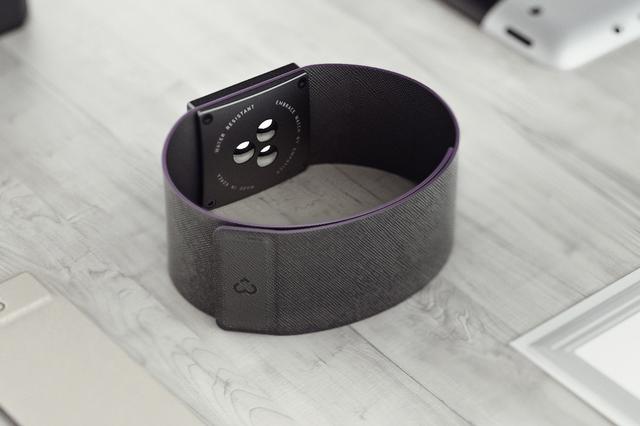
Startup Empatica has launched Embrace, a smart wristband designed specifically for epilepsy patients that can detect seizures and promptly alert their family members.
Prior to an epileptic or convulsive seizure, the human body exhibits elevated levels of electrodermal activity. The Embrace wristband integrates small electrodes that transmit weak electrical currents through the skin to measure sweat gland stimulation. It then collects the user’s motion data and electrodermal activity data in real time, employing advanced algorithms to detect seizures.
Upon detecting a seizure, the wristband vibrates. If the user responds to the vibration, it is considered a false alarm. If the user does not respond, the wristband communicates with the paired smartphone to send an alert to the doctor or family members.
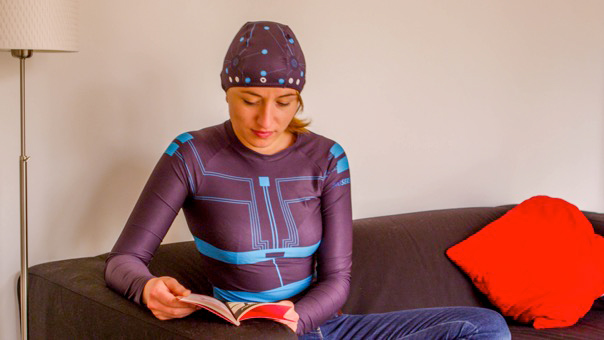
French Medical Technology CompanyBioSerenityDeveloped a product namedNeuronauteSmart clothing that can record abnormal brain and muscle activity and transmit relevant data to doctors via Bluetooth. Once a patient experiences an epileptic seizure, the doctor can be immediately informed of the patient's condition, facilitating early treatment.
This smart garment consists of a top and a hat. The top is equipped with sensors that detect muscle and nerve activity, while also recording respiration, heart rate, and blood oxygen saturation. The hat features built-in EEG electrodes, eye-tracking sensors, and a thermometer. Relevant data are transmitted via an integrated Bluetooth system to a smartphone for analysis by a dedicated application. Even in the absence of symptom onset, the garment continuously monitors the patient’s physiological status around the clock, thereby avoiding the discomfort associated with prolonged EEG monitoring, particularly for pediatric patients with epilepsy.