

From Pharmaceutical Giant to Innovation Powerhouse: The Road Ahead for China's Biopharma Industry
On March 11, 2016, the General Office of the State Council issued the “Guiding Opinions on Promoting the Healthy Development of the Pharmaceutical Industry”;
On August 26, 2016, the Political Bureau of the Communist Party of China Central Committee held a meeting to review and approve the Outline of the “Healthy China 2030” Plan.
In recent years, China’s National Medical Products Administration has issued multiple policies related to pharmaceutical review and approval. The introduction of these policies appears to signal that the transformation of China’s pharmaceutical industry has reached a critical juncture.In this broader context, the biopharmaceutical industry will face structural adjustments and industrial upgrading. Innovation will undoubtedly be the next key agenda for the sector.
So, what are the strategies for innovative drug development, and what are the future trends for novel therapeutics?
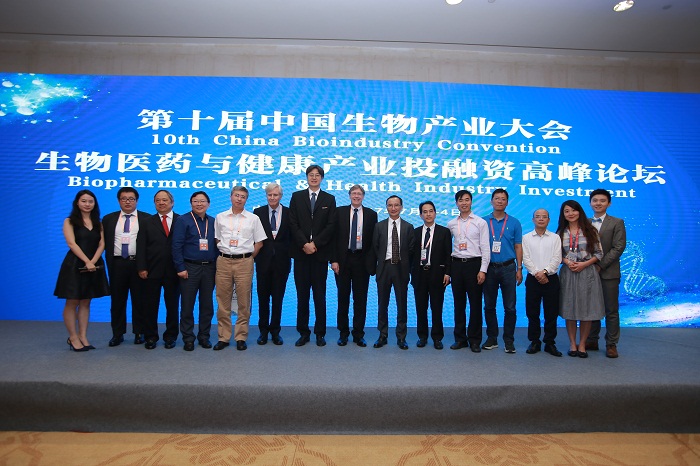
On July 3, 2017, the 10th China Bio-Industry Conference – Summit Forum on Investment in Biopharmaceuticals and Healthcare Industry was held as scheduled in Guangzhou. The event was hosted by the Chinese Society for Biotechnology and the China Association for the Promotion of Development of Pharmaceutical Enterprises, organized by GF Securities Co., Ltd. and GF Xinde Investment Management Co., Ltd., and co-organized by Tongxieyi and ChinaBio.
Hear What These Pharmaceutical Industry Leaders Have to Say.
Conference Highlights:
1. Establishing New Coordinates for the Pharmaceutical Industry in an Era of Innovative Reform
2. Choosing China’s Pharmaceutical R&D Path from the Perspective of Trends in Drug Policy Reform;
3. Joining the ICH: How Chinese Innovation Goes Global;
4. How to Build an Innovation Ecosystem for the Biopharmaceutical Industry
Guest Introduction
Zeng Hao
Chairman of GF Xinde, Mr. Zeng Hao previously served as Vice President and Director of GF Securities, Director of GF Holdings (Hong Kong), and Executive Deputy General Manager of the International Business Department at GF Securities. He has extensive experience and a proven track record in investment management, economic strategy analysis, and industry research.
Highlights
In October 2016, the State Council issued the Outline of the Healthy China 2030 Plan. This document serves as the action guide for advancing the Healthy China initiative over the next 15 years and represents a national-level medium- to long-term strategic plan in the field of health.
The Outline states that China’s pharmaceutical industry must elevate its overall standards, and Chinese pharmaceutical enterprises should expand globally by collaborating with international partners to enhance their global competitiveness.
In response to the call of national planning, leveraging capital to drive innovation and development in the pharmaceutical industry is undoubtedly the primary objective of this forum.
Innovation is the key to the transformation and upgrading of China's pharmaceutical industry. Today, an increasing number of high-tech professionals are choosing to return to China to engage in research and development, more overseas companies are establishing their presence in the Chinese market, and a growing amount of capital is fueling innovation within Chinese pharmaceutical enterprises.
Whether viewed from the perspectives of talent, policy, or capital, this is a highly favorable era for innovative development in China’s pharmaceutical industry. The primary landscape of China’s healthcare industry is bound to be reshaped, and new urban hubs for the healthcare sector will emerge within the next 5–10 years, serving as a critical foundation for the next wave of robust industrial growth.
According to statistics from the Guangdong Academy of Social Sciences, by the end of 2016, Guangzhou had 45 high-tech enterprises in the fields of biology and new medicine. According to data from the Provincial Department of Science and Technology, Guangdong’s R&D expenditure as a percentage of GDP was approximately 2.17% in 2012, and for the first time surpassed 2.5% in 2016, reaching 2.58%.
This figure approaches the levels seen in innovative countries and regions.
As a representative of Guangdong’s capital market, GF Securities has provided capital and market services to nearly one-fifth of China’s A-share listed healthcare companies. GF Xinde has invested in more than 40 healthcare and medical enterprises and collaborated with renowned U.S. venture capital firms in the life sciences sector.
GF Xinde has invested in multiple healthcare companies seeking to enter the Chinese market, aiming to strengthen the hard power of the medical industry by enhancing the soft power of Guangdong’s healthcare hub, thereby building a highly competitive health innovation industrial base with domestic and international influence.
Guest Introduction
Zhu Xun
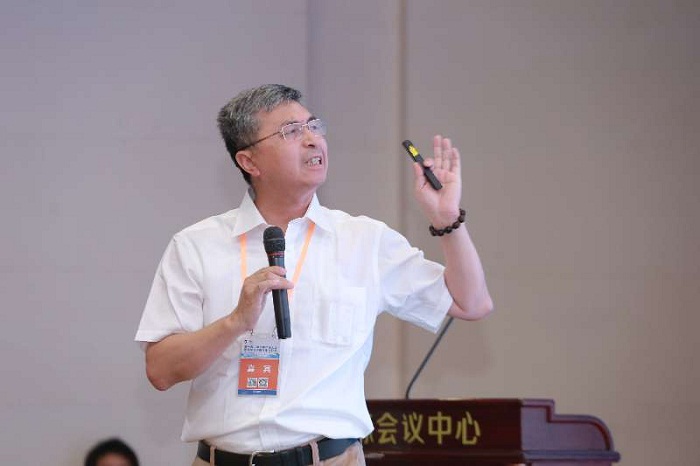
Renowned immunologist, expert on the National New Drug Review Committee, member of the National New Drug Advisory Committee, panelist for the National Natural Science Foundation of China, Professor at Jilin University, doctoral supervisor, and Chairman of the Tongxieyi New Drug Talent Club. Zhu Xun previously served as Vice President of Bethune Medical University, Deputy Secretary-General of the Changchun Municipal Government, and Executive Deputy General Manager of Guotai International Pharmaceutical Company. He currently serves as a specially appointed pharmaceutical expert for New Horizon Capital and as a Non-Executive Director of Guotai International Pharmaceutical Co., Ltd., among other roles.
Highlights
Chinese pharmaceutical innovation enterprises can be categorized into five groups: leaders, peers, followers, laggards, and outsiders.
At the current stage, companies that are leading or running neck-and-neck with global peers are few and far between, while a significant number of enterprises lag behind or even operate outside the mainstream competitive arena. A comparison of the top 20 drugs by sales volume in the Chinese and U.S. markets in 2016 reveals no overlap whatsoever. Although many products used by the Chinese population are generally in sync with international offerings, there is minimal overlap between China’s best-selling pharmaceuticals and those in developed countries.
From 2010 to 2016, the FDA approved a total of 433 innovative drugs, among which the EU had 279, Japan had 223, and China had only 113. Further analysis of these 113 drugs revealed that “older drugs” approved before 2007 accounted for the majority.
This substantial disparity has resulted in a significant gap between the landscape of pharmaceutical innovation in China and that abroad.
Among the 89 first-in-class drugs approved globally between 2010 and 2016, a total of 67 were approved in the United States. This demonstrates that the U.S. holds a commanding lead in the field of pharmaceutical innovation.
Among the number of NME/BLA drugs approved globally each year, Japan accounts for the largest share, while Europe has shown significant growth. It can be said that Japan and Europe are running neck and neck.
However, China currently lags behind in all categories, including approved first-in-class drugs, new molecular entities (NMEs)/biologics license applications (BLAs), and even repurposed or reformulated drugs. The country is struggling to keep pace, reflecting the harsh reality currently facing China’s pharmaceutical industry.
China ranks second globally in pharmaceutical sales volume, making it a major consumer of medicines. The country also has a substantial generic drug sector, establishing it as a major pharmaceutical manufacturer. However, China still has a long way to go to transition from a large-scale pharmaceutical producer to a global powerhouse in the industry.
In other consumer sectors, China is not significantly different from the most advanced nations. However, in the pharmaceutical industry, there are few “Made in China” products that have successfully expanded into global markets, let alone those representing “Created in China.” Changing this situation inevitably requires policy guidance.
The Western pharmaceutical market features strict intellectual property protection, an effective free trade system, and a medical insurance payment framework, all of which are largely established by governments. The effective integration of these three elements ensures high corporate profits, thereby driving substantial investment in the sector. In turn, such high levels of investment further reinforce and solidify the industry’s advantages in intellectual property and market positioning.
Over the past few years, a large number of testimonies on pharmaceutical review and approval have been issued, with their underlying logic rooted in the current landscape shaped by the long-term development of China’s pharmaceutical industry.
China’s pharmaceutical innovation policy reforms are at a critical juncture. On March 11, 2016, the General Office of the State Council issued the “Guiding Opinions on Promoting the Healthy Development of the Pharmaceutical Industry.” On August 26, 2016, the Political Bureau of the Communist Party of China Central Committee reviewed and approved the outline of the “Healthy China 2030” planning program.
In addition, further reforms will focus on drug review and registration, including critical initiatives such as the consistency evaluation of generic drugs, reforms to the classification-based registration of chemical drugs, and adjustments to the registration process for imported drugs.
In short, policies for pharmaceutical review and approval are being harmonized at an accelerating pace, with China’s pharmaceutical regulations aligning increasingly with international standards. China’s formal accession to the ICH on June 1 serves as the clearest testament to this trend.
Joining the ICH signifies that the organization recognizes China’s level of pharmaceutical regulation. On the other hand, it also means that China’s drug regulatory framework will align with ICH standards, a shift in the pharmaceutical sector no less significant than China’s accession to the WTO.
As China undergoes transformation, the United States is also following suit. In 2016, the U.S. passed the 21st Century Cures Act and increased subsequent investments. In the first half of 2017, the number of new drugs approved by the FDA already exceeded the total for the entire previous year, signaling that pharmaceutical innovation in the United States has entered a period of heightened activity.
The United States remains the largest and most rigorously regulated pharmaceutical market. China, by contrast, is the fastest-growing market in terms of drug volume and is undergoing regulatory reforms at an unprecedented pace. China’s capital markets are also highly active, with widespread expectations for the country to rapidly transition from a major pharmaceutical player to a global powerhouse. However, this goal still has a long and arduous journey ahead.
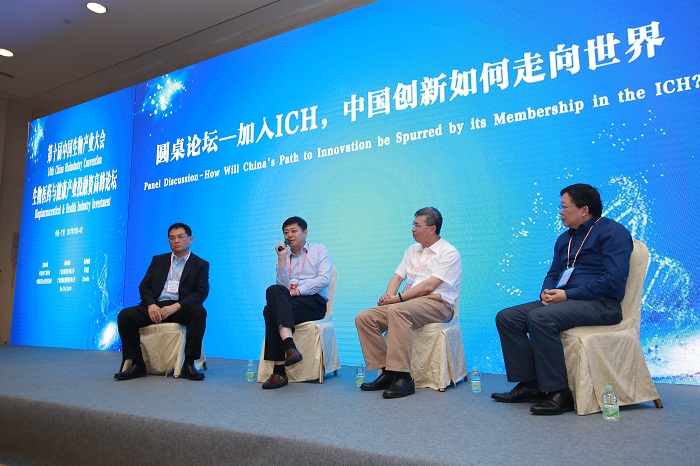
Zhang Wei, Secretary-General of the Chinese Pharmacopoeia Commission: ICH's Harmonization Strategy?
ICH guidelines are registration and submission standards jointly established by Europe, the United States, and Japan, which all member countries must comply with. However, this framework also encompasses the United States Pharmacopeia (USP), the European Pharmacopoeia (Ph. Eur.), the Japanese Pharmacopoeia (JP), and the Chinese Pharmacopoeia (ChP), each of which has distinct general chapters.
The Q series within the ICH guidelines actually pertains to pharmacopoeial standards. It is understood that although this series of research has been led by Europe, the United States, and Japan for many years, it remains difficult for all parties to achieve harmonization in pharmacopoeial standards.
Each country has its own systems, regulations, and industrial standards, making it difficult to reach a consensus. Ultimately, after several years of discussion, the parties finally established pharmacopoeial specifications at the 8th World Pharmacopoeia Congress held in Brazil. In principle, all parties are required to operate in accordance with these specifications, although considerations of their respective practical circumstances will still apply.
Under the ICH framework, achieving full consensus among all parties is challenging; instead, fostering gradual alignment and convergence has proven more effective in establishing a basic common understanding.
From a strategic perspective, if it is difficult for ten people to sit together and reach a unified outcome, would engaging in small groups to lay some foundational groundwork make future consensus easier to achieve?
The ICH is no longer composed solely of regulators from Europe, the United States, and Japan; an increasing number of regulatory agencies, associations, societies, and industry stakeholders are gradually participating. As a result, the nature of the ICH is evolving, progressively transforming into a standards-setting organization. This trend aims to ultimately promote the consistency and convergence of pharmaceutical regulations through national agencies as well as multilateral and bilateral relationships.
For China, joining the ICH will present a significant opportunity. This means that Chinese pharmaceutical innovation enterprises will engage in dialogue using a global language. In addition to the globalization of manufacturing and sales environments, as well as the simultaneous global conduct of R&D and registration, drug regulatory review will also achieve globalization through the adoption of synchronized standards.
Zhu Xun, Chairman of the Tongxieyi New Drug Talent Club: Is China Ready to Join ICH?
Just as with the accession to the WTO back then, one will never be fully prepared if unwilling to join. China indeed lags behind many developed countries in pharmaceutical innovation, which has contributed to the prevalence of overseas medical tourism.
This compels China’s pharmaceutical sector to courageously confront a critical question: Should decisions be guided by individual interests or by the collective well-being of the entire population?
As a large volume of imported pharmaceuticals rapidly enters the Chinese market, domestic pharmaceutical companies may face some negative impacts and shocks in the short term following accession; however, this development is highly beneficial to the public.
Although many enterprises will experience certain impacts, these pressures will ultimately serve as the driving force for the growth of pharmaceutical innovation companies. For those capable of expanding into the global market in the future, this should be viewed as a positive development.
Guest Introduction
Xi Qing
Senior Director, Government Affairs, Market Access, and Corporate Communications, Pfizer China. Xi Qing currently serves as Co-Lead of the Communications Working Group of the Association of Foreign-Invested R&D Enterprises in China.
Highlights
The biopharmaceutical industry possesses a dual nature. On one hand, it is commercial in essence; whether in R&D or sales, the sector must inevitably pursue commercial interests. On the other hand, unlike the fast-moving consumer goods (FMCG) food industry, this field carries a strong sense of honor and social responsibility.
Looking back on the past century of development, humanity has made leapfrog progress in living standards, technology, and life and health. The global average life expectancy has increased from 30 years a century ago to 75 years today. The pharmaceutical industry has contributed nearly 30% to this achievement. Notably, the invention of vaccines, antibiotics, and targeted cancer therapies has made tremendous contributions to human health and well-being.
Unfortunately, China’s current contributions to this field remain relatively limited.
In 2013, China surpassed Japan to become the world’s second-largest pharmaceutical country. However, in the innovative drug market, China’s global share stood at only 5%.
A McKinsey report analyzes several major industries in China and the gaps between these key sectors and global standards, with the pharmaceutical industry exhibiting the widest disparity.
The World Health Organization annually procures certain low-cost medications to provide free of charge to impoverished nations in Africa. In 2011, Indian suppliers won bids for 100 drug products, whereas Chinese suppliers secured fewer than 10. What accounts for this disparity?
Is it a talent issue? No, China has never lacked talent. Among global pharmaceutical companies, there are many Chinese R&D personnel, and recently, many overseas Chinese have returned to China to establish R&D companies.
Is there a shortage of money? Not really. China has abundant capital seeking opportunities.
Why Is There Such a Significant Gap Between China’s Pharmaceutical Innovation and the International Standard? The Root Cause Lies in the Lack of a Robust Ecosystem That Fosters the Development of the Biopharmaceutical Industry.
Biopharmaceutical innovation is a vast ecosystem composed of various facets.
The topmost level comprises the nation’s macro-level policies, such as the 13th Five-Year Plan for the Development of the Pharmaceutical Industry. Top-level design serves as the foundation for the country’s drug research and development.
Over the past one to two years, new policies accelerating the approval of novel drugs have been dazzling. Beyond these changes, market access, drug pricing, and health insurance reimbursement standards are equally integral to the pharmaceutical innovation ecosystem.
The pharmaceutical industry is capital-intensive; it must be integrated into a broader ecosystem and coordinated comprehensively to truly establish the overarching framework and conducive environment necessary for innovation in the biopharmaceutical sector.