

Hong Kong Special Administrative Region Oncology Center Files for IPO After Achieving Over HK$30 Million Revenue Within First Year
In the broader context of cross-border healthcare, following the surge in patients traveling to Europe and the United States for medical treatment, the region separated from mainland China by only a straitHong Kong has also become a new hotspot for medical treatment.Seeking medical treatment in Hong Kong involves relatively simple procedures and, to some extent, helps avoid the aggravation of conditions caused by long-distance travel fatigue, making it a new choice for patients from mainland China, especially those in the Pearl River Delta region.
Previously, VCBeat released《Cross-Border Healthcare: Entering a Phase of Platform-Based Development, with Capital Yet to Fully Flood In | 2016 Annual Review》In the article, among the 49 cross-border medical institutions included in the statistical report, very few have established offline physical clinical facilities. The Hong Kong Special Administrative Region Oncology Center has bypassed intermediary agents by setting up medical clinics and offline studios in Hong Kong, Shenzhen, and Guangzhou, aiming to integrate critical cancer treatment and rehabilitation services across the two regions.
In response, a reporter from VCBeat (WeChat ID: vcbeat) interviewed Dr. Chiu Chung-kit, CEO of the Hong Kong Cancer Center.
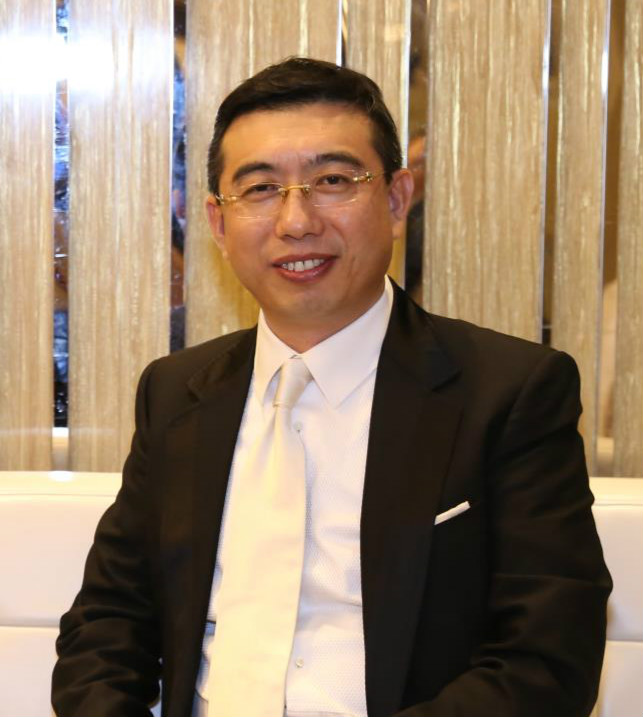
Zhao Zongjie, CEO of Hong Kong Oncology Centre
Zhao Zongjie, CEO of the Hong Kong Special Administrative Region Oncology Center, graduated from Tongji University in 1991. With over two decades of experience in the traditional Chinese medicine (TCM) oncology sector, he entered this field of critical care at the outset of his entrepreneurial journey, when the internet and mobile health were just emerging and opportunities in oncology were abundant. Zhao told reporters that, in his view,Commerce and healthcare are inherently inseparable; only those business models that truly serve patients and address their needs can achieve success.
The team’s COO, Lei Ying, holds a Ph.D. in Clinical Oncology from Sun Yat-sen University. Prior to this venture, she accumulated five years of clinical experience at an oncology hospital and five years of entrepreneurial experience in mobile health, having previously worked on mobile devices and internet-based healthcare solutions in the cardiovascular field.
Both hailing from the oncology field and sharing a deep commitment to this critical area of medicine, they were driven by a longstanding desire to provide essential services that truly meet the needs of cancer patients. With their complementary expertise—one grounded in Traditional Chinese Medicine and the other in Western medicine—they quickly found common ground and launched a cross-strait oncology center project.
Zhao Zongjie told reporters that this entrepreneurial venture is “an attempt to start anew.” “Our purpose in starting over is singular: to truly do something meaningful for cancer patients.” Currently, the company’s medical services team comprises approximately 50 members. In addition to providing medical support during diagnosis and treatment, the team offers telephone and home-based follow-up visits, as well as offline rehabilitation activities, delivering comprehensive care and services that address patients’ psychological, nutritional, and rehabilitative needs.
In the field of oncology treatment, the Cancer Center boasts extensive expert resources. Li Yan, a preeminent authority in Traditional Chinese Medicine (TCM), serves as the Chief Anti-Cancer Specialist. The center has engaged 120 academicians from the Hong Kong Academy of Medicine and nearly 1,000 registered oncologists, providing patients with comprehensive cancer diagnosis and treatment that integrates both Traditional Chinese and Western medicine.
The Hong Kong Special Administrative Region Oncology Center originated in the Guangdong-Hong Kong-Shenzhen region and currently operates one clinical facility each in Shenzhen and Hong Kong. Patients who receive initial diagnosis and treatment at mainland hospitals can proceed directly to the Hong Kong Oncology Center for intermediate care, accessing therapeutic approaches synchronized with those in Europe and the United States. The center’s Shenzhen clinic primarily provides pre-treatment consultations prior to care in Hong Kong, as well as follow-up treatment and rehabilitation services upon patients’ return to the mainland, including management of side effects and implementation of cancer rehabilitation programs.
Furthermore, the Cancer Center has developed an online app, "Cancer Fighter Assistant," and collaborated with oncologists from Hong Kong and across mainland China to establish online studios and micro-clinics.Provide patients with cross-border online MDT (Multidisciplinary Team) consultations, where a working group composed of experts from various domestic and international departments (including internal medicine, surgery, radiology, and medical specialties) collaborates to propose the optimal treatment plan tailored to the patient’s specific condition.Subsequently, the treatment plan is implemented by the relevant specialty departments individually or through a multidisciplinary team, with services such as long-term post-discharge follow-up and disease management provided.
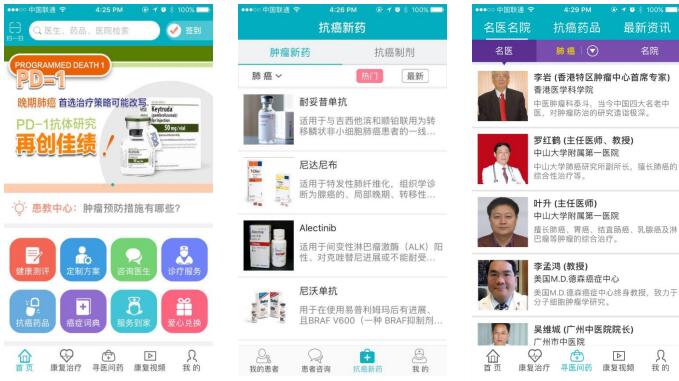
Anti-Cancer Assistant App Interface
Through online service platforms, patients can access customized treatment plans, telemedicine consultations, and health assessments. This enables joint patient management by physicians and partners in Hong Kong and mainland China, provides information on new overseas medications, and facilitates collaborative discussions on treatment strategies. Every step of the treatment process is clear and transparent to the co-managing physicians in both mainland China and Hong Kong. This approach not only addresses regulatory gaps in the critical care recovery phase but also increases the frequency with which oncology patients seek diagnostic and therapeutic services.
The Hong Kong Special Administrative Region Oncology Center has established physical clinics and an online cross-border telemedicine platform connecting both sides of the strait, creating a one-stop closed-loop system for diagnosis, treatment, and rehabilitation. It also implements a two-way patient navigation service, providing Hong Kong-based medical services to mainland Chinese patients, while offering mainland multidisciplinary team (MDT) consultations, medical referrals, and comprehensive post-discharge healthcare management services to overseas patients.
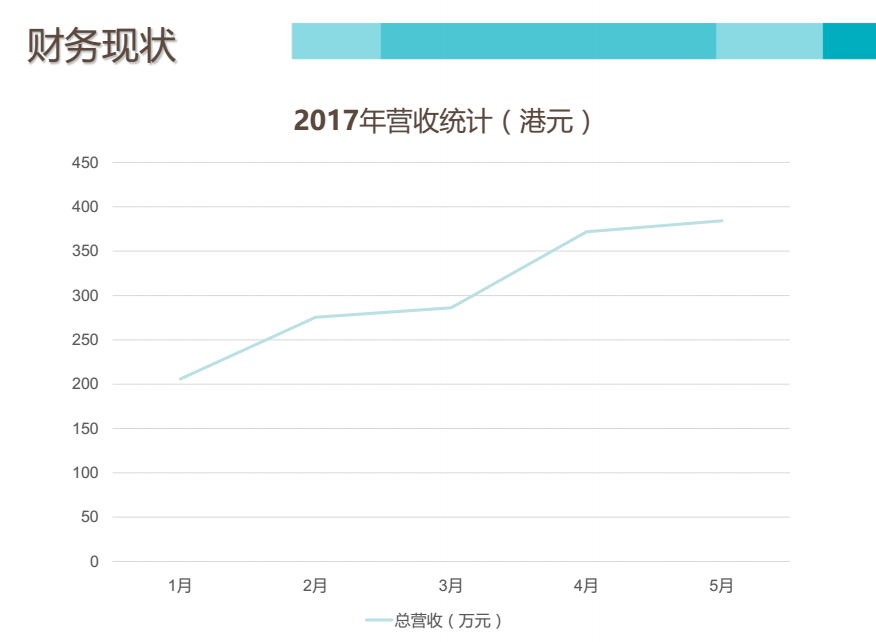
Revenue Statistics of the Hong Kong Special Administrative Region Oncology Center in 2017
As oncology falls under the category of critical care, treatment costs at physical medical institutions are relatively high. Through cross-strait collaborative diagnosis and treatment, including the establishment of subsequent rehabilitation programs,Since its establishment, the Oncology Center has achieved continuous profitability.According to data from the Oncology Center, its current revenue is derived from two sources: consultation and treatment fees at its physical clinics, and profits from Chinese and Western pharmaceutical products, with drug sales accounting for a significant proportion.
Although it has been in operation for just over a year, the Center has cumulatively served more than 4,600 oncology patients. The highest cumulative individual expenditure reached HK$1,960,814 per person, with an average transaction value of over RMB 40,000 per person and a peak transaction value of HK$279,000 per person.Currently, monthly revenue has reached nearly HK$4 million and continues to show an upward trend.
Patient referrals to the oncology center primarily come from five sources:
1. Referrals and introductions from hospitals and physicians in mainland China;
II. Word-of-mouth promotion within patient communities, where patients who have already received treatment refer fellow patients for diagnosis and care;
3. Carry out “Internet+” strategic cooperation with Kangai Weishi, Oncology Good Doctor, and Shenzhen Anti-Cancer Network to directly drive traffic;
IV. Directly attract customers through internet platform marketing, utilizing self-media, online platforms, SEM bidding rankings, and other methods to drive traffic and convert it into customers;
5. Collaborate with banks, health checkup centers, insurance companies, and other institutions to acquire high-end clients.
Regarding competitive advantages, Zhao Zongjie appeared quite confident: “The key lies in our self-operated offline clinics, which ensure service quality and control over profits. Furthermore, our close collaboration with hospitals and physicians creates a complementary relationship; this partnership not only provides us with more specialized medical insights but also brings in a broad patient base, facilitating joint management across the two sides of the Taiwan Strait. Finally, there is our Anti-Cancer Assistant APP, whose design makes it possible for doctors from mainland China and Hong Kong to jointly manage patients remotely online.”
In its future plans, the Oncology Center intends to incorporate additional treatment modalities, such as proton radiotherapy, to serve a broader population of cancer patients. The construction of a medical big data platform is also among its planned initiatives. By leveraging data collected through the Anti-Cancer Assistant APP, the center has established a comprehensive database. To date, it has gathered traditional Chinese and Western medicine diagnosis, treatment, and follow-up data for nearly 5,000 cancer patients. Zhao Zongjie revealed thatThe plan is to complete the collection of 20,000 case records by 2018 and then leverage medical big data to explore precision medicine.
According to statistics from the National Cancer Center, there are approximately 7.5 million prevalent cancer patients in China. Based on an annual per capita expenditure of RMB 70,000 and a tumor treatment penetration rate of 60%, the overall market size has exceeded RMB 300 billion. In terms of treatment, current demand-side conditions are driving the rapid development of China’s oncology medical services market.
In this vast market, the Oncology Center has achieved profitability and entered a growth phase. The next step is to establish more offline chain clinics and studios to serve a larger number of patients with essential oncology care needs. Zhao Zongjie stated that, according to the 2018 plan, the Oncology Center intended to open six new chain clinics/studios in Beijing, Tianjin, Shanghai, Hangzhou, Wenzhou, and Chengdu within the year, serving over 20,000 patients and expanding its market presence across North China, East China, and West China.By 2021, this number will surge to 50, and the patient population will exceed 200,000.It must be said that this is an ambitious vision.
The Oncology Center is currently preparing for its first round of financing, which is expected to raise RMB 50 million in exchange for approximately 10% equity.It planned to apply for a listing on the Hong Kong Growth Enterprise Market (GEM) in 2018, with a view to transferring to the Main Board within two years. Amid rapid expansion, the oncology center’s funds were primarily allocated to market development and enhancing the cross-strait integrated one-stop healthcare system.