

Huayi Yinnuo Files for IPO: Pioneering Tumor Minimally Invasive Interventional Physician Group Targets County Hospitals with B2B Model
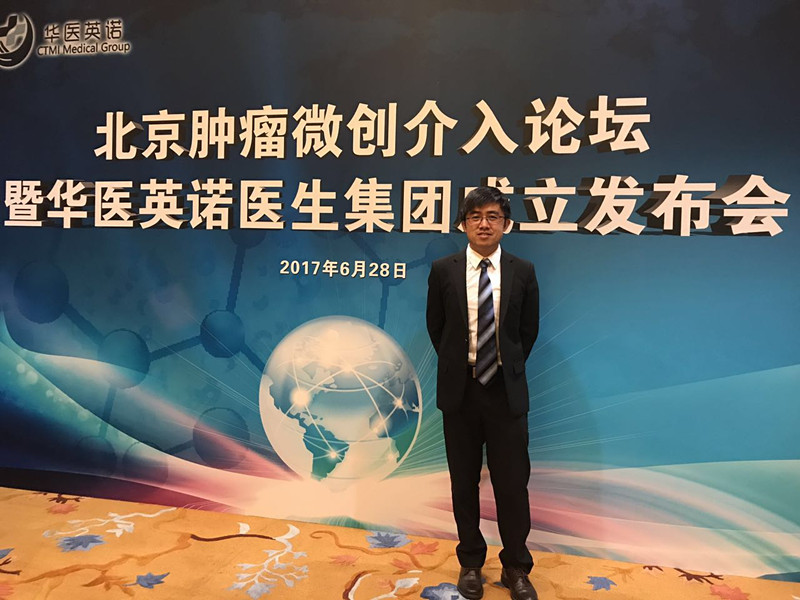
Zhao Xiuwen, Founder and CEO of Huayi Inno Doctor Group
Recently, the Minimally Invasive Interventional Oncology Forum was held in Beijing. Attendees included Professor Cao Lianyuan, an expert from the Hospital Management Institute of the National Health and Family Planning Commission; Professor Zou Yinghua, Vice President of the Interventional Physicians Branch of the Chinese Medical Doctor Association and President-Elect of the Interventional Oncology Professional Committee of the China Anti-Cancer Association; Zhao Xiuwen, Founder and CEO of Huayi Yingnuo Physician Group; and Lu Dongcheng, Founding Executive Partner of Chongshan Capital.
At the conference, they jointly announced the official establishment of China’s first physician group specializing in minimally invasive interventional oncology, named Huayi Yingno Physician Group, which secured angel-round investment from the Chongshan Capital Healthcare Special Fund.
What, then, are the distinguishing features of Huayi Yingnuo Physician Group? What is its business model? And why did it secure angel-round financing shortly after its establishment?
To this end, VCBeat conducted exclusive interviews with Zhao Xiuwen, Founder and CEO of Huayi Yingnuo Physician Group, and Lu Dongcheng, Founding Executive Partner of Chongshan Capital—one as the project operator and the other as a major investor—to hear their insights.
Zhao Xiuwen, a graduate of Shanghai Jiao Tong University, began his career in medical device sales at multinational corporations, rising from a sales representative to National Business Manager. Over the years, he has worked across various cities including Beijing, Tianjin, and Shanghai. He has now founded the Huayi Yingnuo Physician Group, which specializes in minimally invasive interventional oncology therapies, with its headquarters established in Beijing.
Huayi Yinno Physician Group’s core staff is organized into four divisions. The first is the Operations Team, which manages internal systems such as multi-site practice registration and insurance procurement for physicians. The second is the Marketing Department, responsible for identifying target hospitals. The third is the Sales Team, primarily tasked with developing partnerships and conducting negotiations with collaborating hospitals. The fourth is the Medical Team, which focuses on evaluating physicians within the group.
When asked about the reasons for establishing Huayi Yingnuo Physician Group, Zhao Xiuwen’s answer was simple. “Due to my previous work experience, I have accumulated extensive physician resources from Grade A tertiary hospitals. With the advancement of the new healthcare reform, there are increasingly more entrepreneurship projects centered around physicians, such as physician groups, online consultations, and chronic disease management. Therefore, I also wanted to give it a try—what if it succeeds?”
In fact, before starting his venture, Zhao Xiuwen had learned that physician groups originated primarily in Europe and the United States, taking the form of alliances or organizations composed of multiple physicians. According to a 2012 report by the American Medical Association (AMA), only 5.6% of practicing physicians in the U.S. were directly employed by hospitals, while as many as 83% had joined physician groups. A 2015 statistical report indicated that there were approximately 284,300 physician practice entities nationwide, of which 56.06% consisted of a single physician; meanwhile, physician groups with more than 20 members numbered 2,936.
From a policy perspective, the “Outline of the ‘Healthy China 2030’ Planning Program” explicitly states: “Innovate models for the utilization, mobility, and service delivery of medical personnel, and actively explore physicians’ independent practice, contractual services between individual physicians and medical institutions, or the formation of physician groups.” This marks the first time that “independent practice” and “physician groups” have been incorporated into top-level design at the policy level. The issuance of this Outline has charted the course for reforming China’s physician practice system.
On April 1, 2017, the Administrative Measures for Physician Practice Registration issued by the National Health and Family Planning Commission officially came into effect, removing all legal barriers to the system of physicians practicing at multiple locations.
Addressing the current imbalance in the distribution of medical resources within the healthcare system, the need to improve diagnostic and treatment capabilities at lower-tier municipal hospitals, and the reality that 80% of patients flock to large Grade A tertiary hospitals.
Zhao Xiuwen still vividly remembers Professor Zou Yinghua’s remarks during their discussion on project operations: “In line with the current policy landscape in China, we should ‘loosen the reins’ for physicians and promote multi-site practice. Through physician groups, we can, on one hand, provide advanced technical expertise to primary care hospitals and enhance collaborative capabilities at the grassroots level; on the other hand, enable patients to receive high-quality diagnosis and treatment within their local communities, thereby making a tangible contribution to the implementation of tiered diagnosis and treatment in our country.”
It is evident that Zhao Xiuwen’s proposal to establish a physician group aligned with the prevailing sentiments among doctors. Consequently, he rapidly assembled a physician group comprising more than 30 specialists. Following extensive market research and encouraged by supportive policies, he decided to found an oncology physician group, with a primary focus on minimally invasive interventional therapies for cancer.
Minimally invasive interventional therapy is a minimally invasive technique performed under imaging guidance, in which instruments or drugs are introduced into diseased tissue with minimal trauma (no skin incision, only a puncture needle hole) to deliver physical, mechanical, or chemical treatment. In certain disease areas, minimally invasive interventional therapy has become the preferred treatment option for patients who are not suitable for surgical intervention. According to the National Comprehensive Cancer Network (NCCN) Clinical Practice Guidelines in Oncology, minimally invasive interventional therapy is widely recognized as the first-line treatment for intermediate and advanced hepatocellular carcinoma.
In Zou Yinghua’s view, “although traditional open surgery is considered the optimal approach for tumor treatment, an increasing number of surgical procedures are currently evolving toward minimally invasive techniques. Why? Because this maximizes patient benefits, delivering equivalent efficacy with less trauma, shorter hospital stays, and a greater shift toward outpatient care, thereby significantly reducing overall patient costs.”
On the other hand, the advantages of minimally invasive interventional oncology lie in its ability to deliver precise treatment to lesions using modern imaging equipment, thereby concentrating therapeutic agents within the cancerous region as much as possible. This approach is non-surgical and does not require anesthesia, allowing direct access to the lesion. It maximizes therapeutic efficacy while minimizing damage to healthy tissues. Furthermore, due to the minimal invasiveness of the procedure, patients can undergo repeated treatments without compromising their recovery, resulting in fewer side effects.
According to the 2020 goals of the World Cancer Declaration: cancer patients should have access to timely and accurate diagnosis, high-quality multimodal treatment, rehabilitation care, support, and palliative care, including access to necessary medications and medical technical services.
Therefore, Zhao Xiuwen stated: “The characteristics of Huayi Yinuo Physician Group can be summarized as ‘specialized focus, singular objective, and professional operations.’ Huayi Yinuo Physician Group concentrates on the field of minimally invasive interventional oncology, bringing together authoritative experts and physicians from across China. All experts within the group are associate chief physicians or above from large teaching-affiliated Grade 3A hospitals, with 78% of the core Expert Advisory Committee members holding the title of chief physician, possessing extensive experience in minimally invasive interventional cancer treatment.”
Although Huayi Yingnuo Physician Group employs advanced technologies for tumor treatment, patient acquisition (i.e., sources of patients) remains a fundamental factor determining the robustness of its platform’s development.
In terms of patient acquisition, Zhao Xiuwen has developed his own strategy. Unlike other physician groups that directly target C-end consumers, he adopts a B2B model centered on collaboration with medical institutions. Specifically, this approach involves identifying treatment needs among patients at partner medical facilities and matching them with appropriate specialists.
According to Zhao Xiuwen, Huayi Yinuo Doctor Group is currently in negotiations with approximately 30 medical institutions, primarily located in Hebei and Shandong provinces. The group plans to promote its services in North China and Northeast China during the second half of this year and the first half of next year, aiming to establish a track record of successful cases. In the future, it intends to set up branch offices in East China, Northwest China, and South China. The staffing of each branch will be determined based on the number of local medical institutions served. For example, for every 4–5 medical institutions, one business development representative, one customer service representative, and one product specialist will be assigned.
In his vision, partner healthcare institutions must meet both hard and soft criteria. The hard criteria primarily pertain to medical equipment requirements; partner institutions must be equipped with MRI, CT, and ultrasound systems. These imaging modalities are essential for pinpointing pathological lesions and enabling minimally invasive interventional therapies. Consequently, larger county-level hospitals currently possess such equipment, and the state provides targeted support to these institutions to advance tiered diagnosis and treatment. Conversely, without such medical equipment, physicians cannot localize tumors or establish diagnoses, thereby failing to retain patients.
Regarding the non-tangible aspects, “For every hospital collaborating with our physician group, we install a remote consultation system. The purpose is to enable specialists to screen patients remotely, determining which cases require their on-site presence and which do not. Specialists aim for remote consultations to go beyond merely addressing intraoperative issues; they seek to mentor and train grassroots physicians, thereby retaining more patients at the primary care level and facilitating tiered diagnosis and treatment.”
During discussions on collaboration with these medical institutions, Zhao Xiuwen encountered many common challenges faced by physician groups. On the hospital side, physician groups in China are currently in an exploratory phase, and there is no standardized, replicable model that can meet the requirements of every hospital.
Due to the differing nature of hospitals, healthcare institutions have varying expectations and demands for physician groups. Public hospitals aim to minimize costs while securing guidance from renowned specialists, whereas private hospitals expect specialists to dedicate more time to promoting the hospital.
On the patient side, it is necessary to address whether patients should undergo treatment. How should these two scenarios be weighed?
“More importantly, it involves continuously aligning with the needs of doctors and hospitals throughout the collaboration process to accumulate experience,” Zhao Xiuwen told reporters.
Meanwhile, according to Zhao Xiuwen, Huayi Yingnuo Physician Group has established differentiated profit-sharing mechanisms tailored to different hospitals. For instance, if a hospital achieves an annual revenue growth of RMB 100,000 through the Huayi Yingnuo Physician Group, the platform may retain 10% as operational fees, with the remaining 90% allocated to the medical experts.
Of course, this is not a rigid profit-sharing mechanism. In the healthcare industry, physicians are the core asset; therefore, their interests must be maximized at all times.
Although most physicians at the Huayi Yingnuo Physician Group are currently engaged on a part-time basis, Zhao Xiuwen will consider offering full-time positions to physicians as the platform’s business prospects improve in the future.
According to the latest cancer data released by the National Cancer Center in February 2017, aggregated data from 347 cancer registries nationwide showed that approximately 10,000 people were diagnosed with cancer each day in China, equivalent to an average of seven new cases per minute.
In the course of humanity’s fight against malignant tumors, surgery, chemotherapy, and radiotherapy have remained the three most effective treatment modalities to date, playing a pivotal role in cancer management. However, these conventional therapies exhibit significant limitations, as they not only cause damage to normal tissues but also induce severe toxic side effects.
With the continuous advancement of medical technology, cancer treatment is gradually shifting from a “destructive therapy” model to a new “constructive therapy” paradigm. Novel comprehensive treatment models, represented by minimally invasive procedures and bioimmunotherapy, have become important directions in the development of oncology care.
“During the 13th Five-Year Plan period, China comprehensively promoted the construction of a tiered diagnosis and treatment system. As public demand for medical services rapidly increased, mobilizing and leveraging physicians’ potential to serve society became a critical task. The emergence of physician groups is fundamentally aimed at providing medical services to the public. With policies on physicians’ independent practice becoming increasingly clear, the establishment and development of physician groups not only help alleviate the uneven distribution of medical resources in China—enabling patients in regions with relatively lagging medical development to access high-quality care—but also align with the development direction explicitly outlined in the Outline of the Healthy China 2030 Planning Program. This holds profound significance for enhancing the overall level of healthcare in China,” said Cao Lianyuan.
In recent years, physician groups have become a focal point of investor interest. According to Zhao Xiuwen, Huayi Yingnuo is the only enterprise in China that focuses on specialty technical expertise as its core business; therefore, he proactively reached out to Lu Dongcheng, Founding Executive Partner of Chongshan Capital.
Encouragingly, it took Chongshan Capital merely two weeks to move from initial project review to finalizing its investment. Both parties share a strong alignment on the original intent and philosophy behind establishing the physician group, as well as on subsequent development goals and strategic planning. In addition to serving as an investor, Chongshan also assumes the role of a co-founder, injecting its valuable expertise in physician group operations and management, along with its experience in fostering collaborations with medical institutions, into the group. By connecting the group with healthcare resources backed by capital, Chongshan supports Huayi Yinuo’s forward momentum through a synergistic model of “capital + expertise + resources.”
According to Lu Dongcheng, “Chongshan Capital focuses on investments in healthcare and wellness. We have invested in dozens of companies within vertical medical sectors, and this investment marks capital market recognition of the physician group model. Physician groups align with current national policies for healthcare reform, and their development in developed countries has fully demonstrated their feasibility and effectiveness. Chongshan Capital is honored to leverage financial resources to advance the development of minimally invasive interventional oncology in China, supporting further exploration and practice of the physician group model.”
As the project handler, Cong Guojun, Senior Investment Manager at Chongshan Capital, believes that Huayi Yingnuo, as China’s first physician group specializing in minimally invasive interventional oncology, was initiated by leading domestic experts and co-founded by multiple executives from multinational corporations. With its medical technical capabilities and operational management skills ranking among the top in China’s physician group sector, and combined with Chongshan Capital’s experience and understanding of the operation and development of physician groups, Chongshan is highly optimistic about Huayi Yingnuo’s future growth.
During an interview with VCBeat, although Cong Guojun declined to disclose the specific amount of this financing round, he emphasized that the core strengths of Huayi Yingnuo Physician Group lie in its elite team of physicians and excellent operational management. The group effectively channels high-quality medical resources from Beijing to grassroots levels across China, thereby substantially elevating the overall standard of minimally invasive tumor treatment in the country and tangibly alleviating the difficulties faced by domestic cancer patients in accessing care and seeking medical help.
To date, Chongshan Capital has invested in healthcare service enterprises across radiology, pathology, ophthalmology, cardiology, dermatology, nephrology, endocrinology, and gynecology.Investment in the Minimally Invasive Interventional Oncology Physician Group,This marks Chongshan Capital’s further expansion into specialized healthcare sectors, as its medical ecosystem gradually matures and becomes more comprehensive.
After securing angel-round financing, Huayi Yingnuo’s Zhao Xiuwen has become even more confident that the company’s future development will attract strong attention from all sectors of society. In his view, “minimally invasive interventional oncology is still in a developmental stage in China. We aim to share advanced technologies and the most authoritative expertise from both domestic and international sources, respond to the national call for tiered diagnosis and treatment, and help partner hospitals enhance their specialty brand influence through joint department development. This will sustainably improve their academic and clinical capabilities, optimize the tiered diagnosis and treatment system, and ultimately benefit a broad patient population.”