

Vistel AI Eye Health Pioneer Co-Founded by Former Intel Executives Files for IPO to Scale Diabetic Retinopathy Screening Solutions
Diabetic retinopathy (hereinafter referred to as DR) is the fastest-growing cause of blindness. If detected early, the disease can be treated; otherwise, it may lead to irreversible blindness. Currently, there are over 400 million people with diabetes worldwide, including approximately 110 million in China. However, China faces a severe shortage of ophthalmologists (with only 31,400 ophthalmologists in 2012), and the number of specialists dedicated to DR screening is even smaller.
Fortunately, with the rapid advancement of artificial intelligence (AI), repetitive tasks that rely on vast knowledge bases, such as fundus screening for diabetic retinopathy, are poised to be accomplished through technological means. Today, many ambitious IT elites are dedicating themselves to this field, including Sun Yuhui, former Sales Director for Intel China.
“Among the 110 million diabetic patients in China, approximately 30 million suffer from diabetic retinopathy. With an average screening frequency of twice per year per patient, this represents a substantial market demand. I believe AI has significant potential in this field, which is why Dayong and I co-founded Zhiyuan Huitu,” said Sun Yuhui. The “Dayong” mentioned by Sun is Ding Dayong, CTO of Zhiyuan Huitu and a former senior researcher at Intel China Research Institute. During his doctoral studies at Tsinghua University, he specialized in computer vision and machine learning under the supervision of Professor Zhang Bo, an academician of the Chinese Academy of Sciences.
Keen market intuition and solid technical expertise form the cornerstone of Zhiyuan Huitu. However, achieving breakthroughs in diabetic retinopathy screening would be impossible without the invaluable professional knowledge of outstanding ophthalmologists. In this regard, Zhiyuan Huitu’s entrepreneurial vision has inspired a group of distinguished ophthalmology experts to annotate fundus photographs for the company.
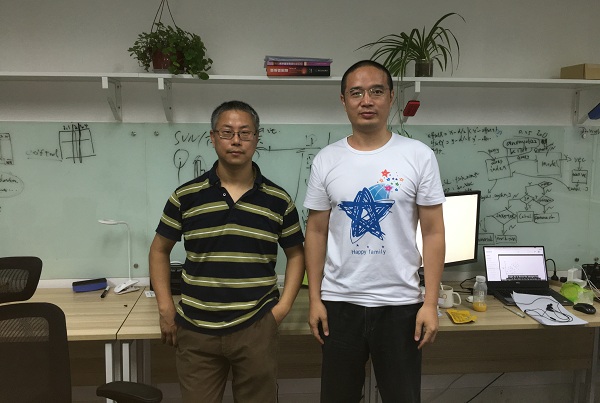
CEO Sun Yuhui (left) and COO Ding Dayong (right)
Classification and Annotation of Diabetic Retinopathy According to International Standards
Sun Yuhui told VCBeat, “An ophthalmology expert often works ten hours a day and then uses their spare time to annotate images for us, frequently staying busy until after 11 p.m. It is precisely because of their help that”We now have over 400,000 annotated data points covering dozens of types of lesions.. “Therefore, I often remind myself that if I slack off even slightly, I would first be failing the efforts of these doctors!”
To provide more effective guidance for patients' subsequent treatment, Zhiyuan Huitu does not merely categorize diabetic retinopathy screening results into three levels: no diabetic retinopathy, mild cases requiring no further in-depth examination or treatment, and cases requiring further in-depth examination and treatment.
Zhiyuan Huitu classifies diabetic retinopathy into five categories according to the international grading system: no diabetic retinopathy, mild NPDR, moderate NPDR, severe NPDR, and PDR. It clearly identifies fundus lesions such as microaneurysms, intraretinal hemorrhages, and hard exudates, thereby making the examination results more targeted.。
Diabetic Retinopathy Screening Requires Industry Standards
Currently,Zhiyuan Huitu achieved a specificity of 90% and a sensitivity of 93% when tested on a dataset of color fundus photographs with varying image quality and severity levels of diabetic retinopathy., but Sun Yuhui did not want to emphasize the issue of accuracy. Years of experience at Intel instilled in Sun Yuhui and Ding Dayong a habit of pursuing perfection, a trait that defines the entire team at Zhiyuan Huitu.
Sun Yuhui explains his perspective on the “accuracy” of diabetic retinopathy screening results as follows:“There is currently a lack of industry standards in the field of AI-based diabetic retinopathy screening from fundus images. From a purely numerical perspective, performance appears robust across the board. This is because each company utilizes its own proprietary database, trains its algorithms on its own data, and validates accuracy using that same dataset, or conducts clinical testing in collaboration with large tertiary hospitals.”
However, the image quality in these databases is relatively better. Therefore, it is now necessary to establish a standardized database containing fundus images of varying quality, annotated by experts. This unified standard database can then be used to validate systems developed by enterprises, thereby enhancing the credibility of the validation results.。”
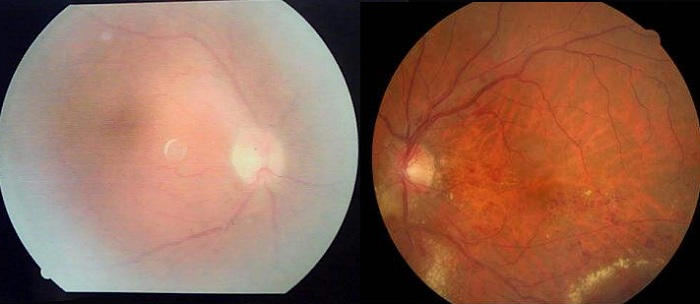
Fundus Image Quality Varies: Assessment by Radiologists
It is precisely for this reason,Given that the AI-assisted screening and diagnostic system is positioned for use in county-level hospitals at the primary care level, where objective conditions such as suboptimal imaging environments and varying levels of technician proficiency make it difficult to guarantee image quality, Sun Yuhui and his team incorporated not only high-quality fundus images but also lower-quality images into their model training during product development. This approach better reflects the real-world usage scenarios encountered by primary care physicians.“In the journey of technological implementation, there is never a ‘best’—so we can only strive to become ‘better,’ better than better!”
In the future, Zhiyuan Huitu will not only screen for diabetic retinopathy but also continue to research the use of artificial intelligence technology to assist in the screening and diagnosis of other ophthalmic diseases, thereby deepening its expertise in the field of ophthalmic imaging.
Zhiyuan Huitu is currently raising its Pre-A round of financing...