

1111D.com Files for IPO: Strategic Shift Toward 'Medicine + Healthcare' Ecosystem Highlights Profit Motives Behind Medical Expansion
Yu Gang, founder of 111.com (Yi Yao Wang), stated that the current market environment for pharmaceutical e-commerce resembles that of China’s e-commerce industry around 2009. While no absolute monopolist has emerged, several small giants have begun to take shape.
Looking back, the key to the emergence of e-commerce giants lies in the diversity and accessibility of services. Yu Gang, who has been deeply immersed in the e-commerce industry for many years, understands this well. Therefore, he has bet the future of 111.com on internet healthcare, aiming to build a pharmaceutical and health ecosystem through the “medicine + healthcare” model to secure 111.com’s competitive advantage in the industry.
In the wake of 111.com’s initiatives, various pharmaceutical e-commerce platforms have rushed to experiment with the “pharmaceuticals + healthcare” model, aiming to enrich their business ecosystems, enhance competitiveness, and build a closed-loop consumer experience, thereby establishing their own moats in the competitive landscape of pharmaceutical e-commerce.
What, Why, and How: VCBeat (WeChat ID: vcbeat) reviews several cases of pharmaceutical e-commerce platforms experimenting with the “drugs + medical services” model, detailing the evolution and trajectory of this approach.
Don't put all your eggs in one basket
In 2009, Alibaba’s “Big Taobao” strategy had been launched for just one year, with the release of its open platform that strengthened the infrastructure of the e-commerce supply chain. JD.com had just completed a $21 million Series B financing round and expanded its product lines to include home appliances and daily necessities. Meanwhile, smaller platforms such as Dangdang, Redbaby, and Vancl continuously diversified their categories and broadened their business scope. At the same time, vertical e-commerce players emerged in large numbers, with a proliferation of specialized websites dedicated to sports goods, cosmetics, and pharmaceuticals and health supplements.
This is the landscape of “the e-commerce industry around 2009,” as described by Yu Gang, former founder of Yihaodian and current co-founder of 111.com.
In December 2009, Jianke obtained the "Certificate for Internet Drug Transaction Services" issued by the State Food and Drug Administration. This certificate made Jianke the first in Guangdong Province and the fifth in China. To this day, the preceding four recipients have faded into obscurity, whereas Jianke has not only survived but thrived. The secret to Jianke’s success lies in “traffic.” During the early days of the internet, when user acquisition costs were low, Jianke secured substantial traffic from video websites, which not only facilitated brand promotion but also helped accumulate a solid user base.
“Pharmaceutical B2C is a once-in-20-years opportunity; we must seize it,” said Xie Fangmin, CEO of Jianke.
Therefore, an examination of the establishment dates of pharmaceutical e-commerce companies reveals that the majority were founded in or after 2010, with market entrants including leading traditional pharmaceutical retail chains and companies with internet-based origins.
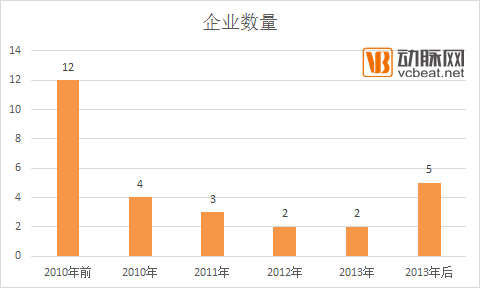
Establishment Date of Currently Active Pharmaceutical E-commerce Platforms
Huang Zuanbai, Operations Director at Kang Aiduo, wrote in a retrospective piece that the Tmall Pharmacy began permitting the sale of pharmaceuticals around February 2012. The Kang Aiduo store on Tmall had launched earlier, in September 2011, under the management of other personnel. At that time, the entire team lacked experience in pharmaceutical e-commerce operations and relied entirely on self-directed learning and growth.
Kang Aiduo’s operational strategy on Tmall Pharmacy drew inspiration from Qilekang, then the top-ranked pharmaceutical seller, by pursuing a blockbuster product approach with a core focus on OTC medications.
After taking full charge of the Kangaiduo Tmall Pharmacy Store operations, Huang Zuanbai set two clear objectives: first, to avoid losses; and second, to break into the top three by the end of 2013, without aiming for the number one spot. Within a year, Kangaiduo surged from 26th place to third among pharmacy stores on Tmall.
Looking back on the development of pharmaceutical e-commerce in recent years, Huang Zuanbai stated that 7leKang seized the opportunity when Tmall Pharmacy first opened its platform, allowing it to become one of the first major players; Kang Aiduo capitalized on adjustments to Tmall’s rules, creating a best-selling product that topped sales across the entire internet; at the end of 2015, the 360 Health platform was established, enabling Jianke to rise with the trend; and in 2016, when JD.com opened its OTC (over-the-counter) category, Shangyuantang gained an early-mover advantage.
“Looking back at the changes in the pharmaceutical e-commerce sector over the past few years, the rankings of the top 10 merchants shift annually, creating a sense that ‘fortune rotates like the feng shui wheel,’ with each player having its moment in the spotlight for a few years,” said Huang Zuanbai in his article “Reminiscences of Pharmaceutical E-Commerce.”
In November 2013, an unassuming small company in Hebei Province obtained the national pilot license for a third-party pharmaceutical e-commerce platform (the 95095 Platform), triggering an “earthquake” within the pharmaceutical e-commerce industry. Prior to this, there were only three types of qualifications in pharmaceutical e-commerce: Licenses A, B, and C. The first two pertained to business-to-business (B2B) transactions between enterprises, while the last was applied for by pharmacies to sell medicines directly to individual consumers.
Pilot Country A License, which can be used to build a third-party pharmaceutical e-commerce platform where other online pharmacies can join. The underlying commercial value is undeniable—although Tmall Health Pavilion could accept online pharmacies at that time, it only held an Internet Drug Information Service Qualification Certificate.
Two months later, Alibaba Group, in partnership with Yunfeng Capital, made a strategic $170 million investment in CITIC 21st Century, a company listed on the Hong Kong Stock Exchange. The identity of the pilot platform was subsequently revealed as being affiliated with CITIC 21st Century. With Alibaba’s investment, the platform was naturally integrated into Tmall Pharmacy. Meanwhile, CITIC 21st Century, which also operated the drug supervision code system, came under Alibaba’s umbrella (CITIC 21st Century was later renamed AliHealth).
Following the 95095 platform, Baibai Fang and Yihaodian successively obtained pilot qualifications for third-party internet-based pharmaceutical retail in the second half of 2014, bringing the total number of comprehensive e-commerce platforms for pharmaceuticals to three.
Several online pharmacies, including Jianke, Haoyaoshi, Deshengtang, and Kangaidu, have capitalized on this trend. Leveraging the traffic from comprehensive platforms, they have achieved significant growth while simultaneously actively developing their official websites or launching mobile apps to mitigate the risks associated with reliance on a single channel.
In June 2016, Yihaodian, 800 Fang, and Tmall Pharmacy received notifications to cease listing and selling pharmaceutical products, marking the cancellation of the pilot program for third-party online retail of drugs.
1. At the time, 111.com claimed that its self-operated channels accounted for more than 60% of its business, making it less affected by the pilot program’s cancellation of marketing restrictions, which demonstrated the effectiveness of its proactive planning.
Be Prepared for Danger in Times of Peace
The 2016 “Great Health E-commerce (West Lake) Forum” could be described as a unifying, victorious, and inspiring gathering in the pharmaceutical e-commerce sector. Several leading figures in pharmaceutical e-commerce convened to discuss the pain points and challenges facing the industry, as well as the urgency for pharmaceutical e-commerce platforms to expand into healthcare services.
At the time, Jianke CEO Xie Fangmin stated, “Should we focus on healthcare services or pharmaceuticals?” This has long been a topic of discussion in the pharmaceutical e-commerce sector. Jianke has consistently explored this question and registered the trademark “Pocket Doctor” in 2011, with the goal of building a mobile health company. “Pharmaceutical sales generated cash flow and ensured the company’s survival; however, to achieve better development, we must venture into mobile health.”
Chen Hua, then CEO of 360 Health, stated that the conversion rate from medical services to pharmaceuticals is so low that it falls into single digits. Therefore, internet healthcare cannot be easily realized simply by having resources and capital; internet healthcare companies currently involved in pharmaceutical businesses certainly have their share of grievances.
Chen Hua is a veteran in the internet healthcare sector. He joined 39 Health Network in 2007 and transformed it into a leading health information platform in China. He later joined 1 Drug Network, where he laid the foundation for its business operations. After Yu Gang’s return, Chen Hua resigned and co-founded 360 Health with Qihoo 360. The new venture remains positioned as a comprehensive platform for pharmaceuticals and health products, supplemented by B-side technical services.
Chen Hua, an entrepreneur with a scholarly background, launched his venture at a time when 360 Health had just secured RMB 100 million in Series A financing. With ample capital reserves, the company enjoyed financial stability and confidence. Moreover, as 360 Health did not engage directly in medical services, it maintained a position of objective detachment, akin to the clarity often afforded to outside observers.
Since the second half of 2015, Qilekang has been operating “Da Bai Yun Zhen” (Great White Cloud Clinic), marking its entry into the mobile healthcare sector. As a result, Shi Zhenyang, Chairman of Qilekang, gained firsthand insight into the “pharmaceuticals plus medical services” model in pharmaceutical e-commerce. He stated that “medical care and pharmaceuticals” are inextricably linked and must form a complete closed loop. To succeed in internet healthcare and mobile healthcare, companies need not only front-end marketing but also strong back-end technical capabilities, requiring a genuine “product and user-centric mindset.”
“Venturing into this sector (internet healthcare) requires the willingness to burn through hundreds of millions of yuan without batting an eye; otherwise, it’s best not to try. This is truly a game for the brave.” After outlining the difficulties of cross-industry expansion, Shi Zhenyang did not forget to poke fun at competitors who have already invested heavily. “Many medical apps now offer incentives as extreme as ‘free iPad with every app installation’ to promote adoption among physicians. They are really risking it all!”
However, one year later, Qilekang announced the launch of its “1 Billion Doctor Entrepreneurship Fund” initiative, providing financial, venue, operational, and managerial support to physicians practicing on the Qilekang Internet Hospital, thereby helping them access richer resources and realize their entrepreneurial aspirations.
Shi Zhenyang is a physician-turned-entrepreneur who previously worked as a pharmaceutical distributor. In 2007, he led a university student startup team to explore the e-pharmacy sector. Following the rise of the Tmall platform, Qilekang quickly established its presence and once became the top performer in Tmall’s pharmaceutical category.
However, Shi Zhenyang believed that lacking control over discourse on third-party platforms, coupled with intensifying price wars, prompted him to seek new growth drivers for Qilekang. In 2014, as mobile healthcare reached its peak popularity, Qilekang naturally expanded into the medical sector.
Human destiny depends on self-striving, but must also take into account the course of history. The same holds true for enterprises: pharmaceutical e-commerce players’ foray into healthcare is driven both by their own business imperatives and by the booming mobile health environment.
Current Status of Pharmaceutical E-commerce
In February 2017, the State Council issued a document abolishing the approval requirements for Class B and Class C licenses for pharmaceutical e-commerce. This signaled a relaxation of the pharmaceutical e-commerce policies in place since 2005, lowering the entry barriers for pharmaceutical distributors and retail pharmacies into the e-commerce sector and making it easier to capitalize on opportunities in this market.
According to data from the China Food and Drug Administration, prior to the cancellation of approval requirements for Class B and Class C licenses, a total of 833 “Internet Drug Transaction Service Qualification Certificates” were issued. These included 40 Class A certificates (for third-party pharmaceutical B2B platforms), 195 Class B certificates (for pharmaceutical manufacturers and distributors operating self-built pharmaceutical B2B websites), and 598 Class C certificates (for online pharmacies), which essentially represent the number of market entrants in the pharmaceutical e-commerce sector.
According to VCBeat’s analysis of the pharmaceutical e-commerce market, B2C pharmaceutical e-commerce can be broadly categorized into three major segments: listed companies, non-listed companies, and pharmaceutical O2O.
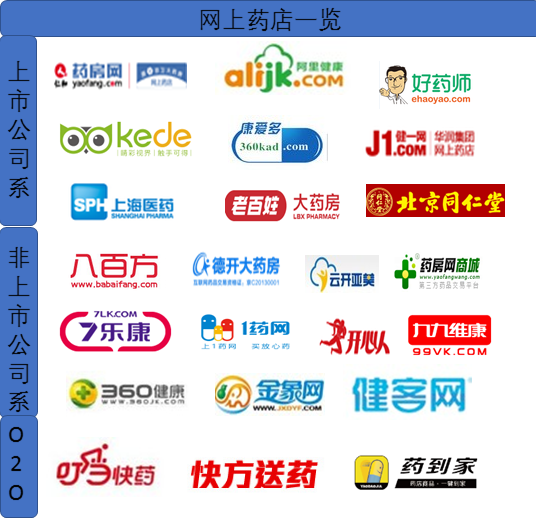
Among them, listed companies are primarily pharmaceutical distributors, including Alibaba Health Pharmacy, Renhe Pharmacy Network, Haoyaoshi, Kangaiduo, and Tongrentang; unlisted companies include Jianke, Qilekang, 1 Drug Store, and Baibafang. The number of enterprises in the pharmaceutical O2O sector is currently limited, so it is listed separately; however, two of the more prominent players have backing from listed companies: Dingdang Kuaiyao is backed by Renhe Pharmaceutical, and Kuaifang Songyao is backed by Buchang Pharmaceuticals.
In terms of financing, active pharmaceutical e-commerce platforms have secured substantial funding. 111.com leads with cumulative financing exceeding RMB 1.5 billion, while Jianke and Qilekang have each raised over RMB 1 billion. Two pharmaceutical O2O companies have secured similar amounts, approximately RMB 300 million each. Other players, such as Yunkai Yamei, Jiujiu Weikang, and 360 Health, have also attracted significant investment.
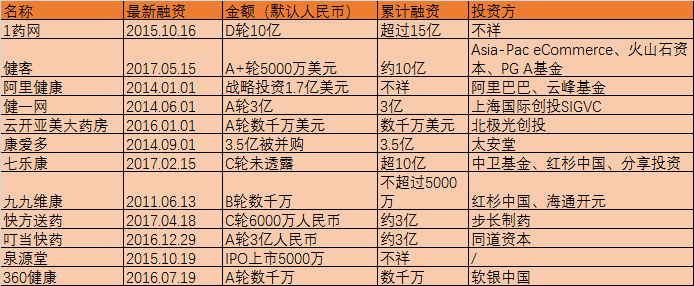
Overview of Financing in Pharmaceutical E-commerce
Company information in the charts can be queried through the VCBeat database. Scan the QR code at the end of the article to become a VCBeat member, and log in to the VCBeat Mini Program or official website to use the database for querying relevant company information.
From 2009 to 2016, a span of seven years, the pharmaceutical e-commerce market can be said to have reached maturity, marked by the fact that various pharmaceutical e-commerce platforms began to move away from infrastructure development and price war traps, basically achieving break-even and slight profitability.
According to VCBeat’s analysis of the financial data of listed-company-affiliated pharmaceutical e-commerce platforms, five such platforms achieved profitability in 2016.
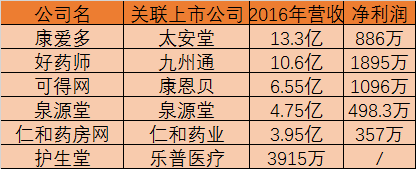
(Note: Haoyaoshi data is pre-tax.)
With policy liberalization, massive financing, and the achievement of marginal profitability, it is evident that pharmaceutical e-commerce is in its most favorable development cycle. Industry unicorns are emerging, leveraging healthcare expansion as a foothold to accelerate the process of business diversification.
A well-known principle in the internet sector is the “7:2:1” rule, whereby the industry leader captures 70% of the market and holds an absolute dominant position; the second-place player accounts for approximately 20% of the market and can occasionally challenge the leader in certain niche segments; while the remaining smaller vendors carve out shares in vertical markets and manage to survive.
The reason lies in the fact that internet technologies or products can be replicated on a large scale; the more they are replicated, the lower the marginal cost becomes. Therefore, market leaders consistently invest heavily in research and development to maintain their technological or product advantages. However, the ultimate beneficiaries of technological progress are small enterprises, enabling them not only to survive but also to thrive.
Although pharmaceutical e-commerce operates within the internet sector, it differs significantly from other segments. Even among e-commerce models, the high level of professionalism required and the non-standardized nature of pharmaceutical products mean that this field does not follow a "winner-takes-all" dynamic; the 70-20-10 rule may not apply here. Consequently, various pharmaceutical e-commerce platforms are building their own "closed-loop ecosystems" to establish competitive moats and capture as much market share as possible.
Medicine and Healthcare: Each Demonstrating Its Unique Strengths

1. 111.com’s journey in healthcare can be traced back to 2014. In August of that year, 111.com launched the “Yi Zhen” channel on its PC platform and simultaneously released the “Yi Zhen” app for mobile devices. Yi Zhen is positioned as a lightweight consultation platform, offering text-and-image-based consultations. It provides online medical services through a team of physicians and pharmacists either employed directly by 111.com or collaborating with the company.
The reason why 1Yao.com expanded into mobile healthcare was backed by the success of its main website’s mobile app, “No. 1 Pharmacy” (before 1Yao.com was renamed). Launched in 2011, the No. 1 Pharmacy app once ranked among the top three most-downloaded apps in the Medical category on the Apple Store in 2014, far surpassing other pharmaceutical e-commerce platforms. With the success of its main app and the emergence of the mobile/internet healthcare trend in 2014, 1Yao.com vigorously developed its mobile healthcare services.
Subsequently, 111.com shifted its medical focus to the development of internet hospitals. In April 2016, Gangling Group, the parent company of 111.com, signed a cooperation agreement with Huanggang Central Hospital to jointly establish the Huanggang Internet Hospital. In the same month, Gangling Group partnered with Guizhou Province to co-build the Southwest Internet Hospital, integrating electronic prescriptions with pharmaceutical delivery services. On July 8, Gangling Group entered into a cooperation agreement with Yuexiu District Traditional Chinese Medicine Hospital in Guangzhou, announcing the establishment of the South China Internet Hospital. Meanwhile, the medical resources of these internet hospitals were integrated with 1Zhen and 111.com, enabling a closed-loop service from diagnosis and treatment to medication purchase.
In August 2016, 1 Drug Network also partnered with Chunyu Doctor, with both parties exchanging entry points and engaging in deep business collaboration.
In terms of its overall strategy, Gangling Group has adopted a “three-pronged” approach centered on 1 Drug Network, 1 Clinic, and No. 1 Drug City (a B2B pharmaceutical e-commerce platform established in December 2015), thereby building a closed-loop ecosystem that spans pharmaceutical distribution, retail pharmacy, and online medical consultations.

Qilekang was founded in 2010 and has undergone three major transformations. Its current business encompasses four core segments: internet hospital, mobile health, pharmaceutical e-commerce, and chain pharmacies. Leveraging its extensive experience in pharmaceutical e-commerce, Qilekang gained significant supply chain advantages after formally entering the mobile health sector in 2015, enabling it to establish a closed-loop model integrating “patients, doctors, and pharmaceuticals.”
In August 2015, Qilekang launched the “Da Bai Yun Zhen” APP, officially entering the mobile healthcare sector. Following its announcement to expand into mobile healthcare, Qilekang completed a $100 million Series B financing round, securing ample capital for its mobile healthcare strategy. Meanwhile, it appointed Jiang Haidong as CEO. Jiang had previously worked at Amazon, JD.com, Lefeng.com, and Vipshop, bringing many years of experience in internet and e-commerce operations.
In May 2016, Da Bai Yun Zhen was renamed “Qilekang Doctor,” positioning itself in the diagnosis, treatment, and management of chronic diseases. Through its physician-facing platform, it assists doctors with patient management, doctor-patient communication, electronic cloud-based medical records, post-consultation follow-ups, and medication recommendations. Meanwhile, its user-facing platform provides tens of millions of general users with online consultations, intelligent triage, appointment scheduling, medication counseling, health check-up bookings, prescription inquiries, and payment for diagnostic and treatment services.
In the same month, 7lekan partnered with the Health and Family Planning Commission of Liwan District, Guangzhou, and the Liwan Hospital of the Third Affiliated Hospital of Guangzhou Medical University (formerly known as “Guangzhou Liwan District Central Hospital”) to jointly establish the Liwan 7lekan Internet Hospital. In March this year, 7lekan also announced the launch of the Yinchuan 7lekan Internet Hospital, focusing on optimizing its supply chain, building a modern logistics base, collaborating with third-party testing institutions, and introducing commercial insurance, thereby exploring an integrated development model encompassing “medical care, pharmaceuticals, testing, and insurance.”
According to the latest data released by Qilekang, its internet hospital has attracted nearly one-quarter of China’s doctors from 31 provinces and over 300 cities.
In June this year, 7lecare announced the launch of the “1 Billion Doctor Entrepreneurship Fund,” providing a range of support—including funding, workspace, and personnel—to physicians practicing on the 7lecare Internet Hospital. This initiative aims to help doctors access richer entrepreneurial resources, facilitate a smoother transition to independent practice, and maximize their professional value. As the largest entrepreneurship support program for the physician community in the mobile health sector, this move is expected to aid 7lecare in continuously expanding its network of connected physicians.

Ali Health was renamed from the Hong Kong-listed “CITIC 21st Century.” In early 2014, Alibaba Group, together with Yunfeng Capital, injected more than RMB 1 billion into CITIC 21st Century, becoming its controlling shareholder and acquiring CITIC 21st Century’s pilot qualification for third-party pharmaceutical e-commerce (code 95095) as well as the drug electronic supervision codes.
In March 2015, the Ali Health official website was launched, introducing four major platforms: the Ali Health Cloud Hospital Platform, the Ali Health Mobile App, the Ali Health Cloud Platform, and the Drug Supervision Code System. Currently, Ali Health’s business operations are primarily focused on pharmaceutical e-commerce, product traceability, smart healthcare, and health management.
Alibaba Health’s journey in internet healthcare is inextricably linked to Alibaba. Prior to the establishment of Alibaba Health, Alibaba had already launched the “Future Hospital” initiative, covering key cities such as Beijing, Shanghai, Guangzhou, Shenzhen, and Hangzhou. Subsequently, Alibaba International Medicine and Donghua Software signed a cooperation agreement in Hangzhou, announcing their joint efforts to build an internet hospital, a big health data platform, and a commercial cloud platform.
Since the launch of Alibaba Health’s Online Hospital, more than 10 physical hospitals across China—including Wuhan Central Hospital, Southwest Hospital, Zhijiang People’s Hospital, Zhijiang Hospital of Traditional Chinese Medicine, and Fengjie County People’s Hospital—have joined the Alibaba Health Internet Hospital platform. These institutions have established online consultation rooms staffed by dedicated personnel to meet patients’ needs for remote medical consultations. In April this year, Alibaba Health partnered with Wuhan Central Hospital to establish Hubei Province’s first internet hospital.
Other platforms under Alibaba have also participated in the company’s healthcare initiatives. For instance, last July, DingTalk announced its entry into the mobile healthcare sector and signed its first vertical cooperation project focused on community-based medical services. This March, at the Apsara Conference, Alibaba Cloud launched “ET Medical Brain,” targeting high-incidence diseases such as thyroid disorders and lung cancer, while providing services including risk prevention and control, as well as assisted diagnosis and treatment. Additionally, ET Medical Brain will focus efforts on medical imaging diagnostics, precision treatment planning, drug efficacy mining, and new drug development.
Overall, Alibaba Health’s healthcare initiatives embody the implementation of the “Health” component within Alibaba’s “Double H” strategy (Health and Happiness). Focusing on building foundational technologies and application platforms to serve the medical and health industry, it collaborates with other Alibaba-affiliated companies—such as Ant Financial, DingTalk, and Alibaba Cloud—to jointly create an ecosystem platform that integrates medical services and pharmaceuticals.

On March 8 this year, Jianke’s first internet hospital was established in Baiyun District, Guangzhou. By acquiring Jingtai Hospital in Baiyun District, Jianke completed the first step in building its internet healthcare infrastructure.
Guangzhou Baiyun Jingtai Hospital is a non-profit medical institution approved and established by the Guangzhou Municipal Health Bureau in 1997. It is a comprehensive Level I community hospital integrating community medical care, prevention, healthcare, rehabilitation, and scientific research. Currently, the hospital is a designated medical insurance provider under the Guangzhou Medical Insurance Program, serving over 6,000 enrolled patients, with an average annual outpatient volume of nearly 100,000 visits.
Jianke’s acquisition of Jingtai Hospital in Baiyun District aims to explore an internet hospital model in collaboration with community hospitals, thereby providing internet-based medical services more directly to local residents. Meanwhile, it will take over the management of the hospital pharmacy to prepare for the outflow of prescriptions.
Xie Fangmin’s rationale for this approach lies in the fact that community hospitals and clinics typically process only 200–300 medication orders per day, resulting in limited drug sales volume, weak bargaining power in procurement, and frequent shortages of many medications. Having operated in the pharmaceutical e-commerce sector for many years, Jianke possesses substantial advantages in the drug supply chain, enabling it to comprehensively meet the medication needs of community hospitals and address their shortcomings.
Additionally, VCBeat has learned through firsthand experience that doctors at Baiyun District Jingtai Hospital have already begun seeing patients on Jianke’s mobile healthcare app, “Jianke Doctor.” It is foreseeable that Jianke Doctor will leverage a broader pool of external physicians and doctors from its affiliated hospitals to enrich its medical resources for mobile healthcare.
Following its acquisition of Jingtai Hospital in Baiyun District, Jianke has now taken over Wuhan Xiongchu Hospital. This facility is a specialized hospital integrating traditional Chinese and Western medicine, with capabilities in medical education, scientific research, and disease prevention. It focuses on the rehabilitation of elderly patients with chronic diseases, healthcare services, and the integration of medical care with elder care. Moving forward, Jianke will leverage this physical hospital entity to align resources with its operational center in Wuhan.
In addition to direct acquisitions, Jianke has also adopted a self-built approach to establish physical hospitals in Chongqing and Hainan.
On June 22, Jianke signed a cooperation agreement with the Chongqing Municipal Government, announcing plans to establish an “Internet Plus” chronic disease management hospital in Jiulongpo District, Chongqing. With a total investment of RMB 200 million, the project will primarily provide diverse chronic disease medical services, including online consultations for chronic conditions, health service management, and mobile healthcare. Specific offerings will encompass outpatient and inpatient diagnostic and treatment services, health education, and basic public health services. Core initiatives will focus on the management of common chronic diseases, rehabilitation for common chronic conditions, and two-way referral systems with hospitals within the district and across the city.
On June 29, Jianke signed an agreement with the Qionghai Municipal Government of Hainan Province, announcing the construction of the Jianke Hainan International Cloud Hospital in the Boao Lecheng International Medical Tourism Pilot Zone. The core services of the Jianke International Cloud Hospital project will focus on assisted reproduction, sports medicine, and chronic disease rehabilitation and treatment, including oncology care.
Jianke Hainan International Cloud Hospital will leverage the financial strengths of Jianke and Kaixin Capital, along with its advantages in internet technology application, pharmaceutical resources, and chronic disease management expertise. By integrating leading international medical resources from institutions such as Harvard University and Yale University, it will establish a comprehensive, high-end international medical institution that integrates treatment, rehabilitation, and scientific research.
Notably, participants in the Jianke Hainan Cloud Hospital project also include Kaixin Capital, an investor in Jianke’s Series A financing round, which further demonstrates the investors’ endorsement of Jianke’s internet healthcare model.
In summary, small and medium-sized hospitals, physical entities, and chronic disease management constitute the core competitiveness of Jianke Internet Hospital, while acquisitions and self-built facilities are the key strategies in Jianke’s layout for internet healthcare.
Pharma + Healthcare Apocalypse
The e-pharmacy sector emerged around 2010, internet healthcare/mobile healthcare gained significant traction in 2013, the two began to converge in 2014, and have experienced explosive growth this year.
A close examination of why pharmaceutical e-commerce platforms are aligning with internet healthcare reveals that the underlying motive is none other than “profit.” Although policy restrictions on pharmaceutical e-commerce have been relaxed, creating new development opportunities for the industry, the ban on online sales of prescription drugs—a major obstacle—remains largely unresolved. For pharmaceutical e-commerce companies, the ultimate goal of venturing into healthcare is to obtain electronic prescriptions through internet healthcare services, thereby securing the qualification to sell prescription drugs.
“The largest segment of the pharmaceutical market is prescription drugs, which are currently dispensed primarily within hospitals. Although the outflow of prescriptions from hospitals has become a clear trend, the policy requiring a valid prescription for the purchase of prescription drugs will remain unchanged. Therefore, by engaging physicians, one can secure prescribing authority and thereby control drug sales,” said Huang Zuanbai, Operations Director at Kang Aiduo, explaining the rationale behind pharmaceutical e-commerce companies’ expansion into healthcare services.
Certainly, at this stage, pharmaceutical e-commerce’s foray into internet healthcare remains in the “drug-subsidized medical care” phase, with a low conversion rate from medical services to pharmaceutical sales. In the short term, the traffic and user base of pharmaceutical e-commerce platforms can be migrated to mobile healthcare services, thereby cultivating users’ habits of seeking online medical care. In the long run, once a closed loop between healthcare and pharmaceuticals is established, synergistic effects may emerge, making the prospects promising.
Furthermore, from the perspective of the entire internet-based healthcare industry, there is a two-way convergence: pharmaceutical e-commerce platforms are expanding into medical services, while healthcare platforms are entering the pharmaceutical sector. For instance, WeDoctor acquired Jinxang.com, launched the “Pharmacy-Clinic” model to engage in offline pharmaceutical retail, and provided remote capabilities for various pharmaceutical O2O (Online-to-Offline) providers. Earlier, platforms such as Haodf, Chunyu Doctor, and Ping An Health also established extensive collaborations with pharmaceutical manufacturers and retail platforms.
With both “medicine + pharmaceuticals” and “pharmaceuticals + medicine” models in play, the boundary between internet healthcare and pharmaceutical e-commerce is disappearing, showing a clear trend of integration. Whether large platforms or small closed-loop systems, all are promising after completing consumer cultivation.
Scan the QR code below to become an official VCBeat member,More industry insights and investment & financing news are all included. Moreover, in the coming year, you will have unlimited access to the completeIndustry Trend Report, keep abreast of the latest globalInvestment and Financing Information, boasting a comprehensiveHealthcare Enterprise Database, andMassive Resource Integration。

Scan the QR code to become a VCBeat member
Beta Version Trial Price: 365 Yuan/Year