

Aokailong Medical: Setting a New Benchmark in China's Hemodialysis Industry by Transitioning from Traditional Equipment Manufacturer to Internet-Plus Dialysis Service Provider
Blood purification, as an emerging medical technology for treating patients with uremia, critical illnesses, and poisoning, is regarded as a therapeutic intervention on par with mechanical ventilation and cardiac pacing. In recent years, the blood purification market has experienced rapid growth, attracting numerous domestic and international manufacturers of blood purification equipment to enter this competitive landscape.
VCBeat Interviews a Representative of China's Hemodialysis Industry——Aokland(hereinafter referred to as “Aokland”), hoping to gain insights into the current state and future of China’s blood purification market through them.
Aokland is a high-tech enterprise dedicated to the research and development, manufacturing, sales, and training of blood purification equipment, as well as the investment and construction of hemodialysis centers, providing integrated hemodialysis medical services. Established in 2003, the company was formerly known as Chongqing Shengdeli Medical Device Research Co., Ltd., and currently operates four secondary subsidiaries. To date, Aokland has grown into a team of over 90 employees, with its core management team including Chairman Tong Junping, General Manager Lei Ming, Deputy General Manager Jia Bei, Vice President of Technology Xu Minqiang, and Operations Director Chen Ran.
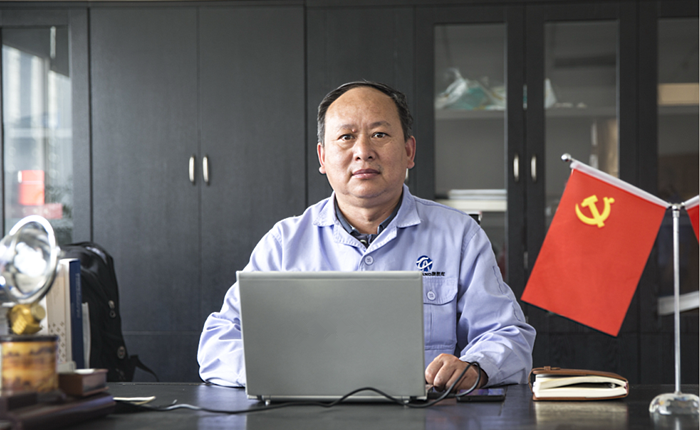
General Manager of AoklandThunder
General Manager Lei Ming, born in 1958, studied weaponry, served as an “educated youth” during the Cultural Revolution, and worked in motorcycle design. He began his career as an ordinary technician at Chongqing Jianshe Industry Group and, through diligent effort, rose to become the director of a branch factory. He ultimately served as Assistant to the General Manager of Chongqing Jianshe Industry Group, Vice General Manager of Jianshe Motorcycle Co., Ltd., and Managing Director of Jianshe Air Conditioning Company. During the 110th anniversary celebrations of Jianshe Industry Group, he served as the on-site commander-in-chief, overseeing the ceremony for the rollout of the group’s 1.1 millionth motorcycle. He is widely regarded as a pioneer of Chinese domestic brand manufacturing and a seasoned practitioner of large-scale enterprise management, boasting extensive experience in both areas.
In 2010, Lei Ming joined Aokland as General Manager. When asked why he chose the healthcare industry, Lei Ming revealed to the reporter, “I have studied many industries and ultimately found that only in the healthcare sector are the goals of enterprises aligned with those of patients, society, and even the nation. The goal of a healthcare enterprise is to do everything possible to preserve patients’ lives and help them live longer. Patients also wish to extend their lifespan. For every additional day a patient lives, they get to see the world for one more day; for every additional day an enterprise helps a patient live, it earns one more day’s revenue.”
"Though the words may be blunt, the reasoning is sound. Providing medical services is inherently meaningful, a view that aligns perfectly with VCBeat’s philosophy. Lei Ming now rarely appears in the media, preferring to settle down and diligently engage in meaningful work. Approaching sixty, he hopes to treat this endeavor as a distinguished pursuit in the final chapter of his life, making greater contributions to society."
Three-Stage Development, Continuously Expanding Business Scope
Under the leadership of such a team, how did Aokland develop step by step? It can be roughly divided into three stages:
Phase I (Before 2009), Prior to 2009, the predecessor of Aokland was Chongqing Shengdeli Medical Device Research Co., Ltd., which was jointly founded by Zhang Baoming, Fang Tingshou, Guo Baocai, and others in 2003. At that time, due to a lack of technology and capital, as well as the fact that national critical illness medical insurance policies had not yet been opened up, Shengdeli faced financial shortages, poor management, and the brink of closure. It was not until 2009, when it was acquired by Tong Junping and co-investors, that the company was renamed to its current name, Aokland.
Phase II (2009–2013), After taking over Aokland, Tong Junping began to increase investment in technological transformation and R&D for its products, promoting product upgrades and iterations. After several years of effort, Aokland’s products have reached maturity, with performance on par with imported counterparts from the same period, and have been introduced to the market in small batches.
Phase III (2013–Present)After achieving clinical maturity with its hemodialysis equipment, Aokland began to expand its business scope. In addition to selling blood purification devices and distributing hemodialysis consumables, the company embarked on establishing hemodialysis centers to provide dialysis medical services. Currently, Aokland has developed its own standardized operational model.
Equipment is the foundation, consumables are the source, service is the platform, and data is the future.
As a Chinese manufacturer of dialysis machines, Aokland’s business model is no longer limited to the sale of hemodialysis equipment; instead, it employs a multi-pronged approach—combining sales, co-construction projects, solution support, and self-built services—to increase its market share in hemodialysis devices.
Aokland’s core business activities include: blood purification medical equipment; the purchase and sale of hemodialysis consumables; the research, development, manufacturing, and sales of water treatment series equipment; chain medical services for blood purification centers; and data management for blood purification users. In the course of its operations, Aokland has also developed a unique development strategy, namely“Equipment is the foundation, consumables are the source, service is the platform, and data is the future.”
The machine is the foundation
Machinery constitutes Aokland’s core competitiveness. Currently, the company primarily promotes its “Aokland” brand for blood purification and its “Shengdeli” brand for water purification. Its main products include hemodialysis machines, hemodiafiltration machines, continuous renal replacement therapy (CRRT) systems, hemoperfusion machines, water treatment equipment for hemodialysis, medical central pure water systems, centralized fluid delivery systems for hemodialysis centers, medical cleaning pure water systems, ultra-pure water equipment for biochemical analysis, and medical consumables.
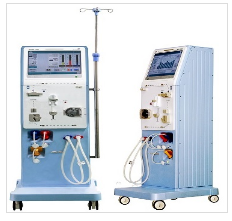
Aokland SDL-2000H Hemodialysis Machine (Image source: Aokland official website)
Among these, the Aokland SDL-2000H hemodialysis machine adopts a micro-mass flow meter-based ultrafiltration control system technology, a first in China. After years of research and development and innovation, Aokland has obtained a series of professional certifications, including CCC, ISO 9001, and ISO 13485. By the end of 2016, the company held 54 patents and 6 software copyrights.
Aokland’s products are in use at more than ten Grade III and Grade II hospitals, including Chongqing Xinqiao Hospital, the Second Affiliated Hospital of Chongqing Medical University, Chongqing Dadukou District People’s Hospital, Chongqing Nanchuan District People’s Hospital, and Leiyang Kidney Disease Specialty Hospital in Hunan Province. The high safety and stability of its products have earned recognition from healthcare professionals, while their effective dialysis outcomes have alleviated patients’ suffering.
Consumables Are the Source
Hemodialysis consumables are the source of profits, but currently, all consumables in this industry are market-oriented products, with ample supply in both domestic and international markets.Aokland adopts a centralized distribution model with direct procurement from manufacturers to supply hemodialysis centers. Aokland also engages in the research, production, and sales of maintenance parts for water treatment equipment, such as saturated brine concentration meters, bacteriostatic filter tanks, and constant pressure controllers.
Service is the Platform
In addition to the production and sales of hemodialysis equipment and water treatment systems for hemodialysis, Aokland collaborates with medical institutions to establish and operate blood purification centers, providing solution support.
In response to the gradually developing independent dialysis service market in recent years, Aokland offers comprehensive solutions and support, including standardized configurations for hemodialysis centers, clinical medical support from healthcare professionals, equipment maintenance and operational training, patient acquisition and promotion strategies, and an operational performance management system.
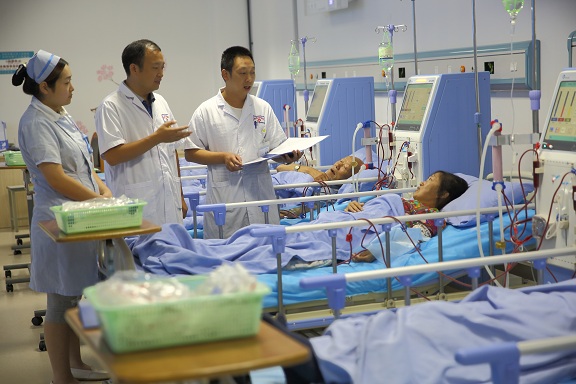
Aokland Sichuan Blood Purification Center (Image source: Aokland official website)
Meanwhile, Aokland has also established its own hemodialysis service institutions, creating for-profit“Aokland Dialysis Home” Chain Blood Purification CentersAokland tailors its point-of-care medical services to suit different regions, cultural contexts, and population habits, offering specialized dialysis options such as scheduled dialysis, elderly care dialysis, travel dialysis, specialist-led dialysis, charitable dialysis, self-service dialysis, mutual-aid dialysis, crowdfunded dialysis, and visualized dialysis.
Data Is the Future
Aokland's independently developedComprehensive Operation Management System for Blood Purification Centers and Cloud Health Data Management System, providing health monitoring services to patients both in-hospital and out-of-hospital.
The Centralized Integrated Operations Management System records patient visit and treatment information, medical orders and nursing tasks issued by healthcare professionals, while also logging equipment performance data and maintenance records; it implements standardized module-based management for consumable usage. The Cloud Health Data Management System aims to build a patient-centric ecosystem, offering service platforms for real-time home care, emotional support, charitable assistance, and health-focused travel. It establishes health records for patients and their families, provides guidance on out-of-hospital medication adherence based on medical orders, and supplies real-time health data and daily living needs information to patients’ families and communities, thereby facilitating the provision of health nursing services and meeting broader ecosystem-related needs.
Although Aokland’s business encompasses both equipment sales and medical services, Lei Ming revealed that the company’s primary revenue stream remains sales-oriented, accounting for 80% of total revenue, which includes equipment sales, leasing, and solution sales.
Squeezed from Both Domestic and International Fronts: How Does Aokland Prevail?
Major Competitors
The competitive landscape currently facing Aokland can be described as a situation of “internal troubles and external threats.” Externally, multinational corporations dominate the high-end market for blood purification equipment. In the segments with the highest brand and technical barriers—namely hemodialyzers and hemodialysis machines—imported manufacturers hold a market share exceeding 90%. Internally, numerous companies have entered the fray, capturing this high-margin market by manufacturing mid- to low-end blood purification devices.
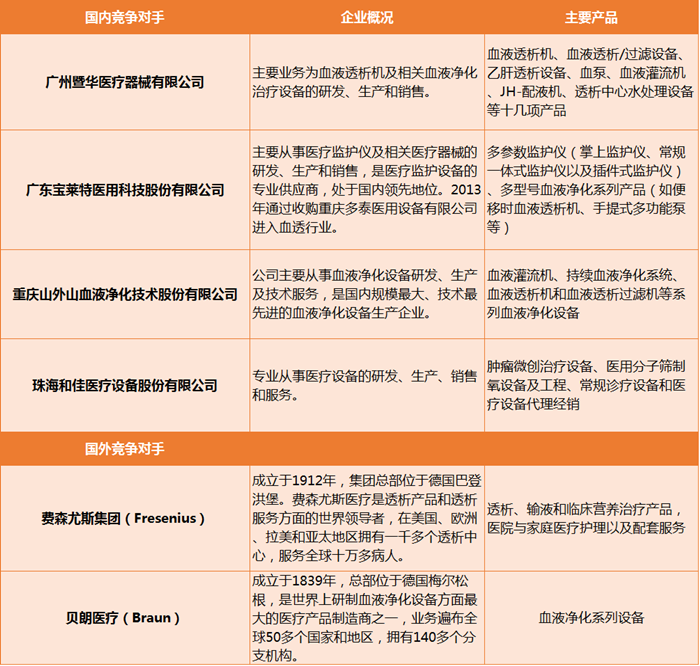
In terms of domestic competitors, there are Guangzhou Jihua Medical Instrument Co., Ltd., Guangdong Biolight Meditech Co., Ltd., Chongqing Sunwoda Blood Purification Technology Co., Ltd., and Zhuhai Hejia Medical Equipment Co., Ltd. Internationally, the market is represented by Fresenius and B. Braun.
Aokland's Competitive Advantages
With such fierce competition, what advantages does Aokland hold in this race?
● Technical Advantages
Aokland boasts a professional R&D team with a multidisciplinary, multi-tiered, and well-structured composition, covering fields such as mechanical structure, manufacturing processes, sensor detection circuits, and control algorithms. The company collaborates with Southwest University, the PLA Logistics Engineering University, Tianjin University, and Jingrui Civil Engineering, among others, to enhance product performance and new product development capabilities, thereby meeting customer and market demands.
● Advantages in Industrial Layout
The company has established a comprehensive and robust product and service system, covering all aspects of “dialysis equipment + dialysis consumables + dialysis services,” which has significantly enhanced Aokland’s market competitiveness.
● Product Quality Advantages
Aokland has established production facilities with rational design, layout, and usage practices, tailored to the characteristics of blood purification equipment, manufacturing processes, and corresponding cleanliness levels, thereby ensuring the safety of its product manufacturing. The company has obtained dual certification for the ISO 9001 and ISO 13485 quality management systems from CMD, and has been successively recognized as a Chongqing Famous Trademark, a High-Tech Enterprise, a Chongqing “Double-Soft” Enterprise, an Intellectual Property Advantage Enterprise, and a Chongqing Enterprise Technology Center.
● Advantages of Chain Operations Management
Aokland has progressively established a unified supply chain system for specialized equipment, consumables, and pharmaceuticals; a clinical technical support system and training base for medical staff; and a unified engineering service system, including layout planning for hemodialysis centers, site renovation, and equipment maintenance. These initiatives have established a systematic guarantee for the standardized management of its chain group.
● Advantages of the “Internet + Public Welfare Services” Online Hemodialysis Service Platform
Aokland’s Online Hemodialysis Service Platform was recognized as a Chongqing “Internet+” Application Demonstration Project in 2017. By leveraging mobile and PC-based nutritional software to accurately assess patients’ nutritional risks and provide online guidance, the platform offers comprehensive support in daily nutrition, psychological counseling, health maintenance, self-management of complications, and family-assisted care for kidney disease patients. Committed to humanistic care, it encourages patients to return to normal life and aims to build a mobile internet ecosystem.
● Brand Advantages
After years of refinement, Aokland has long established a mature brand. The high safety and stability of its products have been consistently recognized by healthcare professionals.
Hemodialysis Industry — Hemodialysis Center Medical Services — Kidney Patient Ecosystem
Aokland's future development plan is to build a “Hemodialysis Industry — Hemodialysis Center Medical Services — Kidney Patient Ecosystem (Kidney Patient Ecosystem Data)” system.
First, leveraging the company’s existing strengths and with its headquarters as the core, we will advance the industrialization of hemodialysis machines, continue to expand market reach, and increase the scale of equipment sales.
Subsequently, in cooperation with hemodialysis centers at public hospitals, Aokland will adopt models such as equipment technology partnerships or leasing arrangements, ensuring no disruption to clinical medical operations. For collaborations with private hospitals, Aokland will pursue equity acquisitions (partial or full) to enter the hemodialysis service sector through controlling or minority shareholdings. Meanwhile, priority will be given to establishing independent hemodialysis centers; for instance, applications will be submitted to local Health and Family Planning Commissions in policy-permissive regions within Guangdong Province, including Guangzhou, Heyuan, and Dongguan, for the establishment of hemodialysis centers.
With Aokland Blood Purification Center Investment Management Company as the investment entity, we promote a standardized service model for chain hemodialysis centers. In mainland China, using provincial administrative divisions as operational units and provincial capital blood purification centers as flagships, we establish market-oriented, for-profit “Aokland Dialysis Home” chain blood purification centers with a three-tier provincial, municipal, and county structure, supported by basic medical insurance and the New Rural Cooperative Medical Scheme, while simultaneously expanding the market coverage of domestically produced hemodialysis equipment.
Starting with hemodialysis products, expanding to hemodialysis services, and ultimately establishing an ecosystem for kidney disease patients. The Kidney Patient Circle represents data; Aokland has developed a software solution that collects data from all patients at hemodialysis centers, facilitating collaboration among centers to deliver enhanced services. Furthermore, the Kidney Patient Circle connects patients with one another, with manufacturers, and with healthcare professionals, enabling the organization of activities and the provision of personalized treatment services.
From Aokland’s development and business model, we see the promise of China’s domestically produced hemodialysis industry. The Chinese hemodialysis market holds immense potential; as Lei Ming puts it, “In the overall hemodialysis market, equipment represents a tens-of-billions-yuan sector, medical services a hundreds-of-billions-yuan sector, and data a trillion-yuan sector.”