

The Gap in Stroke Rehabilitation Between China and Japan: Challenges and Opportunities
“Stroke,” also known as “apoplexy” or “cerebrovascular accident,” is an acute cerebrovascular disease. It refers to a group of conditions characterized by brain tissue damage resulting from either the sudden rupture of cerebral blood vessels or blockage that prevents blood flow to the brain. Stroke includes both ischemic and hemorrhagic types and is most prevalent among the elderly population.
According to data from the National Bureau of Statistics, by the end of 2016, China’s population aged 60 and above had reached 220 million, accounting for 16.7% of the total population. This figure represents one-fifth of the world’s elderly population and one-half of Asia’s elderly population. Among these older adults, 70 million have needs for rehabilitation and long-term care.
In the July 8, 2017 issue of The Lancet, Dr. Tetsuya Asakawa, a renowned neurology expert from Japan, published an article highlighting the significant disparity in post-stroke rehabilitation between China and Japan.

Dr. Tetsuya Asakawa
The Gap in Stroke Incidence Between China and Japan Is Small, but Japan’s Prognosis and Rehabilitation Rates Are Far Higher Than China’s
With the aging of China’s population, stroke, which carries a high disability rate, is increasingly becoming a major public health concern. In China, there are 2.5 million new cases annually, and approximately 70%–80% of these patients lose their ability to perform activities of daily living and require care, imposing a substantial burden on families and consuming significant social resources.
Both Japanese and Chinese people belong to the Mongoloid race, and the incidence of stroke in Japan is similar to that in China. However, the prognosis for stroke patients in Japan is significantly better than in China. According to Japanese stroke guidelines, 64.2% of younger stroke patients (under 65 years old) and 42.2% of elderly stroke patients (aged 65 and above) in Japan are able to regain the ability to walk independently. Furthermore, 60.2% of younger patients and 52.8% of elderly patients are able to return to their communities and resume normal daily life.
Factors Contributing to the Rehabilitation Gap Between China and Japan
Tetsuya Asakawa believes that Japan’s relatively comprehensive health insurance system and its excellent stroke rehabilitation framework enable stroke patients to receive appropriate and timely rehabilitation therapy in the early stages, which is a key factor contributing to such marked differences in prognosis.
Despite the enormous demand for rehabilitation services, early-stage rehabilitation in China remains unsatisfactory due to various constraints.
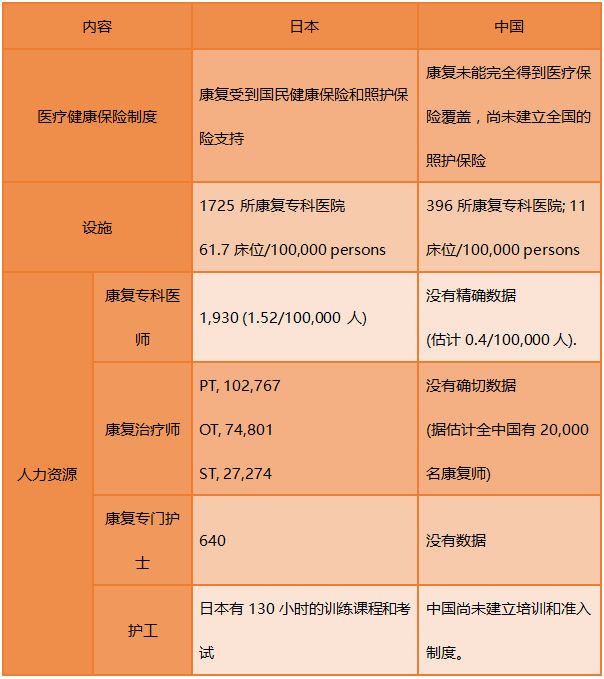
The Gap in Rehabilitation Systems Between China and Japan
First, China’s medical insurance does not provide full coverage for the entire rehabilitation process as Japan does, nor has it established a long-term care insurance system for the elderly like Japan.
Second, China has not yet established an efficient, multi-tiered rehabilitation system that integrates community care, rehabilitation hospitals, insurance, and nursing services. In China, rehabilitation physicians receive lower compensation compared to their counterparts in other specialties, discouraging young medical school graduates from entering the field. Meanwhile, there is a significant shortage of well-trained rehabilitation therapists, particularly speech therapists (STs), as well as nursing aides. Unlike Japan, China has not implemented a licensure or access system for nursing aides; consequently, many nursing aides in China are middle-aged and elderly women from rural areas with relatively low levels of education.
Third, there remains a significant gap between China’s rehabilitation equipment and that of Japan. Many devices commonplace in Japan, such as occupational therapy (OT) simulated activities of daily living (ADL) training equipment and simulated kitchens, were not observed in dozens of rehabilitation hospitals or rehabilitation departments of general hospitals across different regions and at various tiers in China.
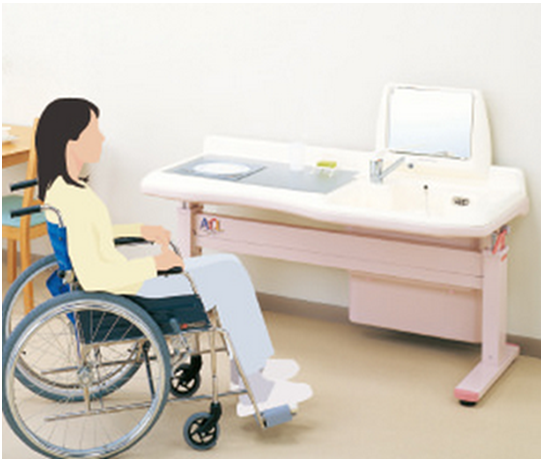
Japanese Simulated Life Scenario Training Devices
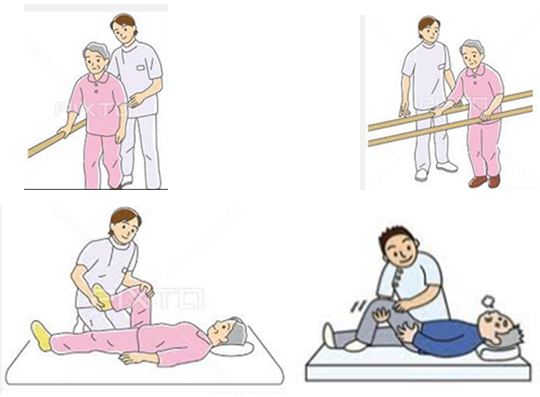
Rehabilitation Training
Furthermore, public awareness of the importance of early rehabilitation remains low. One study indicated that only 38.9% of the general population was aware of the importance of stroke rehabilitation. Moreover, only 11.5% of patients received rehabilitation therapy within one week after a stroke, while 42.4% of patients did not receive any rehabilitation therapy at all following their stroke.
In summary, the vast differences between the rehabilitation systems in China and Japan have led to stark disparities in patient prognosis. It is now time for the government to take measures to improve this situation. Specific measures should include improving the rehabilitation system, training more rehabilitation professionals, and strengthening health education for the general public. As a country with the same ethnic background as China, Japan’s experience and technology in rehabilitation are worthy of attention and application.
As a scientist of Chinese descent, Professor Tetsuya Asakawa is willing to collaborate with visionaries from all sectors to introduce Japan’s advanced rehabilitation concepts and technologies to China, thereby enhancing the quality of rehabilitation services and truly benefiting stroke patients.
Reference: Tetsuya Asakawa, Liang Zong, Liang Wang, Ying Xia, and Hiroki Namba. Unmet challenges for rehabilitation after stroke in China. The Lancet. 2017, Volume 390, No. 10090, P121-122. DOI: http://dx.doi.org/10.1016/S0140-6736(17)31584-2