

NVIDIA: From Gaming Graphics to AI-Powered Healthcare Innovator
Which company was named the world’s smartest company by MIT in 2017?
You might think of IBM, or perhaps tech giants like Google, Facebook, Apple, and Microsoft. After filtering through these familiar names in your mind, you will find that although they are on the list, none of them is the most standout company.
At the top of this list is NVIDIA, known in Chinese as Yingweida. While companies such as IBM, Google, and Facebook have also achieved remarkable success in artificial intelligence (AI), their research primarily focuses on the application layer, leveraging AI technologies to serve end users. In contrast, NVIDIA operates at the foundational technology layer of AI, specializing in AI chips. Although the company’s GPUs (Graphics Processing Units) were originally designed for computer gaming, they have now become the driving force behind breakthrough technologies such as deep learning and autonomous driving.
Three Stages of NVIDIA's Development
Before joining VCBeat (WeChat ID: vcbeat) and transitioning into healthcare media, the author worked in IT media for 13 years, making multiple trips to the United States to attend NVIDIA’s GPU (Graphics Processing Unit) launch events and the GTC (GPU Technology Conference). The author’s relationship with NVIDIA dates back nearly 20 years, starting from the first purchase of an NVIDIA RIVA TNT chip-based graphics card in 2000. Thus, reviewing NVIDIA’s history has also sparked the author’s recollections of past professional experiences.
Over the past two decades, IT technology has advanced at a rapid pace, while artificial intelligence has long been the dream of computer scientists. Today, AI is no longer confined to science fiction; it has begun to emerge across various industries.
What exactly makes artificial intelligence the new IT technology revolution? The answer lies in a novel computing paradigm: GPU-based deep learning, which enables computers to learn from massive amounts of data and then develop complex software that humans cannot write.
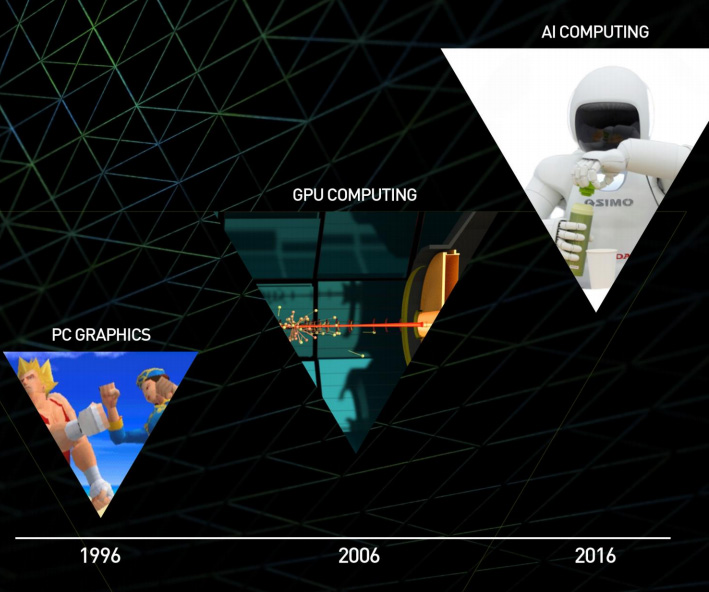
Over the past two decades, NVIDIA has undergone three phases of development: evolving from a leader in PC gaming graphics chips, to the birth of general-purpose GPU computing in 2006, and finally transforming into an artificial intelligence computing company. Initially, GPUs were used to simulate human imagination, bringing virtual worlds in PC games and movies to life. Today, they also emulate human intelligence, enabling a deeper understanding of the physical world.
GPUs deliver robust parallel processing capabilities through thousands of computing cores, which are critical for running deep learning algorithms. Equipped with AI algorithms, computers can learn from massive datasets and serve as the brains of intelligent systems—such as smart computers, robots, and autonomous vehicles—that perceive and understand the world.
Being crowned the world’s smartest AI company is just one facet of NVIDIA’s allure; it has also been the best-performing semiconductor company globally over the past five years. In 2016, NVIDIA was the top-performing stock in the Nasdaq-100 Index, outpacing the second-place contender by nearly threefold. In the third quarter, driven by robust demand for GPU chips from data centers and Bitcoin mining, NVIDIA’s revenue surged by 54%, while its profits doubled to reach an all-time high.
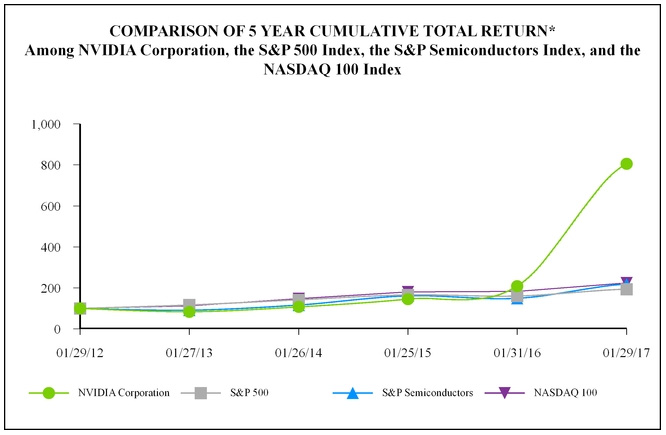
The chart above compares the cumulative returns of NVIDIA stock, the S&P 500 Index, the S&P Semiconductor Index, and the Nasdaq-100 Index as of the end of January each year over the past five years. With January 29, 2012 as the starting point, the share prices of all four indices were set at $100. It can be seen that throughout 2016, NVIDIA benefited from its performance in the field of artificial intelligence, gaining favor among investors and experiencing a significant surge in its stock price. Overall, NVIDIA’s stock price increased eightfold over the five-year period.
Phase I: From Inception to Becoming a Leader in Computer Graphics Chips
In addition to being named the world’s smartest company by the Massachusetts Institute of Technology, NVIDIA has also earned such distinctions as World’s Most Admired Companies (Fortune), Best-Performing CEOs in the World (Harvard Business Review), America’s Greenest Companies (Newsweek), and 50 Best Places to Work (Glassdoor).
What kind of company is NVIDIA, exactly? Who is the CEO?
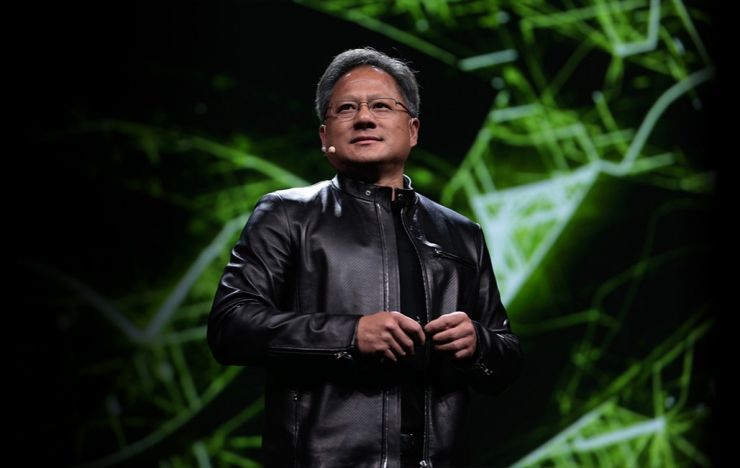
NVIDIA Co-Founder / CEO Jensen Huang
NVIDIA was founded in 1993 by Jensen Huang, Chris Malachowsky, and Curtis Priem. For the past 24 years, Jensen Huang has served as NVIDIA’s CEO. Currently aged54-year-old Jensen HuangHe is a leader with considerable personal charisma. Under his leadership, NVIDIA still operates like a startup: making decisions quickly and executing them rapidly. For a semiconductor manufacturer, this is no simple feat.
Jensen Huang is a Chinese-American born in Taiwan. In 1984, he earned a bachelor’s degree in electrical engineering from Oregon State University, and later obtained a master’s degree from Stanford University. After graduating with a degree in electrical engineering from Oregon State University, Huang moved to Silicon Valley and joined the renowned processor company AMD (1983–1985).Jensen Huang primarily served as a chip designer at AMD, where he was surrounded by numerous PhD holders, causing him significant pressure; he subsequently pursued advanced studies at Stanford University in his spare time.Two years later, Jensen Huang changed jobs and joined LSI Logic (1985–1993).
His work experience at these two chip companies enabled Jensen Huang to enter the field of chip design. In particular, at LSI Logic, Huang participated in the design of the graphics processing components of computer chips and engaged in marketing activities, laying the foundation for the subsequent establishment of NVIDIA. In late 1992, Chris Malachowsky and Curtis Priem, two engineers who had previously worked at Sun Microsystems, recruited Huang into NVIDIA’s founding team. Given his technical background as well as his expertise in sales and management, Huang was appointed President and CEO of the company, a position he has held to this day.
NVIDIA released its first product, the NV1 graphics chip, in 1995. Due to its adoption of polygon texture mapping—a misstep in technological direction—the NV1 proved to be a commercial failure. This product exhausted the company’s initial investment. To survive, NVIDIA reduced its workforce from over 100 employees to just over 30, with Jensen Huang promising to rehire the laid-off staff once the company’s situation improved.
Later, Japanese gaming giant Sega, impressed by NVIDIA’s R&D capabilities, paid a $7 million deposit to commission the development of a graphics chip for its game console. Although Sega ultimately canceled the NV2 order and opted for 3dfx’s PowerVR technology instead, this payment saved NVIDIA from fate.
A major reason for the failure of NVIDIA’s early products was the lack of standardization in 3D graphics interface technologies at the time. Jensen Huang decided to adopt Microsoft’s newly released Direct3D technology in subsequent development efforts, focusing on PC-specific 2D/3D graphics cards. Meanwhile, Huang rehired the R&D personnel who had been laid off following the NV1 setback. Later, NVIDIAIn 1997, the RIVA 128 (NV3) was released and achieved success.
Subsequently, NVIDIA rode the wave of success in the graphics chip sector, with the RIVA TNT and RIVA TNT2 becoming market stars one after another, as its market share surpassed that of the then-dominant industry leader, 3dfx, for the first time.In 1999,NVIDIA launched its first GPU—the GeForce 256—enabling hardware-accelerated real-time programmable shading. In the same year, NVIDIA went public on the NASDAQ.
The launch of multiple blockbuster products has gradually made NVIDIA the most important computer in the marketGraphics chip manufacturer, long holding the top market position, and ac-Purchased 3dfx.In the early 1990s, there were dozens of computer graphics chip manufacturers on the market. Today, NVIDIA is the only independent graphics chip manufacturer remaining; other companies have either gone bankrupt or been acquired. NVIDIA’s most significant competitor, ATI, was acquired by AMD in 2006.
The AuthorInThrough interactions with Jensen Huang at various times, it has become evident that he is a CEO with a distinct personality. He might prop his feet up on a chair while engaging with reporters during meetings, or even have the company logo tattooed on his arm. He can deliver presentations on the latest technologies while dressed in a punk-style leather jacket, and he is also willing to showcase his Chinese language skills for journalists from China.Jensen Huang stated in an interview, “I have made many mistakes and continue to make them. But I am not afraid of making mistakes; only by continually erring, adapting, learning, and innovating can one achieve success.”
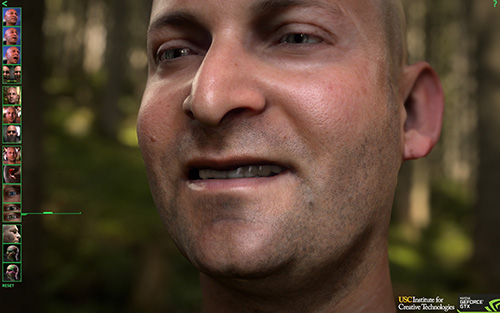
Photorealistic Human Portraits Rendered in Real Time Using NVIDIA Graphics Cards
At the time, NVIDIA’s GeForce GPU products were primarily used in gaming PCs. They could render vast oceanic landscapes, sculpt intricate character hair, and simulate realistic smoke effects, all of which contributed to more lifelike gaming experiences. Moreover, NVIDIA Quadro GPUs were adopted by 90% of professional graphics workstations worldwide. A large number of digital artists, industrial designers, filmmakers, and broadcast professionals relied on NVIDIA GPUs, and the majority of Academy Awards for Best Visual Effects were produced using NVIDIA GPU technology.
Phase II: Achieving General-Purpose Computing Capabilities Through the CUDA Architecture
Although NVIDIA has long held the top position in the visual computing industry, Jensen Huang has consistently maintained technological foresight and sensitivity, continuously driving NVIDIA’s innovation and leading the development of the visual computing sector.
In NVIDIA’s transformation from a graphics card manufacturer to an artificial intelligence company, several key products played pivotal roles in this two-step leap. Prior to 2006, GPU chips relied on dedicated circuits for 3D rendering. Vertex shaders were responsible for vertex description and modeling of 3D scenes, constructing images using triangles, which were then textured through the rendering pipeline to impart color and texture to the 3D imagery.
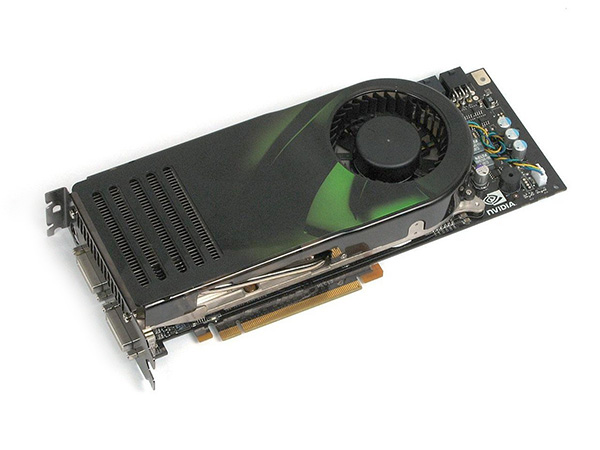
The GeForce 8800 GTX Series Graphics Cards That Launched the Era of General-Purpose GPU Computing
In late 2006, NVIDIA released the GeForce 8800 series (codenamed G80), a groundbreaking GPU. Instead of employing traditional pixel rendering pipelines, this GPU adopted a general-purpose computing architecture known as CUDA (also referred to as SIMD unified shading). This design enabled graphics cards not only to render 3D images but also to perform other general-purpose computing tasks akin to CPUs, thereby giving rise to a powerful and entirely new paradigm of computation.
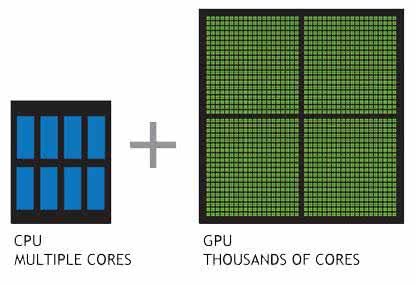
GPUs have more threads than CPUs, enabling rapid completion of parallel computations.
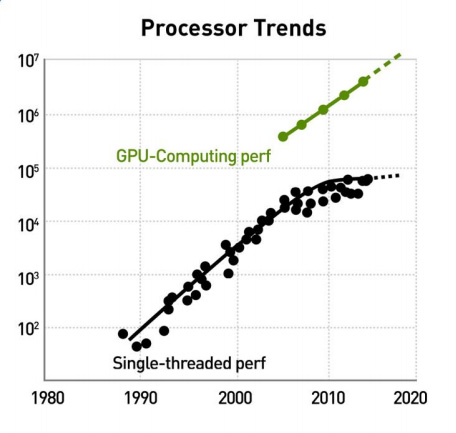
The parallel computing capability of GPUs far exceeds that of CPUs.
The computational performance of the CUDA general-purpose computing architecture can be several times higher than that of CPUs in certain applications, owing to its data parallel processing capabilities. In simpler terms, traditional Central Processing Units (CPUs) have a limited number of cores and are primarily optimized for serial instruction execution, processing data in a pipeline manner where instructions are completed step by step. In contrast, GPUs based on the CUDA architecture feature numerous stream processors, offering significant advantages in large-scale parallel computations. This design endows graphics cards with general-purpose computing capabilities, thereby providing superior computational performance compared to CPUs in large-scale data computing applications.
Building on GPUs with the CUDA architecture, NVIDIA developed Tesla computing cards dedicated to general-purpose computing. Researchers across various fields have leveraged Tesla cards to access computational capabilities previously available only on supercomputers, widely employing them in large-scale computations such as drug discovery, medical imaging, weather modeling, and scientific research.
With its powerful computational capabilities, GPUs have naturally been adopted by supercomputers.Compared to traditional supercomputers built with CPUs, supercomputers utilizing GPU computing cores offer the advantages of higher performance and lower power consumption.China’s Tianhe-1A supercomputer, which ranked first in the world for computational performance in 2010, utilized NVIDIA Tesla computing cards.
During this period, in addition to GPUs, NVIDIA also began venturing into the mobile processor market. The Tegra series represented NVIDIA’s attempt to enter the smartphone chip market. At the time, Jensen Huang believed that smartphones were at the forefront of a wave transforming computing and communication. However, due to underestimating the importance of integrated basebands, NVIDIA’s performance in the mobile chip market was lackluster, and its results in the tablet market were similarly disappointing. Today, Tegra chips are rarely used in smartphones.NVIDIA’s Shield tablet and Shield TV still use Tegra processors.
However, Tegra products achieved significant success after expanding into the automotive sector, leveraging their GPU computing capabilities to focus on in-vehicle infotainment systems and autonomous driving systems. The in-vehicle infotainment system of the Tesla Model S electric vehicle was originally based on the Tegra 3 design and has since been upgraded to the latest Tegra X1. Meanwhile, the Tegra-based autonomous driving system, DRIVE PX, has been adopted by major automakers such as Volvo, Audi, BMW, and Mercedes-Benz. But this is a story for later.
General Computing and the Healthcare Industry
In the era of general-purpose computing, the healthcare sector has become a key arena for NVIDIA GPUs to make an impact. Medical imaging was among the earliest commercial applications to leverage the general-purpose computing capabilities of GPUs to enhance performance, with numerous medical devices equipped with NVIDIA Tesla GPUs.
In certain medical imaging applications, computers are required to process large volumes of high-resolution CT or MRI scans. Patients require rapid, accurate, and comfortable diagnostic experiences, while physicians need tools that enable efficient diagnosis.Integrating massive server arrays into clinical equipment is highly challenging, but the powerful computational capabilities of GPUs and Tesla make it possible to provide compact parallel computing modules.
The general-purpose computing performance of GPUs enables researchers to process these images at speeds tens or even hundreds of times faster than CPUs.Therefore, physicians can view 3D composite images of CT and MRI scans in real time, or enable the system to operate more rapidly without compromising the image quality of diagnostic scans. With these rapidly obtained results, clinicians can assess the status of patient tissues and make diagnoses without the need for biopsies or surgical interventions. Furthermore, multiple physicians can simultaneously view such images and communicate with one another.GPUs are also utilized in the GE Revolution CT scanner, not only to generate high-quality images but also to reduce patient radiation exposure by 82%.

Scientists at the University of Illinois have determined the precise chemical structure of the HIV “viral capsid” for the first time using the Blue Waters supercomputer, which utilized 3,000 GPUs.
For researchers daring enough to take on the most challenging problems, GPU-based general-purpose computing platforms have become key to success. Scientists at the University of Illinois used a GPU-based supercomputer to perform the first all-atom simulation of a viral capsid, achieving a breakthrough in HIV research. Published in Nature, the study determined for the first time the precise chemical structure of the HIV “viral capsid,” which is central to its infectivity.
In the fields of drug development, computational chemistry, bioinformatics, and life sciences, GPUs have gained widespread favor for their remarkable parallel computing capabilities. Associate Professor in the Department of Chemistry at Stanford University andFolding@home Project Director Vijay Pande stated, “The impact of NVIDIA GPUs on protein folding simulations is profound and far-reaching. Teams using GPUs to simulate protein folding have achieved a dramatic surge in productivity. In”Folding@home The application of such powerful processing capabilities has revolutionized this project, significantly reducing the time required for our biomedical research.”
Phase III: Advancing from General Computing to Artificial Intelligence
The general-purpose computing capabilities of GPUs have significantly expanded their application scenarios from mere graphics rendering to a wide range of computation-intensive tasks, enabling scientists and researchers to leverage the powerful parallel processing power of GPUs to solve complex computational challenges. This includes deep learning computations.
In 2010, AI researchers around the world had already begun leveraging the parallel computing power of NVIDIA GPUs for neural network training. The year 2012 marked a milestone in artificial intelligence. Alex Krizhevsky from the University of Toronto developed a deep neural network capable of automatically learning to recognize images from a dataset of one million samples. Trained for just a few days on two NVIDIA GTX 580 consumer graphics cards, “AlexNet” won that year’s ImageNet competition, outperforming human experts with decades of algorithmic experience.
That same year, after recognizing the principle that larger network scales yield stronger learning capabilities, Andrew Ng (then at Stanford University, later joined Baidu, and departed this year) collaborated with NVIDIA Research to develop a method for training networks using large-scale GPU computing systems. This attracted global attention, prompting artificial intelligence researchers worldwide to shift toward GPU-based deep learning. Baidu, Google, Facebook, and Microsoft were among the first companies to apply deep learning to pattern recognition.
GPU-powered deep learning is transforming the way software is developed and executed. In the past, software engineers conceived algorithmic logic and wrote code. Today, algorithms self-learn from massive real-world datasets, enabling software to effectively write itself. Deep neural networks are deployed in data centers and intelligent devices to perform inference and predict subsequent actions. GPU-accelerated deep learning lays the foundation for machine learning, cognition, reasoning, and problem-solving.
NVIDIA GPUs are particularly adept at handling parallel workloads, accelerating network performance by 10–20 times and reducing the duration of each data training iteration from weeks to days. In fact, GPUs have increased the training speed of deep neural networks (DNNs) by 50-fold in just three years—a rate far exceeding Moore’s Law—and are projected to deliver another 10-fold improvement in the coming years.
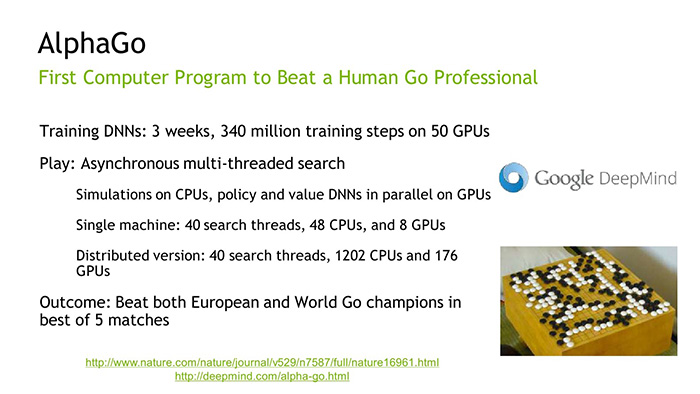
Google’s AlphaGo achieved a decisive victory over South Korean Go master Lee Sedol, leveraging NVIDIA’s GPU products. The standalone version of AlphaGo utilized 40 threads, 48 CPUs, and 8 GPUs, while the distributed version employed 40 threads, 1,202 CPUs, and 176 GPUs.
To facilitate the deployment of deep learning, NVIDIA has adopted a three-pronged strategy. The first step involves building a deep learning ecosystem and collaborating with scientists on deep learning research. The second step focuses on deploying deep learning across diverse platforms, including automobiles, computers, intelligent robots, and servers. The third step is to provide end-to-end solutions. This approach enables NVIDIA to allow its algorithms to learn and share knowledge across different platforms. Moreover, the future applications of these deep learning algorithms are likely to extend beyond autonomous vehicles, offering solutions for the Internet of Things (IoT) as well.
In addition to providing GPU hardware products, NVIDIA has also been committed to developing deep learning software, libraries, and tools. To train applications such as image, handwriting, and speech recognition and accelerate the training process, current deep learning solutions rely almost entirely on NVIDIA GPU-accelerated computing.NVIDIA provides an end-to-end AI computing platform—from GPUs to deep learning software and algorithms.
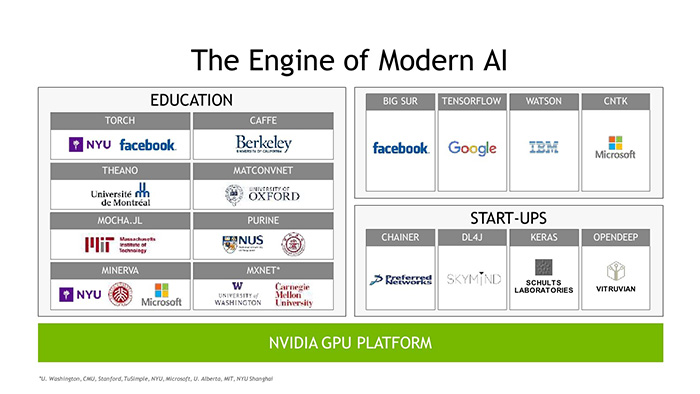
Major companies' deep learning software frameworks are all based on the NVIDIA GPU platform.
NVIDIA provides cuDNN, a GPU-accelerated deep learning software toolkit for design and deployment. It accelerates most deep learning software frameworks—such as Caffe, Caffe2, TensorFlow, Theano, Torch, and CNTK—enabling engineers to focus on training neural networks and developing software applications without spending time on low-level GPU performance tuning. NVIDIA’s GPU-based deep learning systems have rapidly scaled, achieving breakthrough applications in artificial intelligence across search, recognition, recommendation, translation, and more. Alibaba, YaThe world's largest companies, including Amazon, IBM, and Microsoft, commonly use NVIDIA’s GPU deep learning platform to deliver services.
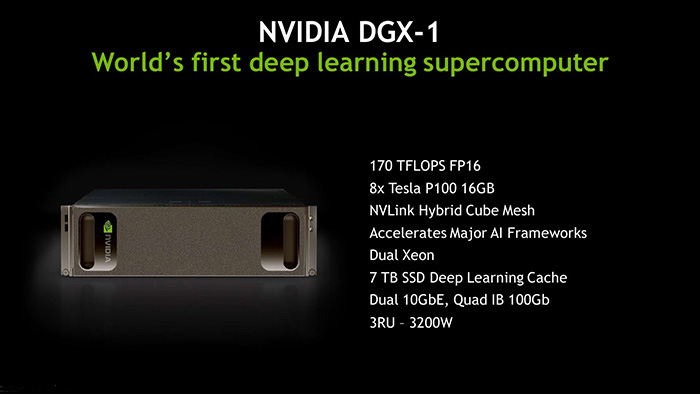
Artificial Intelligence Supercomputer DGX-1
In late 2016, NVIDIA launched its first artificial intelligence supercomputer, the DGX-1, a plug-and-play computing device. Its computational performance is equivalent to that of a high-performance computing cluster with 250 nodes, reducing network training time from weeks to days. These devices have become the AI brains for companies such as Alibaba, Amazon, Google, IBM, Microsoft, and SAP. Meanwhile, NVIDIA has also developed compact AI systems like the DRIVE PX2 and Jetson TX1, serving as the brains for autonomous vehicles, intelligent robots, and smart IoT devices, enabling robots to learn through trial and error.
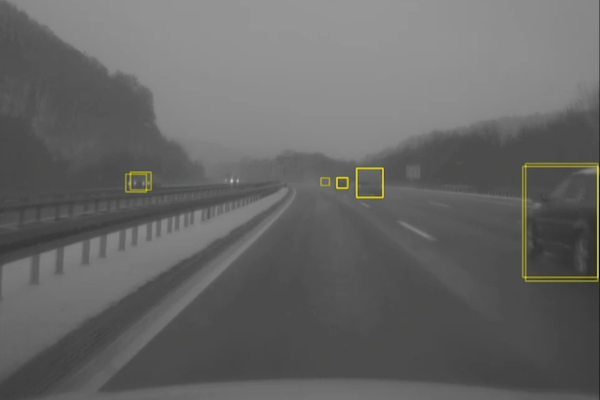
Audi Tests NVIDIA Autonomous Driving System in Extreme Weather Conditions
As mentioned in the previous section, NVIDIA leveraged its processing capabilities in chips and graphics to design Tegra chips suitable for mobile devices such as smartphones and tablets, which were also used in automotive navigation and multimedia entertainment systems. By early 2014, more than 4.5 million cars worldwide had adopted NVIDIA processors, spanning over 20 brands and 100 models. These included automotive giants such as Audi, BMW, and Volkswagen, as well as new industry players like Tesla. Subsequently, NVIDIA developed the DRIVE PX autonomous driving system based on GPU architecture and partnered with automakers including Tesla and Audi. Healthcare and autonomous driving have become the most widely applied fields for NVIDIA’s artificial intelligence technologies.
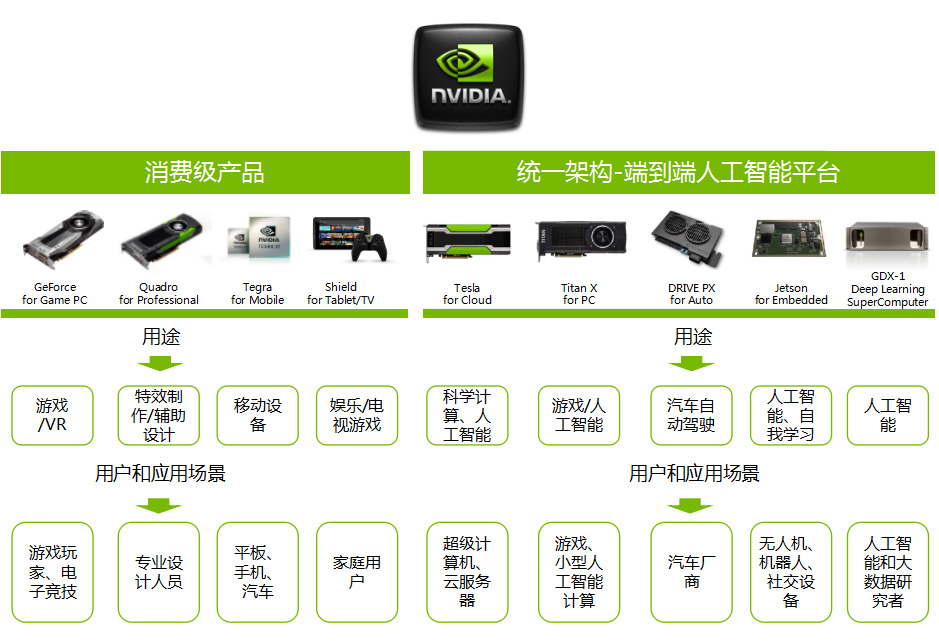
NVIDIA's Current Product Portfolio
Initially, GPUs were tools for realizing human imagination, creating virtual worlds for 3D games and Hollywood films. Today, NVIDIA’s GPUs simulate human intelligence by running deep learning algorithms, becoming an intelligent brain capable of perceiving and understanding the world. In 2016, NVIDIA intensively launched its full suite of AI GPU chips, systems, software, and services. Since then, NVIDIA has transformed from a “gaming chip company” into an “AI computing company.”
At the 8th GPU Technology Conference (GTC) in May 2017, NVIDIA CEO Jensen Huang unveiled Volta, the world’s most advanced AI computing architecture. During the conference, Huang stated, “Significant performance advancements have attracted innovators across various industries. Over the past year, the number of AI service startups driven by GPU technology has more than quadrupled, reaching 1,300. Deep learning has become a strategic priority for major technology companies, increasingly permeating areas such as infrastructure, tools, and product manufacturing. We are working closely with architecture manufacturers to achieve optimal performance. By optimizing every aspect of GPU architecture, we can reduce the hundreds of iterations required to train a model to just hours or days, thereby enhancing engineers’ productivity.”
Artificial Intelligence and the Healthcare Industry
In the field of artificial intelligence, the widespread adoption of NVIDIA GPUs has made them unparalleled in prominence.
In healthcare, physicians will leverage artificial intelligence to detect diseases at an early stage, decipher the human genome, treat cancer, and derive insights from vast amounts of medical data and research to provide optimal treatment recommendations. Kimberly Powell, who oversees NVIDIA’s healthcare sector, stated publicly, “NVIDIA is collaborating with researchers in the medical field to explore the potential of AI in healthcare, and we will expand the application of AI in this sector over the coming years.”
Kimberly Powell stated, “Machine deep learning technologies have already been applied to medical imaging and large-scale data processing. Artificial intelligence will play an even greater role in the healthcare sector, such as in cancer prediction, leveraging deep learning to assess patient risks and provide solutions. Additionally, NVIDIA is also applying artificial intelligence to the discovery of new drugs.”
In addition to emphasizing further applications in the medical field, NVIDIA partnered with the Center for Clinical Data Science at Massachusetts General Hospital during its 2016 GTC Conference. Leveraging its technology, NVIDIA utilized the center’s 10 billion medical images for deep learning training and development, aimed at scenarios such as disease detection, diagnosis, and treatment. In November of the same year, NVIDIA collaborated with the U.S. National Cancer Institute and the U.S. Department of Energy to launch the “Cancer Moonshot” initiative, which aims to develop an artificial intelligence framework to accelerate cancer research. This new framework is called the “Cancer Distributed Learning Environment,” abbreviated as CANDLE.
Jensen Huang stated, “GPU-based deep learning has provided us with a novel tool to tackle significant challenges that even the most powerful supercomputers have struggled to address in cancer research to date. Through collaboration with the National Cancer Institute and the Department of Energy, we have built this AI-powered supercomputing platform specifically designed for cancer research.”
AI-Driven Healthcare Projects Utilizing NVIDIA Products
During the era of general-purpose computing, most NVIDIA products were applied in biomedical research, facilitating foundational studies and accelerating data-intensive scientific computations. Similarly, in the age of artificial intelligence, a substantial amount of basic research continues to be conducted at universities and major hospitals. Institutions such as Stanford University, the Massachusetts Institute of Technology, the University of North Texas, and Mount Sinai Hospital have publicly showcased AI-driven healthcare projects built on NVIDIA platforms for the diagnosis and treatment of conditions including skin diseases and tumors.
Fraunhofer Institute for Medical Image Computing
Researchers at the Fraunhofer Institute for Medical Image Computing in Germany are leveraging GPUs and deep learning to enhance the accuracy of cancer diagnosis. Through AI-powered image analysis, physicians can better reduce false positives, avoid unnecessary treatments, and increase the likelihood of detecting potential new tumors.
Markus Harz, a research scientist at the Fraunhofer Institute for Medical Image Computing, stated, “We believe that early detection is key to treatment. Once algorithms detect anomalies in images, the next challenge lies in accurately diagnosing these abnormalities.” A few years ago, Harz and his research colleagues still relied on the traditional “feature engineering” approach to diagnosis, which remains widely used today. Researchers programmed computers to detect image features and then classified the image data using algorithms such as linear regression or random forests. However, the research team leveragedThe first experiment in the implementation of deep learning demonstrated its ability to address highly challenging problems, including lesion localization and the identification of organ and abnormality contours.
Mayo Clinic
Dr. Bradley Erickson, a neuroradiologist at the Mayo Clinic, leverages artificial intelligence to predict brain tumor genomics using magnetic resonance imaging.
Dr. Erickson’s approach enables physicians to more easily access valuable genetic information, facilitating the prediction of tumor proliferation rates and determining whether tumors will respond to specific drugs and other therapeutic interventions.
In a series of experiments, researchers identified that glioblastoma multiforme—the most common and lethal type of brain tumor—disrupts DNA repair mechanisms. Dr. Erickson believes that combined chemoradiotherapy is more effective for cancers with MGMT gene mutations (methylation) than radiotherapy alone. If the tumor has not undergone such genetic alterations, physicians can opt for treatments with fewer side effects.
Dr. Erickson’s team trained neural networks using magnetic resonance imaging (MRI) data from tumors with both mutated and non-mutated genes. To achieve this, they employed the CUDA parallel computing platform and a series of NVIDIA GPUs equipped with cuDNN, while also deploying their algorithms via Tesla P40 GPU accelerators and other GPUs. The Mayo Clinic was awarded the NVIDIA 2017 Global Impact Award for its research leveraging artificial intelligence to enable early identification of certain brain tumor mutations through MRI.
University of Maryland
Researchers at the University of Maryland’s Institute for Advanced Computer Studies created BEAGLE, providing a revolutionary approach to observing evolutionary dynamics, and were consequently awarded the NVIDIA 2017 Global Impact Award.
BEAGLE is an open-source database and API that leverages NVIDIA GPUs to rapidly partition data, accelerating the analysis of biological sequence data such as DNA through precise computations for specific models. The full name of BEAGLE is Broad-platform Evolutionary Analysis General Likelihood Evaluator. It is widely adopted by scientists studying the evolutionary history of pathogens causing diseases such as HIV/AIDS, influenza, and Ebola, and has now become an integral component of software workflows.
Translational Genomics Research Institute, Phoenix, Arizona
Research by Kim and his team at the institute could enable precision cancer therapies, such as treatments targeting specific cells within a patient’s tumor.To this end, they developed a GPU-accelerated data analysis tool that enables detailed investigation into how cancer cell DNA regulates protein production, as well as how these proteins interact with each other and with other molecules. By using this tool, researchers can identify differences between distinct cell populations within the same tumor.
This study paves the way for personalized cancer therapies in the future, enabling the use of different drugs to target distinct regions of a tumor.
University of North Texas
Andres Cisneros and his team at the University of North Texas aggregated extensive data from the National Institutes of Health to identify DNA repair protein variants associated with cancer.
After identifying these mutations, researchers used GPU-accelerated computer simulations to determine how these mutations alter DNA repair proteins and their functions. “If we know that mutations affect these proteins and are associated with cancer, researchers can use this information to restore protein function, either through drugs or other therapies,” said Cisneros.
Cisneros’s broader goal is to identify more biomarkers that can indicate high-risk signs for specific types of cancer. The team has already identified variants associated with several cancers, including biomarkers for prostate cancer in African Americans.
AI Based on the NVIDIA PlatformMedical IndustryStartup
Beyond basic research, numerous startups have already commercialized their AI projects developed on the NVIDIA platform. We have selected several AI healthcare startups for introduction.
Beijing Infervision Technology Co., Ltd. (Medical Imaging AI Company)
Infervision (Beijing) Technology Co., Ltd. is an intelligent high-tech big data company specializing in cutting-edge applications in artificial intelligence, deep learning, image recognition, and medical imaging. Infervision integrates artificial intelligence into the diagnosis of medical imaging, providing unique solutions for the examination and assessment of complex diseases. Currently, Infervision has established strategic collaborations with top-tier Grade 3A hospitals, such as Wuhan Tongji Hospital, to develop next-generation AI-assisted screening systems.
Infervision’s solutions are widely applicable across various imaging modalities and anatomical regions, such as ultrasound, CT, and MRI, as well as the thoracic cavity, abdomen, and joints. Infervision’s deep learning solutions can scan 250 CT slices within one second, enabling physicians to obtain results in real time, with diagnostic accuracy approaching that of attending physicians. Overall, Infervision has achieved significant improvements in the number of treatable conditions, diagnostic accuracy, computation time, and operational efficiency.
Genetesis (AI Company for Heart Disease Detection)
Genetesis, a company based in Cincinnati, is conducting clinical trials for CardioFlux, which leverages deep learning, sensors, and physics to accurately diagnose chest pain. CardioFlux is a non-invasive biomagnetic imaging system capable of measuring weak magnetic fields in the chest. Powered by GPU-accelerated artificial intelligence, it generates a 3D map of cardiac electrical activity in just 90 seconds, providing physicians with a rapid and accurate method to diagnose arterial blockages and pinpoint their location.
CardioFlux provides physicians with 3D mapping tools to visualize each patient’s underlying electrical activity, enabling the diagnosis, characterization, and treatment guidance of various cardiac conditions, including myocardial ischemia, atrial fibrillation, ventricular tachycardia, and other arrhythmias.
Bay Labs (Portable Ultrasound Scanner)
Bay Labs leverages GPU-accelerated deep learning software to recognize ultrasound images, enabling easier interpretation and analysis of scan results. The company states that its solution is 20 times faster than conventional methods and costs one-eighth as much. It reduces the cost from $400 to $50 per scan and allows for more than five times the number of patient scans annually.
Bay Labs initially started as a software company, developing a deep learning-based software for diagnosing rheumatic heart disease. By integrating with ultrasound equipment, the software enabled rapid diagnosis and delivered valuable medical insights. Currently, Bay Labs has expanded into the research and development of ultrasound devices, creating affordable, portable ultrasound scanners leveraged by artificial intelligence to assist general practitioners in the rapid diagnosis of heart disease.
Athelas (AI Blood Testing)
Athelas, a San Francisco-based company, has developed a portable blood testing device that enables users to measure their white blood cell count anytime and anywhere. Leveraging deep learning and computer vision, the device utilizes GPUs to rapidly analyze blood cells and generate diagnostic reports. With just a few drops of blood, it can identify conditions such as leukemia, infections, and inflammation within minutes. The device is priced at $250, with individual test strips costing $10 each. This technology has met FDA 510(k) Class I standards and is currently available for use in clinics and by consumers at home.
Lunit (AI Company for Breast Cancer Detection)
Headquartered in Seoul, Lunit is leveraging 3D imaging and deep learning technologies for breast cancer detection. In the United States, $10 billion is spent annually on breast cancer screening. According to CEO Anthony Paek, approximately 20% of lung and breast cancers are missed during screening tests. With Lunit’s technology, physicians have increased their correct diagnosis rate from 80% to 83%. Furthermore, in one trial, Lunit outperformed teams from other companies, including IBM and Microsoft.
Lunit prepares data to train its neural network and then provides feedback to improve detection. Paek stated that the business could also expand into other medical fields to detect other types of cancer.
Insilico Medicine (AI Drug Discovery Company)
Insilico Medicine, founded in January 2014 and headquartered in Baltimore, is leveraging artificial intelligence for drug discovery, biomarker development, and aging research. CEO Alexander Zhavoronkov stated that Insilico Medicine aims to enhance the Quality-Adjusted Life Year (QALY) for everyone. Currently, increasing one QALY unit costs $60,000, a goal to be achieved through the development of new drugs.
Zhavoronkov stated that Insilico Medicine’s deep learning technology, which runs on NVIDIA GPUs, can use biomarkers to measure a person’s age. The company has thousands of “leads,” or molecular models for treating diseases, and refines the corresponding drugs by validating them in biological models.
SigTuple (AI Company for Medical Digitalization)
SigTuple is a technology startup founded in Bangalore, India, known as the “Silicon Valley of Asia.” The company leverages AI to analyze visual medical data and scales its services by providing remote diagnostics for blood, urine, and semen tests.
SigTuple’s AI platform, named Manthana, constructs algorithms by learning from existing medical data. Based on these algorithms, it analyzes visualized medical images to rapidly draw conclusions and assist physicians in diagnosis. The company has developed a device called Shonit, which captures and digitizes blood test results. Its goal is to leverage machine learning technologies within artificial intelligence to provide hospitals with precise, safe, timely, and efficient blood screening solutions.