

81% of Patients Believe Mobile Apps Improve Chronic Disease Management Outcomes, Making Digital Health Tools a Key Breakthrough
Amid the rapid surge of mobile internet development, a variety of mobile health apps have continuously emerged, quickly winning over a vast user base due to their greater accessibility, personalized customization, and ease of service access.
In the field of chronic disease management, particularly for costly and difficult-to-manage conditions such as diabetes, heart disease, and pulmonary diseases, the efficacy of related mobile health (mHealth) apps in areas like remote monitoring and behavioral modification has gained recognition from hospitals and physicians, emerging as a significant new force that cannot be overlooked.
Recently, Laura Landro, a columnist for The Wall Street Journal, authored an article on the role of mobile health apps in chronic disease management. The piece provides a detailed overview of the mobile applications currently deployed by U.S. healthcare institutions across various chronic conditions, along with their outcomes. VCBeat (WeChat ID: vcbeat) has compiled and translated the article; see below for details.
NEJM Catalyst Survey: Technology Can Enhance Engagement Among Patients With Chronic Diseases
In December 2015, the New England Journal of Medicine (NEJM) team launched NEJM Catalyst, with the aim of providing healthcare organizations with information on institutional reform, sharing innovative ideas and practical applications, and enhancing the value of healthcare services.
Last year, NEJM Catalyst surveyed 595 healthcare executives and clinicians on technology and patient engagement. The results showed that, regarding “the greatest benefit of technology for patient engagement,” 67% of respondents cited “helping patients achieve healthy lifestyles”; 60% believed it “provides providers with various data when patients are not in the clinic”; 51% considered it “enables more accurate predictive analysis of patients’ health conditions and more timely interventions”; 47% felt it “enhances the capabilities of physical healthcare institutions”; and another 29% of respondents believed it “offers additional support to patients, as they know their doctors will see their data.”
When asked which technology could better improve patient engagement, 85% of respondents answered “biometric devices (such as wireless scales or glucometers)”; options such as “apps,” “text messaging,” “wearable devices,” and “email” also garnered considerable support, with respective proportions of 75%, 70%, 68%, and 65%, indicating that these various technological approaches are widely recognized by clinicians.
Regarding the question “In which areas are patient-engagement tools most effective,” “chronic disease management” and “medication adherence” garnered approval from more than half of respondents, at 81% and 66%, respectively; however, a majority of respondents did not consider such tools suitable for application in areas such as “reducing risky behaviors” and “mental health/behavioral health treatment.”
Mobile Health Apps: Enabling Better Self-Care for Patients with Chronic Diseases
In the United States, approximately half of all adults suffer from one or more chronic diseases; these conditions account for up to 70% of deaths and 86% of the nation’s total healthcare expenditures. It is well known that the prevention and treatment of chronic diseases require substantial time commitments, yet physicians are often unable to provide comprehensive care to patients during brief outpatient visits.
On the other hand, due to a lack of specialized knowledge and relevant awareness, many patients are unable to effectively manage their chronic conditions on a daily basis. They often feel overwhelmed by complex treatment regimens, inadvertently reverting to previous unhealthy habits or failing to adhere to medication protocols, which ultimately results in emergency room visits.
Although various health applications (such as fitness trackers) are currently popular worldwide, most of these apps target sports enthusiasts and individuals pursuing a healthy lifestyle, rather than focusing on connecting patients with healthcare providers. Generally speaking, unless a patient’s physician is personally involved, it is often difficult to demonstrate that such apps can improve health outcomes for patients with chronic diseases.
However, recent studies indicate that in the emerging field of digital health, a class of apps featuring remote monitoring, behavioral modification, and personalized interventions under the direct supervision of patients’ physicians can improve outcomes for the most costly and difficult-to-manage chronic diseases, such as diabetes, heart disease, and lung disease.
Therefore, an increasing number of hospitals and healthcare systems are adopting digital programs that have demonstrated efficacy in clinical trials, delivering them at low cost and on a large scale through smartphones, wireless devices, and sensors.
Such apps not only enhance the confidence of patients with chronic diseases in successful self-management and provide timely guidance and supervision, but also enable their physicians to collect relevant data on patient behaviors and symptoms., to enable timely intervention when patients fail to adhere to the treatment regimen or during disease outbreaks.
The app also enables care teams to provide continuous support for various patient behavior changes, such as weight loss, medication adherence, and exercise.
Joseph Kvedar, a physician and researcher who serves as Vice President of Connected Health at Boston-based Partners HealthCare, commented, “Digital health enables healthcare providers to deeply integrate into patients’ lives in a personalized manner and provide continuous interventions, encouraging patients to maintain a healthy lifestyle—an achievement unattainable through traditional outpatient medical services.”
Partners has tested methods involving such digital tools, including remote blood pressure monitoring for patients with hypertension, text messages encouraging daily exercise for patients with diabetes, and remotely monitored electronic pills that alert patients with congestive heart failure to take their medications on time. According to Kvedar, if widely adopted, these technologies could deliver behavioral interventions across the entire chronic disease population and enhance patient engagement in ways previously unimaginable.
On the other hand, healthcare insurance payment is shifting from “fee-for-service” to “value-based payment,” which also drives the development of digital health.The Centers for Medicare & Medicaid Services (CMS) currently covers certain telehealth services, such as video consultations, and is now considering the inclusion of digital health services, such as mobile applications.
The explosive growth of digital health has prompted numerous researchers to develop applications for diabetes, asthma, and heart disease research, while countless tech startups are providing healthcare providers with various disease management applications.
However, Amir Lerman, an interventional cardiologist and professor of medicine at the Mayo Clinic in Rochester, Minnesota, warns that relying solely on an app is far from sufficient to transform the current state of healthcare delivery; healthcare institutions must also establish rigorous treatment protocols and a patient-centered care system.
This, in turn, has spurred the healthcare industry to conduct research on various digital technologies. Twenty-four health systems, including Rush University Medical Center in Chicago and the University of Virginia Health System, have joined a network operated by Avia, a company dedicated to helping healthcare providers evaluate and test digital patient care methods.
The American Medical Association recently announced a project called Xcertia, with participants including the American Heart Association and the Healthcare Information and Management Systems Society (HIMSS), to collaboratively develop evaluation guidelines for mobile health applications.
James Madara, CEO of the American Medical Association, commented that physicians have recognized the immense potential of digital health tools; however, without a framework to evaluate various apps, there is a risk of adverse outcomes.
Mike Dandorph, President of Rush University, stated, “We must learn how to identify the most meaningful ideas among thousands of new concepts. As we pilot these innovations, we must determine whether they can improve clinical outcomes, enhance patient experience, and reduce overall care costs.”
Below are some digital health tools for which existing evidence has demonstrated improved therapeutic efficacy.
1. Diabetes: Maintaining Physical Condition
Prediabetes refers to impaired glucose metabolism present in patients with hyperglycemia and hypoglycemia, which does not meet the diagnostic criteria for type 2 diabetes. Patients with prediabetes have an increased risk of stroke and myocardial infarction.
According to data from the U.S. Centers for Disease Control and Prevention, approximately 86 million adults in the United States are affected by prediabetes; without weight loss through healthy eating, exercise, and other measures, up to 30% of them will progress from prediabetes to diabetes within five years.
Although many health insurance plans and insurers currently offer diabetes prevention programs, daily guidance is essential to prevent diabetes through lifestyle changes. Consequently, a growing number of people are seeking ways to deliver such services using digital tools.
Intermountain Healthcare, headquartered in Salt Lake City and operating 22 hospitals and 185 clinics, is partnering with the American Medical Association to jointly pilot an online diabetes management program developed by Omada Health, a San Francisco-based health tech startup. The one-year program features a 16-week core online course on healthy lifestyle habits, assigns each patient a personal health coach, and provides access to private online support forums, among other resources.
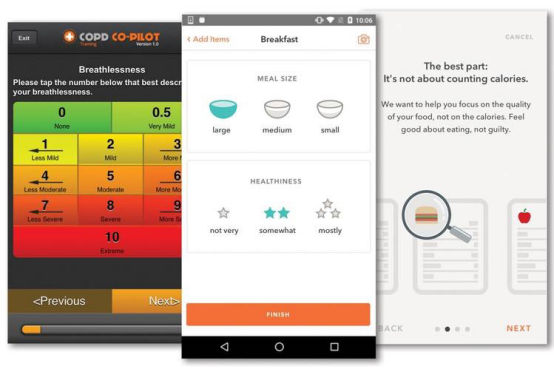
The Chronic Obstructive Pulmonary Disease (COPD) app developed by the Temple University Lung Center (left); screenshots of the Omada Health Diabetes Prevention Program interface (center and right)
Patients enrolled in the pilot program will receive a pedometer and a cellular-enabled scale that transmits their weight readings to their personal Omada profile, which is also accessible to their health coach. Patients can log their daily activities and food intake online or via a mobile app. If they have other connected devices, such as an Apple Watch, they can link them to the program to automatically sync activity data. Patient outcomes will be displayed on a personal dashboard.
Following the completion of the first phase of the program, Omada will offer a 36-week maintenance course focused on helping patients maintain their weight loss. Sean Duffy, CEO of Omada, believes that weight reduction cannot be achieved simply by providing a pedometer and a scale; rather, these devices must be integrated with high-frequency interactive interventions to deliver comprehensive social support and personalized services to patients.
Health coaches typically engage with patients once or twice a week to review their completion of course modules, address their questions, and commend participants who consistently track their daily activities or dietary intake. Patients may also communicate with their health coach at any time, and the coach is required to respond within one business day.
Omada sends aggregate patient reports to Intermountain to illustrate treatment outcomes across the overall study population. Additionally, it can transmit individual patient reports to facilitate targeted follow-up by the hospital. If patients encounter difficulties in adhering to their care plans, health coaches also encourage them to seek assistance from physicians at Intermountain.
Studies have shown that participants in the Omada program were able to maintain weight loss and lower average blood glucose levels two years after starting the program. An article published in the Journal of Aging and Health reported that 501 Medicare beneficiaries insured by Humana participated in a digital diabetes program provided by Omada.
After 12 months, participants experienced a 7.5% reduction in body weight, along with improved blood glucose levels and reduced cholesterol levels. In addition to lowering the risk of developing diabetes among participants, patient-reported outcomes indicated significant improvements in self-care, diet, and exercise, as well as a decrease in feelings of depression and isolation.
Mark Greenwood, one of the physicians and program leaders at Intermountain, commented, “An increasing number of patients now prefer to access care services through online systems, enabling them to receive assistance in the comfort of their own environments and schedule appointments according to their own timelines, rather than waiting in line at outpatient clinics. In the future, primary care providers will serve as both physicians and navigators, leveraging technology to help patients manage their conditions.”
Based on current contracts with various health plans and insurance companies, Omada estimates that it will recoup its investment in the program within two years. Over five years, the medical cost savings per participant are projected to exceed $2,000.
Greenwood stated that the program implements value-based payment, but he also noted that cost savings would further stem from preventing patients with prediabetes from progressing to full-blown diabetes—historically, healthcare institutions have spent $8,000 annually per patient on management.
64-year-old Michael Astle enrolled in Intermountain’s program after learning that his blood sugar levels were elevated. He said he had long been aware that his health was at risk and was eager to lose weight, but he had procrastinated for years, reluctant to make changes.
After joining the program, he greatly enjoyed using a cellular-connected smart scale to track his weight and a mobile app to log his physical activity and dietary habits. Although he never met other online participants in person, he believed that forums fostered a sense of community cohesion; when individuals struggled to adhere to the program or experienced discomfort, others could provide the necessary encouragement to help them persevere.
Within 16 weeks, Astle dropped from 227 pounds to 190 pounds, and continued losing weight until he reached his goal of 180 pounds. Astle said that knowing his weight data would be sent to his health coach every time he stepped on the scale kept him highly motivated: “I couldn’t let myself gain the weight back.”
2. Pulmonary Diseases: Halting Symptom Progression
Chronic Obstructive Pulmonary Disease (COPD), which includes emphysema and chronic bronchitis, affects approximately 30 million Americans. These conditions are commonly associated with smoking and exacerbate dyspnea in patients. Without timely pharmacological intervention, worsening symptoms can lead to emergency department visits or recurrent hospitalizations. Patients often fail to recognize that their symptoms are entering a critical range, resulting in delayed treatment.
The Lung Center at Temple University in Philadelphia, Pennsylvania, has developed a medical application called COPD Co-Pilot. Patients use their smartphones once daily to report symptoms such as shortness of breath, coughing, wheezing, and sore throat, and they use a handheld spirometer to measure the volume of air inhaled and exhaled by the lungs. If a user fails to submit a report by noon, the system will send them a reminder.
The COPD Co-Pilot features the use of computer algorithms to compare daily reported data with patient baseline data, thereby assessing symptom severity; nurses review the scores and refer patients who appear to require immediate treatment to physicians available for same-day care.
If the situation is not urgent, the system will provide different treatment plans. Nurses can recommend a specific plan after reviewing it with the doctor and communicate with the patient via text message or email to inquire whether the patient is willing to adhere to the plan or has other needs.
A study published in 2015 in *Telemedicine and e-Health* found that patients using COPD Co-Pilot to report daily symptoms and receive same-day treatment experienced fewer and significantly less severe exacerbations, achieved better disease control, and showed improvements in lung function and activity status.
Gerard Criner, Director of the Temple University Lung Center and principal investigator of the study, stated that the program is designed to help patients better manage their COPD while maintaining daily contact with the center’s medical team. “We leverage this app to directly connect healthcare providers with patients, enabling early intervention and preventing disease exacerbation.” The technology used in the study has been refined and implemented in HGE Health Care Solutions, a Temple University affiliate founded by Criner.
Ronny Neal, a 58-year-old patient with chronic obstructive pulmonary disease (COPD) receiving care at the Temple University Lung Center, has been using the app continuously for approximately one year. His condition once made walking or breathing difficult and, in severe cases, required hospitalization for several days. When the medical team at Temple University recommended that he participate in the app-based program, Neal was initially skeptical. “Can they really monitor my every step?”
But now he believes that the app indeed helps motivate him to better manage his symptoms and enables him to quickly receive attention from healthcare professionals and obtain necessary medications when his condition worsens. On several occasions when he forgot to enter data, he received text messages reminding him to complete the entry as soon as possible. “Living with COPD is truly painful; it cannot be cured, but you certainly don’t want it to get worse or find yourself frequently in and out of the hospital. I’ve now formed a habit: every day, after getting up, brushing my teeth, and taking my medication, I open the app to submit my report.”
3. Blood Pressure: Monitor Medication Usage
Many patients with chronic diseases often fail to take their medications as prescribed, which is a particularly dangerous issue. A study has shown that 22% of patients with diabetes, high cholesterol, and hypertension do not adhere to their medication regimens. Because hypertension and high cholesterol often present no obvious symptoms, patients may believe they do not need these medications.
To improve patient adherence to hypertension medications, Rush University Medical Center is collaborating with Proteus Digital Health of Redwood City, California, to develop a system called Proteus Discover. This system encapsulates the medication within a pill that includes an ingestible sensor made from trace minerals and sized no larger than a grain of sand. Once the patient swallows the pill, the sensor communicates with a wearable patch worn on the patient’s torso, recording the time of ingestion along with data such as heart rate, step count, and rest periods.
The patch can transmit information via a wireless network to applications on mobile devices, such as smartphones or iPads, enabling patients to monitor their medication adherence and share this information with healthcare providers. If a patient misses a dose or forgets to take their medication, an alert will be sent to their mobile device.
A study published last year in the Journal of the American College of Cardiology found that using the Proteus Discover system significantly reduced blood pressure and cholesterol levels in patients with hypertension and diabetes, compared to standard routine care.
Anthony Perry, Vice President of Population Health and Ambulatory Services at Rush University, stated, “In the field of chronic disease management, patients often fail to adhere to prescribed medication regimens. Proteus Discover is a tool that provides feedback data to patients, enabling them to monitor their medication intake and helping them establish consistent habits for taking medications on time and at the correct dosage.”
4. Heart Disease: Helping Patients Take Control of Their Condition
In the United States, one-third of deaths are caused by heart disease, yet many of the associated risk factors—such as poor dietary habits, smoking, and physical inactivity—are preventable. Following angioplasty (a minimally invasive procedure that dilates narrowed lesions or implants stents to restore patency in diseased vessels), patients can reduce the risk of recurrent heart disease by participating in cardiac rehabilitation programs.
However, in many cases, patients do not attend all necessary follow-up visits, and the implementation of the plan is often constrained by the rehabilitation team’s level of individual attention to each patient.
Earlier this year, in a study published in *Clinical Investigation*, researchers at the Mayo Clinic provided online or smartphone app–based healthy lifestyle information to a group of patients participating in cardiac rehabilitation programs and had them report their dietary and exercise habits.
Compared with patients receiving general care, those using digital programs achieved weight loss, improved lifestyle habits, and had fewer cardiac-related emergency department visits and hospital readmissions.
Steve Ommen, a cardiologist at Mayo Clinic and Medical Director of the Center for Connected Care, stated that Mayo is integrating apps, wearable monitoring devices, and other digital technologies into management plans for patients with chronic diseases.
Ommen explained that Mayo Clinic’s goal is not to develop a separate application for each disease, but rather to identify solutions that can be broadly applied to the management of all complex conditions, as many patients often suffer from multiple comorbidities. Ideally, after a period of close monitoring, patients’ lives would gradually return to normal, enabling them to achieve self-care and self-monitoring.
He continued, “Whenever we introduce a new technology to assist them, patients are eager to try it. Technology will certainly change the relationship between patients and care teams, but we believe it brings both parties closer together, thereby truly expanding and enhancing the doctor-patient relationship.”
References:
https://www.wsj.com/articles/how-apps-can-help-manage-chronic-diseases-1498443120