

Linjia Haoyi Files IPO Prospectus, Aiming to Become the '7-Eleven' of Community Pediatric-Focused Family Clinics
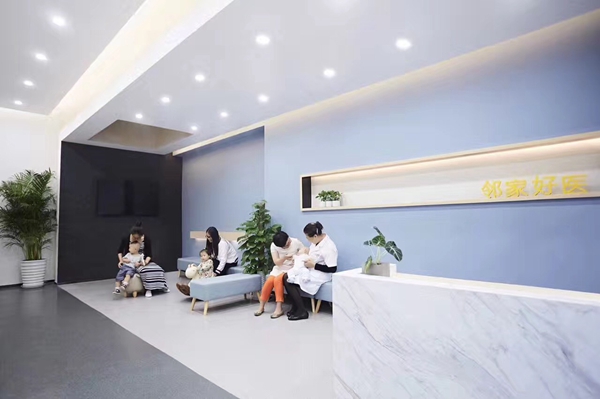
A Corner of the Interior View of Linjia Haoyi Clinic
On July 9, Linjia Haoyi’s pediatric-focused family clinic launched in Hangzhou!
Hangzhou No. 6 Street Clinic is a wholly-owned and self-built family clinic by Linjia Haoyi, featuring pediatrics as its specialty. Covering an area of approximately 400 square meters, the clinic spans two floors. The interior design is dominated by a blue color scheme, with walls adorned with animal illustrations favored by young children.
Linjia Haoyi was founded in early 2016 by founder Luo Lin and his team in Shanghai. Currently, its physician network includes both specialists and general practitioners, serving tens of thousands of users.
As China’s healthcare reform has entered a critical phase, Luo Lin has identified that the core of the reform lies in promoting tiered diagnosis and treatment, with the key to this system being the enhancement of service capacity at the primary care level.
Therefore, the opening of this Neighborly Good Doctor offline clinic is also aimed at enhancing the service level of primary healthcare and meeting diverse medical needs, serving as an effective supplement to government-provided basic medical services.
In the primary healthcare sector, many entrepreneurs have established clinics—such as specialty clinics and general practice clinics—given that clinics represent the most accessible care setting for residents.
So, among the myriad of clinics, what is the core competitiveness of Neighborhood Clinic? And what exactly is its family clinic service featuring pediatric care?
Prior to establishing the clinic, Rorin decided that its medical services would enter the family healthcare market through pediatrics. Consequently, the clinic comprises four departments: Pediatrics, Internal Medicine, Traditional Chinese Medicine (TCM), and Laboratory Medicine.
The pediatric care market is saturated, broadly categorized into high-end clinics and primary care clinics. High-end clinics charge significantly more than public hospitals, serve a smaller patient volume, and rely on clients with commercial insurance. In contrast, the fragmented landscape of existing primary care clinics is characterized by poor clinical environments, substandard diagnostic and treatment practices, limited service offerings, and highly variable operational capabilities.
For patients, the high cost of distinguishing provider quality leads them to prefer tertiary hospitals even for minor ailments, which ultimately harms the entire primary healthcare system.
To address two major pain points in clinics, Luo Lin aims to establish a clinic that offers a pleasant environment, relatively affordable pricing, and high-quality medical services. This initiative seeks to promote professional and convenient tiered diagnosis and treatment services, while making the healthcare experience accessible, warm, and trustworthy.
When establishing clinics, Luo Lin strove for standardization in site selection by surveying the operational models of existing clinics and analyzing population density. Typically, it takes 1 to 1.5 years for a clinic to complete the entire process from site selection to renovation. In contrast, Linjia Haoyi completed the design, renovation, and approval processes for its clinics in just over three months. The spatial design of the clinics was carried out by Mobike’s design team. Through optimized space planning and process management, the project ensured high-quality standards and patient experience while effectively controlling costs, thereby laying a solid foundation for future replication.
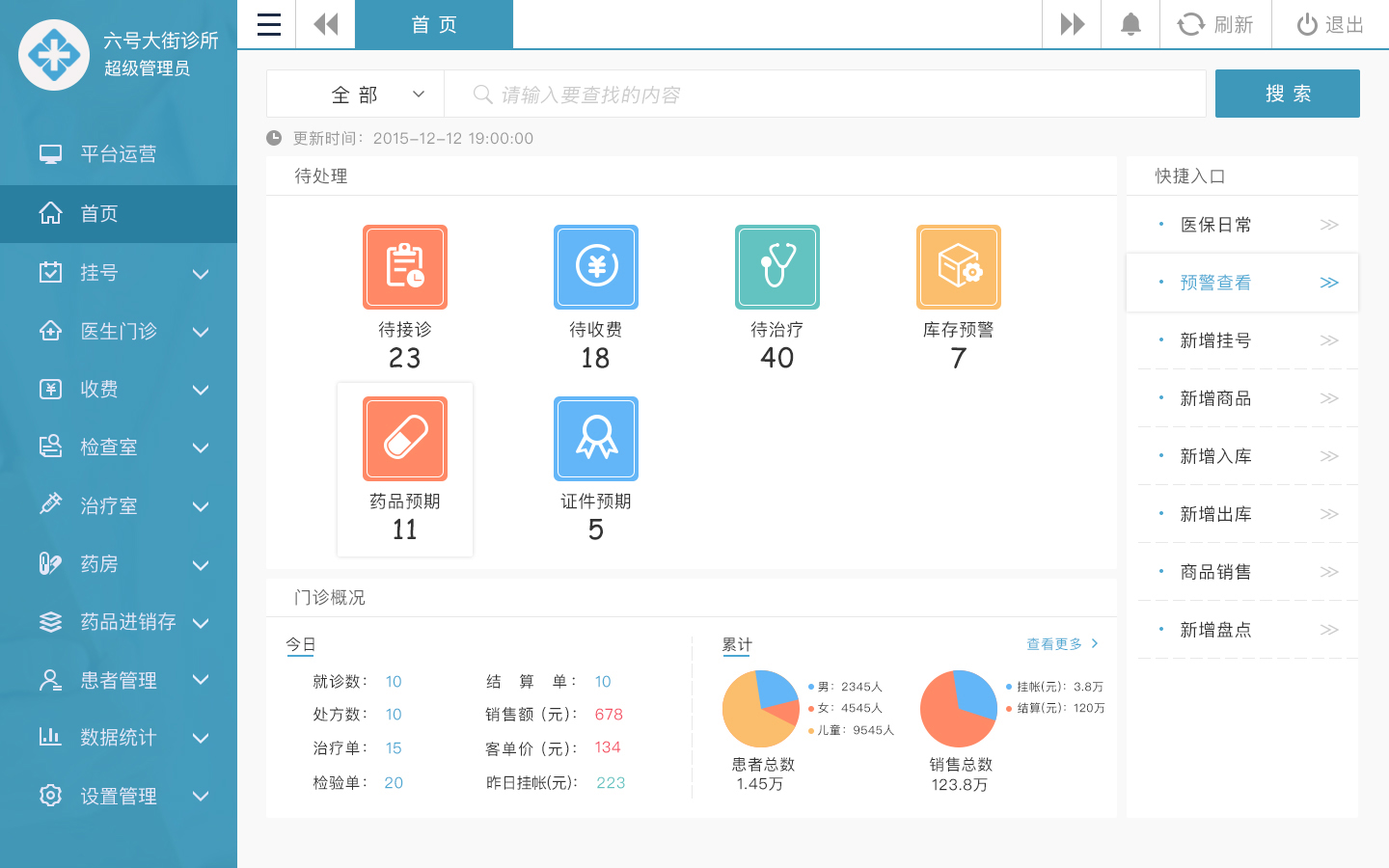
Ruolin Cloud Clinic
Meanwhile, Linjia Haoyi has also dedicated itself to the independent research and development of a SaaS-based clinic medical informatics system (Ruolin Cloud Clinic), enabling medical data to flow more efficiently while reducing the need for patients to make multiple visits. Technically, it has already achieved online integration with municipal-level medical insurance systems. Given that primary healthcare facilities typically operate with limited staff and involve shorter patient care pathways, the advantages of this system include the following:
1. Simple, user-friendly, and easy to operate, effectively reducing patients' medical consultation time;
2. Establish standardized services, implement the national tiered diagnosis and treatment policy, integrate with Hangzhou’s medical insurance system, and achieve informatization;
3. Clinical Decision Support System (CDSS): Assists in clinical diagnosis and treatment decisions, improves healthcare quality, reduces medical errors; data statistics enable precision marketing;
4. Leverage cloud-based data to break down information silos in primary healthcare.
No matter how aesthetically pleasing the clinic’s interior design is, or how flawless its SaaS system may be, if physicians fail to deliver high-quality medical services, it will be impossible to retain users—let alone leverage pediatrics as an entry point to provide comprehensive healthcare services for the entire family.
Therefore, Luo Lin established the service philosophy of Linjia Haoyi Clinic as “To cure sometimes, to relieve often, to comfort always,” providing humanistic care to patients, adopting a patient-centered rather than disease-centered approach, delivering comprehensive, continuous, and timely medical services, and emphasizing follow-up care and health management for patients.
The entire medical team at the Liuhao Dajie Clinic consists of both full-time and part-time staff. Full-time physicians are primarily categorized into senior and intermediate professional titles, with two holding senior titles and two holding intermediate titles. The team also includes three tuina therapists and traditional Chinese medicine practitioners, four nurses, and one laboratory technician.
For instance, Dr. Jia, a Chief Physician, has nearly 40 years of experience in pediatric diagnosis and treatment, having managed hundreds of thousands of pediatric cases. He graduated from Shandong Medical College in 1979 and previously served as the Vice President in charge of medical operations at Linyi No. 2 People’s Hospital, President of Linyi High-Tech Zone People’s Hospital, and Director of Medical Services at Hangzhou Baiyang Community Health Service Center. He specializes in the diagnosis and treatment of common and frequently occurring pediatric diseases, is adept at managing complex and critically ill pediatric cases, and has particular expertise in child healthcare and pediatric psychological and behavioral disorders.
Dr. Wang, Attending Physician, has nearly 20 years of clinical experience and completed one-year fellowships in the Department of Pediatrics at Shandong Provincial Hospital and Zhejiang Children's Hospital, respectively. He specializes in the diagnosis and treatment of common and frequently occurring pediatric conditions, such as tonsillitis, laryngitis, herpangina, bronchitis, pneumonia, asthma, allergic cough, acute gastroenteritis, eczema, dermatitis, lead poisoning, zinc deficiency, vitamin D deficiency, night sweats, and bruxism. He also possesses extensive experience in managing complex and critical pediatric cases, including Henoch-Schönlein purpura, acute pediatric laryngitis, febrile seizures, severe pneumonia, myocarditis, diarrhea with dehydration, nephritis, and pancreatitis.
Dr. Ni, Attending Physician, has been engaged in the diagnosis and treatment of general practice for over ten years. With many years of teaching experience at top-tier (Grade A tertiary) hospitals, Dr. Ni is proficient in diagnosing diseases across various specialties and possesses extensive clinical and teaching experience. As an expert in emergency and rescue medicine, Dr. Ni serves as a Basic Life Support (BLS) Instructor for the American Heart Association.
Part-time physicians, primarily those practicing at multiple sites, are renowned specialists from prestigious institutions such as The Second Affiliated Hospital of Zhejiang University School of Medicine (Zhejiang Er Yuan), The First Affiliated Hospital of Zhejiang University School of Medicine (Zhejiang Yi Yuan), and Zhejiang Provincial Children's Hospital. The medical director is a chief physician with 40 years of clinical experience and hospital management expertise, demonstrating strong capabilities in both hospital administration and professional practice.
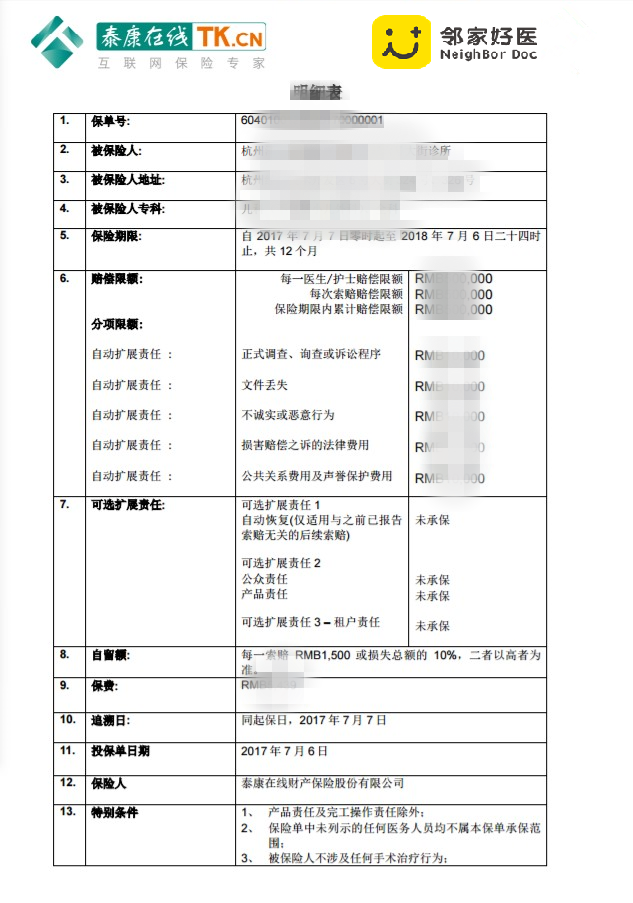
Because traditional clinics have weak risk resistance in their operations, and the risk factor will correspondingly increase during the process of scaling up, it is necessary to have insurance companies provide risk mitigation support.
As Linjia Haoyi is the exclusive strategic partner in China of Hannover Re, the world’s third-largest reinsurer, for mobile healthcare services, Luolin has partnered with Hannover Re, Taikang Online P&C Insurance as the direct insurer, and MSH as the claims administrator to develop medical malpractice liability insurance tailored for private healthcare providers in China, thereby safeguarding the growth of medical institutions.
The advantages of this insurance are: service effectiveness and accessibility. The primary insurer is Taikang Online, the reinsurer is Hannover Re from Germany, and the claims administrator is MSH China, the largest health insurance company in China. The maximum coverage amount per medical professional can reach RMB 500,000.
The main coverage of the insurance includes:
1. Losses incurred by the Insured due to claims first made against the Insured during the Policy Period for improper professional conduct and notified to the Insurer within the Policy Period, as well as defense costs incurred by the Insurer or the Insured with the prior written consent of the Insurer.
2. Covered departments include Pediatrics, Traditional Chinese Medicine, Western Internal Medicine, and Dentistry.
“This is one of the few cases in China where medical malpractice liability insurance has been purchased for clinic medical staff, as general insurers typically do not collaborate individually with ordinary standalone clinics,” said Luo Lin.
Regarding revenue, Luo Lin told the reporter that it mainly includes three aspects: first, common and frequently occurring diseases: building trust with patients and serving as a traffic entry point—providing neighborhood-style care.
Second, single-disease management: such as child growth and development, pediatric healthcare, pain management, and language disorders. Continuously explore in-depth needs to transform healthcare from passive to proactive.
Third, diversified operations: clinic e-commerce platforms, genetic testing, health screenings, home-based medical care, and patient referrals. This approach breaks through revenue-per-square-meter limitations and drives revenue growth. Specifically, Linjia Haoyi has established a clinic e-commerce platform for distribution, offering service-oriented retail products such as genetic testing, health screenings, and categories not available within the clinics themselves.
The conversion rate at one of our partner clinics has exceeded expectations: four genetic testing orders, each with an average transaction value nearing RMB 10,000, were placed within a week; and the hit product “Ding Bu Yang” (Anti-Itch), launched for the summer mosquito season, sold out its entire stock of 1,000 units in just three days. This performance has surpassed the traditional benchmarks for clinic productivity and revenue.
In the process of scaling up primary healthcare services, clinics need strong cost control measures in addition to focusing on revenue and management. Private, non-chain primary healthcare institutions have weak bargaining power in the supply chain and rarely focus on supply chain management. Linjia Haoyi has its own wholly-owned trading company, which optimizes the supply chain through centralized procurement, reducing procurement costs for clinics by 20%–30% annually.
In the future, Luo Lin also hopes to explore more models to help doctors better transition out of the public healthcare system, such as the physician partnership model. Under this arrangement, both parties jointly establish clinics, with one party providing management expertise and the other delivering medical technical services.
In his view, a good doctor does not necessarily make a good boss; the art of medicine is not the same as the art of business. Moreover, doctors generate value only when providing clinical care, whereas running a clinic requires devoting more than 40% of one’s energy to non-clinical administrative tasks, which do not create value.
Linjia Haoyi’s self-operated clinics are expected to reach 15 next year; fully managed clinics are projected to total 10 this year, with a plan for 45 next year. The objective is to establish benchmarks, implement unified standards, and truly empower primary care providers.
The clinic SaaS system is scheduled to be deployed in 500 clinics this year, reaching 2,000 next year. The supply chain currently covers more than 300 clinics and will expand to 2,500 urban primary-care clinics next year.
As a complement to public hospitals, Luo Lin aims to promote the development of primary healthcare and facilitate better career opportunities for medical professionals seeking to transition out of the state-run system. Meanwhile, by standardizing clinic operations and unifying service standards, the goal is to become the 7-Eleven of the primary healthcare sector.