

China's 3D Medical Printing Industry Landscape: Only 2 of 46 Companies Hold CFDA Certification, with Orthopedics, Dentistry, and Surgical Planning Dominating the Market
3D printing, also known as additive manufacturing technology, originated in the United States in the late 19th century. At that time, the U.S. developed photo-sculpture and topographic modeling techniques, which subsequently gave rise to the core manufacturing concept underlying 3D printing. However, the technology did not see significant development and widespread adoption until the 1980s.
In the new century, with advances in foundational research such as computer technology, materials science, and imaging technology, 3D printing has begun to be applied on a large scale. The China Internet of Things University-Enterprise Alliance describes it as “an idea from the century before last, a technology from the last century, and a market for this century.”
In the medical field, with the development of precision medicine and personalized medicine, 3D printing has been widely applied in areas such as implants, orthopedics, dentistry, complex surgical instruments, bioengineered organs and tissues, hearing aid shells, and pharmaceuticals.
According to the Wohlers Report 2015, the healthcare sector accounted for 13.1% of downstream applications in additive manufacturing in 2014. In that year, more than 20 types of 3D-printed implants received approval from the U.S. Food and Drug Administration (FDA), covering areas such as the skull, hip, knee, and spine. Among these, over 100,000 hip implants were manufactured, with approximately 50,000 already implanted in patients.
Currently, four products in China have received CFDA certification: the 3D-printed acetabular cup, 3D-printed artificial vertebral body, and 3D-printed spinal interbody fusion cage developed through the collaboration between AK Medical and Peking University Third Hospital; and Medprin’s 3D-printed dural (spinal) patch.
On December 1, 2016, BlueLight Inno successfully implanted 3D bioprinted blood vessels into rhesus monkeys. As of the announcement date, BlueLight Inno had completed in vivo implantation experiments of 3D bioprinted blood vessels in 30 rhesus monkeys, achieving a 100% survival rate.
3D technology also plays a significant role in the fields of precise surgical planning, real-time intraoperative navigation, and postoperative quantitative assessment. EDDA Technology’s IQQA-3D imaging platform has been utilized in over 35,000 clinical cases.
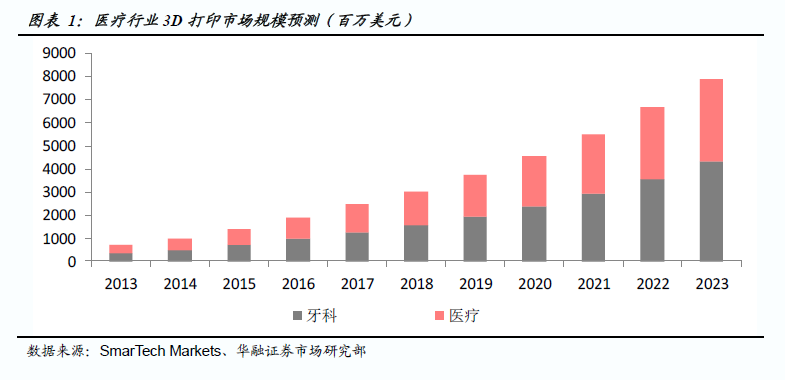
These cases demonstrate that 3D medical printing is growing at an unprecedented rate. According to research forecasts by SmarTech Markets, the market size for 3D printing in the dental and medical fields is expected to reach $4.544 billion in 2020.
Prior to undertaking this topic, we initially assumed that there would be very few relevant enterprises in China. However, through this review, VCBeat (WeChat ID: vcbeat) has identified a total of 46 companies involved in 3D medical printing. (Due to time and information constraints, we acknowledge that the data collected may not be exhaustive. Companies and institutions not included are welcome to contact us.)
These companies are engaged in the sales of products such as printers, scanners, and consumables, as well as the research and development of bioprinting technologies and the planning of surgical solutions. Among them, 26 operate across the entire industry, while 20 specialize specifically in medical printing. The technical advisors for these enterprises are predominantly Academician Lu Bingheng, Academician Dai Kerong, and their students, with 3D printing talent recruited from nine major universities, including Tsinghua University, Xi’an Jiaotong University, and Huazhong University of Science and Technology.
Overview of 3D Medical Device Printing Companies
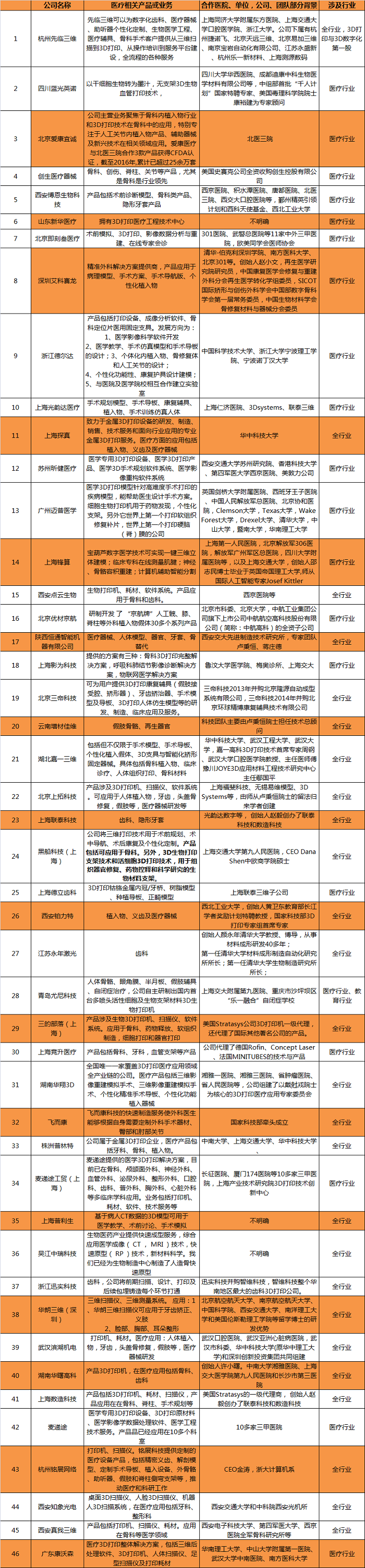
The order of the inventory list is not related to ranking.
According to statistics from VCBeat, among these 46 companies, 41 are involved in orthopedics and dentistry, accounting for 89%. Four companies are engaged in the printing of organs, tissues, and blood vessels, representing 8.7%. Twenty companies operate exclusively in the healthcare sector, comprising 43%, while 26 companies serve multiple industries, making up 57% (the term “multiple industries” refers to involvement in both healthcare and other sectors).
Company information in the charts can be queried through the VCBeat database. Scan the QR code at the end of the article to become a VCBeat member, and you can log in to the VCBeat Mini Program or official website to use the database for querying relevant company information.。
China's Renowned 3D Printing Expert Team
Although the 3D printing industry is developing rapidly, there are not many renowned expert teams and research institutions. VCBeat has learned that nearly 80 universities in China offer 3D printing programs, among which the expert teams from prestigious universities include:
Professor Yan Yongnian and His Team at Tsinghua University
Academician Wang Huaming and his team at Beihang University
Academician Lu Bingheng and his team at Xi'an Jiaotong University
Professor Huang Weidong and his team at Northwestern Polytechnical University
Professor Shi Yusheng and his team at Huazhong University of Science and Technology
Prof. Xu Mingen and His Team at Hangzhou Dianzi University
Professor Yang Yongqiang and his team at South China University of Technology
Professor Yao Shan and his team at Dalian University of Technology
Prof. Chen Jimin and His Team at Beijing University of Technology
Policy Breakthroughs in 3D Printing for the Medical Sector
To safeguard the safety of subjects in medical device clinical trials and standardize the approval process for such trials, the China Food and Drug Administration (CFDA) formulated the “Catalogue of Class III Medical Devices Requiring Clinical Trial Approval,” which includes eight product categories such as customized additive manufacturing (3D-printed) orthopedic implants. Nevertheless, there remains strong advocacy within the industry for reforming the market approval processes for high-tech products like 3D-printed technologies.
The Ministry of Industry and Information Technology, the Ministry of Finance, and other agencies issued the "National Plan for Promoting the Development of the Additive Manufacturing Industry (2015–2016)," proposing that by 2016, a relatively complete additive manufacturing industry system would be initially established, with rapid growth in industrial sales revenue achieving an average annual growth rate of over 30%, and overall technical standards keeping pace with international levels. Among these, the development goal for the medical field is to initially become a tool for new drug research and development, clinical diagnosis, and treatment. A number of application demonstration centers or bases will be established across China.
On March 8, 2016, the Ministry of Science and Technology released the “Notice on Issuing the 2016 Project Application Guidelines for Key Special Programs under the National Key R&D Program, Including Precision Medicine Research.” The guidelines explicitly listed “Precision Medicine Research” as one of the key special programs to be prioritized for launch in 2016, marking its formal entry into the implementation phase.
On March 9, 2016, the Ministry of Science and Technology also released the “Guidelines for Project Declaration in 2016 under the Key Special Program on Research and Development of Biomedical Materials and Tissue/Organ Repair and Replacement,” designating rapid prototyping of personalized implants and interventional devices, as well as biological 3D printing technology, as priority areas eligible for financial subsidies.
In February 2017, the Anhui Provincial Commission of Economy and Information Technology released the “Anhui Province 13th Five-Year Plan for the Development of the Pharmaceutical Industry,” in which “3D-printed medical devices” was listed as one of the four key development priorities. The most cutting-edge industry mentioned in the plan is “cell 3D printing,” a form of medical manipulation at a more microscopic level. This suggests that within five years, it could emerge as a new healthcare industry in Anhui.
Schematic Diagram of the Medical 3D Printing Industry Chain
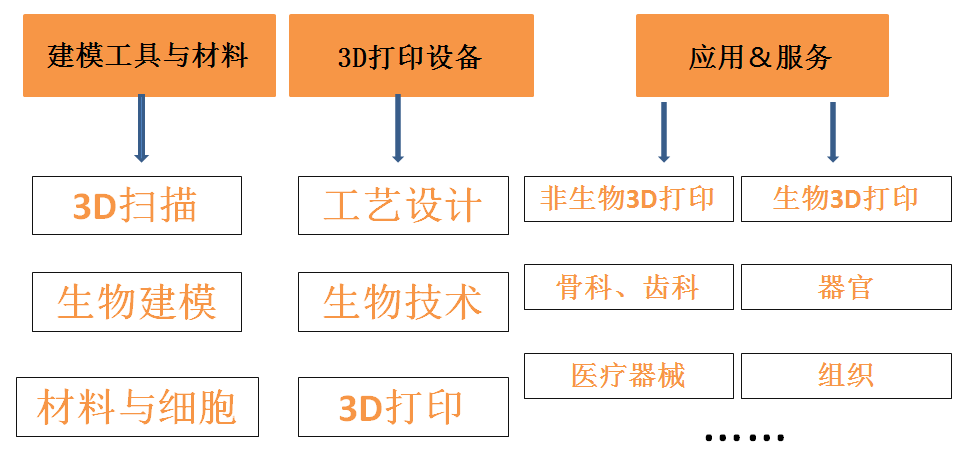
3D Modeling Is a Key Technology for Medical 3D Printing
There are currently dozens of imported and domestically produced 3D printers on the market. However, the key focus of current research lies in converting black-and-white CT/MR image data into patient-specific, three-dimensional printed organs and tissues; thus, 3D modeling is the critical technology in medical 3D printing.
In layman’s terms, 3D modeling refers to the construction of models with three-dimensional data within a virtual 3D space using 3D creation software. Researchers leverage CT, MRI, and 3D reconstruction technologies: they first scan the human body using CT and MRI to obtain two-dimensional data, then perform professional screening and artifact removal, followed by 3D reconstruction processing, ultimately generating data suitable for 3D printing.
During the modeling process, the clarity of the initial image acquisition is crucial. With advances in modern imaging technology, two-dimensional image data obtained from CT and MRI scans now meet the requirements for three-dimensional modeling. The conversion and reconstruction from 2D to 3D data are key to enabling 3D printing.
Furthermore, in the fields of surgical planning and simulation, it is not only necessary to select appropriate 3D printers and printing materials; personalized, rapid, and precise modeling that seamlessly interfaces with 3D printing equipment to enable individualized patient condition assessment and visualization, thereby allowing physicians to formulate personalized and precise surgical plans tailored to the specific pathology, constitutes the key to the successful application of 3D printing technology in precision medicine.
From the current market perspective, relatively mature 3D reconstruction processing systems include Materialise Mimics from Belgium, 3D-Doctor from Able Software in the United States, and VGStudio MAX. Although China is relatively weak in this area, several companies are conducting research, such as Zhejiang Derda, Shanghai EDDA, and AccuLab.
Taking EDDA Technology as an example, the company has officially launched its [IQQA® Personalized Precision 3D Printing Modeling and Design Service]. Based on patients’ CT/MR images and powered by the IQQA® imaging technology platform, this service enables convenient and rapid personalized 3D imaging-based preoperative assessment and surgical planning, thereby facilitating modeling design prior to 3D printing.
EDDA Technology’s COO, Zeng Xiaolan, introduced that IQQA’s rapid modeling technology can complete modeling within 10–20 minutes, featuring personalization, standardization, and quantification. Automated modeling ensures that model data remains unaffected by individual variations among expert physicians.
Biological 3D Printing and Non-Biological 3D Printing
Based on the materials and properties of the printed products, we categorize 3D printing in the medical field into two types: non-biological 3D printing and biological 3D printing.
Biological 3D printing is a form of in vivo 3D printing based on bioactive materials, cell and tissue engineering, MRI and CT technologies, and 3D reconstruction techniques, with the goal of printing living organs and tissues.
Non-biological 3D printing refers to the use of non-biological materials and 3D printing technology to fabricate non-biological prostheses. Non-biological materials include plastics, resins, metals, and others, with primary applications in medical fields such as dentistry, orthopedics, implants, and medical education.
Bioprinters differ from mainstream 3D printers in that they fabricate genuine living tissues by depositing layers of biomaterials or cellular building blocks, rather than layers of plastic. Application areas include bone regeneration, controlled drug release, soft tissue engineering, cell printing, and organ printing. Representative companies include Sichuan BlueLight Inno, Janus Biotech, Qingdao Uni-Tech, and Hubei Jiayi 3D.
Conventional tablets can only maintain a constant release rate, which means that patients have to split the pills themselves and take them at regular intervals throughout the day. However, some hormonal medications require very precise dosing intervals, which poses challenges for patients, especially when they need to take multiple medications simultaneously. More importantly, different clinical situations may require different release rates, and the medication may only be effective within a limited concentration range.
To achieve this level of customization, the tablets are not 3D printed layer by layer as is commonly done. Instead, each tablet will consist of several distinct components, including polymers engineered into specific shapes to encapsulate the drug and control its release rate.
By adjusting the shape of the drug-encapsulating polymer, medications can be released at any desired rate. For instance, a five-channel configuration enables drug release through five separate conduits. Furthermore, multiple drugs can be stored within a single pill, with each drug released at different rates according to specific requirements.
Physicians need only use software specifically developed by researchers to create the required configuration files, which then generate a 3D-printable pharmaceutical template. The desired medication is subsequently printed using a 3D printer.
Beyond controlled drug release, the adoption of bioprinting can accelerate clinical trials for verifying the efficacy of new drugs by reducing the failure rate of animal studies. In the cosmetics industry, where the goal is to completely eliminate animal testing, many companies are currently dedicated to developing skin tissue models. Distinguished scientists from fields such as materials science, neuroimaging, and toxicology have published numerous findings in this area.
Languang Inno utilizes autologous mesenchymal stem cells from experimental animals to prepare stem cell bioinks and perform 3D bioprinting of blood vessels through its independently developed 3D bioprinting technology system. After implantation into the experimental animals, vascular regeneration is achieved by mobilizing endogenous regenerative capacity while maintaining the stemness of the mesenchymal stem cells.
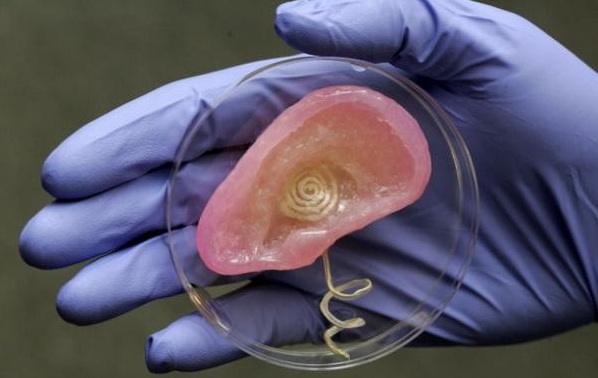
It is reported that, as of December 1, 2016, BlueLight Inno had completed in vivo implantation experiments of 3D bioprinted blood vessels in 30 rhesus macaques, with a postoperative survival rate of 100% for the experimental animals.
In the United States, a leading center for 3D bioprinting research, the team at Wake Forest University successfully cultivated bladders in vitro using techniques including 3D printing in 2016. The team has also printed artificial ears, muscle tissue, and bone.
On June 23, 2017, Advanced Solutions, a company based in Kentucky, USA, developed the world’s first 3D bioprinter for human organs. This technology is currently capable of printing liver tissues the size of a coin, utilizing vascularization techniques within the 3D structure to mimic the functionality of a real liver. Furthermore, 3D bioprinting can also simulate lungs, hearts, kidneys, pancreases, bones, and even skin.
Orthopedics primarily focuses on the anatomy, physiology, and pathology of the musculoskeletal system. Common diseases of the musculoskeletal system include degenerative joint diseases, spinal trauma and degenerative conditions, extremity trauma, bone defects, osteoporosis, and bone tumors. Orthopedic implants are one of the treatment modalities for musculoskeletal disorders. These implants are designed to wholly or partially replace joints, bones, cartilage, or components of the musculoskeletal system.
According to Frost & Sullivan data, the market size of orthopedic implants in China reached $9.54 billion in 2012, $16.6 billion in 2015, and is projected to reach $21.8 billion in 2017. At present, trauma implants account for a larger share than joint and spinal implants in China; however, the overall volume and market share of joint and spinal implants are trending upward.
Non-metallic implants present significant opportunities, currently accounting for 44% of all medical 3D printing revenue, with projections indicating further growth to over 60%. From now until 2026, the compound annual growth rate (CAGR) for the production of all 3D-printed orthopedic and medical implants is expected to reach 29%. The fastest-growing segments—knee reconstruction, spinal fusion devices, and non-extreme weight-bearing applications—are projected to significantly outpace the overall average growth rate.
In recent years, software-based dental restoration has become widespread, with many dental clinics, laboratories, and specialized denture manufacturers adopting 3D printing technology.
Digital dentistry integrated with 3D printing has brought high precision, low cost, high efficiency, and standardized dental data to the dental industry. Many dental clinics or laboratories utilize 3D printers to fabricate patient-specific tooth models.
The 3D data required for model fabrication can be collected either by directly scanning the oral cavity (a full-mouth scan takes approximately 2 minutes) or by indirectly scanning conventional physical models.
According to the forecasts in SmarTech’s “Dental 3D Printing 2015: A Decade of Opportunity Forecasts and Analysis,” the market size for 3D printing technology in the dental sector was projected to reach $2 billion by 2016, with sales rising to $3.1 billion by 2020.
Surgical guides are a type of personalized surgical tool, including joint guides, spinal guides, and dental implant guides. Surgical guides are custom-made surgical aids that must be specifically fabricated prior to the patient's surgery. Their function is to accurately align implants with the patient's pathological sites based on individual anatomical features, thereby achieving precise implant placement.
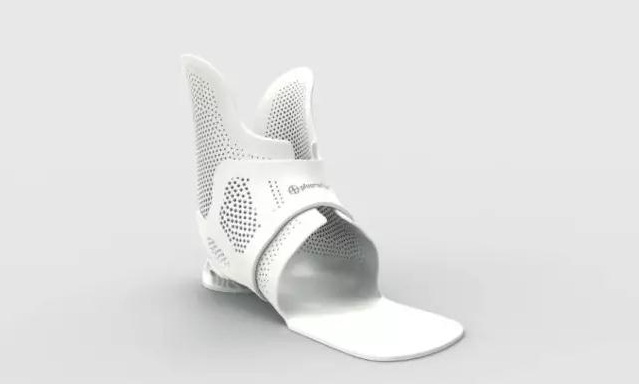
3D-printed prosthetics include upper-limb orthoses, lower-limb orthoses, spinal orthoses, upper-body prostheses, and lower-body prostheses. These products generally require personalized customization; however, traditional CNC machining often struggles to achieve this due to limitations such as machining angles.
Furthermore, traditional prostheses are typically expensive, and the cost of replacement increases with age. In contrast, 3D-printed prosthetic hands usually cost only between €50 and €200, with relatively inexpensive materials that are easy to replace, repair, and reuse.
On March 23, 2016, Aprecia Pharmaceuticals announced the commercial launch of SPRITAM® (levetiracetam) tablets, a product previously approved by the U.S. Food and Drug Administration (FDA). This marks the first FDA-approved prescription drug manufactured using 3D printing technology. SPRITAM is indicated as adjunctive therapy in the treatment of partial-onset seizures, myoclonic seizures, and primary generalized tonic-clonic seizures.
Aprecia is the world’s first and only company to leverage 3D printing technology for the development and production of pharmaceutical products at commercial scale, while also employing its proprietary ZipDose® technology to improve patients’ medication administration.
Challenges and Opportunities in the 3D Medical Device Printing Industry
Chinese companies began to enter the 3D printing sector on a large scale between 2008 and 2012, attracting significant investment enthusiasm. After several years of market cultivation, this investment fervor has gradually become more rational. Currently, the industry has yet to achieve substantial scale, and no leading enterprises comparable to U.S. counterparts such as 3D Systems or Stratasys have emerged.
In terms of materials, currently available 3D printing materials mainly include powders, liquids, filaments, etc. Most of these are produced domestically in China, but metal powders are primarily reliant on imports.
Regarding certification, although the government has provided substantial support to 3D printing companies, it has not relaxed the approval requirements for their products. Currently, only four non-biological printed products have obtained certification from the China Food and Drug Administration (CFDA), while biological products have yet to receive certification; consequently, the research and development progress of bioprinted products remains generally slow.
Although 3D printing of medical devices faces various challenges, few 3D printing companies currently specialize in medical applications, resulting in no distinct competitive advantage for any single enterprise; thus, opportunities for development remain available across the industry.In the course of development, it is essential to integrate clinical practice and place emphasis on 3D modeling technology. Personalized customization services can be offered to clients via the Internet.。
Furthermore, no bio-3D-printed products have yet received certification from the China Food and Drug Administration (CFDA). Only by deeply integrating manufacturing processes with regenerative medicine through joint research and development can enterprises ensure that this emerging technology truly meets biological standards, thereby accelerating the clinical application of 3D-printed products.
Special thanks to Yang Jing, Secretary-General of the 3D Printing Medical Devices Professional Committee of the China Association for Medical Devices Industry; Zeng Xiaolan, COO of EDDA Technology; and Zhao Xiaowen, Founder of Accuwin, for their support of this article.
Scan the QR code below to become an official VCBeat member and gain access to comprehensive industry insights and investment news. Additionally, you will enjoy unlimited access to completeIndustry Trend Report, timely grasp the latest globalInvestment and Financing Information, with a comprehensiveHealthcare Enterprise Database, and alsoMassive Resource Matchmaking。

Scan the QR code to become a VCBeat member,
Beta Version Trial Price: 365 yuan/year.