

Kangbairui Harnesses DT Era Data to Power Personal Health Cloud Management
Whether discussing “Internet Plus” or Industry 4.0, traditional thinking has always associated technology with men. When Jack Ma stated in his speech that the internet is transitioning from the IT era to the DT (Data Technology) era, he emphasized that technology is no longer a male-dominated domain. Chinese women are now emerging as prominent figures in fields such as big data, cloud computing, and artificial intelligence, becoming the “goddesses” of deep-tech entrepreneurship.
VCBeat (WeChat ID: vcbeat)It is reported that the 2nd “Global Women Entrepreneurs Conference” was held in Hangzhou on July 10–11. Li Xiaoxia, President of Beijing Kangbairui Health Management Co., Ltd. (hereinafter referred to as “Kangbairui”)—a prominent figure among physician entrepreneurs and women entrepreneurs—was invited to attend the conference and participate in a roundtable forum. At this event, Kangbairui’s product, Daxia Health, was honored as one of the Top 10 Women’s Entrepreneurship Cases of 2017.

Daxia Health Honored as One of the Top 10 Female Entrepreneurship Cases in 2017In the image above, the fifth person from the left is Li Xiaoxia, President of Kangbairui.
As one of China’s earliest general practitioners and among the first experts to venture into the private sector to provide health management services, Li Xiaoxia has founded three specialized health companies, guided the establishment of nearly 40 health centers across China, and served hundreds of thousands of clients with health management services. Together with her team, she developed a full-lifecycle health management service system, pioneering the “Internet + Health Management” model, and has been deeply engaged in the health management industry for 13 years. At the Women’s Entrepreneurship Conference, Li Xiaoxia shared her entrepreneurial journey during a roundtable forum.

Li Xiaoxia Speaks at the “Women Mastering Cutting-Edge Tech” Roundtable Forum
Health Accessible to All, Health Integrated into Life
Speaking of why she started her own business, Li Xiaoxia has deep feelings. As one of the earliest general practitioners in China, her decision to become an entrepreneur stemmed from her previous medical practice experience, during which she observed the inefficient and repetitive nature of doctors' work and the high cost for the public to access comprehensive health solutions.
China is the country with the largest burden of chronic diseases in the world. In China, a single physician sees 30 to 60 patients in just one morning. Doctors must tirelessly repeat instructions on exercise, diet, and healthy lifestyle practices to each patient with chronic conditions, leaving them so busy that they barely have time to drink water or use the restroom. Consequently, it is difficult for them to devote energy to providing humanistic care to their patients.
Statistical data shows that the average person visits a doctor 59 times in their lifetime. In China, it is difficult for the general public to access high-end medical services comparable to those available abroad. Li Xiaoxia believes that whether ordinary people can enjoy equitable health care is a critical issue. Kangbairui aims to make these services intelligent and data-driven, ensuring accessible healthcare for all and integrating health into everyday life.
Li Xiaoxia stated in her speech, “Our original intention in starting this venture was to make life better and the world a better place.”
Create a Personal Health Cloud for Every User
By 2017, Li Xiaoxia had been practicing medicine for 21 years. Throughout this long journey, one question she pondered was,Does health require a lot of money to buy? The answer is certainly no; for example, chronic diseases are entirely preventable.
When discussing how to manage health precisely and effectively while enhancing user experience, Li Xiaoxia mentioned the term “big data.” A significant portion of Kangborui’s products is built on a big data foundation.
Li Xiaoxia stated, “Currently, many patients undergo one set of tests at tertiary hospitals, another set at health examination centers, and yet another set of relevant tests at primary healthcare institutions. Our data is scattered across various institutions, does not belong to the patients themselves, and lacks continuity, making it impossible to compare or analyze.”
Physicians are prone to “overtreating minor conditions” in clinical practice. Even for trivial ailments, extensive testing is often conducted, primarily due to fragmented, unsystematic, and incomplete data sharing.
Everyone desires good health,In the future, everyone should be the master of their own health, with their own data cloud and database.Therefore, building on over a decade of offline service experience, Kang Bairui aims to optimize workflows through its offline services, enabling physicians to efficiently access patients’ complete health information in the shortest possible time and allowing patients to receive the most precise, cost-effective, and appropriate treatments with minimal delay. The Daxia Health APP currently provides precisely this type of service.
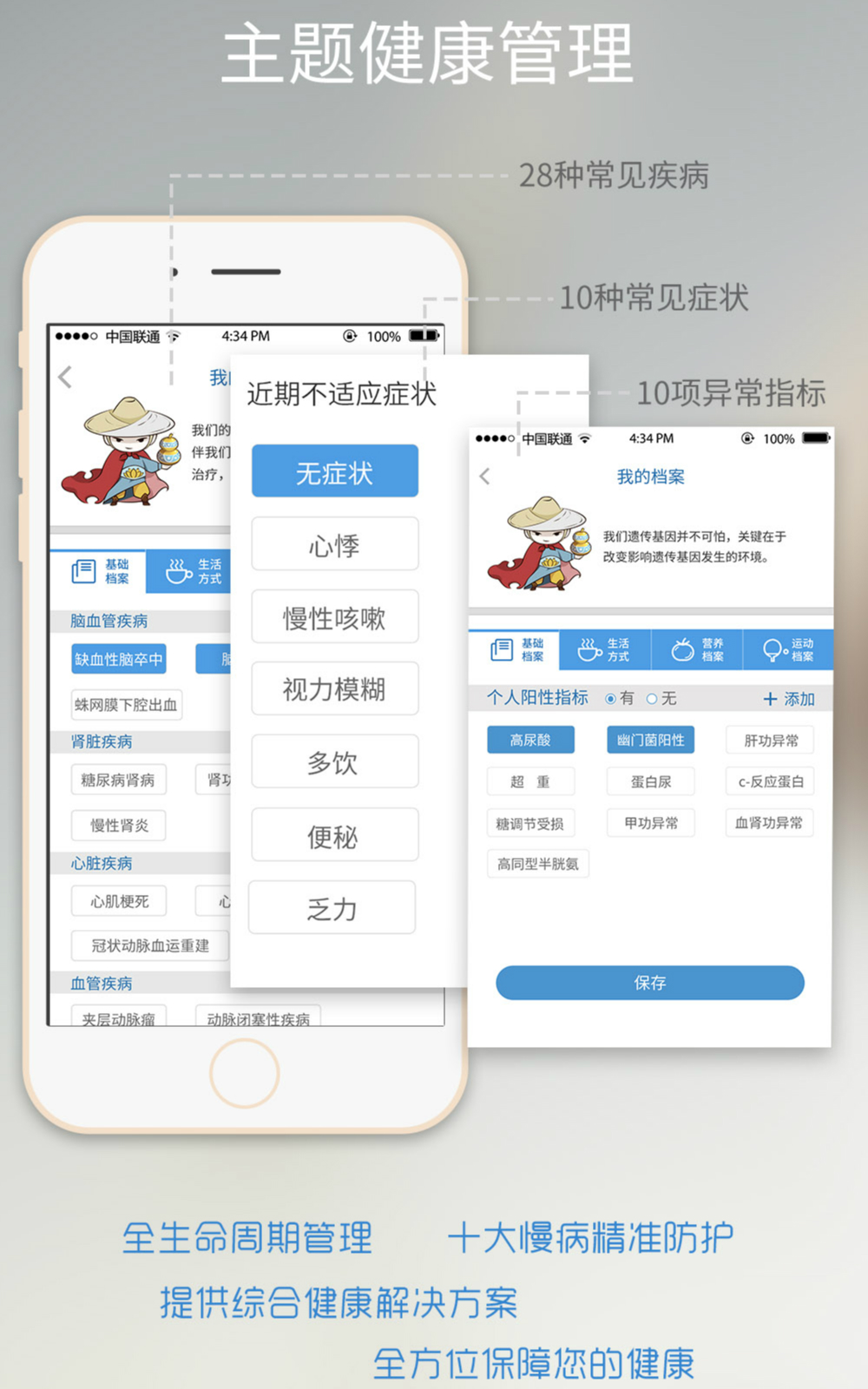
Daxia Health App - Personal Health Record Management Interface
Data Disrupts Healthcare, Bringing Challenges
Discussing the challenges encountered during the entrepreneurial journey, Li Xiaoxia stated, “Fields such as internet healthcare and artificial intelligence have seen extensive innovation across other industries, fundamentally transforming our daily lives. However, the integration of medicine with intelligent technologies, as well as the convergence of medical data with physicians’ professional expertise, faces significant challenges.”
First, it is difficult to transform the entrenched professional paradigms of physicians.Medicine is a serious profession. Given the complexity of the human body, particularly when life and health are at stake, physicians must be the first to embrace changes in healthcare delivery models; without their acceptance, patients cannot access these services. In this process, physicians often question whether internet-based models can deliver high-quality treatment, whether intelligent systems can achieve sufficient precision, and whether such approaches can provide patients with a positive experience and tangible health outcomes. These concerns are deeply rooted in physicians’ established mindsets and professional paradigms, making them difficult to change.
Second, it is a major challenge for technical talent to comprehend relatively complex and obscure medical terminology, and to determine how the internet and healthcare sectors can be better integrated.Li Xiaoxia stated, “It is extremely challenging for internet healthcare models to transition from online to offline operations, and operating purely online is equally difficult. It took Kangbairui over a decade to successfully shift its model from offline to online. Therefore, the sector that may ultimately be disrupted—and indeed the most resistant to disruption—is healthcare.” At present, the integration of the internet and healthcare still requires a period of exploration.
3. The issue of standardization of medical data.Data results for the same clinical parameter vary significantly depending on the time of assessment, patient age, healthcare institution, and examination method. Addressing this issue requires a large volume of data samples to support data standardization and intelligent analysis. Li Xiaoxia noted that this is a common challenge across the industry.
Recommendation: Do not let the stethoscope be the last item connecting doctors and patients
At the roundtable forum, Li Xiaoxia also offered advice to future healthcare entrepreneurs. She believes that medicine is a discipline centered on people; it is not only about expertise and technology but also an art and a humanistic endeavor, inseparable from physicians’ support for their patients. “There is a saying in the industry that the stethoscope may be the last tangible object imbued with empathy connecting doctors and patients. As medical intelligence advances to the point where doctors and patients no longer need to meet in person, can the gesture of a doctor placing a hand on a patient’s forehead to convey warmth still be preserved?” Li Xiaoxia stated,She hopes that through the exploration of medical intelligence, repetitive professional knowledge and methods can be addressed in an intelligent manner, enabling physicians to return more fully to the essence of medicine and allowing patients to experience greater humanistic care.
In her sharing with entrepreneurs, Li Xiaoxia said:“Medicine cannot be entirely online; we must never abandon offline interactions, as it is essential to connect with every individual. Although offline engagement is challenging and complex, consuming significant energy and resources, we must still remain by the side of every patient.”
Among the products currently released by Kangbairui, there is the Daxia Health APP targeted at individual users, as well as a Doctor Workstation that provides services on the physician side. Regarding how to better integrate technology with services, Yang Song, Product Director of Beijing Kangbairui Health Management Co., Ltd., told reporters,Kangbairui’s current goal is to become the application infrastructure and enabling catalyst for the entire health management industry.
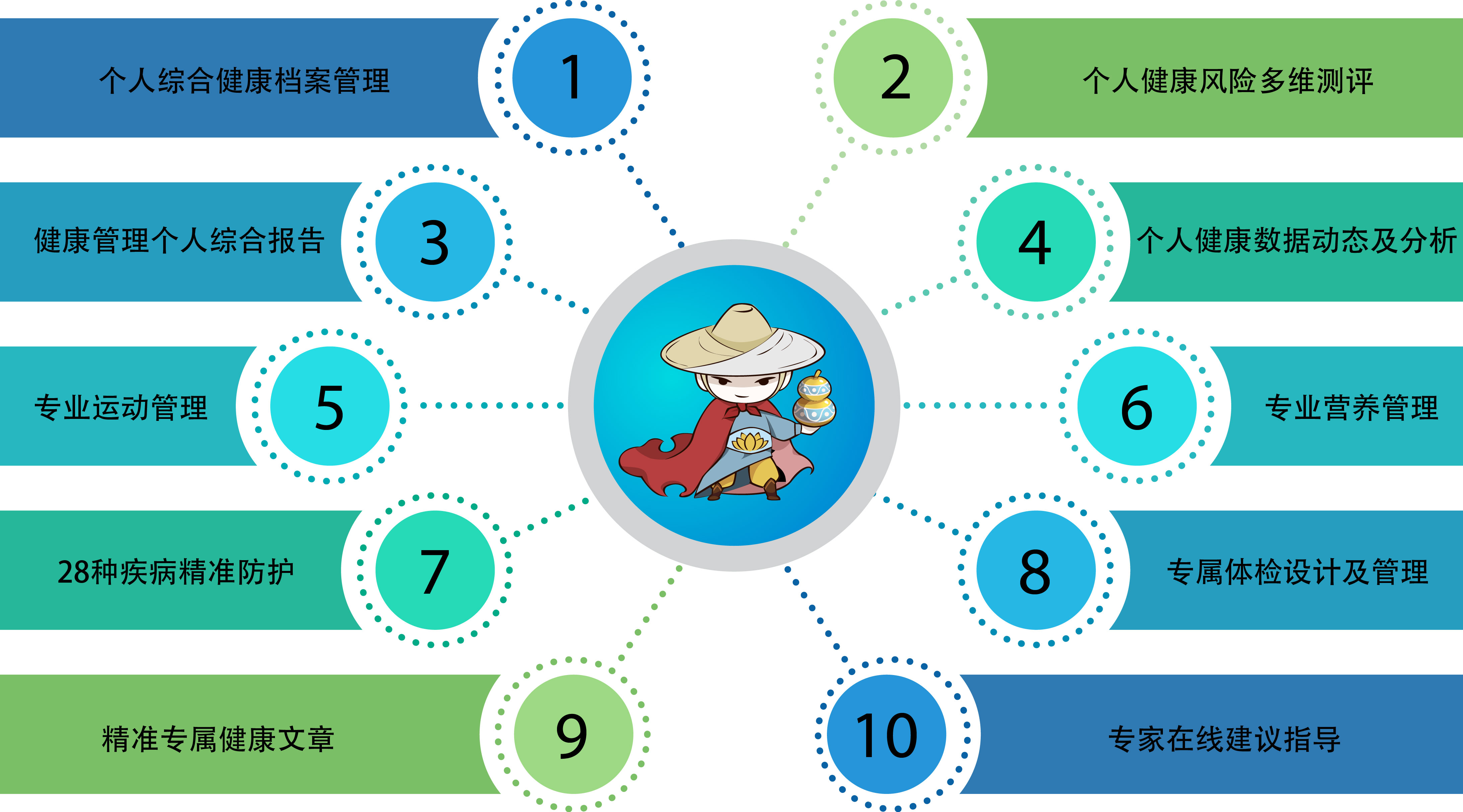
Daxia Health App Services
What Kang Bairui actually aims to do is a kind of ““Professional Tool-Oriented” Services, enabling the system to present the current needs and challenges faced in health management. Yang Song stated, “Similar to the water and electricity sectors, we can interface with the demands of other industries to fulfill their needs. Building on health-related demands, we provide professional support tools for clients and physicians, offer end-to-end solutions for the health management industry, and develop health problem-solving models, thereby serving as the infrastructure and catalyst for the health management sector.”
Leveraging Big Data and AI to Free Up Doctors' Time and Energy
Among consumer-facing products, the Daxia Health app currently enables users to manage their daily health. Routine reminders and personalized health management plans are displayed in real time on mobile devices, allowing the system to fully assist individuals with real-time health management.
Furthermore, the app enables precise communication between physicians and users, integrates historical and real-time dynamic health data, and establishes individualized health records for each user. This liberates more of physicians’ time and energy, allowing them to provide more professional support to users.
Currently, Kang Bairui’s physician workstation has achieved large-scale, standardized data processing capabilities, enabling scientific health management through automated methods. Yang Song told the reporter:“We have automated the entire process of automatic identification, automated associative processing, and automatic export of diagnostic conclusions. This ensures that our services are more optimized and holistic, building upon physicians’ individual professional expertise. It enables physician–patient interactions to transcend temporal and spatial constraints, thereby delivering professional and precise medical services.”。
Deepening the Core of Health Management, Building a Customer Data System
Regarding the next steps in product planning, Kangbairui’s consistent objective has been to continuously deepen the core of its health management services. Within Kangbairui’s health management system, the company has been continually exploring how to enhance the professionalism of solutions generated through intelligent data processing, and how to more precisely oversee the entire health management process. Achieving these goals requires ongoing refinement of its core capabilities. Kangbairui is committed to conducting in-depth analysis of diseases, positive clinical indicators, and the overall health management workflow, striving to optimize the intelligence of its systems.
In addition, Yang Song revealed, “We will upgrade the physician workstation into a universal information analysis and response platform for health management. This platform will primarily serve industries with health service needs, leveraging its general capabilities and tools to drive customer engagement.”
Leveraging its 13 years of experience in health management and a robust customer data infrastructure, Kangborui is upgrading its products to a more intelligent predictive system. This transition marks the shift from Health Management 1.0 to the 2.0 era, enabling more precise prediction, inference, and analysis of users' physical conditions.
Currently, Kangborui’s business model encompasses five major sectors: insurance companies, enterprise and institutional groups, community-based primary healthcare, health examination centers, and smart terminals combined with internet healthcare. To date, Kangborui has signed agreements with more than ten large enterprise and institutional groups, as well as with industry platforms to provide empowerment services. Its clients and partners include major banking systems, financial institutions, the petroleum sector, the insurance industry, internet healthcare platforms, and suppliers of intelligent health devices.
Therefore, its strategic development goal is to deeply align with national policies by leveraging innovative models that integrate medical intelligence, health big data, and online-offline synergy. This approach aims to empower primary healthcare and health management, establish prevention and control frameworks for chronic preventable diseases, drive the development of the health industry, and provide robust safeguards for the healthy lives of the Chinese population.