

Andrew Ng Enters Healthcare: AI-Powered ECG Algorithm Outperforms Human Experts in Detecting Arrhythmias
Source: 36Kr; Author: Tian Xuyang; Edited by VCBeat
Recently, a team of Stanford researchers led by Dr. Andrew Ng developed a new machine learning model that detects arrhythmias from electrocardiograms (ECGs), achieving performance that surpasses even human experts.
This new method, capable of automatically making diagnoses, holds significant importance for daily medical practice, as it can help people identify the symptoms of potentially fatal arrhythmias.Make better judgments and prevent problems before they occur. Furthermore, it can provide high-quality medical care in regions with scarce healthcare resources.
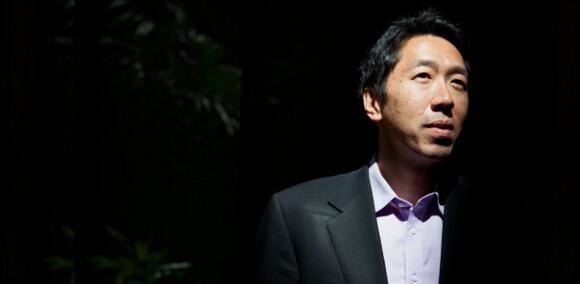
It appears that after leaving Baidu, Andrew Ng joined Drive.ai and has also developed an interest in the application of artificial intelligence in healthcare.
"In recent years, scientists have discovered the valuable role of machine learning in treating many difficult and complicated diseases, such as skin cancer, eye diseases, and breast cancer, by analyzing medical images."
“I am quite heartened to see that people have been able to shift their perspectives so rapidly, accepting the fact that deep learning can deliver more accurate diagnoses than specialist physicians in certain vertical medical fields.”Andrew Ng stated in an email. He further added that it is also exciting to see researchers beginning to explore new applications of medical AI beyond image data, such as electrocardiograms (ECGs).
After leaving Baidu this March, Dr. Andrew Ng has returned to Stanford to continue his academic research.
A research team at Stanford University trained a machine learning algorithm to identify various irregular heartbeats in electrocardiogram (ECG) data. Certain arrhythmias can lead to serious health complications, including cardiac arrest; however, these signals are often difficult to detect, requiring patients to wear ECG monitors continuously for several weeks to ensure safety.
A critical yet frustrating aspect is that, due to the inherent characteristics of arrhythmia, even highly skilled physicians often struggle to differentiate between benign and malignant cardiac instability.
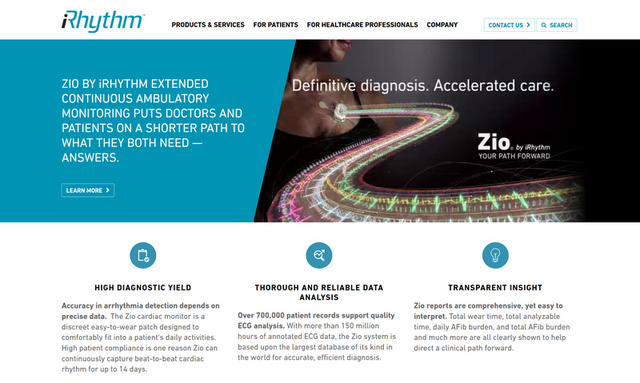
The research team partnered with iRhythm, a manufacturer of wearable electrocardiogram (ECG) devices, to collect 30,000 thirty-second ECG recordings from patients with various types of arrhythmia.
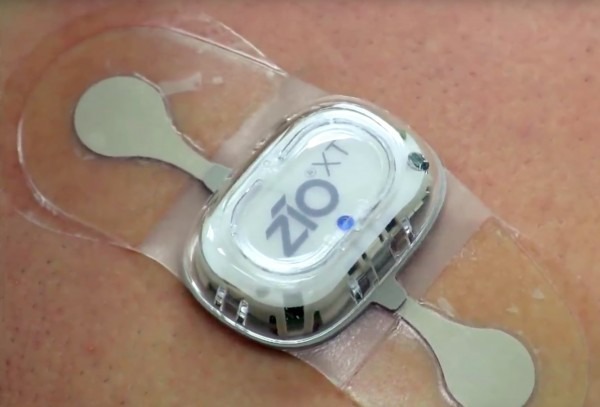
Portable ECG Device for Data Collection
To evaluate the algorithm’s accuracy, the team also invited five cardiovascular specialists from diverse backgrounds to assess 300 untested datasets alongside the AI. The scientists selected the results from three of these experts as a reference.
Deep learning involves the process of feeding vast amounts of data into large, complex simulated neural networks and continuously optimizing them until they can accurately identify problematic electrocardiogram (ECG) signals.
This approach has become highly mature in the recognition of complex images and audio, yielding speech and image recognition products that outperform humans. In this light, it is only natural to apply deep learning techniques to the recognition of medical images.
Eric Horvitz, who serves as the head of Microsoft’s search division, a practicing physician, and a machine learning expert, noted that two other teams from MIT and the University of Michigan are also focusing on the challenging problem of using machine learning to diagnose arrhythmias.
If we take a longer-term view, it is also an imaginative prospect that machine learning can search for subtle clues of various diseases by integrating and analyzing vast amounts of seemingly unrelated data.
Using deep learning to diagnose arrhythmia is still a relatively simple application in the field of AI healthcare. If we turn our attention to other, more complex diseases, we will see a very different landscape. More importantly, a broader range of issues needs to be taken into consideration.
In the aforementioned project on AI-driven cancer diagnosis, Regina Barzilay, the MIT professor leading the team, identified a critical bottleneck in medical AI: the scarcity of high-quality disease data.
“You are always anxiously seeking information, especially data,” she said. “Should I use this medication or another?” “Is this the best treatment option?” “What is the probability of disease recurrence?” …
Without reliable clinical data, your chosen diagnosis will remain at the stage of pure speculation.
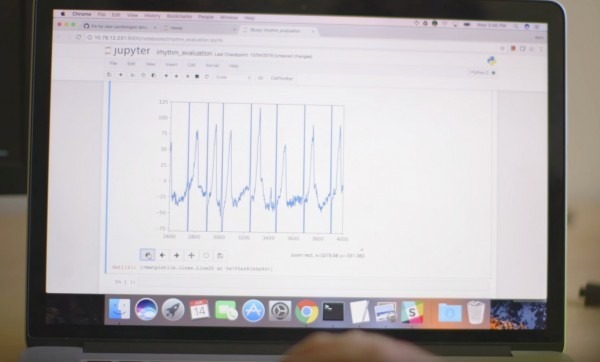
Stanford researchers are conducting training on algorithms.
However, unlike relatively straightforward and everyday applications such as image and speech recognition, the deployment of AI in healthcare—a domain where stakes can be life-or-death—faces a major challenge: earning the trust of both physicians and patients.
To experts outside the field of artificial intelligence, these algorithms often appear abstruse and obscure. At times, even AI specialists leading projects may not fully grasp the underlying mechanisms of how these algorithms operate. Specifically, deep learning stands out as one of the most opaque and difficult-to-understand branches within the broader field of machine learning.
Convincing physicians and patients that these cold, complex machines can make judgments most beneficial to their health will be a major challenge for AI practitioners.
Nevertheless, Andrew Ng remains firmly convinced that a major revolution in the healthcare sector is imminent.
“There is still a great deal of work ahead to integrate these algorithms into the workflows of healthcare systems,” he said. “But I firmly believe that within ten years, the healthcare industry will adopt AI more extensively and become vastly different from what it is today.”