

What’s Next for Tertiary Hospitals If Medical Consortia Succeed? Insights from Dr. Xiong Lizé of Xijing Hospital
"Will teaching the apprentice starve the master?"
Imagine that, with the continuous implementation of medical consortium policies, an increasing number of Grade A tertiary hospitals have established medical consortia to support county-level hospitals, community health centers, and township health centers. Meanwhile, patients have developed the habit of seeking initial care at primary healthcare institutions. In this way, the tiered diagnosis and treatment model—characterized by initial consultation at the primary level, two-way referrals, separate management of acute and chronic conditions, and coordinated collaboration between upper- and lower-level institutions—has been truly realized.
With patients flocking to primary care institutions, the “inverted triangle” pattern of healthcare utilization has been reversed, allowing primary care facilities to operate normally thanks to the increased patient volume. So, how should tertiary Grade A hospitals—which have lost a significant number of patients—chart their future development and redefine their positioning?
Or, to put it more bluntly: How do these Grade A tertiary hospitals sustain themselves? Do they rely on state subsidies, or on their own capacity for continuous self-generation of revenue?
In this regard, the development model of Xijing Hospital may offer a pathway for reflection or exploration for tertiary A hospitals.
Xijing Hospital, located in the historic city of Xi’an, is the First Affiliated Hospital of the Fourth Military Medical University. Its predecessor was the Central Hospital, established in 1939 during the War of Resistance Against Japanese Aggression in Yan’an. In 1954, it merged with the Affiliated Hospital of the former Fifth Military Medical University. After more than seven decades of development, the hospital has grown into a large-scale comprehensive medical center integrating clinical care, teaching, scientific research, disease prevention, and health promotion.
In terms of academic disciplines, the hospital currently has 9 national key disciplines, 7 National Clinical Key Specialties (Military), 12 Medical Specialty Research Institutes of the PLA, and 5 key laboratories at the national and military levels. It has established six “hospitals within a hospital” specializing in gastroenterology, orthopedics, neurology, cardiovascular diseases, dermatology, and plastic surgery.
In terms of talent, the hospital employs one academician of the Chinese Academy of Engineering, three chief scientists of the National “973” Program, one leading talent and five top-tier talents from the Military Innovative Talent Project, eight Chang Jiang Scholars Distinguished Professors, nine recipients of the National Natural Science Foundation of China’s Funds for Distinguished Young Scientists, 29 “Three-Star” Talents recognized by the General Logistics Department of the PLA, 24 individuals elected as chairpersons or vice-chairpersons of the Chinese Medical Association, and six individuals holding key positions in international academic organizations.
Xijing Hospital currently has 3,218 beds in operation. Its patient base spans 30 provinces, municipalities, and autonomous regions across China. Among hospitalized patients, 27.1% are from Xi’an, 38.1% are from other areas within Shaanxi Province, and 31.1% are from outside Shaanxi Province. Outpatients from outside the province account for 40%. In 2014, the hospital recorded 3.728 million outpatient and emergency visits, 151,000 hospital admissions, and 88,000 surgical procedures, with a single-day peak of 15,437 outpatient and emergency visits.
Compared with other Grade A tertiary hospitals, Xijing Hospital does not have a high volume of emergency visits; Huaxi Hospital, the largest in Sichuan Province, handles 5.3 million emergency visits annually.
With the advancement of tiered diagnosis and treatment, tertiary hospitals, as lead institutions, have established medical consortia and healthcare groups, along with virtual hospitals. As patients increasingly seek care at primary-level facilities, resulting in a decline in patient volume for tertiary hospitals, how should these institutions redefine their positioning and pursue development?
“No matter how China’s healthcare reform evolves, if every hospital can provide patients with optimal treatment outcomes and the best medical experience at an affordable cost, we will certainly not lack patients,” said Xiong Lize, President of Xijing Hospital.
In Xiong Lize’s view, addressing the above points can transform the current state of hospitals from three perspectives: first, refined management serves as the foundation; second, innovation-driven development is the key; and third, project-based management is the leverage point.
In 2013, Daisuke Kondo authored a book titled What China Lacks, What Japan Lacks, in which he stated that Chinese people lack high-quality services, cohesive spirit of unity, and refined technical expertise.
In the healthcare industry, there is a particular need for sophisticated technical expertise and refined management. How should such sophisticated technology and refined management be manifested in the healthcare sector? How does Xijing Hospital implement its refined management practices?
According to Xiong Lize, in the Radiology Department of Xijing Hospital, patients previously had to undress in front of many people for imaging examinations. This often led to improper positioning and significantly prolonged the time required for each scan. To address this, he introduced a private changing room where patients could change their clothes beforehand. Patients were provided with baskets to store their clothing and mobile phones, allowing them to leave immediately after the examination. Following this adjustment, nearly all patients requiring imaging services could be accommodated by 11:00 a.m. each day. More importantly, this approach protected patient privacy and upheld their dignity.
In postoperative patient management, a patient who underwent stone removal surgery required long-term indwelling catheter placement for drainage purposes. The physician instructed the patient to return to the hospital after two months for catheter removal. However, following discharge, the patient experienced resolution of stone-related pain and consequently failed to return as scheduled. The hospital also did not provide timely reminders to the patient, as the physicians were too occupied with clinical duties to closely monitor individual patient follow-up compliance.
This can easily lead to medical malpractice. Therefore, to achieve refined management in hospitals, particular attention must be paid to details. This not only reflects the hospital’s level of competence but also that of its physicians.
For example, reluctance to wash hands within a hospital setting can easily lead to infections. Therefore, Xiong Lize encourages everyone to practice hand hygiene. “Under our monitoring, nurses demonstrate the best handwashing compliance, followed by physicians, while department heads show the poorest compliance. This is because no one dares to criticize department heads.”
Although hospital beds are limited, Xiong Lize chose to reduce the average length of stay for patients to alleviate bed shortages. He primarily focused on three areas: innovating medical technologies, improving healthcare quality, and optimizing patient care processes.
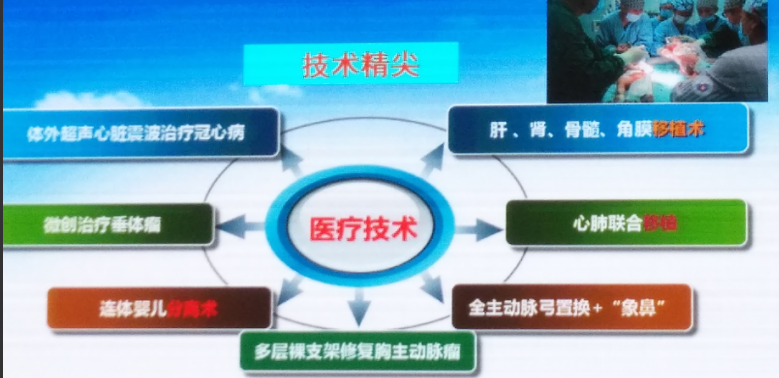
In the realm of innovative medical technologies, Xiong Lize pioneered minimally invasive surgical techniques, such as those used in hysterectomies. Previously, due to the lack of minimally invasive options, patients seeking hysterectomies or oophorectomies for ovarian cysts had limited choices. Now that physicians are proficient in minimally invasive procedures, patient demand has surged. Furthermore, postoperative recovery is enhanced, with scars being virtually invisible, allowing patients to swim confidently during the summer months.
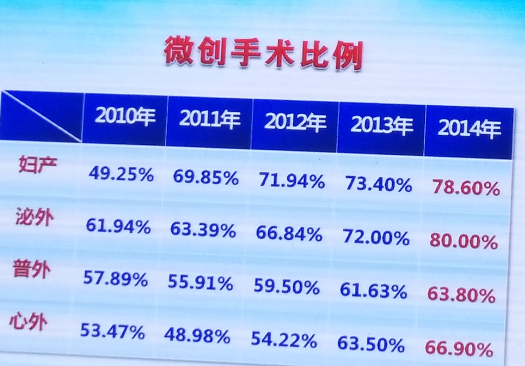
From the introduction of minimally invasive surgery in 2010 to 2014, over this four-year period, the proportion of minimally invasive procedures in obstetrics and gynecology rose from 49.25% to 78.6%, while in urology it increased from 61.94% to 80%. The details are as follows:
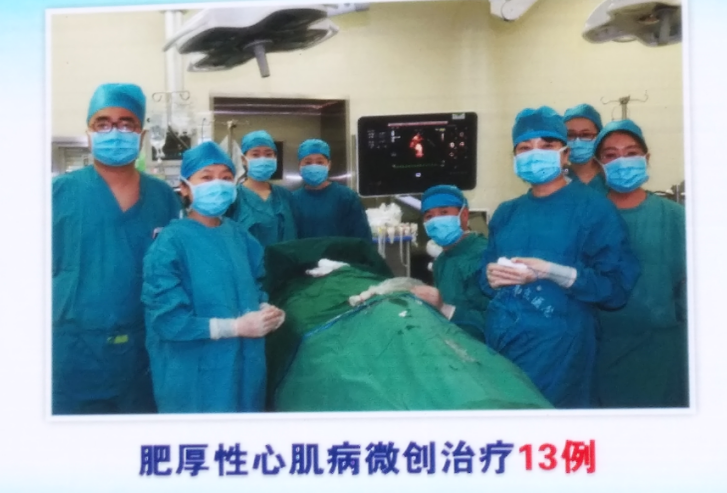
For hypertrophic cardiomyopathy, Xijing Hospital also performs minimally invasive surgeries for patients. Previously, patients with severe conditions required open-heart surgery; now, ultrasound guidance enables surgical intervention for those who were previously inoperable. Meanwhile, patients undergoing minimally invasive surgery have not exhibited symptoms of arrhythmia.
In addition to minimally invasive surgery, Xijing Hospital has continuously pioneered new techniques. For instance, it performed the first open-heart surgery using cardiopulmonary bypass in China and has maintained long-term postoperative follow-up for this patient (the male on the right in Figure 3 below).
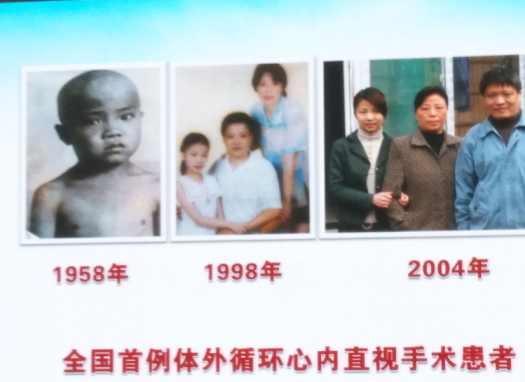
From 1958 to the present, the patient has continued to live well even after 40 years. During a follow-up visit in 2004, her daughter had already grown up. This photograph reflects nearly 60 years of follow-up by Xijing Hospital.
“Imagine if we could provide such care to every patient; would we still worry about a lack of patients? We have so many outpatient and inpatient cases, so there is no shortage of patients,” said Xiong Lize.
In 1986, Xijing Hospital performed the world’s first replantation surgery for ten severed fingers. The procedure was carried out simultaneously by two surgical teams and lasted 27 hours. Not all blood vessels were successfully revascularized on the first attempt, necessitating secondary explorations and additional surgeries.
Furthermore, Xijing Hospital has performed face transplantation and China’s first uterine transplantation. It even saved a patient with only 13 centimeters of small intestine remaining through transplantation. To date, this patient remains the longest-surviving recipient of small intestine transplantation.
According to Xiong Lize, small bowel transplantation was particularly challenging at the time. The patient’s small intestine was first explanted and anastomosed ex vivo. The anastomosis process is illustrated in the figure below:

“The biggest challenge we currently face is the shortage of donors. I hope that one day we can transplant pig livers into human bodies instead of consuming them as food. This is the direction of our research, and we are competing with medical teams in the United States,” said Xiong Lize.
Certainly, genetically modified pig livers are required. However, prior to that, Xiong Lize will transplant pig livers into monkeys. Meanwhile, his team will compete with a U.S. medical team to see whose monkeys can survive longer.
For tertiary Grade A hospitals, this project-based management approach is a relatively effective management model.
According to Xiong Lize, the mortality rate for patients with aortic dissection remains high even after surgery. He later instituted a policy requiring that, once diagnosed, patients must be transferred directly to the cardiac surgery department rather than remaining in the emergency department. As a result, the mortality rate dropped to 4% in 2013 and further declined to 2.3% in 2014.
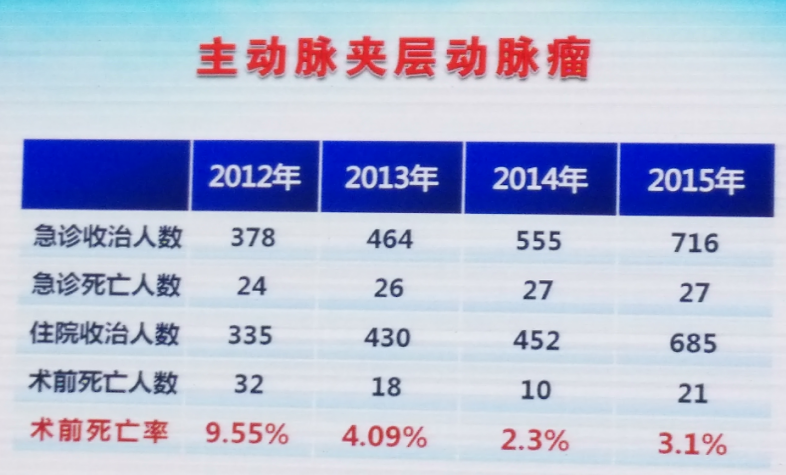
Patients received excellent care, and through word-of-mouth referrals, Xijing Hospital attracted a growing number of patients. Later, Xiong Lize established a Chest Pain Center, leading to a further increase in the number of aortic dissection cases admitted during the first quarter and a significant monthly rise in acute myocardial infarction cases.
Another difficult-to-treat disease category is cancer. In the United States, the survival rate for patients after a cancer diagnosis is 66%; in China, the survival rate for patients after a cancer diagnosis is only 30.9%. This is because, generally speaking, cancer patients in China are diagnosed at an advanced stage, whereas cancer patients in the United States benefit from the numerous and detailed cancer screening programs available in U.S. hospitals. As a result, American patients can receive treatment at an early stage of the disease, while medical institutions in China do not offer equally comprehensive cancer screening.
Xiong Lize still vividly remembers a patient he treated during the 2008 Wenchuan earthquake. The patient was a 16-year-old girl whose right leg had been trapped under rubble for an extended period. Upon her arrival at the hospital, physicians determined that amputation was necessary to save her life.
Upon seeing her daughter after the surgery, the mother looked at her lying in bed with one leg missing. Overwhelmed by thoughts of her daughter’s future, she could not help but shed tears. Yet her daughter smiled gently and silently wiped away her mother’s tears with both hands.
Witnessing this scene, Xiong Lize was overcome with emotion. He reflected: Perhaps the experts and professors who treated the girl believed they had accomplished something truly remarkable by saving her life. “Why can’t we leverage innovative technologies to save the young girl’s life while also preserving one of her legs? The future well-being of a little girl with both lower limbs intact is incomparable to that of a girl who has lost both legs.”
“We hope to enhance our hospital’s diagnostic and treatment capabilities through technological innovation, thereby helping more patients.”
As an urban central hospital, particularly a research-oriented (teaching) hospital, Xijing Hospital can contribute to the implementation of tiered diagnosis and treatment. The first step is to clarify its positioning by determining which conditions should be accepted for treatment and which should not.
Secondly, strive to enhance the capability to manage complex cases referred from other hospitals. When patients who cannot be diagnosed or treated elsewhere are transferred to your facility for care, you must have the capacity to effectively handle them. This requires specialized expertise and innovation, enabling you to perform interventions that others cannot.
For other tertiary Grade A hospitals, although the tiered diagnosis and treatment system has diverted patients with common and frequently occurring diseases, those that can emulate Xijing Hospital will not face a shortage of patients. This may well represent the future development path for tertiary Grade A hospitals.