

Zhejiang Health Official Ma Weihang: Addressing Medical Talent Shortages and Charting the Future of China's Hospitals
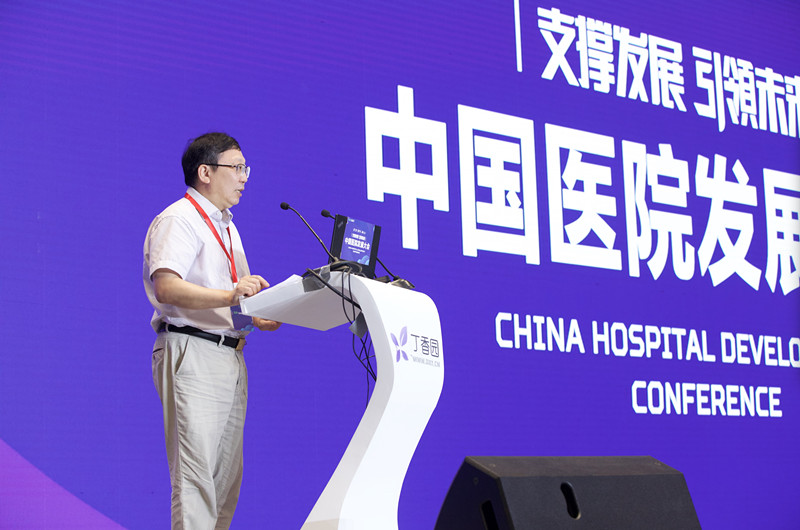
Ma Weihang, Deputy Director of the Zhejiang Provincial Health and Family Planning Commission
On the morning of July 15, by the Qiantang River, the 2017 China Hospital Development Conference, hosted by DXY, was held at the Hangzhou International Expo Center, the main venue of the G20 Summit. VCBeat (WeChat ID: vcbeat) was invited to provide comprehensive coverage of the event.
Amid the sweeping reforms reshaping China’s healthcare system today, such profound shifts in the external environment are exerting a significant impact on the existing stock of medical talent.
At the conference, Ma Weihang, Deputy Director of the Zhejiang Provincial Health and Family Planning Commission, shared his views on medical talent in the context of healthcare reform policies.
“Our healthcare reforms in Zhejiang Province are both synchronized with and ahead of the national reforms. As of April 1, 2014, all public hospitals in Zhejiang Province had implemented pilot programs for zero-markup drug pricing,” Ma Weihang told reporters.
During Zhejiang Province’s healthcare reform, the Provincial Committee of the Communist Party of China and the Provincial People’s Government made the significant decision in 2012 to implement the “Two Descents and Two Improvements” initiative. This effort aimed to promote the downward flow of high-quality urban medical resources and healthcare personnel to grassroots levels, thereby enhancing primary healthcare service capacity and public satisfaction with medical care, and addressing shortcomings in livelihood-related areas.
In recent years, the “Implementation Opinions on Promoting the Establishment of a Long-Term Mechanism for ‘Dual Sinking and Dual Enhancement’” has been introduced, focusing on close-knit medical consortium collaborations and supplemented by partnerships with provincial-level medical institutions. This initiative aims to guide high-quality provincial and municipal healthcare resources toward primary care settings, strengthen the development of primary healthcare service systems, and gradually achieve “enhanced service capacity and improved service efficiency” in primary healthcare institutions.
In terms of medical consortiums, the primary focus is on establishing connections between urban hospitals and county-level hospitals, encompassing three key aspects: first, setting up imaging and electrocardiogram (ECG) consultation centers; second, forming a joint drug procurement alliance; and third, carrying out collaborative talent development to achieve shared human resource utilization.
Meanwhile, private capital is being vigorously encouraged to invest in the healthcare sector to further strengthen tiered diagnosis and treatment, promote community physician services, advance the integrated reform of county, township, and village healthcare systems, and solidify the foundation of clinical care.
Since the inception of healthcare reform, numerous challenges have emerged. Ma Weihang believes that the most critical and difficult task is how to stimulate the vitality of healthcare professionals and cultivate medical talent. Without mobilizing the enthusiasm of the vast majority of medical personnel, the process of healthcare reform will be extremely arduous and difficult to sustain.
Hospitals constitute a specialized service industry that relies on a large cohort of professional technical personnel who are willingly committed to delivering high-quality care. Therefore, human resources represent the most critical asset for hospitals, making talent management one of their top priorities. Only when employees feel satisfied, possess a sense of belonging, and demonstrate ownership—sharing both the honors and challenges of the institution—can their initiative be fully mobilized. This engagement is essential for providing satisfactory patient services and serves as a necessary approach to addressing the difficulties and high costs associated with accessing medical care.
Ma Weihang believes that it is time to liberate healthcare providers, necessitating the creation of more favorable conditions for medical personnel to stimulate their vitality and engagement in reform.
Currently, China faces a significant shortage of medical personnel. In Zhejiang Province, China, the ratio of hospital staff to beds ranges from 1:1.5 to 1:1.8. In contrast, many hospitals abroad, particularly those with high reputations, maintain a bed-to-staff ratio of 1:1.4 to 1:1.6, with more advanced institutions achieving a ratio as high as 1:8.
Meanwhile, hospitals are also experiencing a severe shortage of talent. Talent constitutes an integrated system—an organic and unified framework with core talent as the cornerstone, generalist talent as the foundation, scarce specialist talent as the driving force, and support staff as supplementary resources. Each category of talent is indispensable. Through collaborative efforts and coordinated integration, all types of talent work together to achieve the hospital’s strategic objectives.
Core talent consists of experts, who are the most critical resources and sit at the apex of the talent pyramid. We strive to create opportunities for professional growth, retain talent with genuine care, ensure a satisfying work environment, and inspire them to dedicate their utmost efforts to the hospital’s development. By creating opportunities and favorable conditions to attract more experts, we aim to secure a leading position in talent acquisition and establish a competitive advantage.
Therefore, securing talent is of paramount importance. It can be said that without talent, there can be no brand; a strong brand must be built upon a solid workforce structure to achieve excellence.
Currently, medical talent is primarily concentrated within hospitals. Although there is a shortage of personnel, this issue cannot be resolved in the short term. So, how can Chinese hospitals develop amid such staffing shortages?
Ma Weihang believes that there are four potential development trends for hospitals in China, marking a shift from standalone institutions to systemic hospital networks, and from disorder to order. Hospitals should not focus solely on physical infrastructure and hard power; they must also recognize soft power elements such as hospital networks, informatization, and virtual hospitals, integrating both aspects organically.
First, how to achieve effective collaborative healthcare. It is necessary to restructure the medical service delivery system. In the past, hospitals operated in a fragmented and highly competitive manner, where hospital directors often sought to undermine competing institutions by poaching their talent or displacing their departments. This approach has resulted in tertiary hospitals becoming increasingly dominant, while primary care facilities have grown progressively weaker.
Therefore, significant efforts must be made to collaboratively reconstruct the healthcare system.
Second, we should adopt managed care models. Historically, hospitals existed primarily to treat illness. The Kaiser Permanente model in the United States offers valuable lessons on how to align the interests of health insurers, hospitals, and physicians. With a shared patient-centered goal, this close collaboration—grounded in common values—shifts our focus in healthcare delivery toward maintaining health, rather than concentrating resources on end-of-life intensive care unit (ICU) interventions.
Third, develop big data healthcare. With the advancement of modern technology, especially new technologies, some models of medical service delivery may be disrupted. For example, this could change the content of medical services and affect certain roles such as radiologists.
Because the essence of medicine is humanism, the humanistic care between doctors and patients cannot be entirely replaced by cold technological machinery, nor can it achieve complete trust.
Fourth, the era of diversified healthcare. Private medical institutions can cater to individual needs and provide specialized medical services; for the government, the focus is on delivering basic medical services. This diversification in healthcare fosters mutual promotion and development within the industry.