

Liao Xinbo on Doctor-Hospital Relations under New Healthcare Reforms: The Rise of Platform Hospitals
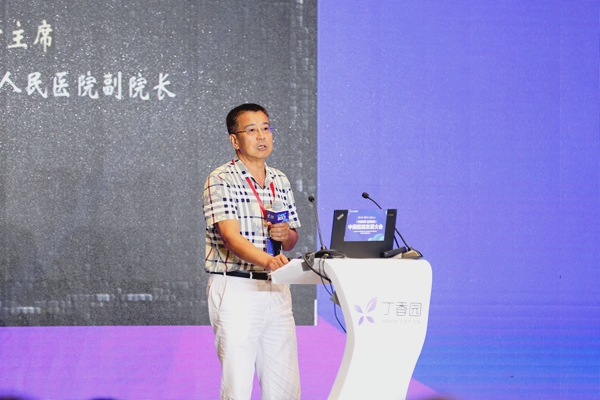
Introduction to Liao Xinbo
Former Deputy Director of the Guangdong Provincial Health Department, currently serving as a visiting professor and adjunct supervisor at six universities including Sun Yat-sen University, and founder of the Guangdong Medical Safety Association.
During his tenure as Deputy Director of the Guangdong Provincial Health Department, Liao Xinbo was responsible for hospital administration, healthcare reform, medical policy, foreign affairs management, and health supervision. Meanwhile, he remained prolific in writing, authoring numerous influential articles on healthcare reform analysis, and became widely known as the “Blogging Director.”
On July 15, at the 2017 China Hospital Development Conference hosted by DXY,Liao XinboDelivered a keynote presentation titled “Platform Hospitals and Physicians Under the New Healthcare Reform,” discussing hospital development models and the evolving relationship between hospitals and physicians in the context of the new healthcare reform, and proposing the concept of the “platform hospital”—wherein future hospitals will serve as platforms for physicians’ clinical practice, leading to a more diversified relationship between physicians and hospitals. The following article is compiled from Liao Xinbo’s on-site speech and post-conference interviews.
Liao Xinbo: Good morning, everyone! It is a pleasure to return to DXY and engage in discussions on key issues under the new healthcare reform. Today, I will be sharing my insights on “Platform Hospitals and Physicians in the Era of New Healthcare Reform.”
I believe that hospitals and hospital administrators face an extremely heavy workload today, particularly under the new circumstances. What are these new circumstances? They refer to the new healthcare reform, which encompasses the following two directions:
One is the reform of public hospitals, which restricts their expansion and reduces outpatient visits at large hospitals to achieve tiered diagnosis and treatment; the second is the impact of zero-markup drug pricing. Under the influence of these two factors, along with many other contributing elements, the roles of physicians and hospital platforms have undergone significant changes. Therefore, we must rethink the relationship between doctors and our hospitals, rather than continuing to adhere to the previous extensive growth mindset.
We aim to establish a new type of relationship between doctors and hospitals, transitioning from the traditional “unit-based individual” model to a “social individual” model. This shift from unit-based to social individuals is also a goal outlined in our national policies, which sought to reform the personnel system and abolish the bianzhi (state-approved staffing quota) system by 2020. These changes have subsequently transformed the relationship between doctors and hospitals.
Platform Hospitals Provide a Base for Multi-Site Practice
Currently, there is a proliferation of physician groups, and the government is encouraging physicians to practice at multiple locations. This raises the question: where will these multi-site practicing physicians and physician groups go? Specifically, where will physicians within our DXY community pursue multi-site practice? I believe that, under these circumstances, a platform should be established in the future. Functioning like a supermarket, this platform would provide a practical base for physicians engaging in multi-site practice and for physician groups. This is what we refer to as a "platform hospital."
Platform-based hospitals should incorporate back-end support, such as surgical centers and endoscopy centers. These are well-established practices that are already widespread abroad. Overseas, procedures like endoscopy and cardiac catheterization are not limited to tertiary hospitals but can also be performed at other qualified clinics. Additionally, service-oriented and administrative management models have already emerged in many platforms.
Subsequently, in alignment with the current development trajectory of county-level hospitals, we assist them in establishing departmental management systems and operational workflows. We also provide service marketing support. In some hospitals, marketing agencies are commissioned to conduct brand design, encompassing hospital branding, departmental branding, and physician branding.
Another point is the potential emergence of personal branding for physicians in the future. Currently, a physician’s personal brand is entirely determined by the hospital they are affiliated with. In the future, however, it may evolve into a societal phenomenon; once marketing or packaging services targeted at physicians emerge, doctors will no longer require institutional endorsement from hospitals, as they themselves will become powerful brands.
Below, we discuss the specific aspects from which to build a platform-based hospital. I believe there are three key areas. The first is the service platform, which is physician-centric. Regardless of the format, it should revolve around physicians by establishing a high-tech work platform that enables capable doctors to fully leverage their expertise.
Second, the operational platform. Each medical specialty constitutes a healthcare product line. As such, every detail matters, ranging from department establishment to the reputation generated after patient recovery. To build a product line, four management teams must be established: the Patient Management Team, the Marketing Management Team, the Operations Team, and the Clinical Discipline Team.
Third, the management platform. How to establish a value-oriented management platform with employee satisfaction as its goal. When I was at the Provincial People's Hospital, I proposed that only when employees are satisfied can patients be satisfied. In Singapore, it is also "two firsts," rather than simply putting patients first.
Platform hospitals still have many aspects that require research and development to align with China’s national conditions. The challenges faced by platform hospitals ultimately boil down to the issue of physicians—specifically, how to demonstrate their value. Therefore, within any hospital, whether public or private, it is essential to identify where the value of its physicians lies.
For instance, managerial physicians possess not only superior technical skills but also strong management capabilities. Another category is professional physicians, who demonstrate high competence alongside high patient satisfaction and a strong reputation. Furthermore, there are high-potential physicians, who have a solid foundation, excellent clinical skills, and strong medical ethics, offering significant room for professional growth.
The currently heated discussion on standardized residency training (SRT), particularly regarding how to cultivate residents’ professionalism, also offers insights into this matter. It is crucial to foster their professional ethics through proper guidance rather than moral coercion, which closely aligns with the third point. In fact, many SRT participants are high-potential talents who should be prioritized for development to meet organizational needs.
Doctors and platform hospitals are partners.
Next, we will discuss the relationship between hospitals and platforms. So, what is the nature of this relationship? The most typical model is a partnership, wherein hospitals and physicians operate as partners. In the United States, this collaborative arrangement is more prevalent, distinct from mere multi-site practice or a straightforward employer-employee relationship.
Therefore, drawing on the experiences of developed countries, I believe that the relationship between physicians and hospitals in China may evolve along several trends: one is fully independent physicians forming small group practices; another is open collaboration between hospitals and physicians; a third is close-knit partnerships between hospitals and physicians; and ultimately, physicians becoming employees who are prohibited from establishing any labor or employment relationships with third parties.
The foundation for all of this is multi-site practice. I have never emphasized multi-site practice per se; rather, I believe it reflects physicians’ professional value and transforms their practice environment.
Building on the foundation of multi-site practice, once platform-based hospitals are established, the degree of affiliation between hospitals and physicians will range from loose to tight. In the future, not only large hospitals but also smaller ones will possess medical talent; such expertise will no longer be confined exclusively to major medical centers.
Take Harvard University’s affiliated hospitals as an example: none of them employs more than 1,500 physicians; their physician headcounts all fall within the range of 1,000 to 1,500. So where have all the physicians they trained gone? They are not retained solely for internal use but are supplied to society at large. Harvard’s affiliated hospitals serve as a sanctum and premier institution for cultivating and providing medical talent to society. Drawing on this model, whether in implementing standardized residency training or facilitating the mobility of specialists in our country, we should boldly release these professionals into the broader healthcare system. Only by doing so can we train a larger pool of medical talent.
From the final outcomes, it is evident that large hospitals boast superior equipment and cultivate physicians with strong foundational skills, extensive knowledge, and robust research capabilities, whereas these aspects are less pronounced in smaller institutions. However, physicians working in smaller hospitals have more opportunities to take on independent responsibilities and gain comprehensive practical experience. Furthermore, a shift in professional identity imposes new career demands on physicians; when motivated to advance their own careers, they are certain to fully leverage their capabilities.
Next, we explore the driving forces behind platform hospitals. I believe there are two: technology-driven and service-driven. Service-driven refers to attracting patients through service; when patients “vote with their feet,” it reflects a service-driven approach, with the focus on how to satisfy patients. Technology-driven pertains to discipline construction and talent development, requiring the establishment of a favorable environment for disciplinary advancement and a well-structured talent pipeline.
Therefore, to summarize the future relationship between hospitals and physicians, while changes are inevitable, the core principles remain unchanged and aligned with the healthcare reform direction proposed by the State Council. The top-level design of healthcare reform is sound and can, to a certain extent, guide the development of platform-based hospitals. This defines the relationship between hospitals and physicians under the backdrop of the new healthcare reform.FutureRelationship Outlook.
That’s all for today due to time constraints. Thank you, everyone!