

2017 China Hospital Development Conference: Insights from Liu Zhefeng, Liao Xinbo, and Zhu Hengpeng on Medical Talent and Management
On the morning of July 15, by the Qiantang River, the 2017 China Hospital Development Conference (hereinafter referred to as CHDC), hosted by DXY, was held at the Hangzhou International Expo Center, the main venue of the G20 Summit.
Centered on the theme “Talent Supports Development, Branding Leads the Future,” the conference will closely align with the pulse of industry development. It will focus on the practical challenges hospitals face in human resources and brand building, delve into the challenges and opportunities confronting domestic hospitals in their current development and future construction, and conduct specialized discussions and exchanges on the implementation of relevant policies.
Attendees included Liu Zhefeng, Director of the News Division under the Publicity Department of the National Health and Family Planning Commission; Ma Weihang, Deputy Director of the Zhejiang Provincial Health and Family Planning Commission; Liao Xinbo, former Deputy Director of the Guangdong Provincial Health Department; Zhu Hengpeng, Deputy Director of the Institute of Economics at the Chinese Academy of Social Sciences; Zhao Ping, former President of the Cancer Hospital of the Chinese Academy of Medical Sciences; and Lin Li, Deputy Director of the Publicity Division of the Hangzhou Municipal Health and Family Planning Commission. In addition, hundreds of hospital administrators and experts in human resources and brand building from the United States, Europe, Taiwan, and other regions gathered to engage in discussions and exchanges.
It is reported that the conference will last for two days (June 15–16) and will be divided into three major segments: the Main Forum, the Talent Forum, and the Brand Forum. The event will feature activities such as roundtable debates, the selection of China’s Best Employers in Healthcare Institutions, the Top 100 Hospital Brand Communication Rankings, and the DXY Talent 10th Anniversary Awards Gala Dinner.
So, what were the highlights of today’s forum? What insights did the attendees share? Was the list of Best Employers among Chinese Healthcare Institutions unveiled?
Amidst the sweeping reforms transforming China’s healthcare sector today, profound shifts in the broader external environment are exerting a significant impact on the existing stock of medical talent.
At the conference, Li Tiantian, founder and chairman of DXY, stated that as a connector in China’s healthcare sector, DXY is committed to building a data-driven healthcare service platform to enable the public to access trustworthy medical services. In operating its own offline healthcare service platform, DXY has gained a profound understanding of the critical importance of medical talent to both healthcare institutions and healthcare service platforms.
Liu Zhefeng, Director of the News Division under the Department of Publicity of the National Health and Family Planning Commission, stated in his address that as an industry pioneer, DXY possesses a vast pool of physician resources, enabling the listening to voices from frontline doctors through its platform. Meanwhile, DXY serves as a value connector for the healthcare industry, hospitals, and physicians, playing a crucial bridging role.
Ma Weihang, Deputy Director of the Zhejiang Provincial Health and Family Planning Commission, expressed high expectations for the conference in his speech. He hoped that the event would provide in-depth elaboration and extensive discussion to jointly explore pathways for development. He argued that it is time to liberate healthcare professionals by creating more favorable conditions to stimulate their vitality and participation in reforms. Therefore, attracting and retaining talent is crucial. Indeed, without talent, there can be no brand; a strong brand must be built upon a well-structured workforce to achieve excellence.
Zhu Hengpeng, Deputy Director of the Institute of Economics at the Chinese Academy of Social Sciences, believes that hospital directors in China are facing significant challenges under the new landscape. For instance, there is an expectation to achieve tiered diagnosis and treatment through the four models of medical consortia. In short, “tiered diagnosis and treatment” can be equated with tiered management. By way of analogy, when a son grows up and marries, the family must divide its household; each parent is responsible for recognizing and supporting their own children. This is a necessary system for a large country. Tertiary Grade A hospitals are generally affiliated with prefecture-level cities, while county and district hospitals belong to the county level. Having county magistrates and county party secretaries fund these hospitals while handing over management authority to tertiary Grade A hospitals violates the administrative management system.
Furthermore, Liao Xinbo believes that hospitals will become platforms for physicians’ clinical practice in the future, with increasingly diversified relationships between doctors and hospitals. He is the former Deputy Director of the Guangdong Provincial Health Department, currently serves as a visiting professor and adjunct supervisor at six universities including Sun Yat-sen University, and is the founder of the Guangdong Medical Safety Association.
Subsequently, at the CHDC Conference, DXY and McKinsey jointly released the 2016 Best Employers Ranking.
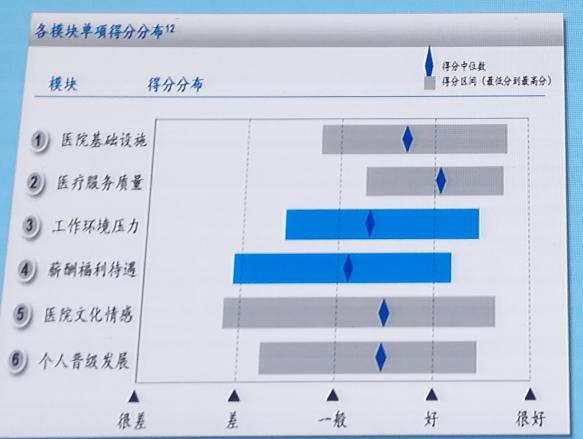
According to Wang Jin, a Global Director at McKinsey & Company, this ranking is based on survey responses from 30,000 physicians, including 2,500 doctors from private hospitals. The survey assessed the satisfaction levels and ratings of these 30,000 physicians across six modules comprising 24 subcategories. Among these six dimensions, the two areas in which physicians expressed the highest satisfaction were the quality of medical services and hospital infrastructure.
These six major modules include hospital infrastructure, quality of medical services, workplace stress, compensation and benefits, hospital culture and sentiment, and personal career advancement. As shown in the figure:
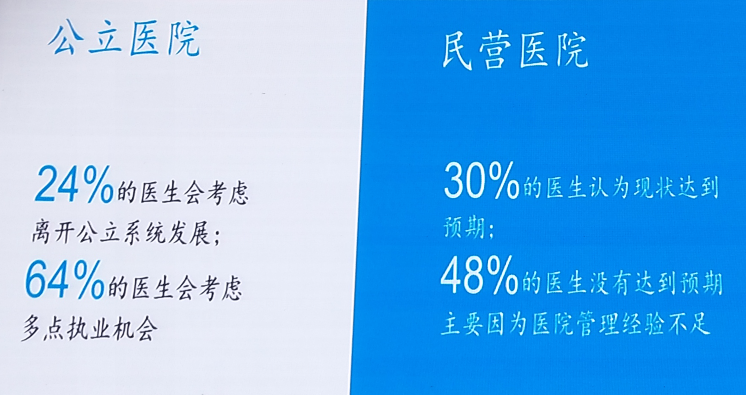
Surveys of physicians in public and private hospitals reveal that 24% of doctors in public hospitals are considering leaving the public system for career development, while 64% are contemplating multi-site practice. In private hospitals, 30% of physicians feel that the current situation meets their expectations, whereas 48% believe it falls short, primarily due to insufficient hospital management experience.
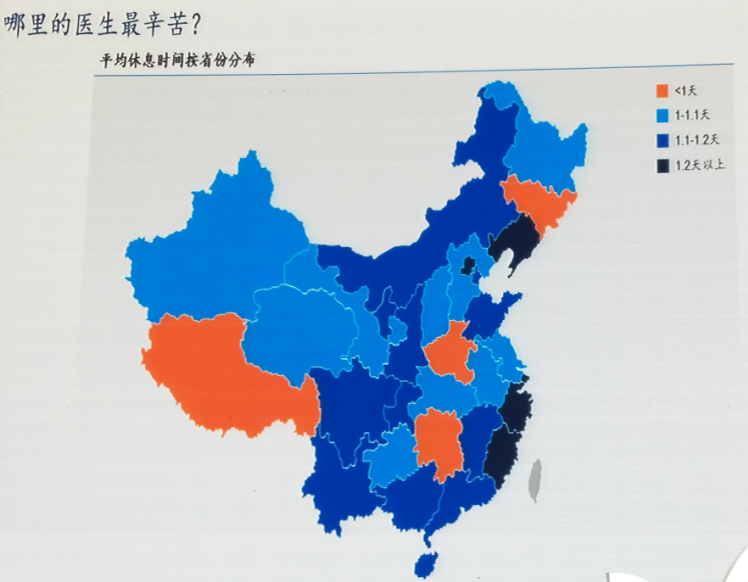
In terms of doctors' rest time, the average weekly rest duration for doctors across China is 1.1 days. Doctors in Henan Province work the hardest, with an average weekly rest duration of only 0.78 days.
When discussing the realization of personal self-worth, 84% of physicians in public hospitals responded negatively, and 77% of physicians in private hospitals expressed the same view. In other words, the vast majority of physicians believe that their compensation does not adequately or reasonably reflect their personal self-worth.
Therefore, resigning from public hospitals to work in private hospitals does not appear to be a well-established or clear-cut career choice. Only 4% of physicians in public hospitals are considering leaving the public system for future development, while 64% indicated they would consider opportunities for multi-site practice but would not leave the public hospital system. From physicians’ perspective, management issues remain the area with the greatest disparity compared to public hospitals.
The specific list is as follows:
I. Top 10 Public Hospitals as the Best Employers in Chinese Medical Institutions in 2016

II. Best Employer Awards for Public Hospitals by Category

III. Top 10 Private Hospitals as the Best Employers in Chinese Medical Institutions in 2016
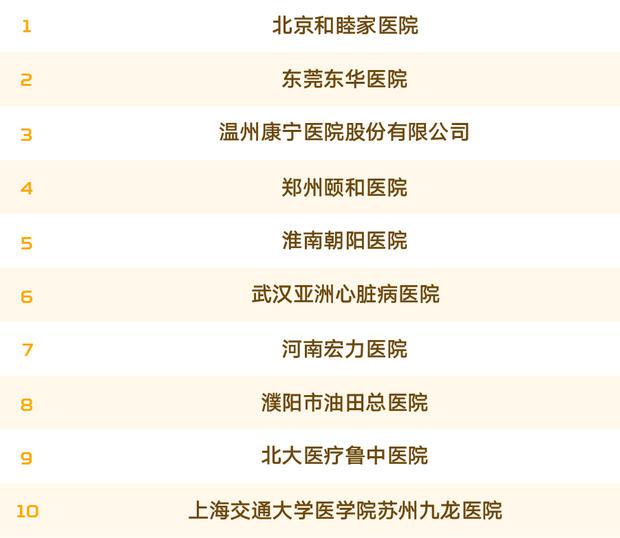
IV. Top 10 Private Hospitals Among the Best Employers in Chinese Medical Institutions in 2016
