

Symbow Medical Secures RMB 120 Million Series A Funding Led by Huayi Capital to Advance Minimally Invasive Interventional Surgical Navigation System
VCBeat (WeChat ID: vcbeat) has learned that Xinbo Medical, a pioneer in navigation systems for minimally invasive interventional surgery, recently completed its Series A financing round. The round was led by Huayi Capital, with participation from Buchang Pharmaceutical [603858], the National Emerging Industry Guidance Fund managed by SDIC Chuanghe, Xiantong Capital, and other investors. The transaction, which included partial transfers of existing shares, amounted to a total of RMB 120 million.
Xinbo Medical is a high-end innovative medical technology industrialization enterprise founded by returning overseas scholars. Established in 2011, the company primarily researches, develops, and manufactures products for early tumor screening and diagnosis based on molecular imaging and multi-modal imaging technologies, as well as real-time precision navigation systems for use in minimally invasive surgical procedures.
Dr. Zhao Lei, Chairman of the Company, earned his bachelor’s degree from Tsinghua University. He subsequently pursued graduate studies at Boston University and Harvard University in the United States, where he obtained his Ph.D. He conducted postdoctoral research at Harvard Medical School, served on its faculty, and worked as a researcher at its affiliated Brigham and Women’s Hospital (BWH). Currently, he holds a prominent academic position in the field of biomedical engineering.
Newbo Medical’s product portfolio includes the MRI-guided minimally invasive interventional therapy system, the IGS-MF surgical navigation system, and the ultrasound light scattering breast imaging system. Among these,The Ruguang Chao series leverages the principles of ultrasound and light scattering to significantly enhance the specificity of conventional breast ultrasound screening, addressing the issue of low diagnostic accuracy among primary care physicians due to insufficient experience (CFDA and CE certified). Within this product line, the dual-mode breast examination system combining ultrasound and light scattering is the most widely used. It has been recommended by the China Maternal and Child Health Association as a novel method for breast cancer screening in China and has been incorporated into the national guidelines for breast cancer screening.
China’s First Minimally Invasive Interventional Surgery Navigation System Recently Approved
Recently, the product “Minimally Invasive Interventional Surgery Navigation System“Recently obtained the Class III medical device registration certificate from the CFDA. This surgical navigation system, through its specialized design, is compatible with MRI or CT equipment from various manufacturers.”
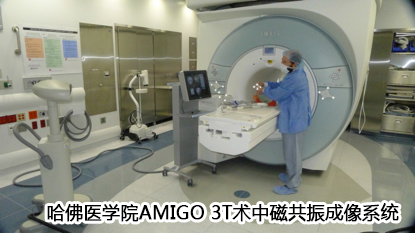
Functionally, it enables flexible display of 2D and 3D medical images, automatic tracking and calibration of anatomical orientation and images, automatic registration and fused alignment of surgical instruments with medical imaging, intraoperative respiratory motion-synchronized image compensation, as well as comprehensive functionalities including surgical planning, intraoperative navigation, real-time monitoring of the treatment process, and postoperative on-site outcome assessment.
When used in conjunction with MRI systems from partner manufacturers, it enables advanced functionalities such as automatic real-time updating and navigation of intraoperative MRI images, as well as interactive control of MRI scanning. When integrated with CT, it facilitates four-dimensional information tracking and display, providing comprehensive spatial and temporal data. The overall intraoperative navigation accuracy of the surgical navigation system is less than 2 mm, making it suitable for guiding minimally invasive surgeries and treatments across various body regions.
Minimally Invasive Interventional Surgery Navigation: Solving the Challenge of Freehand Blind Puncture
Unlike traditional surgical navigation, this is the first in China to be used forMinimally Invasive Intervention FieldSurgical navigation system, capable of addressing the challenge of freehand blind puncture by physicians.
As of November 2016, there were 40 imported traditional surgical navigation devices that had obtained product registration certificates. Among these, BrainLAB accounted for 32.5%, Brainlab AG for 20%, Medtronic for 15%, Stryker for 10%, with the remainder held by other companies.
The surgical navigation products offered by these companies are primarily focused on traditional navigation for neurosurgery, orthopedics, and otorhinolaryngology (ENT) procedures. These systems often lack high precision and fail to address artifacts caused by respiratory-induced body movements as well as other displacement issues. Consequently, they are unsuitable for minimally invasive interventional procedures such as needle biopsy and aspiration drainage.
Minimally Invasive Interventional TherapyIt is a modern, high-tech, minimally invasive treatment that involves the direct introduction of specialized instruments—such as catheters, guidewires, and puncture tools—into the human body to diagnose lesions, obtain biopsies, or perform localized therapies. Its most significant advantages are that it does not require open surgery, resulting in minimal trauma, rapid recovery, and superior efficacy.
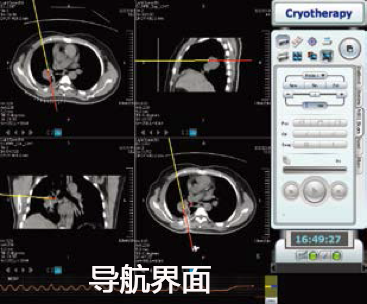
For example, in the past, during non-vascular minimally invasive interventional procedures, physicians would mentally reconstruct a 3D model and simulate the puncture process based on 2D images acquired by imaging equipment, and then perform blind punctures in the operating room relying on experience and intuition, which was time-consuming and labor-intensive. Today, with advances in navigation for minimally invasive interventional surgery, 3D reconstruction can be performed on a computer to simulate the optimal puncture path, allowing physicians to perform the puncture guided by the simulation.
It is understood that during the development of surgical navigation equipment, support was received from projects such as the Ministry of Science and Technology’s “Major International Cooperation Projects under the 11th Five-Year Plan,” the National Development and Reform Commission’s “National Debt Project for High-Tech Industrialization Demonstration Engineering in Medical Devices,” and the Ministry of Industry and Information Technology’s “Electronic Information Industry Development Fund.” More than 20 domestic and international patents have been granted, covering all aspects from core algorithms to system design.