

Bright.md Secures $8M Series B Funding to Advance AI-Powered SmartExam Platform, Cutting Patient Visit Time to Under 90 Seconds

Bright.md
AI-Powered Remote Nursing Healthcare Service Provider
Recently,VCBeat (WeChat ID: vcbeat)It has been reported that Bright.md, a digital care solutions manufacturer based in Oregon, USA, has secured $8 million in Series B financing. The round was led by B Capital Group, with participation from Seven Peaks Ventures.
Bright.md secured $3.5 million in its Series A financing round, led by Seven Peaks Ventures. Combined with the $1 million raised in its previous seed round, Bright.md’s total funding has reached $12.5 million.
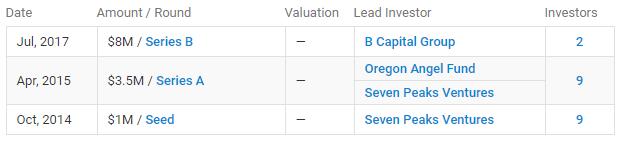
Bright.md’s Funding Status (Source: Crunchbase)
It is reported that this round of funding will support the continued development of cloud-based AI software within Bright.md’s SmartExam system, including new healthcare service systems. Additionally, the funds will be allocated to market promotion, sales and marketing efforts, expanding customer service, attracting talent, and scaling up the team.
SmartExam Platform: AI Pre-diagnosis Achieves 60% Automation in Healthcare
According to the Centers for Medicare & Medicaid Services (CMS), annual healthcare spending in the United States amounts to nearly $3 trillion (accounting for more than 17% of the gross domestic product), yet the World Health Organization still considers the U.S. healthcare system to lag behind those of other developed nations.This leaves the United States facing an awkward reality—despite all the money spent, it continues to exhibit widespread inefficiency and public dissatisfaction.
According to 2014 data, the average wait time for U.S. patients to access primary care was 19 days.In fact, among developed countries, the United States ranks second only to Canada on this metric, with Canada showing clear improvement. For patients, excessively long wait times for medical consultations lead to a widespread perception that the value of healthcare does not justify its cost. A prominent cause of this outcome is the insufficiency of primary care facilities.
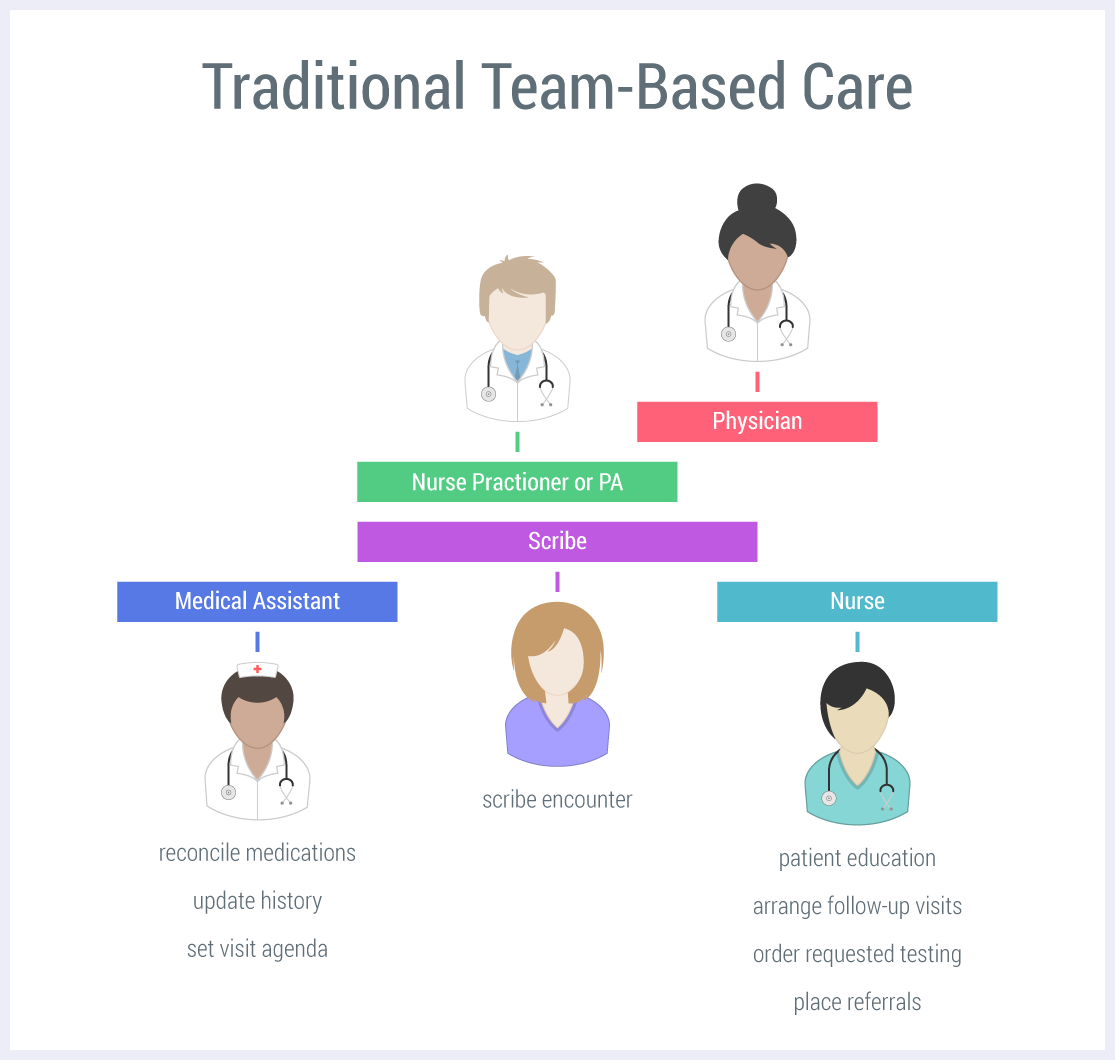
Traditional Team-Based Nursing Process
Bright.md’s SmartExam platform enables U.S. primary care practices to automate up to 60% of patient visits.. Patients can access the SmartExam platform via PC or mobile devices. The software can answer questions about various clinical conditions, help users locate nearby healthcare facilities, and input health insurance information.
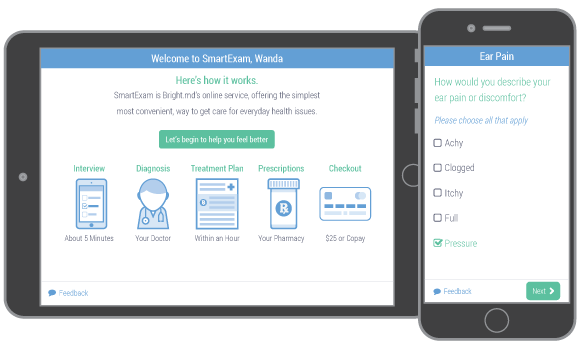
"Through the AI pre-diagnosis program, the time required for patient visits can be reduced from 20 minutes to less than 2 minutes."(Time required to view symptoms), and can prescribe medications for simple conditions. Each visit is offered at a price of $20 or less. The platform provides various patient payment options, including cash payments, HSA, and insurance billing. In addition to serving individuals, it also offers in-depth analysis and reports to group clients, including employee performance metrics and utilization statistics.
On the physician side, using software solutions, doctors can provide treatment plans for patients, document visits, generate after-visit summaries (AVS), write prescriptions, and schedule follow-up visits more efficiently.
In effect, SmartExam serves as a virtual physician assistant, leveraging AI to automate clinical workflows and enabling primary care providers (PCPs) to deliver efficient remote care. This efficiency helps practices increase capacity by 30%, reduce care costs by up to 80%, and boost profit margins by up to 300%.
At this stage, the platform has established partnerships with major U.S. healthcare delivery systems, including Adventist Health, Greenville Health System, and Rush University Medical Group. Previously, the company also secured funding from the Oregon Angel Fund and Stanford University’s StartX Fund.
Product Features: Streamline patient care pathways and address physician time scarcity.
Unlike many telehealth startups that provide services directly to consumers, Bright.md offers a technology platform directly to healthcare institutions. Ray Costantini, co-founder and CEO of the company, stated in an interview, “Patients want care from doctors, not from computers,” aiming to differentiate Bright.md’s services from those of typical telehealth companies.
Telemedicine delivers care to patients who are geographically distant from their providers via telephone, secure messaging, or video. Digital care team members offer patients the same convenience while automating much of the care delivery process for providers, making care significantly more efficient for clinicians.
During the consultation, Bright.md’s SmartExam system acts as a digital physician assistant, dynamically interacting with patients to collect their medical history and physical examination records. The information gathered through the system is then sent in SOAP (Subjective, Objective, Assessment, and Plan) format to the EMR (Electronic Medical Record) system for dynamic documentation and visualized in chart form.
As providers within the patient-extended PCMH (Patient-Centered Medical Home) care team, they can quickly review patient information transmitted via the SmartExam system, select diagnostic and treatment plans, and deliver care in approximately two minutes, as opposed to the traditional 15–20 minutes per visit.
Notably, Bright.md provides care from advanced practice providers rather than physicians for patients with low-acuity symptoms, such as respiratory conditions, which account for nearly one-third of virtual visits. For time-consuming diagnostic workups, SmartExam offers a streamlined care pathway. Consequently, patients complete virtual visits online ten times faster than in-person visits.
In other words, each healthcare provider using SmartExam sees an average of 150 to 200 patients per day.
The Founding Team of Bright.md
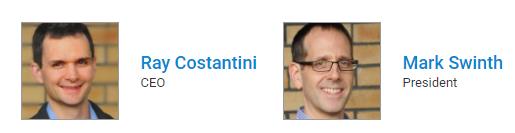
At the time of Bright.md’s seed funding round, Ray Costantini, Co-founder and CEO of Bright.md, stated, “For today’s patients, the inability to access primary care in a timely manner is a fundamental problem. That is why we created Bright.md—we aim to help providers work smarter and deliver more efficient, high-quality, low-cost care.”
Bright.md was co-founded by Dr. Costantini and Mark Swinth in January 2014. Dr. Costantini is a pioneering healthcare business leader and seasoned entrepreneur. Previously, he served as Regional Medical Director and Director of Product Strategy at Providence Health and Services, where he guided the development of numerous groundbreaking web-based products.
Mark Swinth is a seasoned business strategist and entrepreneur. He served as a strategy consultant at Bain & Company for over a decade, focusing on sectors such as software, medical devices, and health insurance. As early as 1999, Mark Swinth co-founded BrandFidelity, where he served as Senior Vice President leading application development (the company was later acquired by the Federal Institute). In 2007, he founded Tapwood LLC. Bright.md marks his third entrepreneurial venture.
Dino Vendetti, a partner at Seven Peaks Ventures (a venture capital firm), commented on them as follows: “The innovation and talent emerging from Oregon are impressive, and Bright.md is one of the most prominent startups. Bright.md’s use of software automation to streamline communication and interactions between physicians and patients resonated with our team. The backgrounds and passion of Ray and Mark constitute the foundation entrepreneurs need to succeed in this rapidly growing market.”
Ray Costantini, Co-founder and CEO of Bright.md, stated, “Over the past three years, our software has gained significant traction, and we have been recognized as the market-leading remote care solution. SmartExam is more comprehensive and scientific than other approaches, reducing care costs by guiding patients through personalized questions and providing targeted information for providers to use in diagnosis and treatment.”
Reference: http://bright.md/media/blog/2016/02/26/improving-access-to-primary-care.html