

QiJi Health Combines SaaS and AI to Transform Nephrology Care in Chinese Hospitals
Kidney disease is a high-cost medical condition, accounting for a significant proportion of national health insurance expenditures. There is a strong imperative for cost containment from both the treatment and patient perspectives. From the standpoint of the National Health and Family Planning Commission, data monitoring has become the most critical challenge.
At present, nephrology departments in hospitals across China generally face the following three issues:
First, medical hardware such as blood pressure monitors, weighing scales, and hemodialysis machines has long suffered from data silos. As a result, the data generated by these devices can only be manually transcribed into computers by doctors and nurses, leading to high labor costs.
Second, due to the large number of information technology systems within hospitals, a tertiary hospital may have nearly one hundred different types of software systems. To access patients’ nephrology-related data, physicians often need to use multiple accounts to log into various software platforms.
Third, the need for early warning and traceability in nephrology. As a high-risk department, nephrology patients are susceptible to sudden clinical deterioration. In China’s tertiary hospitals, the high patient-to-physician ratio means that a single physician may be responsible for thousands of patients. This is particularly critical during severe infectious disease outbreaks, when robust traceability mechanisms are essential to contain the spread of infection.
Powerful automation systems can help physicians track changes in patient condition data, thereby reducing the workload of manual clinical review.
Qiji Medical,“Qi”is a collective effort,“Ji”It signifies the mission of saving lives and helping people. ChinaofHealthcare Industry,NoRelying on individual heroism,but rather rely onThe Power of the Crowd, which is how Qiji Medical got its name.
Qiji Medical’s core team comprises several professionals with years of work experience in Europe. Following two rounds of financing, the team has grown to over 20 members. The platform’s core competency lies in leveraging specialized big data technologies to provide physicians with efficient data collection, organization, and analysis.
Collaboration Cases with Changzheng Hospital
The Hemodialysis Center of Shanghai Changzheng Hospital is the only one in China that operates four dialysis shifts per day. Under immense work pressure, it is extremely difficult for medical staff to ensure error-free operations.
Prior to collaborating with Qiji Medical, the hemodialysis unit at Changzheng Hospital primarily relied on paper forms for staff scheduling and the manual recording of patient data reports.
Following the implementation of the Qiji Medical Platform, functionalities such as automated check-in, automated scheduling, automated alerts, and automated medication management can be realized. This significantly alleviates nurses' workload and enhances the accuracy of hospital services.
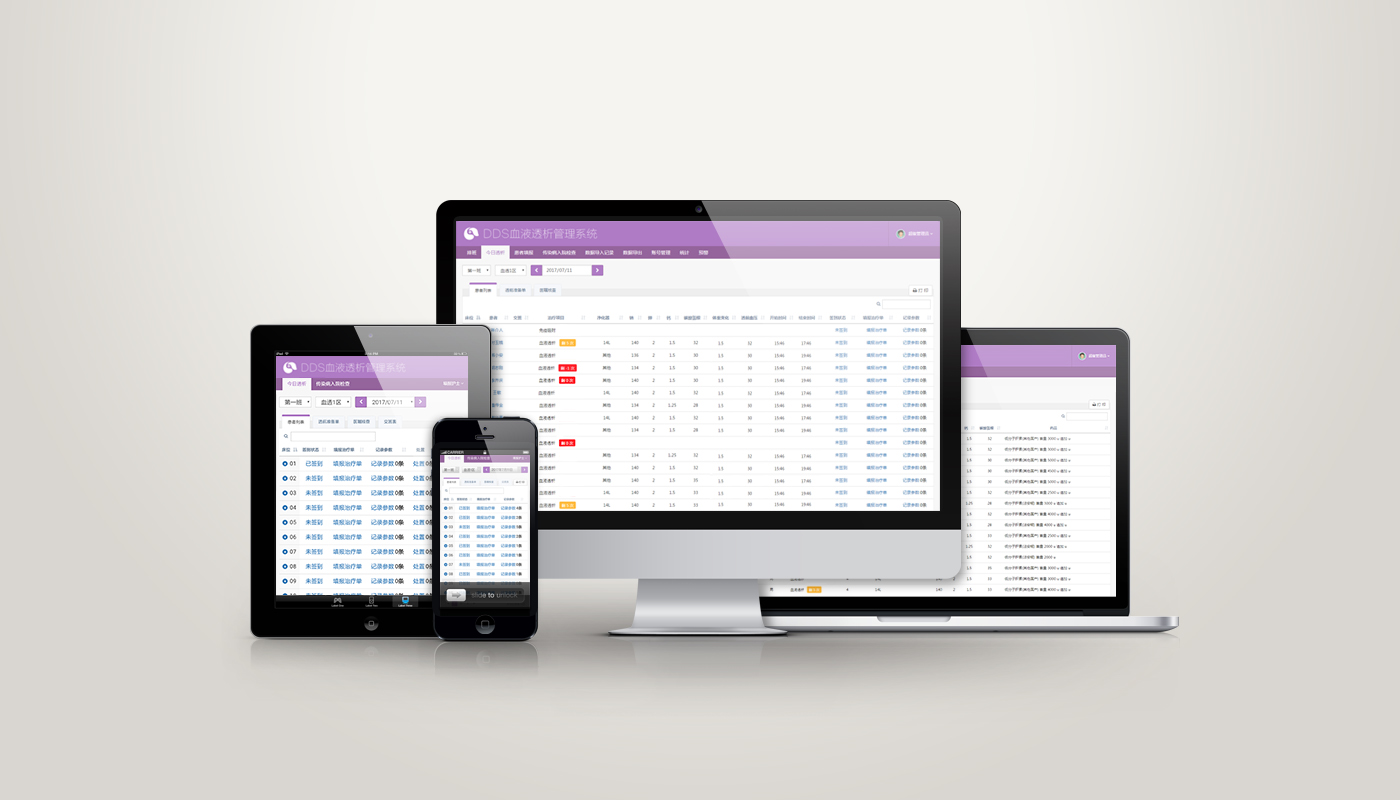
In terms of data collection, the Qiji Medical Platform interfaces with various hospital information systems to centralize nephrology-related data onto a single platform. By leveraging four specialized software solutions—DDS (Hemodialysis Management), PDS (Peritoneal Dialysis Management), AKI (Acute Kidney Injury Management), and CKD (Chronic Kidney Disease Management)—the platform connects with professional diagnostic equipment. This enables the aggregation of patient diagnosis and treatment information from hospital departments, hemodialysis centers, and patients’ homes across different time periods.
In the field of peritoneal dialysis, Qiji Medical has provided Changzheng Hospital with information technology services for remote doctor-patient engagement. Peritoneal dialysis physicians and nurses at Changzheng Hospital can monitor daily therapeutic efficacy for patients via WeChat, thereby reducing the frequency of hospital visits and increasing the intensity of follow-up care by medical staff.
Furthermore, department directors at Changzheng Hospital have research needs, such as the analysis and monitoring of special complications. Based on preliminary analyses, department directors formulate bold hypotheses, validate them through data systems, and subsequently leverage machine learning to enhance mathematical models.
To address this situation, Qiji Medical has established an artificial intelligence mathematical model to help department managers and physicians derive additional information coefficients and provide clinical decision support.
Currently, Qiji Medical has collaborated with Changzheng Hospital to analyze risk factors for complications of peritonitis using an artificial intelligence engine. In the future, this collaboration will lead to the development of a prediction platform for peritonitis.
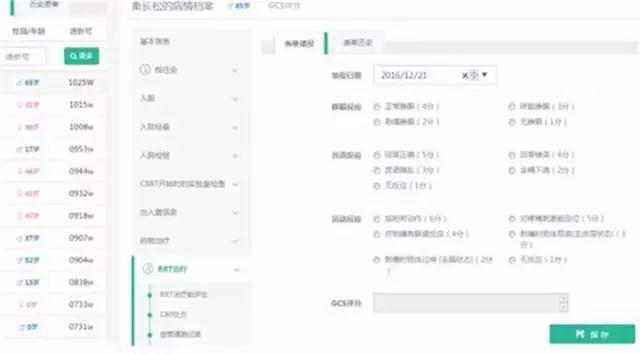
Figure: Qiji Platform Peritoneal Dialysis Physician Interface
In terms of customization, the basic package of the Qiji Medical Platform already meets the digitalization needs of most hospitals.
Regarding the differences in administrative management of nephrology departments among hospitals, such as hospital payment methods, patient admission and discharge processes, and the printing formats and content of paper documents, the Qiji Medical Platform enables rapid, low-cost customization to maximize the fulfillment of diverse customers' personalized needs.
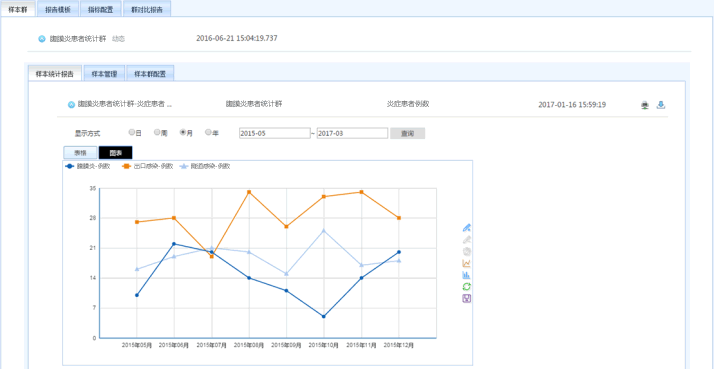
Qiji Medical's Target Clients
Qiji Medical primarily serves public medical institutions, while its engagement with private medical institutions is still in the early stages; moreover, there are significant differences in the service orientations for these two sectors.
Private medical institutions, such as third-party hemodialysis centers and private hospitals, focus primarily on remote management rather than software sales, unlike Grade II and Grade III public hospitals. From the perspective of national policy, hemodialysis centers within comprehensive private hospitals and independent third-party hemodialysis centers are poised for rapid development in the future.
The most significant challenge facing private medical institutions is the scarcity of outstanding physicians. For third-party hemodialysis centers to develop, they must be supported by top-tier talent. In the United States, a single physician can directly oversee more than ten hemodialysis centers, whereas Chinese physicians lag far behind in this regard.
By leveraging the Qiji Medical Platform, the spatial and temporal barriers between medical institutions can be bridged, enabling chief physicians from large hospitals to dedicate time and energy to providing services directly to private hospitals and third-party hemodialysis centers within public hospitals, thereby achieving shared access to top-tier talent.
Qiji Medical leverages renowned physicians from tertiary hospitals to provide delegated management for patients at the hemodialysis centers of comprehensive private hospitals and third-party hemodialysis centers. In the process of remote management, Qiji Medical charges healthcare institutions certain management fees.
Collaborations with third-party hemodialysis centers tend to focus on improving service quality and driving patient volume. In contrast, partnerships with hemodialysis centers at comprehensive private hospitals encompass not only hemodialysis services but also the sales of nephrology pharmaceuticals. Therefore, Qiji Medical’s collaboration with the latter involves a broader scope.
Transitioning from B2B to B2C
Currently, Qiji Medical has already partnered withShanghai ChangzhengHospital,JiangsuProvincePeopleHospital,Sir Run Run Shaw Hospital, HangzhouThe First Affiliated Hospital of Zhengzhou University, and Nanfang Hospital of Guangzhou, among othersOver 30A partnership has been established with a renowned Grade-A tertiary hospital.
In the future, Qiji Medical’s business model will gradually transition from B2B to B2C. The company’s next strategic step is to provide an integrated suite of convenient, nephrology-focused services, including remote medical monitoring, nearby dialysis treatment, recommendations for the most cost-effective medication purchases, at-home testing and laboratory services, and specialized kidney disease insurance.