

From Selling 30 Million Ultrasound Gel Tubes Annually to Becoming China's Leader in Remote Ultrasound Consultation: The Transformation of Anbijie
At 10 a.m. on July 19, the reporter arrived as scheduled at Anbijie, located just across the street from VCBeat (WeChat ID: vcbeat). Unlike the aloof and opulent image often associated with traditional medical device companies, Anbijie’s first impression was one of comfort and ease. This immediately put the reporter, who had initially felt some apprehension, at ease.
As a smiling young man born in the 1980s stepped out of the office and greeted the reporter in authentic Chongqing dialect, the reporter sensed that it would be a pleasant interview. This young man was none other than the interviewee himself, He Fadong, General Manager of Anbijie Company.
He Fadong’s father, He Changbo (currently Chairman of Anbijie), founded Anbijie in 2006. Headquartered in Chongqing, the mountainous city, Anbijie is a medical device company primarily engaged in the research and development, manufacturing, and sales of products in the field of ultrasound medicine. It is a pioneer and leader in China in the areas of ultrasound disinfection and ultrasound informatics.

Anbijie Chairman He Changbo (left) and General Manager He Fadong (right)
When asked about the original motivation for founding such a company, He Fadong revealed to the reporter that Anbijie’s founder and Chairman, He Changbo, was originally a physician. He graduated from Chongqing Medical University in 1984, practiced medicine for over two decades, and once served as the director of the Second Hospital of Jiangbei District in Chongqing. Consequently, he possesses a high level of insight into the healthcare industry and has a profound understanding of physicians’ professional needs.
In 2006, He Changbo entered the niche market of medical ultrasound coupling agents, launching his venture with RMB 30,000 in borrowed start-up capital. As a newcomer to the medical manufacturing industry, he was unaware of the challenges involved in transforming a laboratory product into large-scale production. Unexpectedly, the first batch of products failed to meet quality standards; releasing them to the market would have caused significant adverse effects. After careful consideration, he resolutely decided to destroy the entire batch and resume production only after improving the manufacturing process.
This decision cost the company hundreds of thousands of yuan, delivering a severe blow to Anbijie at the time and marking He Changbo’s first firsthand experience of the hardships of entrepreneurship. Despite numerous challenges, the company ultimately survived. Today, Anbijie has grown into a team of over 90 employees, completed its listing on the National Equities Exchange and Quotations (NEEQ) in 2015 (stock code: 834324), and boasts total assets exceeding RMB 100 million.
China's No. 1 Antiseptic Ultrasound Gel, with 30 Million Units Sold Annually
Anbijie's flagship product is aDisinfectant Medical Ultrasound Coupling Agent, by incorporating disinfectants into the coupling gel, a coupling gel with disinfecting properties has been developed. The product is applied between the skin and the transducer to disinfect the ultrasound probe and eliminate harmful microorganisms. Currently, Anbijie’s disinfectant coupling gel is available in 14 provinces and municipalities across China.Annual sales volume: approximately 30 million units, accounting for more than 95% of the company's total revenue.
In fact, in the field of antiseptic ultrasound coupling agents,Anbijie is a Chinese first-of-its-kind innovation, holding R&D patents. The company was the first to propose “Ultrasound probes require disinfection.” This concept, and through 10 years of publicity and promotion, this idea has been accepted by most ultrasound physicians.
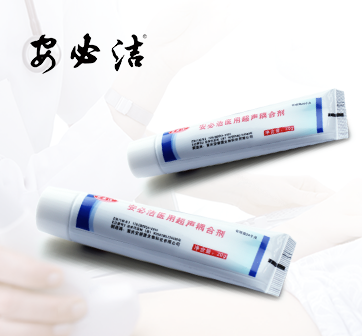
“To use a simple analogy: after using a thermometer, a doctor will wipe it clean and then disinfect it by immersing it in alcohol. As a medical device that comes into contact with human skin and mucous membranes, why should ultrasound probes not be disinfected?” This is the rationale He Fadong has consistently upheld for the need to disinfect ultrasound equipment."Moreover, as an ordinary person, I find the lack of disinfection for ultrasound probes to be a truly alarming practice. You have no way of knowing what conditions may have been present on the previous patient’s skin."
So, how should ultrasound equipment be disinfected? In fact, unlike in developed countries in Europe and the United States, sonographers in China face an extremely heavy workload, performing 20–40 examinations per morning alone, leaving no time for rigorous disinfection of ultrasound transducers. Therefore, a simple and convenient antiseptic coupling gel has become the optimal choice for ultrasound disinfection.
Prior to 2006, the market relied on traditional ultrasound coupling agents intended for intact skin, with no domestically produced antiseptic alternatives available; Anbijie was the first to fill this gap. Following the launch of Anbijie’s antiseptic ultrasound coupling agent, numerous competitors emerged, and the number of manufacturers offering similar products has now exceeded 70. Despite intensifying competition, Anbijie has maintained a commanding lead by leveraging its technological and first-mover advantages in the market.
Stepping Down from the Pedestal: Pioneering Remote Ultrasound Consultation in China
Perhaps because it had long dominated the market for ultrasound coupling gel, Anbijie began to grow “restless” and sought to make new inroads in the field of ultrasound. At that time, several experts who maintained close ties with Anbijie proposed a concept:Can ultrasound be used for remote consultations?This was undoubtedly a novel and intriguing challenge for Anbije. Coincidentally, Anbije was collaborating with the Second Affiliated Hospital of Chongqing Medical University on an ultrasound imaging analysis software, so the company integrated this concept into the platform. After multiple discussions with experts in Guangdong, Chongqing, and other regions, the company officially launched the project in 2011, entering the internet healthcare sector and initiating remote ultrasound consultation services.
In January 2012, the company formally established its team. He Fadong, who was then serving as an assistant to the general manager, had previously engaged in healthcare management at Chongqing Southwest Hospital and possessed extensive expertise in the management and operations of medical services. Additionally, he had participated in the tendering process for a remote consultation system at Southwest Hospital. Consequently, He Fadong undoubtedly became the project lead. He recruited his close friend Shen Weidong, who was then employed at Alipay, to form a three-member founding team.
Although it was an internal startup within the company, it was by no means a simple endeavor. Recalling the hardships of their entrepreneurial journey, He Fadong and Shen Weidong remarked in unison, “We really fell into many traps back then!”
Technical Challenges
First, on the technical front, as they transitioned from traditional healthcare to internet-based healthcare, they initially had no technological reserves and had to start from scratch. It took the team nearly two years to develop the remote ultrasound consultation system from conception to maturity, before it could finally be deployed in hospitals.
Objective Conditions
Just as they were on the verge of success, they were dealt a severe blow by the inadequate hardware infrastructure of hospitals at that time. Unlike today, hospital hardware capabilities were far less robust, and computer configurations varied widely across institutions, consistently undermining the stability of the system. Compounding this issue, many hospitals had poorly developed intranets and extremely limited external bandwidth, making the implementation of remote consultations exceptionally challenging.
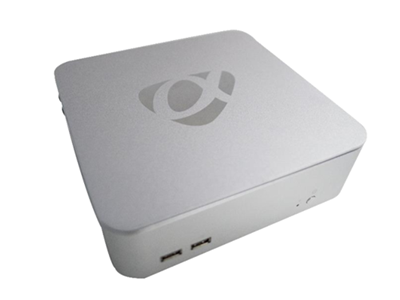
Anbijie Dynamic Medical Imaging Quality Control, Consultation, and Teaching System——Anruida
To address the hardware issues, the team specially customized a standardized hardware solution. After integrating this standardized hardware, the system began to operate very smoothly. Therefore, Anbije’s current system has already become aIntegrated Hardware and Software Products“Actually, I think technical issues are relatively easier to solve. If you fall into a pit, you just find a way to get out of it, and then it’s behind you,” remarked Shen Weidong, Technical Director at Anbijie.
Practical Factors
What truly gave Anbiji a headache was actually the human factor. First, there was user acceptance. A practical issue with remote consultations is the lack of standardized pricing. Each hospital has its own fee structure for patients, which must be incorporated into official price regulations. For remote consultations, there are no clear standards regarding how much to charge or whether the services are covered by medical insurance. Moreover, remote consultations represent a significant shift from doctors’ current work habits and practices, which may not be readily accepted by them. Therefore, at that time, user acceptance of Anbiji’s ultrasound remote consultation system was very low.
Next is the shortage of high-quality medical resources among China’s upper-tier healthcare institutions. When conducting remote consultations, who will provide them to primary care hospitals? Departments in tertiary hospitals are extremely busy every day, and doctors simply do not have time to conduct remote consultations. For example, West China Hospital has more than 70 ultrasound machines in its ultrasound department, with over 3,000 patients queuing up daily for ultrasound examinations. With such a heavy workload serving their own hospital’s patients, how can they possibly have time to conduct remote ultrasound consultations for other hospitals?
Therefore,From hardware and networks to personnel, Anbije is facing significant tests., for this product to survive, it had to identify a viable niche. Consequently, the team made a significant strategic pivot at that time,Transition to in-hospital operations, conducting in-hospital consultations, quality control, and teaching.
From Remote Ultrasound Consultations to In-Hospital Consultation Quality Control and Teaching
Despite numerous challenges, Anbijie has persevered. Currently, its Anruida system is primarily used for internal hospital consultations, quality control, and teaching.
In-Hospital Consultation
Hospital physicians can conduct remote medical consultations via the system. Experts do not need to be present at the diagnostic site; by viewing real-time, high-definition footage captured on-site, they can collaborate with local physicians to confirm patient diagnoses, thereby saving time and improving the utilization and efficiency of medical resources.
In-hospital Quality Control
In fact, there are serious problems in the quality management system of ultrasound diagnosis and treatment in China. Unlike MRI examinations, where two doctors jointly control the quality through initial review and re-review, the report of an ultrasound examination is entirely based on the conclusions dictated by the performing physician according to the images, without a senior doctor conducting a re-review. In fact, national regulations require that ultrasounds need to be reviewed.
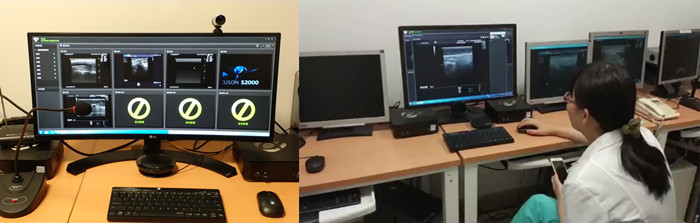
Beijing 301 Hospital is using the Anruida system for departmental quality control.
To address this issue, Anbije has implemented this system for in-hospital quality control. Supervising physicians responsible for quality control can use the system to monitor the real-time procedural performance of every individual within the department or team. These supervisors can also review recorded videos within the system, and all ultrasound examination reports require their final sign-off and confirmation. In this way, a two-tier quality control process is achieved for ultrasound examinations.
In-Hospital Teaching
Furthermore, senior physicians can leverage this system for teaching purposes. Medical students can clearly observe live procedural operations, diagnostic medical images, and treatment outcomes. The system is also capable of real-time, full-process recording of diagnostic images and procedural videos, enabling high-quality, long-term storage for future educational use.
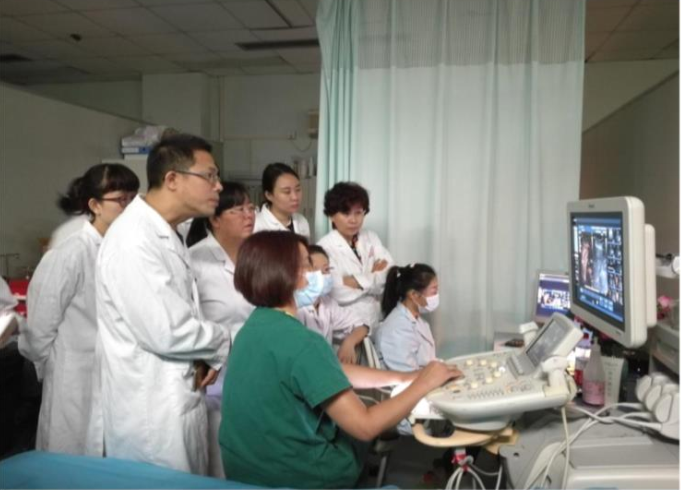
West China Hospital is using the Anruida system for departmental training and teaching.
Business Models and Strategic Layouts in the Context of Medical Consortiums
From remote ultrasound consultations to in-hospital consultations, quality control, and teaching, Anbijie has developed its own unique business model and strategic layout through a process of exploration, setbacks, and further exploration.
● From point to area, from top to bottom
The first step is to secure partnerships with leading hospitals, collaborating with top-tier benchmark institutions in China's ultrasound industry. The company’s current clients include:Beijing 301 Hospital, Shanghai Sixth People’s Hospital (the birthplace of ultrasound medicine in China), West China Hospital and West China Second University Hospital, Xiamen University Affiliated Zhongshan Hospital, Chongqing Xinqiao Hospital (the Ultrasound Medicine Center of the PLA), etc.. Securing these benchmark hospitals is tantamount to capturing the markets in Southwest, East, and North China, ultimately achieving nationwide coverage across China.
Early this year, the state began to encourage the construction of medical consortia, which is actually a very beneficial thing for Anbijie. The hospitals that the company currently occupies are all leading hospitals in the medical consortiums, such as the Huaxi system and Shanghai Sixth People's Hospital, each of which has more than ten medical consortia under it. It will be much easier to take over the lower-level hospitals after securing these leading hospitals first.
● Direct Sales + Project Collaboration to Expand Market Presence
For hospitals such as West China Hospital and the Second West China Hospital of Sichuan University, which have already demonstrated strong recognition of the product, the company adopts a direct sales model. For Beijing 301 Hospital and Chongqing Xinqiao Hospital, the company engages in project-based collaborations to jointly conduct scientific research initiatives and share the resulting benefits.
● Leverage system-derived products to expand the market
Anruida is a dynamic medical imaging quality control, consultation, and teaching system that transmits real-time dynamic medical images from clinical settings—such as DSA ultrasound, digestive endoscopy, laparoscopy, and hysteroscopy—to any location, providing solutions for real-time interactive communication between two sites. Therefore, its functionality extends beyond ultrasound consultation, quality control, and teaching. It can support live surgical broadcasts or recorded video rebroadcasts, serving departments beyond the ultrasound unit. In the future, it will be applied in a broader range of clinical environments, offering immense market potential.
The Future: Traditional Healthcare and Internet Healthcare, Walking on Two Legs
Regarding Anbijie’s future development plans, He Fadong told reporters that the company will make certain adjustments to its operations in both the traditional healthcare and internet healthcare sectors.
Traditional Healthcare, Anbijie will further upgrade its existing ultrasound gel products, develop additional models, and target more niche markets to enrich its product portfolio. For instance, it will launch sterile ultrasound gel for infants, disinfected sterile ultrasound gel for interventional procedures, and introduce new products for other medical segments requiring gel-based formulations.
Meanwhile, the company is also exploring other ultrasound disinfection methods. As disinfectant coupling gels are more expensive than traditional ones, some hospitals may be reluctant to adopt them. Therefore, Anbijie will next focus on developing new disinfection products (such as disinfectant solutions) to address this issue. The relevant technology has already been introduced, and the products are currently undergoing experimental trials.
Internet Healthcare, the company is exploring “ultrasound + AI.” Anbijie has collaborated with several research institutions and universities to perform intelligent recognition on imaging data in real time as it is acquired, highlighting suspicious areas to alert physicians. However, due to the lack of standardized ultrasound imaging data, only thyroid and breast imaging are relatively standardized. They predict that these two areas will witness the most rapid development in AI-enabled ultrasound.
In addition, to meet physicians’ needs, Anbijie plans to launch several new hardware and software products this year, such as mobile ward-round solutions. In terms of informatization, the company will focus on separating ultrasound technical operations from diagnostic interpretation and standardizing ultrasound diagnostics. It is reported that Anbijie will have further financing needs and is currently preparing for its Series B funding round.
Whether it’s ultrasound coupling gel or remote ultrasound consultations, why does Anbije always manage to seize the initiative? He Fadong’s exact words were “"We have been deeply rooted in this industry for many years, with a network of physician friends, and all our products are derived from the real-world needs of frontline clinicians."“Therefore, maintaining close engagement with users and understanding their true needs is essential to seizing the next major opportunity.”