

Poly Real Estate Files Prospectus for Its $7.5 Billion Senior Care Initiative, Aiming to Become China's Most Capable Property Developer in Elderly Services
As the saying goes, “There is nothing new under the sun,” but for every enterprise daring to cross industry boundaries, each journey is a brand-new first.In recent years, hot money has poured into the healthcare industry, including from real estate developers who are “flush with cash.”
Compared with the squeezed profit margins in the real estate sector, the healthcare industry offers substantial profits and promising growth prospects, thereby attracting significant capital from real estate developers.Investment in the healthcare sector has long been characterized by three major features: substantial capital requirements, high professional barriers, and slow returns. Meanwhile, the elderly care industry is often regarded as a sector that “generates no profit, only buzz.”
For Poly Real Estate, which has been exploring the elderly care industry for seven years, what drives its profitability, and what attempts has it made during its cross-industry expansion?
Poly Real Estate Elderly Care Business Overview
“Real estate developers possess unique advantages in developing senior housing projects. The large-scale development of residential properties will serve as a crucial guarantee for the successful implementation of senior care initiatives,” said Hu Zaixin, Deputy General Manager of Poly Real Estate.
Among its industry peers, Poly Real Estate was one of the first enterprises to enter the elderly care sector and has committed the most resources to it. In 2008, Poly Real Estate dispatched senior executives to Japan to study the business models of elderly care real estate, seeking insights and exploring pathways for launching its own elderly care services. In 2012, Poly began a comprehensive rollout of its strategic layout in the elderly care industry.
In 2013, Poly Real Estate proposed the creation of a Chinese-style elderly care model integrating home-based care, community-based care, and institutional care.
Currently, Poly Real Estate has six senior housing projects in cities such as Beijing, Shanghai, Guangzhou, Chengdu, and Sanya.Among them, the occupancy rate at Beijing Xishan Linyu and Xi Hui professional elderly care institutions has reached 70%, basically achieving a balance between revenue and expenditure.
Poly Real Estate’s elderly care property strategy is as follows: home-based care with unified service standards, community-supported care with unified facility standards, and institution-backed care with unified professional standards. This integrated model addresses the cultural, psychological, and physiological needs of seniors, thereby meeting their comprehensive care requirements.
According to Poly Real Estate’s strategic plan, the next five years will mark a period of rapid growth for its elderly care business. In institutional elderly care, the company plans to establish 80–100 He Xi Hui facilities across 50 cities within five years. For community-based and home-care services, it aims to set up 300 He Xi Healthy Living Centers in 30 core cities over the next three years, comprising 30 flagship stores and 270 experience centers.
Furthermore, Poly has leveraged the “China International Senior Industry Expo” as a platform to establish the “China Elderly Care and Age-Friendly Industry Alliance,” integrating industry resources. Through sustained development, it has cultivated a full-industry-chain ecosystem encompassing elderly care service providers, nursing training institutions, age-friendly housing, elderly care industry research centers, and medical resources.
Currently, Poly Real Estate has developed elderly care products such as “Hexi Hui” and Hexi Healthy Living Pavilion.
“Micro-Profit” Business Model: Leveraging Asset-Light Strategies to Access Financial Channels
According to publicly disclosed data from Poly Real Estate, the company’s asset-liability ratio decreased by 1.19 percentage points from 2015 to 74.76% in 2016. Moreover, its net gearing ratio also declined to 55%, representing a drop of 29.8 percentage points from 2015 and marking the lowest level since 2010.
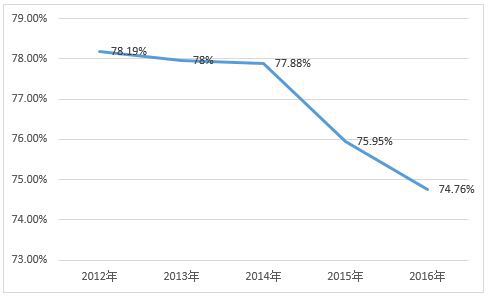
Changes in Poly's Asset-Liability Ratio from 2012 to 2016
(Data source: Wind Information)
Regarding the cash flow to current liabilities ratio, Poly's net operating cash flow to current liabilities ratio stood at 35.7% in 2016. From this perspective, Poly’s ability to cover short-term debt with cash flows generated from operating activities has declined.
On the other hand, at the end of 2016, the company’s interest-bearing liabilities decreased by a net RMB 7.9 billion, with the outstanding balance of interest-bearing liabilities totaling RMB 112.2 billion, including only RMB 13.2 billion in short-term debt.It is worth noting that Poly’s cash and cash equivalents reached RMB 46.98 billion in 2016, which was more than sufficient to cover its short-term debt. The ratio of cash and cash equivalents to short-term interest-bearing liabilities stood at a high 3.55%, indicating no short-term solvency pressure.
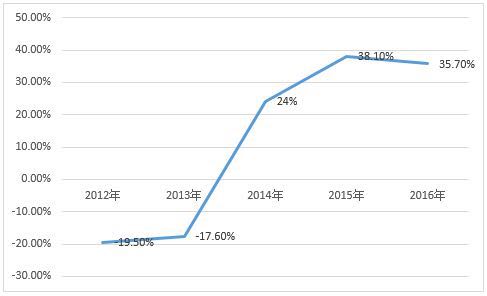
2012-2016 Changes in Poly's Cash Flow to Current Liabilities Ratio
(Data source: Wind Information, Tospur Consulting Research Department)
In recent years, Poly has maintained a stable financial position. Although it carries significant debt, it faces minimal short-term repayment pressure. Under these circumstances, Poly has positioned the profitability model of its senior housing real estate as “low-margin.”
Its profitability roadmap is as follows: In the short term, during the investment phase, revenue from the sales of age-friendly housing will be reinvested into the R&D and construction of age-friendly products, as well as the retrofitting of age-friendly supporting facilities. In the medium term, it will take 3–5 years to enter a stage of stable operations and achieve break-even. From a long-term perspective, it aims to reach the profitability levels of developed countries within 8–10 years by establishing financial channels and listing Real Estate Investment Trusts (REITs), which is currently one of the popular approaches to achieving an “asset-light” business model.
Poly’s elderly care business generates profits from: fees charged for age-friendly design and in-home value-added services under its home-based care model; service fees for products and services offered at healthy living centers under its community-based care model; and monthly rent plus professional service fees under its institutional care model. In the short term, it can only achieve slim profit margins.
Poly plans to establish 80–100 Hexi Hui senior living facilities across 50 cities over a five-year period. In the realm of community-based home care, it aims to set up 300 Hexi Healthy Living Centers in 30 core cities within the next three years, comprising 30 flagship stores and 270 experience centers.
Going forward, Poly is expected to invest RMB 5–6 billion in fixed assets and working capital.
Full-Chain Industry Intervention: Extending Upstream and Downstream
In Poly's elderly care industry framework, the full industrial chain was fully laid out by 2015.
Upstream Industry Chain:On November 6, Poly Real Estate announced a comprehensive strategic partnership with Taiping Life Insurance to establish China’s first equity investment fund dedicated to the health and elderly care industries, aiming to address capital cost issues. This marks the launch of a new model by Poly Real Estate to leverage insurance funds for the development of health and elderly care communities, signaling a new era for China’s elderly care real estate and industry development.
Midstream Industry Chain:Service institutions and Hexi Hui, elderly care real estate. Hexi Hui implements a six-in-one service system covering medical care, rehabilitation, psychology, entertainment, dietary services, and daily living assistance, adhering to the principle of "professionals doing professional work" to provide specialized services for the elderly. The Beijing "Hexi Hui" facility has achieved an occupancy rate of 70%, basically realizing a balance between revenue and expenditure.
Downstream Industry Chain:It then established a company specializing in products for the elderly and, through venture capital firms, made professional investments in technology products to generate substantial cash flow.
Furthermore, Poly Real Estate has also cultivated specialized investment and operating companies. The investment company adopts an asset-heavy model, while the operating company employs an asset-light approach. Adhering to the principle of focusing on mature locations in core first- and second-tier cities, they are rapidly deploying institutional elderly care projects and community-based elderly care initiatives. In the future, the aforementioned equity investment funds will also expand into areas such as health diagnostics.
The Trinity: Building a Chinese-Style Elderly Care Model Integrating Home-Based, Community-Based, and Institutional Care
Relying on property management companies to establish service standards is the core of home-based elderly care.In 2010, Poly Real Estate launched the “Shanju Elderly Care” initiative within its communities. Leveraging value-added services in property management, it provided customized “Five-Assistance” services—meal assistance, bathing assistance, cleaning assistance, emergency assistance, and medical assistance—and explored the establishment of a comprehensive framework for home-based elderly care, including service offerings, standards, pricing, and procedures. Over the next three to five years, Poly Real Estate plans to carry out age-friendly renovations in existing communities, implement unified age-friendly facility standards in new developments, and extend home-based elderly care services to all Poly communities.
With the advancement of informatization, Poly Real Estate plans to launch home-based online information services and establish an “Intelligent Service Platform for the Elderly,” offering services tailored to seniors, such as emergency call assistance, housekeeping appointment scheduling, health consultations, purchasing agency for daily necessities, and payment processing on behalf of users.
Integrating age-friendly products into mature urban residential communities, and providing elderly-oriented products and lifestyle amenities across the entire chain of planning, development, operation, and services, to meet the needs of older adults for relative independence from their children while cohabiting with them, and to establish a model of elder care characterized by mutual assistance, love, and harmonious coexistence—this is the goal of Poly Real Estate’s community-based elder care initiative.
Community-based elderly care primarily involves the planning and construction of age-friendly housing and senior apartments within communities. Leveraging community hardware infrastructure as a platform, and integrating clubhouses and supporting facilities, it establishes four core amenities: “Senior Universities, Activity Centers, Wellness and Fitness Centers, and Day Care Centers.” This approach facilitates functional integration between community-level resources and street-level health, medical, cultural, and sports facilities, thereby maximizing comprehensive benefits.
Poly Real Estate has established Poly Anping Professional Care and Elderly Services Company, featuring “integration of medical care and elderly care” to provide professional nursing services for the elderly and create the “Hexi Club” professional elderly care institution. Poly Real Estate will also establish a chain of professional elderly care institutions in provincial capital cities across China, serving Poly property owners. These institutions will introduce high-quality resources from local Grade A tertiary hospitals, form multidisciplinary private consultation teams, and establish four professional standards: “daily living assistance, medical nursing, emotional support, and emergency rescue,” offering a range of customized services including elderly life care, financial services, and tourism.
Traditional Community-Embedded Integrated Medical and Elderly Care Module — Poly Hexihui
Hexihui is a “medical-care integrated” elderly care institution, registered as a private non-enterprise entity (i.e., a private non-profit elderly care facility), positioned in the mid-to-high-end elderly care market. Initially targeting seniors capable of self-care, it later shifted its focus to those requiring assisted living and nursing care, as operational experience revealed these services to be the primary unmet needs.
Hexi Club implements a six-in-one service system encompassing medical care, rehabilitation, psychological support, entertainment, dietary services, and daily living assistance.Upholding the principle that “professionals should handle professional matters,” and aligned with the “six-in-one” service positioning, we have assembled a frontline service team characterized by professionalism and youthfulness. This team comprises experts in elderly care services and management, clinical medicine, nursing, rehabilitation, nutrition, and psychology. Adopting a responsibility-based holistic care model, we deliver professional services to the elderly.
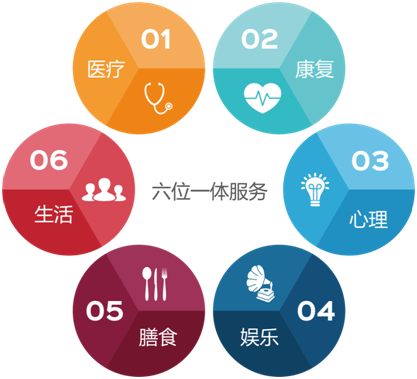
Hexihui’s “Six-in-One” Service Model
It is reported that the Beijing Poly Xishan Linyu Hexihui Senior Living Apartment has a total construction area of 22,300 square meters. The building comprises seven stories, including one basement level and six above-ground floors. There are currently 200 rooms with over 230 beds. Approximately 20 rooms are designated for training purposes, while 165 rooms are occupied by more than 210 residents. “Hexihui” is closely integrated with the “Nursing Hospital,” delivering integrated services encompassing medical care, nursing, elderly care, and rehabilitation. This model establishes a new paradigm for elderly care that merges medical treatment with wellness, providing curative care for the ill and recuperative support for the healthy.
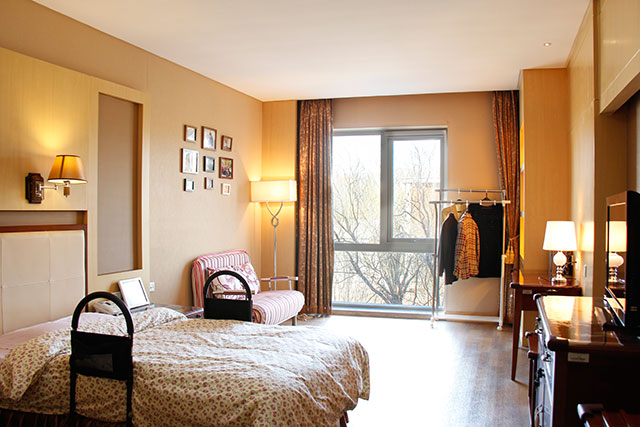
Interior Photos of Beijing Hexihui
By 2015, Hexi Hui ranked first in occupancy among peer senior care institutions of the same tier in Beijing during the same period, achieving basic cash flow break-even with a positive trend. Excluding property depreciation, it reached cash flow break-even and has maintained a surplus since April 2014.
Hexihui is now a key research unit in the elderly care service industry, as well as a standardized testing and talent training base for elderly care services. It has completed the filming of skill demonstration videos for junior and intermediate-level elderly care workers, with its elderly care service brand demonstrating notable effectiveness.
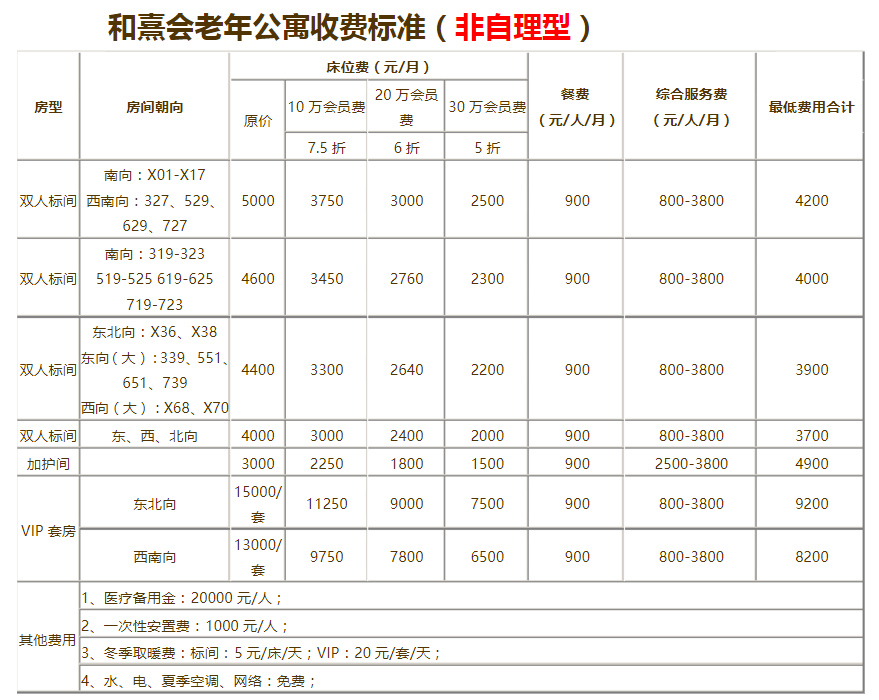
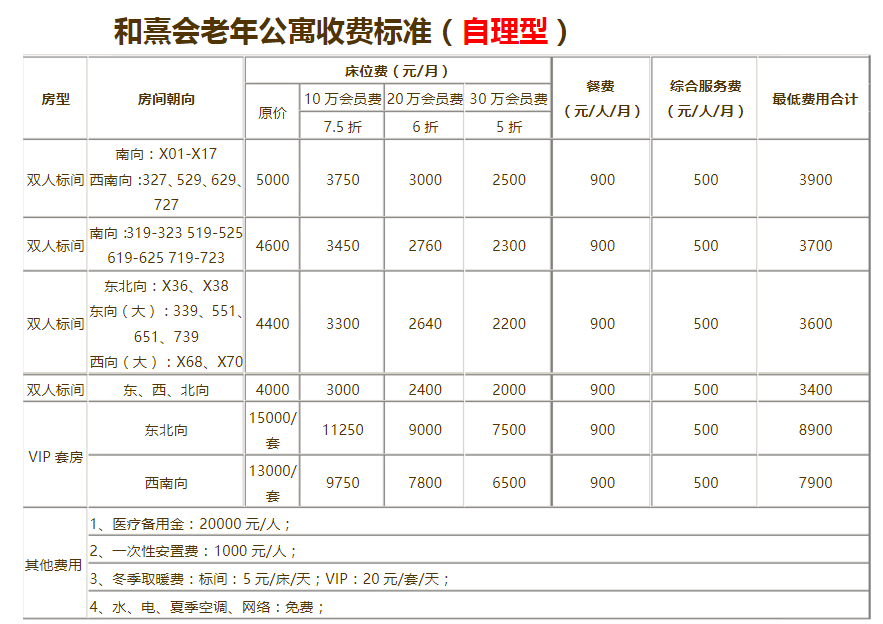
Appendix: Hexihui Fee Schedule
Overview of Overseas Real Estate Investment for Elderly Care
In China, the elderly care industry is characterized by fragmented resources, a lack of standards, an incomplete industrial chain, and low service quality.This current situation lags far behind that of foreign countries. In the United States, the stock of senior housing stands at 3.6 million units and is increasing at a steady rate. Japan’s system is even more comprehensive, with 2,000 commercial nursing homes and a fully developed industrial chain.
HCP and Ventas, the two largest healthcare real estate investment trusts (REITs) in the United States, allocate their largest investment shares to senior living communities, accounting for 38% and 60% of their total portfolios, respectively. This is followed by skilled nursing facilities and medical office buildings, with hospitals receiving the smallest share.
In countries such as the United Kingdom, the United States, and Japan, the development of REITs and CMBS (Commercial Mortgage-Backed Securities) has also provided additional financing channels for the development of senior housing. Meanwhile, reverse mortgages and various types of pension insurance help ensure seniors’ ability to pay for elderly care facilities and services.
Overview of Investment in Elderly Care by Domestic Real Estate Developers
Wang Jianlin, Chairman of Wanda Group, once stated, “Real estate is not an evergreen industry; among all property sectors, the most promising is senior living real estate.” He regards senior living real estate as a key direction for the real estate industry’s future breakthrough and transformation.As of 2014, more than 80 real estate enterprises across China, including Poly, Vanke, Sino-Ocean, Greenland, Hopson, Wanda, and Greentown, had entered the senior housing real estate sector.
Vanke: To Develop “De-real-estate-ized” Elderly Care Business
Since 2010, when Vanke announced its three major strategies—residential industrialization, commercial real estate, and senior housing—the company has undertaken multiple pilot projects related to senior housing in Hangzhou and Beijing. However, Vanke has consistently emphasized that its role in the senior housing sector is focused on service provision rather than property development. Reportedly, Vanke’s senior housing business is currently centered on constructing senior living facilities and providing community-based care services.
Previously, at the 2013 performance press conference, Vanke Chairman Yu Liang emphasized that while Vanke was interested in continuing to explore the senior living real estate sector, the “senior care” component involved was more about service attributes—specifically, providing elderly care services—rather than real estate attributes. This move aimed to separate elderly care from real estate development; senior housing viewed merely as an adjunct to real estate is not a core focus of Vanke’s services.
As early as 2010, Vanke piloted the senior housing project “Vanke Happiness Hub” in Doudian, Fangshan District, Beijing, adopting a dual model of sales and leasing to pave the way for its senior real estate development. Additionally, it tested the waters in Huanqing City in Beijing and Vanke City in Qingdao, and later developed senior housing projects within Liangzhu Cultural Village in Hangzhou, albeit on a smaller scale. Currently, Vanke is exploring new approaches to the development of senior housing.
Greentown Elderly Care: A New Academic-Style Approach to Elderly Care
In the view of Song Weiping, Chairman of Greentown, Greentown may have various directions for future development, but “what Greentown must succeed in is the elderly care industry.” As one of the earliest real estate developers in China to venture into elderly care real estate, Greentown’s “academy-style elderly care” initiative has garnered widespread acclaim, yet it has also encountered profitability challenges. Song Weiping stated that developing elderly care real estate requires a degree of idealism and patience.
While typical developers emphasize the provision of elderly care services and medical hardware in senior living real estate, Greentown focuses on an “academy-style” approach by establishing a dedicated education company to operate “universities for the elderly.” Greentown’s initial foray into senior living real estate was the “Yiyang Apartments” within its Greentown Lanting project in Linping, Hangzhou, launched in 2010. In addition to public amenities such as a health center, cultural and sports activity center, community outpatient clinic, and nursing home, the development also established a community-based university for the elderly, marking Greentown’s preliminary exploration of “academy-style elder care.”
Greentown believes that by organizing the daily lives of elderly residents within its communities in a school-like manner, and by offering various learning opportunities and activities tailored to their physical and mental well-being, it can reinterpret and better understand the spiritual needs of the elderly.
Furthermore, Greentown has developed experimental “academy-style elderly care” projects such as Yilexue and Wuzhen Yayuan, advocating idealistic senior living real estate to meet the spiritual needs of the elderly.
Sino-Ocean Land: “Transoceanic Collaboration” Creates Elderly Care Brand “Chunxuanmao”
In 2013, Sino-Ocean Land officially established “Sino-Ocean Elderly Care Operations Management Company” and launched a new elderly care brand, “Chunxuanmao.” Li Ming, Chairman of Sino-Ocean Land, stated that the elderly care industry is expected to become one of the company’s four core business segments, alongside residential property, commercial real estate, and financial services.
Sino-Ocean Group has entered the elderly care industry, adopting a strategy of forming strategic alliances with internationally renowned senior living service providers. Chunxuanmao represents Sino-Ocean Property’s first “cross-border collaboration” initiative, wherein Sino-Ocean signed an agreement with Columbia Pacific and Emeritus, a well-known U.S. senior living services provider, to jointly establish a Sino-foreign equity joint venture for development and operations. Kaijian International, the Chinese subsidiary of Columbia Pacific, is the first foreign-invested enterprise in China to hold a business license for elderly care services; its first senior living project commenced operations in October 2012.
Insights from Real Estate Developers’ Diversification into Healthcare
1. The elderly care industry must be grounded in reality and tap into the mid-to-low-end market. Currently, many high-end nursing homes in China have generally high vacancy rates. This is because China’s elderly care system is primarily based on home-based care, supported by community-based services, and supplemented by institutional care. Private elderly care institutions tend to offer high-end services with expensive fees, resulting in limited social acceptance. By targeting middle-income families, the industry could potentially reach a broader audience.
2. Elderly care should “de-emphasize real estate” and center on services. Poly Hexi Club provides seniors with a “six-in-one” service model, implementing professional elderly care services and management to build elderly care upon services rather than merely providing accommodation.
3. Cross-sector expansion into the elderly care industry can pursue an asset-light strategy, facilitate financing channels, reduce the debt-to-asset ratio, and focus on developing core businesses.