

Vanke's Six-Year Healthcare Journey: From Children's Hospitals to Rehabilitation Care
The Vanke-Baoneng Dispute—The longest-running and largest M&A and anti-takeover case in the history of China’s A-share market officially came to an end on July 1. By that time, 30 months had passed since Baoneng first purchased Vanke shares, and nearly two years had elapsed since Baoneng’s initial equity disclosure filing for Vanke.
The Vanke–Baoneng Dispute involved multiple stakeholders, including consortiums, insurance capital, private capital, and state-owned enterprises, with total participating funds exceeding RMB 100 billion and floating profits or losses for related parties amounting to billions of yuan. It has also had a profound impact on economic policy formulation, financial regulation, and market orientation.
Beyond the treacherous landscape of corporate warfare, Vanke, as a high-quality real estate stock, offers many highlights at the business level. During its development, the company has maintained rapid growth in its core business while achieving diversified expansion by venturing into education, long-term rental apartments, and healthcare and elderly care, thereby adapting to economic cycles and industry adjustments.
VCBeat (WeChat ID: vcbeat) has compiled Vanke’s investment layout in the medical and health sectors, analyzing the big health business behind Vanke.
Copy Taiwan Chang Gung Memorial Hospital
Vanke’s exploration in the healthcare sector began under its former chairman, Wang Shi. Public records indicate that between 2010 and 2011, Wang Shi made intensive visits to numerous private hospitals in Taiwan, the United States, and South Korea. The earliest benchmark he referenced was Chang Gung Memorial Hospital in Taiwan, founded by the Formosa Plastics Group.
Chang Gung Memorial Hospital was founded in 1976 by Wang Yung-ching, Chairman of the Formosa Plastics Group. Its core philosophy is to manage the hospital using corporate business principles, implementing advanced management systems in cost control, individual performance evaluation, compensation design, and medical equipment procurement. At that time, it was already one of the most highly regarded hospital groups in Taiwan and also enjoyed a strong reputation in mainland China.
Prior to Wang Shi’s visit to Taiwan’s Chang Gung Memorial Hospital, the Formosa Plastics Group had already collaborated with Xiamen Haicang Company to establish Xiamen Chang Gung Hospital, which officially commenced operations in May 2008.
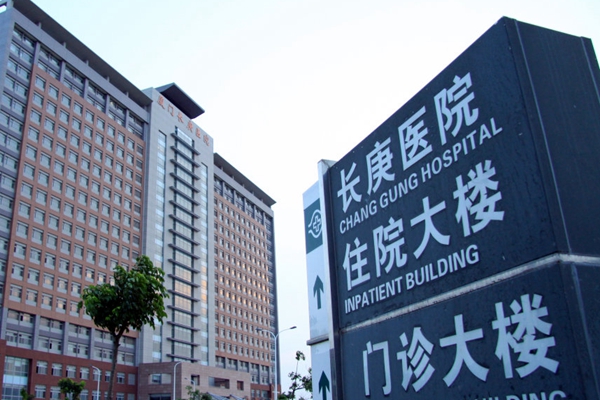
Xiamen Chang Gung Hospital
At that time, policies were largely encouraging private capital to enter the healthcare sector. The “New Healthcare Reform” plan stated that “we should accelerate the formation of a diversified landscape for healthcare provision and encourage private capital to establish non-profit hospitals,” making it an opportune moment for real estate developers to cross over into healthcare investment.
In 2011, Vanke sent its first letter to the Shenzhen Municipal Government, applying to establish medical facilities in Shenzhen, thereby embarking on its journey of investing in healthcare. Initially, Vanke planned to create a non-profit tertiary children’s hospital with 500 beds. However, as its understanding of hospital investment deepened, Vanke revised its investment strategy, deciding to split the project into three smaller-scale children’s hospitals to be established in Shanghai, Guangzhou, and Shenzhen.
At the time, Wang Shi stated that the three children’s hospitals in these locations would follow three distinct operational models: one would provide medical services to low-income patients; another would serve affluent patients, with the profits generated used to subsidize care for the poor; and the third would focus exclusively on treating complex and refractory diseases using cutting-edge technologies, without targeting a specific patient demographic.
However, in actual practice, the children’s hospitals in these three locations were temporarily suspended due to reasons such as the lack of partners, professional medical management talent, and incomplete approvals, and have not yet commenced substantive operations to date.
Elderly Care Services Become Key
Around 2009, the senior housing real estate market was booming, and Vanke launched its own senior housing initiative at that time. According to Vanke’s plan, the company intended to roll out senior housing projects in core cities such as Beijing, Shanghai, Guangzhou, Shenzhen, and Hangzhou within two to three years after 2009. Additionally, it would prioritize expansion in ten other Chinese cities characterized by “three highs”: a large elderly population base, high per capita disposable income, and advanced medical care standards. Senior living services were also slated to become an independent business segment within Vanke.
We can examine several case studies to analyze the implementation pathway of Vanke’s elderly care business. The first is the Vanke Happiness Hub project, initiated by Vanke in 2010. Positioned as an elderly care real estate development, it is located in Doudian, Fangshan District, Beijing. Targeting seniors and their families, the project provides services such as elderly care assistance and home-based nursing.
Next is the “Vanke + Beijing Enterprises” partnership. Their joint project, named “Beijing Guangxi Medical and Elderly Care Center,” covers a land area of 7,054.24 square meters, with a total gross floor area of 17,594.83 square meters. The facility consists of two buildings, north and south. The senior living apartments are located in the south building (the north building houses a Level II rehabilitation hospital currently under application). The senior living apartments span six floors, offering a total of 72 rooms and 110 beds for elderly residents. Phase I will initially open floors 4–6, providing 35 rooms and 52 beds.
The collaboration model involves Vanke Elderly Care exporting its service and management control standards, while the property management contract rights held by the original property company remain unchanged. Vanke Property assists with renovation and operations, and Beijing Enterprises Holdings provides resource matchmaking and other support.
Lastly, there is Guangzhou Huixin Hospital, which opened at the end of last year. Yu Minfeng, Assistant General Manager of Guangzhou Vanke, who oversees this project, stated that his team began searching for a suitable location in the second half of 2015. After six months of search, Xintang Hospital finally came into their view. Founded in 1965, Xintang Hospital is a Grade II Class A hospital. Guangzhou Vanke completed the implementation of this project by increasing capital to obtain a controlling stake and renamed it Huixin Hospital.
Huixin Hospital held its opening ceremony on December 31 last year. Positioned as a “specialty-focused, general-support” institution, it is established as a specialized hospital with rehabilitative medicine as its core feature, integrating services such as preventive healthcare, primary medical care, and professional rehabilitation.
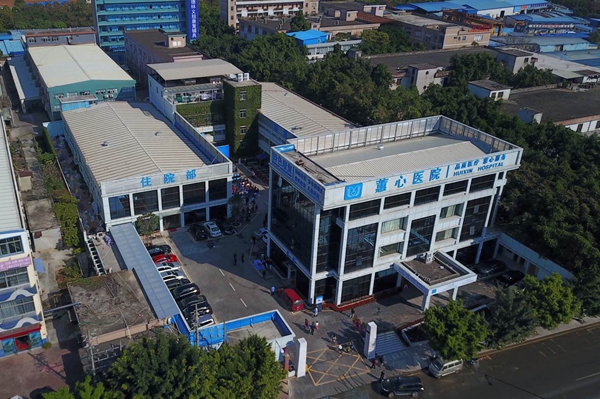
Guangzhou Huixin Hospital
Overall, Vanke’s strategic approach to elderly care may involve three distinct models. The first is senior living real estate, which integrates elderly care services into residential communities to create a marketing concept that supports its core property sales business. Notably, Vanke has made significant investments in such embedded services; for instance, its elderly care service team in Beijing alone comprises over 300 members.
The second model is the collaborative type, which leverages its existing expertise in elderly care services through partnerships with other institutions to provide comprehensive standards for projects and integrate other Vanke business lines, thereby achieving integrated service delivery.
The third model is the self-built type, which achieves direct controlling stakes in hospitals or elderly care service departments through greenfield development or investment-led renovation, thereby providing integrated medical and pharmaceutical services tailored to diverse population segments.
Reflections on Vanke’s Business Expansion in Healthcare
Vanke is neither the first nor the last real estate developer to expand from its core business into the healthcare sector. In terms of practical implementation, Vanke has experienced setbacks and was not the most successful among its peers. The typical significance of Vanke’s expansion into healthcare lies in the high attention it commands; its transformation has prompted the real estate industry to reflect on industrial layout strategies. Furthermore, the subsequent successful launch of a batch of senior living and rehabilitation hospital projects has provided valuable references for the “real estate + healthcare” model.
To clarify the reference value of Vanke’s expansion into the healthcare business, it is advisable to ask several key questions: Why pursue this venture? What is the core logic? How should it be executed? Which resources and partners are needed for collaboration? And how can sustainable operations be maintained after implementation?
# The Topic of Real Estate Developers' TransformationThe topic of transformation among real estate developers first emerged in 2009. In the aftermath of the financial crisis, the real estate market received substantial policy support, enabling it to buck the downward trend and experience a rapid surge. However, this upswing also sparked public skepticism and scrutiny. This contrast between broader economic coolness and sector-specific heat prompted developers to explore diversification strategies beyond their core real estate business.
At that time, Wang Shi also stated in a public speech, “Vanke has been preparing for its transformation for ten years.” Regarding the specific direction, he said, “Vanke will undertake whatever cities need, such as schools, hospitals, exhibition centers, sports facilities, and even waste treatment plants and sewage discharge systems.” Wang Shi proposed that Vanke should transform into an “urban supporting service provider.”
Vanke’s Transition from Real Estate Development to “Urban Supporting Service Provider”
Industry insiders believe that, with the evolution of the real estate market, property development is no longer the sole mission of developers; increasingly, they are consciously or unconsciously assuming the role of “city operators.” By rationally integrating educational or medical elements into their projects, real estate developers can cultivate a unique competitive advantage.
The drive to enhance competitiveness is the underlying cause, while collaboration or self-development represents the specific implementation methods. In the actual execution process, issues such as organizational structure design and talent acquisition arise. The relative success of Vanke’s elderly care projects can be attributed to early planning of its personnel structure; by the time it needed to scale up, a complete business framework was already in place, enabling effective nationwide expansion. In contrast, the failure of the children’s hospital project stemmed from a lack of sufficient experienced executives. Furthermore, the cross-industry transition from real estate to healthcare inherently involves a significant gap, making it difficult to implement projects relying solely on capital investment or conceptual ideas.
For the Huixin Hospital project, Vanke adopted a strategy of acquisition followed by renovation. The advantage of this approach lies in its ability to effectively leverage the hospital’s existing resources, reduce investment in human resources and management teams, and exert greater control over the direction of development.
From single-family residential development to proactive transformation, Vanke’s shift in mindset is driven by structural adjustments in the real estate sector, evolving user demands, and urban development needs. Real estate companies are increasingly prioritizing operations, with the “asset-light” business model becoming the preferred evolutionary path for developers, including Vanke.
Analysts suggest that the transformation of the real estate sector is driven by four core logics: financial innovation, internet thinking, land reserves, and business diversification. Financial innovation alleviates the capital pressure associated with large-scale investments, enabling companies to deploy their operations on a massive scale. The crux of internet thinking lies in identifying user needs; whereas property developers previously focused solely on selling homes, under a demand-oriented approach, they now place greater emphasis on users’ derivative needs and provide corresponding services. Land reserves refer to the strategy wherein, against the backdrop of a continuously improving real estate market and the scarcity of land resources in first-tier cities, real estate enterprises begin to acquire and reserve land plots in second- and third-tier cities.
Diversified operations are a key focus of real estate transformation. Companies can pursue vertical extension along the real estate industry chain or expand into non-real estate sectors to achieve a complete corporate transformation. For example, Vanke has extended its core real estate business into education and healthcare, while Yihua Health has fully transformed into the broader health industry. Relevant data show that among dozens of A-share listed real estate companies, more than 80% have ventured into businesses beyond real estate, with their investments in these areas continuing to increase.
For a long time, China’s economic growth has relied on the rapid expansion of the real estate sector. However, after years of frenzied growth, this path dependency is bound to be broken. As an “evergreen sunrise industry,” big health undoubtedly holds immense appeal for real estate developers.
Therefore, an increasing number of real estate developers, such as Vanke, will expand into the broader healthcare sector beyond their core property business, with development directions becoming more diversified beyond hospitals and elderly care services.