

SoYoung CEO Jin Xing Expands into 200 Tier-2 and Tier-3 Cities with Clinic Empowerment Strategy
MPCi
Venture Capital Institutions in High-Tech Startup Fields
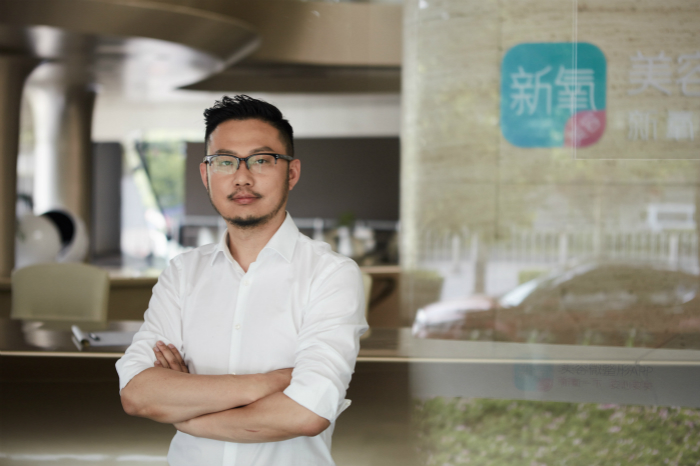
Jin Xing, CEO of SoYoung
“Survival of the fittest reigns supreme; competition among medical aesthetics platforms is no longer as intense as it was two years ago,” said Jin Xing, founder and CEO of So-Young.
In 2015, there were more than 30 medical aesthetics apps on the market; today, fewer than one-third remain in stable operation. As a gateway-level medical aesthetics app, SoYoung has disrupted traditional models in consumer education and customer acquisition. Coupled with technological advancements that have enhanced the safety and convenience of medical aesthetic procedures, consumer awareness and understanding of the industry have continued to deepen.
Since 2016, a new wave of “market penetration into lower-tier cities” has swept across China, with New Oxygen as its pioneer. Unlike the brute-force land-grab competition seen two years earlier, the current phase resembles a golden harvest period underpinned by the mutual endorsement of doctors, hospitals, and consumers.
VCBeat (WeChat: vcbeat) conducted an exclusive interview with Jin Xing, who shared his latest insights on the current medical aesthetics app market and New Oxygen’s operational strategy for 2017.
Pioneering the “New Oxygen Model”
“New Oxygen’s product model can be described as ‘social + content + e-commerce,’ which is known in the industry as the ‘New Oxygen Model.’”
In May 2014, So-Young decided to launch its “Plastic Surgery Diaries” feature. At the time, this functionality was highly innovative and disruptive in China, sparking internal debate within the company. After all, sharing is an altruistic act, let alone posting online the most graphic and unsettling images from one’s plastic surgery experience. Would users be willing to use it?
“Identifying content creators in the plastic surgery sector is extremely challenging. In beauty communities, nearly any woman can serve as a source of user-generated content (UGC), since most have experience with various cosmetics. However, users frequenting plastic surgery communities are predominantly individuals considering undergoing procedures, making them largely incapable of generating content. At that time, the New Oxygen team collaborated with physicians to upload detailed post-operative recovery information for over 200 procedures—including daily symptoms and guidance on distinguishing normal from dangerous signs—to attract user engagement.”
As of the second quarter of 2017, SoYoung had accumulated 3.2 million consumer-written cosmetic surgery diaries, essentially covering the vast majority of doctors and hospital procedures in China.
Aesthetic medicine is a highly non-standardized service, inextricably linked to social interaction and content for e-commerce decision-making. The greater the volume of reviews, the more precisely products and services can be filtered, effectively shortening consumers’ decision-making time. “Flagship stores operated by JD Medical Aesthetics Hub or plastic surgery hospitals on Tmall only address the sales channel. For consumers, the challenge lies not in making online purchases, but in making consumption decisions.”
Driven by authentic consumer scenarios and strong brand endorsement, SoYoung has experienced rapid growth in transaction volume. In 2016, its online gross merchandise value (GMV) exceeded RMB 2 billion, driving an output value of RMB 6 billion. In June 2017, peak orders surged by 400% year-on-year. In terms of scale, SoYoung has secured a leading position among medical aesthetics apps and remains committed to expanding its scale while maintaining strict quality control.
“Urban Penetration” Strategy
“When first entering the market, medical aesthetics apps may have had their own ideas and approached from different angles. Once a company figures out a relatively smooth and verifiable model for the industry, other companies will quickly replicate it.”
The outcome is predictable: products are becoming increasingly homogeneous.
"However, specific strategies and tactics may vary among companies. Leading institutions generally focus on continuously expanding their scale and market share, leveraging economies of scale to build competitive barriers. Companies with relatively smaller market shares may concentrate on niche segments, offering differentiated services."
Therefore, for medical aesthetics apps, differentiation is not actually reflected at the product level, as product models are easily replicable; more important are the enterprise’s positioning, strategy, and operations.
Since the beginning of 2016, New Oxygen has launched its “market penetration into lower-tier cities” strategy, expanding its presence to second-, third-, and fourth-tier cities. Currently, its partner hospitals cover more than 200 cities across China.
Now, you may see co-branded promotional advertisements for New Oxygen and local aesthetic clinics on buses or bustling streets in cities such as Zhengzhou, Tianjin, Hengyang, and Wuhu. “Offline joint promotions are our key focus this year. For the app, co-placement indeed helps share costs. As for institutions, they prefer to partner only with leading platforms. In cross-industry integration, we hold a significant competitive advantage.”
“We recognized early on that the majority of consumers in the medical aesthetics industry make their purchases locally. Therefore, we need to engage and cultivate users in every city.”
The channel penetration strategy implemented in 2016 laid a solid foundation for the strong resurgence in 2017.
Become a Leading Medical Aesthetics Platform
According to monitoring data from multiple third-party platforms, including QuestMobile and Analysys, SoYoung has occupied a leading entry position since the second half of 2016. Moreover, two key metrics reflecting user stickiness—APP “launch frequency” and “usage duration”—have been steadily rising. This pattern of market evolution has recurred multiple times in the history of China’s internet industry, as evidenced by prior competitive dynamics in the online travel, group-buying, video streaming, and ride-hailing sectors.
In terms of brand promotion, So-Young began to fully dominate top-tier film and entertainment resources in 2017, while expanding the scale of its offline promotional efforts.
In its early stages, New Oxygen primarily collaborated with small clinics. Starting in 2016, the platform began attracting large medical aesthetics chains to join voluntarily, including domestic industry giants such as Mylike and Yestar. “Mylike operates more than 30 clinics across China and has established a dedicated subsidiary within the group to manage cooperation between all its affiliated institutions and New Oxygen. Yestar has adopted a similar approach.”
Large chain medical aesthetics institutions are increasingly shifting their advertising budgets toward medical aesthetics apps, a trend that is irreversible in the long run.
The value that a high-quality medical aesthetics app company can bring to plastic surgery hospitals or doctors is far more than just generating short-term revenue; its greater value lies in building reputation, similar to the function of Dianping (a popular consumer review platform). Consumers are much more cautious when choosing a medical aesthetics institution than when selecting a restaurant, making the role of medical aesthetics platforms even more critical.
Medical aesthetics consumption is a low-frequency, high-ticket industry. For institutions not listed on medical aesthetics platforms, plastic surgery diaries often feature negative reviews. This is because satisfied customers rarely proactively leave reviews, whereas dissatisfied customers, finding no other channel for complaints, turn to medical aesthetics apps to voice their grievances.
After joining the platform, institutions can display e-commerce sales in real time and encourage satisfied consumers to write reviews.
To date, SoYoung has attracted 6,600 hospitals and 15,000 doctors to join its platform, accumulating medical aesthetic consumption data from 20 million users. Taking Beijing as an example, among the more than 260 licensed medical aesthetic institutions in the city, over 230 have joined SoYoung, representing a penetration rate of nearly 90%.
Furthermore, SoYoung is extending its reach across the upstream and downstream segments of the industry chain, including major medical device and pharmaceutical manufacturers. “Recently, the Global Vice President of Restylane visited SoYoung’s headquarters to discuss deeper collaboration.”
Why are upstream manufacturers attracted? Primarily because these enterprises previously collaborated mainly with doctors and medical institutions, lacking direct channels to communicate with consumers. Medical aesthetic apps serve as connectors, enabling upstream manufacturers to engage directly with end consumers, which facilitates brand awareness building and allows for consumer rebates.
Empowering Clinics, Building a Healthcare Industry Ecosystem
In terms of expanding its network of hospitals and physicians, the market is gradually undergoing changes. Beyond continuous growth in quantity, New Oxygen has begun to deeply engage in the offline operations of medical institutions, helping these partnered hospitals achieve accurate positioning and build brands within specialized segments of the medical aesthetics industry.
“Originally, offline medical aesthetics institutions lacked significant differentiation, with the vast majority of doctors claiming they could perform all procedures. In contrast, the SoYoung app targets a more focused audience, enabling doctors to specialize in specific areas and establish their own unique competitive advantages.”
For example, a hospital in Dalian listed on the New Oxygen platform specializes in creating a Korean-style upturned nose for internet celebrities. This type of nose is unacceptable to ordinary consumers because it looks unnatural and obviously surgically enhanced. However, internet celebrities are highly satisfied with the results, and after gaining popularity within their circle, the hospital’s business has thrived.
Furthermore, some medical aesthetics institutions have established their foundations on the intellectual property (IP) of renowned physicians, others on specialized categories (such as energy-based devices and injectables), and still others on service excellence. During the 2016 So-Young Medical Aesthetics Gala, awards were presented to industry leaders in these specialized categories to recognize their contributions to brand upgrading and the growth of medical aesthetics consumption.
In 2016, So-Young established the So-Young Business School, akin to Taobao University. The instructors at So-Young Business School comprise elites from the medical aesthetics industry, including top-tier clinic directors, physicians, operations experts, and senior consultants.
To date, more than 700 medical aesthetic institutions have participated in training programs offered by New Oxygen Business School, with cumulative attendance exceeding 3,000 participants; the majority of these institutions are located in second- and third-tier cities.
In addition to covering basic operational methods and techniques for medical aesthetic platforms, the training program prioritizes helping institutions clarify their online positioning and develop differentiation strategies.
“Many institutions are well-versed in price wars. New Oxygen helps institution managers decide which types of products should compete on price and which should not. We have our own set of theories based on industry-standard pricing models. By providing hands-on guidance to these institutions, we have cultivated a significant number of deeply partnered institutions on our platform.”
At some key partner institutions, customers referred by So-Young account for 60%–70% of the total user base.
The general pricing strategy is to use low-priced items for customer acquisition and high-priced items for profit generation. As specific offerings evolve dynamically with technological advancements and consumption upgrades, real-time adjustments and displays are implemented using New Oxygen’s big data analytics.
These institutions have actually established a deep, mutually beneficial symbiotic partnership with New Oxygen, centered on helping them improve ROI through consultation and services. For institutions that perform well on New Oxygen, marketing costs typically amount to 10%, far below the industry average of 50%.
New Oxygen is entering its fourth year this year. The company’s vision is to endure for another 100 years and become a enterprise with a market capitalization of RMB 100 billion. Jin Xing stated that one of New Oxygen’s “modest goals” is to leverage technology to help 100 million people achieve beauty safely, while providing comprehensive support to entrepreneurially run clinics operated by small- and medium-sized physicians.