

Integrating Internet, Specialized Diseases, and Big Data: Traditional Chinese Medicine Embraces the Intelligent Era
If the formal implementation of the Traditional Chinese Medicine (TCM) Law in July has ushered in a true spring for the development of China’s TCM industry, what potential and opportunities do new technologies—represented by the internet, big data, and the Internet of Things (IoT)—bring to the innovative development of TCM?
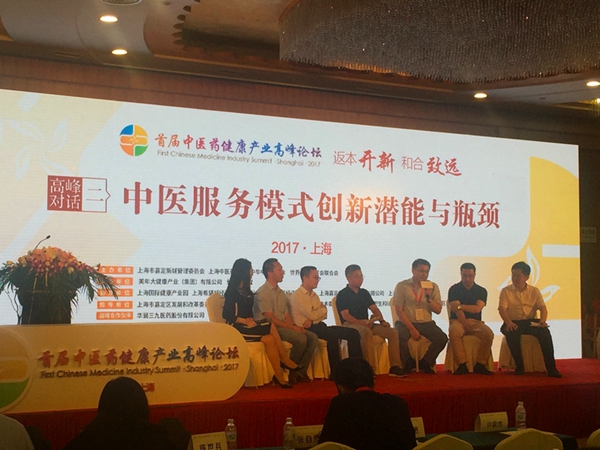
On July 29, the inaugural Shanghai Summit on Traditional Chinese Medicine (TCM) Health Industry, co-hosted by the Administrative Committee of Shanghai Jiading New City, Shanghai University of Traditional Chinese Medicine, the China Association of Chinese Medicine, and the World Federation of Chinese Medicine Societies, was held in Shanghai. During the high-level dialogue, Wu Dasheng, founder of Taikuntang TCM Chain, shared how Taikuntang has achieved innovation in the inheritance and service delivery of TCM through its exploratory practices integrating “Internet+,” specialized disease management, and big data. VCBeat (WeChat ID: vcbeat) promptly reported on these insights.
As a TCM medical service provider that started as a traditional Chinese medicine chain, Tai Kun Tang, with a decade of history, has actively increased its investment in the past two years and become a leading brand in Shanghai’s privately run TCM sector. In Wu Dasheng’s view, the convergence of technological advancements, favorable policies, and cultural revival has created unprecedented opportunities and possibilities for innovating and enhancing TCM service models.
For Traditional Chinese Medicine (TCM), the advent of "Internet+" has brought about far more than just improved patient experiences and enhanced medical efficiency; more importantly, it has opened up new pathways and possibilities for the inheritance and innovation of TCM. The development of the internet, the Internet of Things (IoT), and artificial intelligence has introduced new methods for passing down the clinical expertise of renowned and experienced TCM practitioners.
“With traditional methods of inheritance, we rely on manual labor for data collection, organization and analysis, as well as summarization and refinement. Now, through the objective acquisition of four-diagnostic information, electronic medical records, data mining, deep learning, and the application of artificial intelligence, we can achieve digitized data collection, automated analysis, and intelligent application. Furthermore, through internet-based collaboration, we can pass down the experience of renowned physicians and upload clinical data. The accumulation and application of this data can even provide the possibility for progressive improvements or revolutionary breakthroughs in the efficacy of Traditional Chinese Medicine (TCM),” said Wu Dasheng. “Currently, Go has AlphaGo, and Western medicine has the Watson robot. I believe that in the near future, robots featuring renowned veteran TCM practitioners for auxiliary decision-making, or robots specialized in TCM-dominant diseases, will emerge.”
Taking polycystic ovary syndrome (PCOS) as an example, Taikuntang has leveraged technological means to collect and analyze data from a large repository of medical records, identifying at an early stage the correlations between TCM macroscopic indicators and Western medicine microscopic indicators. “For primary-care institutions lacking diagnostic resources, there is hope that corresponding diagnosis and pattern-based treatment can be conducted through the four TCM diagnostic methods—inspection, listening/smelling, inquiry, and palpation—as well as observation of body type, odor, and hair characteristics,” said Wu Dasheng.
According to Wu Dasheng, Professor Yu Jin, Honorary President of Taikun Tang and Honorary Chairman of the Gynecology and Obstetrics Branch of the Chinese Association of Integrative Medicine, has dedicated 62 years to the study of polycystic ovary syndrome (PCOS). She was the first to clearly propose a clinical classification scheme both domestically and internationally, and established an integrated traditional Chinese and Western medicine diagnosis and treatment model based on classification, primarily utilizing “Kuntai No. 1 and No. 2.” Repeated clinical validations have demonstrated an ovulation rate of 90% and a pregnancy rate of 70%, earning her widespread acclaim at home and abroad. As early as 2008, Taikun Tang employed information technology to conduct statistical analysis of over 400 cases accumulated by Professor Yu through years of clinical practice. Based on this analysis, algorithms and models for Professor Yu’s classified treatment approach were constructed, and version 1.0 of the PCOS-specific disease database was developed. This effort helped establish diagnostic criteria for PCOS, enabling broader adoption of this technology by primary healthcare institutions.
Building on these explorations, in 2006, Taikuntang, with support from the Shanghai Municipal Special Project for Innovation in Traditional Chinese Medicine, initiated the development of the “Yu Jin PCOS Medical-Education-Research Cloud Platform.” This platform aims to connect gynecological experts from medical institutions at all levels across China and around the world, forming a clinical collaboration network under the Yu Jin Studio. Based on unified structured electronic medical record templates, each member can enter data via the website backend or WeChat on mobile devices, manage their patients at any time, access diagnostic and treatment recommendations provided by Professor Yu Jin, and search relevant materials. Members also regularly participate in or observe Professor Yu Jin’s teaching clinics, engage in online teaching sessions, and request consultations with Professor Yu Jin and other physicians for complex cases as needed.
Wu Dasheng hopes that this open platform will connect with and serve 300 experts from various regions and enroll 10,000 new PCOS cases within three years. On this basis, the platform aims to further optimize clinical pathways, improve clinical outcomes, maintain and expand its leading advantage in research on this specific disease, cultivate and strengthen the tiered healthcare workforce for the diagnosis and treatment of polycystic ovary syndrome (PCOS), enhance the clinical capabilities of primary care physicians, and benefit more patients.
Wu Dasheng is undoubtedly full of expectations for the integration of internet technology with the inheritance and development of Traditional Chinese Medicine (TCM). “We firmly believe that the application of modern information technology will certainly reshape the landscape of traditional medicine, driving improvements in therapeutic efficacy and fostering innovative development,” he stated. He also revealed, “With PCOS research as our flagship initiative, Taikuntang has gradually developed its distinctive operational model over the past decade, characterized by ‘Nine Schools, Four Departments, and Ten Specialized Diseases,’ along with ‘Three Therapeutic Methods, Eight Formulas, and Five External Treatments.’ These constitute Taikuntang’s core treasures today.”
According to VCBeat, as early as 2015, Taikuntang established a traditional Chinese medicine (TCM) consultation room on the Wuzhen Internet Hospital platform and launched the “TCM Remote Platform,” enabling the collection and remote transmission of TCM diagnostic information such as facial complexion, tongue appearance, and pulse conditions. In March this year, Taikuntang unveiled its new “Taikuntang 2.0” strategy, aiming to partner with WeDoctor, a leading domestic internet healthcare platform, to deeply cultivate the “Internet + TCM” market.