

Berry Genomics: A Gene Revolution Born from Love — The Entrepreneurial Journey of a Pioneer in Non-Invasive Prenatal Screening
In May ten years ago, aboard a flight from San Francisco to China, Dr. Zhou Daixing, then Head of Sales for Illumina’s Asia-Pacific region, jotted down a simple mathematical model on paper, attempting to explain how second-generation high-throughput sequencing technology could be used to screen for fetal Down syndrome from maternal peripheral blood.
At that time, Zhou Daixing did not realize that this seemingly simple mathematical model would usher him into a vast and dynamic new world, and that the efforts of him and his global peers would spark a profound revolution in prenatal screening technology.
This technological revolution has ushered traditional prenatal screening into a new era of non-invasive testing. In China alone, nearly 2 million pregnant women underwent screening in 2016 using this technology to assess the risks associated with chromosomal abnormalities in chromosomes 21, 18, and 13.
A decade later, Zhou Daixing and his partners leveraged this revolutionary non-invasive prenatal testing (NIPT) technology to establish Berry Genomics, China’s first publicly listed genetics company specializing in prenatal screening, which achieved a market capitalization of RMB 10 billion within eight years.
This is a story woven from the dreams, trust, and perseverance of scientists, entrepreneurs, investors, and leading medical experts. Now, this company, tucked away in a four-story building just outside Beijing’s Northeast Fifth Ring Road, is transforming into a public entity. As a pioneer in the field of non-invasive prenatal testing (NIPT), it is building a commercial empire centered on cell-free DNA detection in peripheral blood, spanning from a three-tier prevention system for birth defects to molecular detection and diagnosis of early-stage tumors.
If you have the opportunity to converse with Zhou Daixing and Gao Yang, you will discover that this corporate founder is a thinker of our times; the dialogue unfolds naturally, without even the need for questions. On a morning in July 2017, Zhou Daixing and Gao Yang shared with VCBeat (WeChat ID: vcbeat) their reflections on crafting better life experiences and their expectations for Berry Genomics, while openly discussing their team’s dream of sustainable business operations. The journey toward realizing this dream was merely a natural “choice of path,” devoid of any dramatic or earth-shattering events.
More-than-Moore Law
Most turning points do not arrive with a sudden “whoosh,” but rather, as described in Carl Sandburg’s famous poem about fog, “on little cat feet”; only those who listen patiently can detect the subtle shifts of the times.
Brian Arthur, a founder of complexity science, points out in his book *The Nature of Technology* that qualitative changes in technology within core domains will trigger the transmutation of business systems, achieving a new equilibrium through a series of new models. In the field of sequencing, cost changes that outpace Moore’s Law have brought about tremendous opportunities.
“Compared with first-generation sequencing, the most significant breakthrough of next-generation sequencing (NGS) technology lies in the dramatic increase in throughput, accompanied by a geometric decline in sequencing costs. Since 2007, the cost of sequencing the human genome has halved every six months, far outpacing the well-known Moore’s Law in the IT sector (which states that computing speed doubles every 18 months at a fixed cost, or equivalently, computing costs are halved every 18 months for a fixed level of computational power). The cost per genome has dropped from $95.26 million sixteen years ago to $800 today,” said Zhou Daixing. This chart, which demonstrates a trend surpassing Moore’s Law, originally came from Illumina, the sequencing giant where he once worked. With its current technological reserves, Illumina can reduce the sequencing cost to $100 within approximately one and a half years.
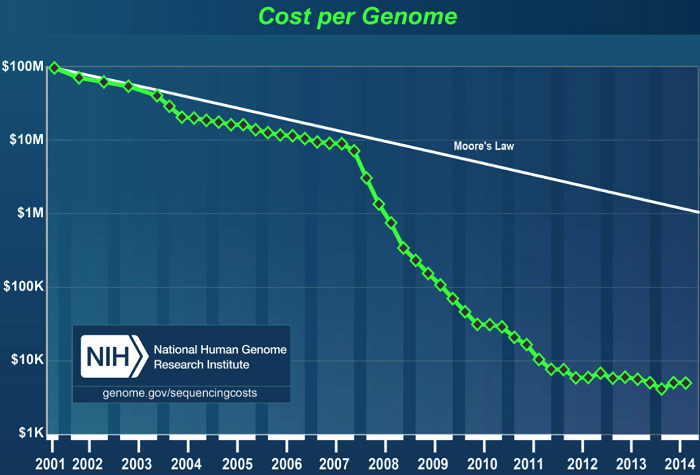
Image from NIH
The rapid iteration of new technologies will lead to the large-scale adoption of their applications. In Zhou Daixing’s view, gene testing equipment is still in its infancy, much like computers in the 1980s, when a single computer could essentially perform only one task. “However, within three years, many individual tests will be consolidated into a single testing panel.”
“During the era of first-generation sequencing technology, sequencing companies primarily conducted business around large-scale scientific research projects, and ultimately, two companies came to dominate the vast majority of the market,” Gao Yang, Chairman of Berry Genomics, told VCBeat. As the industry evolved from first-generation to second-generation sequencing technologies, everyone was grappling with the same question: in which field would gene sequencing experience an explosive breakthrough?
In 2007, Gao Yang, then General Manager of BGI’s Health Business Unit, believed that niche disease markets such as infectious diseases were relatively static and had limited potential. “In contrast, non-invasive prenatal testing for Down syndrome, which is caused by trisomy, presents no pathological ambiguity. Zhou Daixing’s proposal to conduct Down syndrome screening via peripheral blood essentially identified an excellent market opportunity—one with both a clear catalyst for rapid growth and sufficient market scale.”
A New Market from Scratch and an Unplanned Entrepreneurial Venture
In 2007, Zhou Daixing’s wife became pregnant. As an advanced maternal age patient, she was deeply concerned about the risk of Down syndrome in the fetus. The doctor informed Zhou Daixing that assessment based on fetal nuchal translucency thickness was required, noting that “it is difficult for laypersons to make such judgments; even among professional physicians, the diagnostic accuracy ranges only from 60% to 80%.”
Before Berry Genomics brought non-invasive prenatal testing (NIPT) into clinical practice, two common methods for detecting Down syndrome were available: serum screening and invasive amniocentesis. The former measures proteins and hormones in the mother’s blood, but these markers have a low correlation with Down syndrome; the latter carries an approximate 0.5%–1% risk of miscarriage and a 0.5%–1% risk of fetal malformation. Prior to the advent of NIPT technology, statistics showed that in 2013, among China’s 17 million pregnant women, the rate of prenatal diagnosis was less than 1%.
The incidence of Down syndrome ranges from 1/600 to 1/800. In China, approximately 26,600 newborns are diagnosed with Down syndrome each year, meaning that on average, one child with Down syndrome is born every 20 minutes.
In a 1997 paper published in The Lancet, Professor Dennis Lo of the Chinese University of Hong Kong pointed out that approximately 5% of the DNA fragments in maternal plasma are of fetal origin. In Zhou Daixing’s view, molecular diagnostic techniques should enable precise detection of Down syndrome, as children with normal karyotypes have two copies of chromosome 21, whereas those with Down syndrome have three.
After jotting down that rudimentary mathematical model on the plane, Zhou Daixing hoped to validate the feasibility of using next-generation sequencing technology to detect fetal chromosomal aneuploidies.
On January 15, 2008, Zhou Daixing, Dennis Lo, and their colleagues finalized the experimental protocol. They conducted double-blind testing using next-generation sequencing on 28 samples provided by Professor Dennis Lo (including 14 T21 cases and 14 normal controls). Upon completion of the trial in April, all 14 T21 samples were successfully identified, yielding a detection rate of 100%. During a conference call held after confirmation of the double-blind test results, Professor Lo was extremely excited.

“Father of NIPT” Professor Dennis Lo
Subsequently, Professor Dennis Lo repeated the experiment and expanded it to include detection of trisomy 18 (T18), trisomy 13 (T13), and sex chromosome abnormalities. In 2010, Professor Lo published the paper “Noninvasive prenatal diagnosis of fetal chromosomal aneuploidy by massively parallel genomic sequencing of DNA in maternal plasma” in the Proceedings of the National Academy of Sciences (PNAS). This marked the first rigorous laboratory validation worldwide of the clinical feasibility and reliability of non-invasive prenatal testing (NIPT).
Armed with these experimental results, Zhou Daixing approached three companies in an effort to advance the industrialization of NIPT:
One is Illumina, but the company’s primary goal at the time was to challenge the $3,000 Human Genome Project.
One was Life Technologies, which held a monopoly during the era of first-generation sequencing. The company achieved highly promising test results in July 2009; however, following market research, Life Technologies concluded that the oncology market, valued at nearly $23 billion, offered greater promise than prenatal screening.
Another was BGI, which had 128 sequencers at the time. However, as BGI was establishing research service centers worldwide to provide sequencing services, it did not have the capacity to develop the prenatal screening market.
At the time, Hou Ying, then an Illumina distributor and currently Vice Chairman of Berry Genomics, took Zhou Daixing to Hunan to visit Academician Xia Jiahui, the founder of medical genetics in China. They received this response: “Detecting fetal chromosomal abnormalities from peripheral blood has been my lifelong dream. I will firmly support any effort, no matter how faint the clue.”
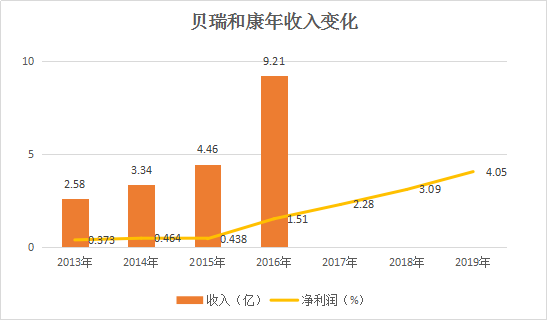
Zhou Daixing, a staunch believer in NIPT technology, ultimately transformed himself into an entrepreneur. In 2010, he co-founded Berry Genomics with Hou Ying and Gao Yang. His Forrest Gump-like perseverance eventually paid off: four years later, Berry Genomics’ revenue reached RMB 258 million; seven years later, it hit RMB 920 million. In its eighth year, the company went public through a reverse merger, achieving a market capitalization exceeding RMB 10 billion, with projected profits for 2019 reaching RMB 405 million. Today, tens of millions of pregnant women across more than 90 countries worldwide are undergoing this test.
John L. “Kip” Miller, then President of Life Technologies’ Genetics Division, who had vetoed the NIPT project, later told Zhou Daixing, “Although I have personally invested in many projects, not investing in NIPT remains my biggest regret to date.”
In 2013, Life Technologies launched the Ion Proton sequencing platform, officially entering the NIPT market.
One Slide and a $60 Million Financing Round
“At the outset, we founders pooled RMB 10 million in startup capital to purchase sequencing equipment and recruit our team,” Gao Yang told VCBeat. Shortly after its establishment, the company’s order book for high-throughput sequencing-based research services was fully booked, with clients including research institutions such as the Chinese Academy of Sciences and the Chinese Academy of Agricultural Sciences. “At that time, there were virtually no clinical translation applications of high-throughput sequencing on the market. The material cost for performing a single non-invasive prenatal testing (NIPT) case was approximately RMB 2,000–3,000. We reinvested all the profits from our research services into the NIPT project.”
In the field of prenatal diagnosis in China, Xiangya Hospital of Central South University and Peking Union Medical College Hospital are the two leading institutions. In 2010 and 2011, Berry Genomics collaborated respectively with Xiangya School of Medicine, Central South University, and Peking Union Medical College Hospital to conduct retrospective clinical trials involving 412 cases and prospective clinical trials involving 1,741 cases. At Xiangya Hospital, Berry Genomics’ products accurately detected 67 cases of chromosomal aneuploidy disorders, including trisomy 21 (Down syndrome), trisomy 18 (Edwards syndrome), trisomy 13 (Patau syndrome), 45,X (Turner syndrome), and other chromosomal aneuploidy syndromes, achieving a combined sensitivity of 100% and a specificity of 99.71%.
As the business began to take off, many keen-eyed individuals started paying attention to Berry Genomics. Cai Daqing, then a partner in the healthcare group at Legend Capital, had a friend in the investment community who experienced an unplanned pregnancy. Concerned about the risk of Down syndrome due to advanced maternal age, the friend reached out to Berry Genomics through Cai for prenatal testing. The final test results came back normal. After successfully giving birth, the investor friend specially treated Zhou Daixing and his team to a meal.
“Clinical translation requires the support of top-tier experts, but for companies, the greater challenge lies in determining the right timing for market entry.” After the technology had been thoroughly validated by the market, Gao Yang believed it was time to launch commercialization. In September 2011, he approached his former colleague at BGI, Cai Daqing. “We showed only one slide, featuring clinical data from Xiangya Hospital and Peking Union Medical College Hospital.”
An hour later, Cai Daqing expressed his desire to make an exclusive investment. “This RMB 65 million was likely the first investment ever received by a NIPT company worldwide, as the investment boom in the genomics industry did not emerge until 2015.” After securing this funding, Berry Genomics rapidly recruited nearly 200 sales personnel. “The sole criteria for hiring were enthusiasm, relevant experience, and a belief that NIPT could transform the prenatal diagnosis market. We needed to find the right people at the right time to rapidly expand our market presence.” By the end of 2012, the company’s team had grown to more than 400 employees.
This funding was later proven to be the most significant financing round in Berry Genomics’ history, as its main competitor, BGI, also entered the NIPT market in late 2011, half a year later.
Ouyang Xiangyu, Managing Director at Legend Capital, stated in an interview with VCBeat that first-mover advantage serves as a highly effective moat in the healthcare sector, with relative advantages becoming increasingly pronounced over time.
Data also corroborates this assessment: Berry Genomics began offering the “Beian” non-invasive prenatal testing (NIPT) service in 2011, with the number of tests performed reaching 237,600 by 2015 and nearly 600,000 in 2016, capturing a market share of close to 40%.
After completing clinical trials at prestigious hospitals in the industry, namely Xiangya Hospital of Central South University and Peking Union Medical College Hospital, Berry Genomics took two years to expand its presence to 150 hospitals across more than 30 provinces throughout China. After 2015, it signed cooperation agreements with 62 public hospitals among the 108 national pilot institutions accredited by the National Health and Family Planning Commission, with its product and service system covering 70% of medical high-throughput sequencing laboratories nationwide.
In Cai Daqing’s view, their comprehensive understanding of the industrial and technological landscape, coupled with the accumulation of industry connections and resources, enabled them to lead multiple rounds of investment at the early stages of Berry Genomics and become its largest institutional shareholder. Legend Capital has built an upstream and downstream industrial chain centered on Berry Genomics, creating an ecosystem among its portfolio companies. “As we secure a growing presence in such core sectors, our investment advantages will become increasingly pronounced.”
Gao Yang told VCBeat that Berry Genomics and Legend Capital have maintained frequent interactions at both the capital and industrial levels. Wang Dong, the Chief Financial Officer and Board Secretary, was introduced to Berry Genomics by Legend Capital, which also recommended many of the intermediary service agencies involved in the company’s IPO process.
A Team That Has Stayed Together for 10 Years
Jack Ma’s Alibaba Empire was built with the unwavering loyalty of its “18 Arhats.” Similarly, Berry Genomics’ core team has seen virtually no departures to date; each member was a top-tier expert in the field of gene sequencing at the time. They are long-time friends who know each other well, and many joined Berry Genomics simply after receiving a phone call from the founder.
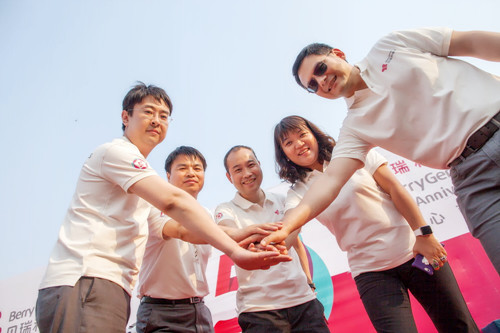
Group Photo Celebrating Berry Genomics’ 5th Anniversary, from left to right: Gao Yang, Wang Dong, Zhou Daixing, Hou Ying, Yu Fuli
In 2002, Zhou Daixing joined Lynx Therapeutics in the United States, which later merged with Solexa. Together with his team, he designed the second-generation sequencing technology that currently holds a 70% market share, and the company was acquired by Illumina at the end of 2006.
Gao Yang, the Chairman born in 1980, previously served as General Manager of BGI’s Health Business Division. An expert in the localization of disease-susceptibility genes, he has made outstanding research contributions to elucidating the relationship between genetic variations and tumorigenesis. He also served as the Head of Bioinformatics for the Chinese team in the China component of the International HapMap Project.
“He first met Zhou Daixing in 2003 at a bioinformatics forum in Europe, where Zhou delivered a keynote speech on ‘de novo assembly of new species using short-read paired-end sequencing.’ ‘Fewer than 20 people worldwide had seen this data,’ said Gao Yang. It was another four years before BGI assembled the cucumber genome map.”
On May 18, 2010, Zhou Daixing, Hou Ying, and Gao Yang founded Berry Genomics. After making a round of phone calls, they had assembled the heads of R&D, marketing, and channel development.
Zhang Jianguang, formerly the technical lead of the high-throughput sequencing platform at the National Institute of Biological Sciences, Beijing (NIBS), submitted his resignation to his former employer the day after receiving a call from Zhou Daixing. He currently serves as the head of R&D at Berry Genomics, leading a research and development team of nearly 100 members.
“Maybe it was due to hypoxia; I agreed before I even realized what was happening.” At the time, Dr. Wang Jun, who was working at the Institute of Nanotechnology at Zhejiang University, was traveling in Tibet. Two weeks later, Wang had resigned from his previous position and driven from Hangzhou to Beijing. “Wang was the only person on our team who owned a car back then. Only after he arrived did we realize that we still needed to find him accommodation,” Gao Yang remarked with some emotion. “Before finding an apartment, Wang stayed at a Home Inn near Sanyuanqiao for two weeks.” Wang Jun currently serves as the General Manager of Hangzhou Berry Genomics, overseeing the production and quality systems for high-throughput sequencing instruments and consumables.
Tian Feng, Head of Data Analysis; Zhou Ke, Sales Director; and Ren Yuanyuan, Head of the Production Department, all joined Berry Genomics shortly thereafter. Zhao Jingjing, a Ph.D. candidate at the School of Life Sciences, Peking University, was at home awaiting childbirth when she received a call from Gao Yang; she officially joined Berry Genomics in 2012 and currently serves as Marketing Director.
Fu-li Yu, from the Department of Human Genetics at Baylor College of Medicine in the United States, joined Berry Genomics because it allowed him to “realize his dream of translating scientific research achievements into industrial applications.” He has participated in major international human genome projects, including the HapMap Project, the 1000 Genomes Project, and CHARGE, and has published more than 30 articles in journals such as Nature and Science. The bioinformatics algorithms Atlas2 and SNPTools, developed by his team, have been applied in numerous large-scale genomic projects. It was during the HapMap Project that he met Gao Yang.
“For a while, competitors in the industry engaged several headhunting firms to aggressively poach talent,” Zhou Daixing joked, noting that many colleagues had reported being approached by headhunters, yet no one ended up leaving.
“I believe the reason everyone stays at Berry Genomics is that our management avoids unnecessary turmoil and our business growth remains stable. We are genuinely engaged in meaningful work, helping pregnant women and hospitals address prenatal screening issues in a safe and cost-effective manner. We all firmly believe this is a project with immense potential value.” Zhou Daixing, who always wears a smile, does not subscribe to authoritarian, paternalistic management. Instead, he encourages team members to voice their own opinions, stating, “When there is disagreement, we defer to the person directly responsible for the matter.”
Having relinquished a substantial equity stake in Illumina to pursue his entrepreneurial venture, he places little priority on material pursuits. Nevertheless, he is deeply committed to the well-being and benefits of his employees; at Berry Genomics, compensation levels in the sequencing sector have consistently remained above the industry average.
Life is long, and there is no need to rush. Zhou Daixing, a quintessential analytical thinker, has always been patient in explaining his vision, specific technical details, and macro-level trends in industrial transformation, often citing key milestone dates off the top of his head. Under the leadership of this calm and composed executive, Berry Genomics now boasts more than 1,300 employees.
DIKW Believers
According to Zhou Daixing, the ultimate goal of gene sequencing is to re-examine humanity from a data perspective and to redefine the relationship between disease and health.
As a proponent of the DIKW model, he believes that the entire gene sequencing sector, including players like Berry and Kang, will become increasingly IT-oriented in the future. By leveraging high-sensitivity algorithms to analyze liquid biopsy data and effectively integrating protein and DNA databases, a robust model can be constructed to generate valuable information for risk prediction.
A review of Berry Genomics’ business evolution clearly reveals that Zhou Daixing is strategically positioning the company across four dimensions: data collection, information transformation, knowledge structuring, and wisdom-based solution provision. The company aims to establish a large-scale genomic database for the Chinese population, conduct bioinformatics analysis using proprietary algorithms, and ultimately deliver services for clinical medical practice.
In 2015, Berry Genomics and Alibaba Cloud jointly established the "Shenzhou Genomic Data Cloud," independently building a large-scale genomic database for the Chinese population that differs from international general databases predominantly based on Caucasian data. It currently contains over 400,000 genomic datasets.
At the level of information transformation, the core lies in the effective bioinformatic analysis and interpretation of the massive genomic data generated by high-throughput sequencing. To address gene data analysis, Berry Genomics has developed two core technologies: the Verita Trekker variant detection system and the Enliven variant annotation system. Zhou Daixing told VCBeat that integrating big data to filter out 99.99% of the meaningless mutations from three million variants, thereby extracting valuable information, constitutes the first step toward achieving precision medicine.
In the “Wisdom” component of the DIKW hierarchy, the “Map of Hereditary Breast Cancer Gene Mutations in the Chinese Population,” a collaborative project between Berry & Kang and Peking University Cancer Hospital, revealed that breast cancer gene mutations in the Chinese population differ significantly from those in other ethnic groups.
“We have built Berry Genomics’ big data system in accordance with international standards for annotation and interpretation, and significant progress has already been made in database construction and data mining. Stakeholders can now see how the entire system analyzes and interprets data to support clinical practice,” said Professor Yu Fuli in an interview with the media. “Our future plan is to achieve intelligent result interpretation. Imagine that raw sequencing data from a sample could be intelligently analyzed by computational tools to directly generate reliable reports—all of which depends on the big data platform and application systems we are currently building.”
Simple, Stable, Scalable
Gao Yang believes that a commercial project with economies of scale requires optimizing laboratory-level methods into industrialized production processes, placing greater emphasis on user experience to achieve simplicity, stability, and scalability in operational procedures. This necessitates innovation in both process management and technology.
In order to provide a highly user-friendly gene sequencer, Berry Genomics obtained CFDA approval a full six months later than BGI. However, in Zhou Daixing’s view, the NextSeq CN500 sequencer upgraded during this period will enable them to achieve their desired market share.
Compared with other sequencers, Berry Genomics sequencers are more affordable and feature user-friendly, simplified operations. They can process 96 samples per run, with an annual maximum throughput of up to 60,000 tests. For operators, the process is as simple as selecting options from a menu and pressing a button; the report is generated within seven hours.
In addition to the advantages in the sequencing step, non-invasive prenatal DNA testing offers unique benefits at every stage of its technical workflow, including sample collection and transport, DNA extraction, library preparation and construction, and data analysis.
Berry Genomics has established a comprehensive, technology-driven process solution serving its core base of 400 hospitals. Unlike models relying on cold-chain logistics and barcode tracking, the company’s adoption of ambient-temperature transport has now become the industry standard. Under this simpler, lower-cost logistics framework, the nationwide volume of NIPT tests reached 2 million cases last year.
In library preparation, their proprietary PCR-free technology enables a two-step pipetting, one-step purification, single-tube reaction workflow, minimizing potential contamination and errors from manual handling while delivering excellent reproducibility.
In terms of data analysis, the RUPA rapid information analysis method can complete a single-sample comparison in just 5 seconds, with full-chip data analysis requiring only 1 hour, thereby enabling comprehensive, automated, and efficient data management.
Gao Yang told reporters that high-throughput analysis generates massive amounts of data. They have streamlined large-scale supercomputing systems into a single desktop server, with all service processes software-enabled, allowing operation by a single individual.
The high-throughput sequencing in vitro diagnostic (IVD) product and service system, centered on the NextSeq CN500, covers 70% of medical high-throughput sequencing laboratories across China, including over one hundred medical institutions (such as medical testing centers) like Peking Union Medical College Hospital, West China Second University Hospital, Shanghai Red House Obstetrics and Gynecology Hospital, Nanfang Hospital, and Xijing Hospital. This product model can operate independently in hospital laboratories without differentiation and has been promoted worldwide by Illumina as an industry standard.
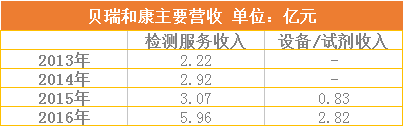
In China, the number of sequencing service providers currently significantly exceeds that of sequencer and reagent manufacturers; therefore, the service model holds a dominant position in the industry. As regulatory policies are implemented in an orderly manner, large and medium-sized hospitals are tending to favor the product model, and the proportion of the service model is expected to decline in the near future.
The Expansion of the Empire
When asked by VCBeat about the basis for Berry Genomics’ performance commitment of nearly RMB 900 million in profits over the next three years, Gao Yang stated that Berry Genomics holds a leading position in the field of non-invasive prenatal testing (NIPT). Following its listing, the company will implement a comprehensive layout across the entire industry chain, establishing an integrated product and service system that covers the upstream segment (research and development and manufacturing of gene sequencers, reagents and consumables, software development, and construction of genetic databases), the midstream segment (genetic testing projects focused on two application areas: genetics and oncology), and the downstream segment (serving institutions applying gene sequencing technologies and end users).
During his most recent public speech, Zhou Daixing stated that Berry Genomics’ long-term goal is to detect the vast majority of genetic disorders—particularly those severe conditions causing intellectual disability, physical disability, or death—through maternal plasma DNA testing during the second trimester, or even the first trimester.
In 2016, the Hunan Provincial Health and Family Planning Commission designated Hunan Jiahui Genetic Specialty Hospital to undertake the pilot program for the “Healthy Baby” Special Initiative. The NIPT-Plus pilot was implemented in six counties across four cities in Hunan Province: Hengyang, Yiyang, Chenzhou, and Huaihua. This testing technology, jointly developed by Berry Genomics and Hunan Jiahui, can screen for 100 major chromosomal disorders in a single test.
Building on their expertise in high-throughput gene sequencing of plasma DNA, they have successively developed a range of products across multiple fields, including non-invasive testing for microdeletion and microduplication syndromes, non-invasive single-gene disorder testing, chromosomal disease testing, preimplantation genetic testing (PGT), and non-invasive tumor detection (for lung cancer and breast cancer). Preliminary achievements have been made, and according to Berry Genomics, clinical trials have demonstrated the safety and efficacy of these products.
Zhou Daixing told reporters that the current tumor detection market bears some resemblance to the breakthrough momentum seen in NIPT in 2010. He believes that in the coming years, the field of tumor detection will become a substantial market within the sequencing industry.
Years later, Gao Yang still clearly remembers Berry Genomics’ first paying customer. It was in the spring of 2011, when a doctor from an obstetrics and gynecology hospital in Beijing called him to come to the department, as an advanced maternal age patient wanted to try non-invasive Down syndrome screening and paid him several thousand yuan in cash on the spot.
Zhou Daixing stated that he hopes Berry Genomics will achieve the following within the next five to ten years: enable expectant parents to be informed of three major types of birth defects—those causing disability, intellectual impairment, and death—before their children are born; and allow patients to detect tumors at early, treatable stages through genetic testing, thereby offering hope for survival to cancer patients.
Postscript
Returning to the essence of Berry Genomics’ non-invasive prenatal screening (NIPT) revolution, Zhou Daixing firmly believes that “this is an endeavor rooted in ‘love.’” From the “small love” of being parents to the “greater love” of benefiting countless families through genetic technology, this love is the driving force that has propelled this NIPT pioneer forward through challenges and remains the mission he will continue to uphold.