

Helix Launches the World’s First DNA App Store, Pioneering a Platform-Based Model for Consumer Genomics
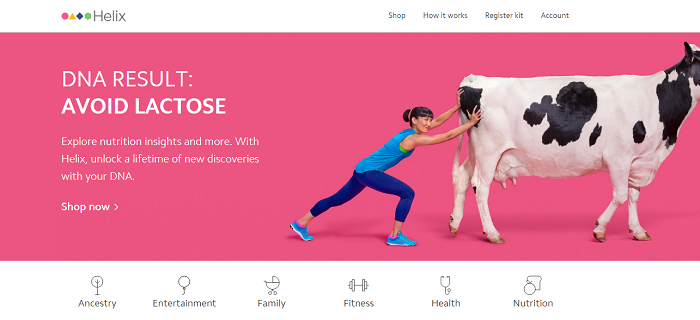
Helix is a sibling company of the liquid biopsy firm Grail. Both companies were founded around the same time and each secured $100 million in financing during the same period. In contrast to the stir Grail has caused in the industry, Helix has maintained a relatively low profile over the past two years.
After two years of development, Helix finally launched on July 24, 2017. The long-anticipated DNA App Store has finally lifted its veil of mystery.
The Consumer Genetic Testing Market: A World of Oddities and Controversy
Helix targets the consumer market, a sector that has never lacked critics. Recently, Soccer Genomics launched a product offering personalized training plans based on DNA test results, but its ill-conceived marketing campaign sparked a wave of negative reviews online. However, the Soccer Genomics incident is merely the tip of the iceberg in the consumer genomics field.
As sequencing costs decline, more companies are recognizing the potential of the consumer genomics market and hope to carve out a share beneath the dominance of the two giants, 23andMe and AncestryDNA. However, given the overwhelming strength of 23andMe and AncestryDNA, it is no easy feat for other companies to secure a foothold in the market. Many have opted for unconventional strategies, leading to the emergence of a wide array of diverse testing offerings.
To circumvent FDA scrutiny, these testing services typically avoid disease risk assessment. Instead, they usually target the nutrition and wellness markets. Of course, there are also purely recreational tests, such as wine preference assessments. If approached with the same mindset as one would for horoscope readings, these tests can indeed be quite entertaining.
Innovative Model: Building a DNA App Store
Among new entrants, Helix had the highest starting point. As a subsidiary of Illumina, it secured substantial financing and industry attention at its inception that other companies could not obtain.
Compared with other companies, Helix has more innovations in its model. Most consumer testing companies use chip-based testing to find some variations in DNA, while Helix uses whole-genome testing.
In contrast, whole-genome sequencing is naturally far more expensive. Helix’s ingenuity lies in its avoidance of a one-time transaction model; instead, it adopts a platform-based approach, positioning itself as a provider of customized services leveraging genetic information to deliver long-term value to consumers.
Users initially need only spend $80 to purchase a saliva collection kit and then mail the collected saliva sample back to Helix. Of course, this is merely the beginning of the genetic sequencing journey. While consumers’ primary intent may be to obtain specific genetic data through testing, these data can subsequently be utilized by Helix to enable users to find tailored services and products on its platform.
Initially, users only needed to pay a small fee to obtain results regarding athletic aptitude, but Helix already captured their complete genetic information through this test. The next time they apply for other services, there is no need for retesting; instead, previous results can be directly accessed. The cost of performing comprehensive genomic sequencing would certainly exceed the amount users paid for the experience of a specific genetic test. What deeper significance lies behind Helix’s approach?
First, they anticipate that you will return for additional testing: Helix is set to launch an app platform featuring a variety of engaging applications to attract users. The genetic information stored on the platform will be shared with all apps, and Helix will take a commission from the profits generated by these apps. This business model naturally necessitates a substantial reserve of genetic data.
Second, Helix aims to serve as the bridge between consumers and brands, driving customers of partner brands to undergo genetic testing, helping brands deliver personalized services, and sharing in their revenue.
Currently, Helix’s product offerings include ancestry testing developed in collaboration with National Geographic magazine and personalized dietary guidance, with each product priced from $100 to several hundred dollars.
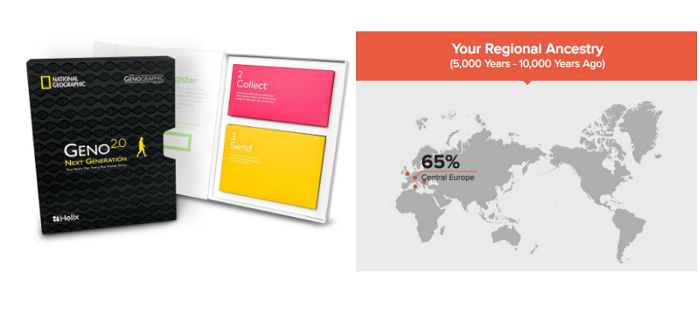
Co-launched with National Geographic MagazineGeno 2.0, which can trace ancestral information
Company CEO Robin Thurston likened this model to the App Store of the sequencing industry, a carefully considered strategy.
Strict Product Quality Control: The Key to Long-Term User Trust
Unlike the laissez-faire approach adopted by the Google Play Store, Apple Inc. strictly screens every app listed on its platform through a rigorous review process. Helix has replicated this model. The company has an internal team of 14 members responsible for vetting each product, including scrutinizing the underlying scientific principles, with the aim of filtering out pseudoscientific tests.
“We hope such procedures will earn consumers’ trust; products on the Helix platform are reliable.” Thurston: “What Helix needs is consumers’ long-term trust.”
Titanovo is one of the products listed on Helix, specializing in DNA-based dietary plans. CEO Oleksandr Savsunenko shared Helix’s review process with the audience. Savsunenko revealed that the company initially submitted 200 scientific studies to support their product, but 60%–70% of them failed to meet Helix’s standards. “I was certainly disappointed; they kept pointing out flaws here and there. But ultimately, it cannot be denied that our product has been upgraded.”
According to VCBeat, Titanovo has discontinued its early product, DNA Lifestyle Coach, and is currently focusing on the DNA Diet Coach product available on Helix.
Helix also offers some controversial products, such as the previously mentioned wine preference test. The “developer” behind this product is called Vinome.
Skeptics argue that while DNA can reveal what flavors a person is capable of tasting, it cannot truly predict whether they will enjoy them. However, Thurston contends that Vinome provides a solid scientific foundation: their taste algorithm is based not only on DNA test results but also on questionnaire data, making the approach feasible.
“My view is that the value of genetic data is to provide you with a baseline,” said Julia Cheek, CEO of EverlyWell. EverlyWell is also a consumer nutrition company, primarily offering testing services for protein and fat content in blood and breast milk. The company currently provides food sensitivity testing, metabolic assessments, and breast milk analysis through the Helix platform, while also conducting DNA research.
On one hand, the strategy of combining DNA testing with other information sources enables Helix’s partners to deliver more precise solutions. On the other hand, compared to whole-genome sequencing, these smaller-scale orders and blood tests are more readily accepted by consumers. Playing the long game is Helix’s true strategy.
Since its founding and $100 million funding announcement in 2015, Helix has been pursuing an unconventional business model. Speculation has long surrounded the ultimate form Helix would take. Now that Helix has officially entered the market, its success will ultimately be determined by the market and consumers.