

Evergrande Health Reports HK$528 Million Revenue in 2016, Expands into Medical Aesthetics and Community Elderly Care Management
On March 22, 2017, Evergrande Health Industry Group (0708.HK, hereinafter referred to as “Evergrande Health”) released its annual results announcement for 2016 in Hong Kong, China. While achieving steady growth in its financial performance, Evergrande Health’s strategy of diversifying its layout across the health industry and building a comprehensive, full-lifecycle health service system deserves attention.
During the reporting period, Evergrande Health achieved a turnover of HK$528 million in 2016. Of this, the health business generated a turnover of HK$249 million, representing a 343% increase from the previous fiscal year. Total assets reached HK$3.16 billion, a 267% increase compared to the end of 2015. Gross profit amounted to HK$202 million, with a gross profit margin of nearly 39%, reflecting a 4-percentage-point improvement over the previous fiscal year.
According to incomplete statistics, Evergrande owns more than 400 residential communities in over 200 cities across China, serving 3.7 million homeowners and adding 700,000–800,000 new residents annually, making it an industry leader. Leveraging these community-based resources, Evergrande possesses unique advantages in operating internet-enabled community hospitals, which constitutes one of the core businesses of Evergrande Health.
Three Major Strategies
What Are the Core Services of Evergrande Health? Tan Zhaohui, Chairman of Evergrande Health, stated: “Evergrande Health will integrate the advantages of its three core service pillars to establish a full-lifecycle healthcare service system that combines prevention, treatment, and wellness, with an emphasis on prevention. This system will achieve complementary strengths and resource sharing with the public healthcare sector, jointly enhancing the quality of healthy living for the general public.”
These three core services are:
I. Optimize medical services.Evergrande Health has established a “trinity” medical service system characterized by information interoperability, tiered diagnosis and treatment, and the integration of medical care with elderly care. This system is led by high-end international hospitals, grounded in community-based health management services, and integrates resources from Grade 3A hospitals across various regions to channel high-quality medical resources into communities.
II. Improve Health Security.Evergrande Health has engaged in deep collaboration with financial institutions such as insurers, integrated with the national medical insurance system, and established a comprehensive health protection framework covering multiple insurance types. In doing so, it has pioneered a “Kaiser Model” tailored to China’s specific conditions, effectively integrating healthcare services with medical insurance.
III. Develop the Big Health Industry.Evergrande Health integrates across multiple industries, including finance, tourism, the internet, sports, and leisure, to incubate new industries, business formats, and models within the broader health sector.
Evergrande Health Goes Public via Backdoor Listing
Evergrande first entered the healthcare sector in 2013, when the State Council issued the “Several Opinions on Promoting the Development of the Health Service Industry,” which highlighted an 8-trillion-yuan blue-ocean market in the broader health industry, prompting Evergrande to venture into healthcare.
In December 2013, Evergrande and Harvard University reached a strategic cooperation agreement to jointly establish the Harvard Center for Green Building, the Harvard Center for Immunology and Disease Research, and the Harvard Center for Mathematical Sciences, with the aim of conducting scientific research and fostering industrial development in fields such as green building, healthcare, and applied sciences.
Among these initiatives, the Harvard Center for Green Buildings will launch research and educational programs dedicated to creating sustainable, high-efficiency buildings, focusing on issues of urgent relevance to China in its pursuit of sustainable urbanization.
The Harvard Immunology and Disease Research Center is engaged in basic and translational biomedical research and education, supporting exchange programs for Chinese scholars. The Harvard Center of Mathematical Sciences primarily focuses on mathematics and its applications, providing visiting scholar and student exchange opportunities for academics and students from China.
In September 2014, Evergrande acquired Wonjin, South Korea’s largest medical aesthetic institution. Founded in 1999, Wonjin is the country’s largest comprehensive plastic surgery hospital and has performed cosmetic procedures for many of South Korea’s most popular celebrities.
On February 27, 2015, Evergrande issued an announcement stating that it had completed the acquisition of a 74.99% stake in New Media (00708.HK), thereby becoming the controlling shareholder of the company. Following the acquisition, Evergrande renamed New Media to Evergrande Health and achieved a back-door listing. Tan Chaohui was appointed as Chairman of Evergrande Health. The announcement indicated that Tan Chaohui had been serving the Evergrande Group since its establishment.

Tan Zhaohui, Executive Vice President of Evergrande Group and Chairman of Evergrande Health Industry Group
In June 2015, the Evergrande Internet Community Hospital, also known as the Community Medical and Elderly Care Management Center, commenced operations. The Evergrande Internet Community Hospital is a community hospital jointly established by Evergrande Health in collaboration with world-renowned medical institutions (the University of Nebraska Medical Center in the United States) and multiple top-tier tertiary hospitals across China (such as Southern Medical University and its affiliated hospitals, the First Affiliated Hospital of Guangzhou Medical University, etc.), leveraging globally leading health big data models and internet technologies.
Strictly speaking, the health industry primarily refers to the medical industry, which is centered on disease treatment. Currently, the trend is to extend the industry’s focus both upstream and downstream from disease treatment, shifting from a treatment-centric healthcare service model to a health service model focused on prevention, wellness, rehabilitation, and elderly care. This constitutes the core logic behind Evergrande Health’s business layout.
Evergrande Health Strategically Positions Itself in Four Major Healthcare Sectors
Currently, Evergrande Health comprises four major segments: new international hospitals, medical aesthetics, community-based integrated elderly care and health management centers, and “Evergrande Wellness Valley.” The elderly care and healthcare services operate synergistically. Evergrande has implemented in-depth strategic layouts across these sectors.
First, the new international hospital sector.In September 2015, Evergrande signed a strategic cooperation agreement with Brigham and Women’s Hospital, affiliated with Harvard University, to introduce the hospital into China. The hospital is a world leader in multiple specialties, including oncology, cardiology, obstetrics and gynecology, neurology and neurosurgery, orthopedics, and rheumatology. It boasts more than 1,000 principal investigators and has secured over $640 million in research funding.
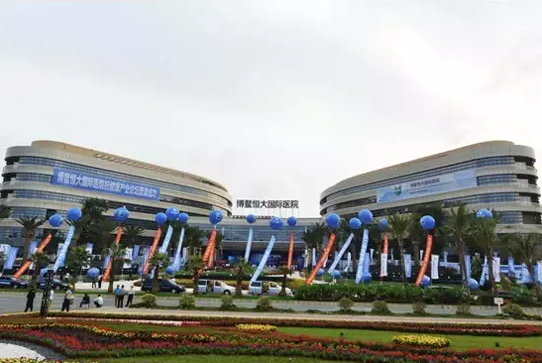
Boao Evergrande International Hospital. Image from Securities Daily Voice
Boao Evergrande International Hospital is the first joint project between Brigham and Women’s Hospital and Evergrande Group. Construction commenced in December 2015, and the facility has been fully completed, commencing trial operations in 2017.
In the future, the hospital will focus on the field of oncology, which poses the greatest threat to human health and involves the highest complexity. It will introduce internationally top-tier medical teams, technologies, and equipment, conduct cutting-edge medical research, and provide world-class services for the diagnosis, treatment, and rehabilitation of cancer patients.
Second, in the field of medical aesthetics.As early as September 2014, Evergrande acquired Wonjin, South Korea’s largest medical aesthetics institution. Subsequently, in June 2015, it opened the Evergrande Wonjin Medical Aesthetics Hospital in Tianjin, positioning itself in the high-end market. It then successively established micro-medical-aesthetics clinics in first- and second-tier cities such as Beijing and Guangzhou, thereby building the Evergrande Medical Aesthetics system to provide convenient, accessible premium skin management and anti-aging services.
By establishing “flagship” medical aesthetic hospitals, Evergrande Health has deployed its presence in key cities across China, adopting an internet-driven operational model characterized by “tiered services and customer traffic redirection,” and has entered a phase of stable operations. Medical aesthetic institutions in Chongqing, Shanghai, and Hainan are under construction as scheduled. Evergrande also plans to invest in the development of an International Medical Aesthetics and Anti-Aging Center in Boao Lecheng.
Third, regarding the community-based medical and elderly care management center.Evergrande Health has strategically positioned its 12 operational “Internet+” health management centers nationwide, using health management and elderly care services as entry points. Building upon existing community-based health diagnosis and treatment services, the company has integrated rehabilitation and eldercare service modules, partnered with nearly 30 local Grade-A tertiary hospitals and specialized hospitals of high caliber, and served a population of approximately 200,000 residents in surrounding communities, thereby achieving an initial nationwide footprint for this business segment.
Currently, Evergrande Health has established 11 community pilot health centers across nine provinces in China, including Guangzhou, Changsha, Nanchang, Wuhan, Chengdu, Jinan, Luoyang, Shijiazhuang, and Shenyang. Meanwhile, by leveraging internet technology, it delivers continuous medical services and health education.
It is evident that, while introducing “external partners” to co-develop high-level international hospitals, Evergrande Health has established strategic collaborations with Grade A tertiary hospitals across China, building service platforms such as second-opinion consultations, telemedicine, and direct referral channels, thereby extending premium medical resources to the community.

Evergrande Internet+ Community Health Management Center. Image from Healthy Elderly Care Real Estate
Meanwhile, leveraging the Community Health Management Center, we have carried out health data collection and follow-up management for community residents. As of July 2016, Evergrande Health had completed over 4,000 medical examinations and established health management records for more than 10,000 residents, forming a high-quality, continuous stream of health data. Based on this, the community provides integrated solutions combining “prevention, treatment, and care,” and offers services such as home safety assessments, age-friendly renovations, and in-home elderly care specifically tailored to senior residents.
Evergrande Health has also actively aligned with the national medical insurance system. In April 2015, Evergrande signed a strategic cooperation agreement with PICC (People’s Insurance Company of China) to introduce insurance institutions as partners, develop commercial medical insurance and elderly care financial products covering families, elderly care, and specific diseases, and establish an Evergrande Health elderly care model suited to China’s national conditions.
Fourth, “Evergrande Health Valley” is the flagship product of Evergrande Health’s wellness space layout.In 2016, Evergrande Health integrated its strengths in core services such as healthcare, elderly care, medical aesthetics, and anti-aging, along with high-quality domestic and international health resources, to research and formulate China’s first all-age health service “Wellness Space” living standards, and innovatively created “Evergrande Wellness Valley” as the flagship product.
Yangsheng Valley embodies the innovative “1+N” healthy lifestyle concept. In this framework, “1” represents the home, with health as its foundation. “N” refers to scientific, comprehensive, full-lifecycle health services tailored to 65 key health concerns across nine major life stages: preconception, infancy, toddlerhood, childhood, adolescence, young adulthood, middle age, wise age (elderly), and centenarian years.
The first batch of projects—Sanya Haitang Bay “Evergrande Health Valley” and Ocean Flower Island Lanwan—commenced construction in June 2016 and were officially launched in November of the same year.
As for Evergrande’s advantages, Tan Zhaohui stated, “Real estate enterprises possess inherent advantages in areas such as routine health monitoring, physical examinations, community healthcare, and rehabilitative and elderly care services. This constitutes the logical basis for our investment and development in the health industry.”
Advantages of the Community Medical and Elderly Care Management Center
As a real estate enterprise, the foundation of Evergrande Health remains community-based integrated medical and elderly care management.
Evergrande Community Medical and Elderly Care Management Center establishes digital health records for residents, continuously accumulating high-quality health data through wearable devices, home monitoring equipment, and mobile apps. It builds a health big data platform to analyze and assess health risks, formulate pre- and post-disease intervention plans, and promote precision medicine.
Leveraging mobile internet and the Internet of Things (IoT), we conduct O2O services for prevention, screening, treatment, and elderly care, providing personalized solutions to comprehensively meet residents’ needs. Meanwhile, by establishing a cloud-based platform for doctor-patient interaction, we optimize resource allocation, enhance the medical experience, improve doctor-patient relationships, and ensure fair compensation for physicians.
Regarding the specific operational model, it can be summarized into three aspects.
First, deploy smart medical devices within residential communities to cultivate the habit of self-service, one-click health checkups. For instance, community health self-service kiosks can provide residents with medical-grade self-service health screening services. All-in-one health management units can measure 11 health indicators, including blood pressure, blood glucose, uric acid, cholesterol, and body fat. All test results are uploaded to personal health records, making these devices particularly suitable for monitoring the physical condition of the elderly.
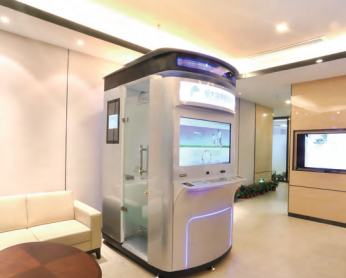
Smart Medical Devices in the Community
Second, Evergrande is capable of integrating high-quality resources and establishing strategic partnerships with Grade A tertiary hospitals across China. It has built service platforms such as second-opinion consultations, telemedicine, direct referral channels, and green lanes, thereby forming a nationwide tiered medical network. This extends premium medical resources to the community level, providing property owners with telemedicine services and in-home consultations that can be scheduled without leaving their residences.
Third, relying on community health management centers to carry out the collection and tracking management of health data for community residents. Utilize smart medical devices and online medical platforms to collect big health data, provide integrated solutions combining “prevention, treatment, and care,” and establish personal health information databases.
Profitability of Evergrande Health
Evergrande’s strategy for building hospitals centers on mergers and collaborations to rapidly enter and secure a market position. Through the acquisition of South Korea’s Wonjin Hospital and partnership with Harvard-affiliated Brigham and Women’s Hospital, capital injection enabled the swift establishment and opening of Evergrande Wonjin Aesthetic Hospital and Boao Evergrande International Hospital.
So, what is the profitability situation of Evergrande Health? By analyzing its publicly released semi-annual and annual reports, it can be seen from the data that in mid-2016, both its gross profit and net profit experienced significant declines.
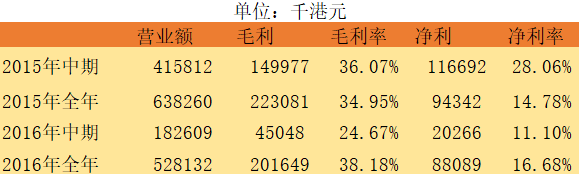
Evergrande Health Annual Report Data
As the company went public through a reverse merger, its original media business was not divested, and it continued to generate revenue from advertising and publishing/distribution. With the media segment’s profit margin declining by approximately 12% in the first half of the year, the group’s gross profit margin decreased from 34.95% in the same period last year to 24.67%.
However, overall, Evergrande Health’s gross profit margin has consistently remained above 20%, with a net profit margin also exceeding 10%.
Over the years of operation, Evergrande has closely followed policy directives, rapidly responding and strategically positioning its industrial layout whenever new policies were introduced. Meanwhile, leveraging the extensive community resources inherent to real estate enterprises, combined with its management expertise, as well as advanced scientific diagnostic and treatment models, cutting-edge precision technologies and equipment, and research platforms in the medical field, Evergrande has achieved rapid market expansion.