

Yihua Health Completes Full Transition from Real Estate to Healthcare via Strategic Acquisitions, Reports RMB 1 Billion Revenue in H1 2017

July 27 News: Yihua Health announced that its subsidiary, Dazi Sellekang, plans to acquire a 70% equity stake in Kunshan Changhai Hospital Co., Ltd. for RMB 63.35 million in cash. By acquiring controlling interest, Dazi Sellekang has enhanced the company’s strategic layout in the Yangtze River Delta region. This acquisition aligns with the company’s broader health strategy of integrating medical care with elderly care.
Following the completion of the acquisition, the hospital’s operating performance will be consolidated into the Company’s financial statements, which will have a positive impact on the Company’s operational results.
In fact, the predecessor of Yihua Health was Yihua Real Estate, which was established in February 2000 as the first listed real estate company in eastern Guangdong Province. It is a large-scale investment enterprise covering real estate development, property management, industrial real estate, commercial real estate, tourism real estate, elderly care real estate, and urban infrastructure construction. Currently, Yihua Real Estate’s construction projects are based in Shantou and have expanded to Jieyang, Meizhou, Xiangtan, Liuyang, Sichuan Province, Shandong Province, and other regions across China.
Prior to its name change in January 2015, Yihua Health’s core business was real estate development. The company’s real estate revenues in 2013 and 2014 were RMB 729 million and RMB 158 million, respectively. As demand for real estate remained sluggish, particularly given that the company’s projects were concentrated in third- and fourth-tier cities where the market downturn was more pronounced, Yihua Health began transitioning toward the healthcare sector in the second half of 2014. It subsequently acquired Zhongan Kang and took a stake in Youde Yi. In the first half of 2015, Yihua Health’s real estate revenue had shrunk to RMB 55 million, while its healthcare revenue reached RMB 367 million.
Following a series of successful capital operations and industrial layout in recent years, Yihua Health has formed two core development pillars—medical services and elderly care services—with a strategic focus on private general hospitals and mid-to-high-end elderly care communities.
It must be acknowledged that in its transition from real estate to the healthcare sector, Yihua Health opted for mergers and acquisitions as a convenient pathway.
According to industry insiders, the profit margins in the real estate sector are lower than those in the healthcare industry, a disparity sufficient to attract the attention of property developers. Furthermore, investing in the healthcare sector represents a strategic attempt to diversify risks associated with the property market.
Given the high barriers to entry in the healthcare industry, which demands advanced medical technology, top-tier talent, and high-quality services, mergers and acquisitions may be the optimal strategy for real estate companies seeking rapid entry into the healthcare sector.
For real estate enterprises, the cost of establishing a new hospital is also substantial. First, they must navigate a series of procedures, including verifying whether there is a local plan for new hospital construction, obtaining regulatory approvals, overseeing construction, recruiting physicians, and purchasing medical equipment. Second, long-term hospital operations require competing with other healthcare institutions—such as public hospitals, private hospitals, and chain clinics—and building the hospital’s brand.
However, the success of mergers and acquisitions (M&A) hinges on favorable timing, advantageous location, and harmonious human relations. The relative importance of these factors follows the hierarchy: Timing > Location > Human Relations. “Timing” refers to national policies, economic conditions, market demand and competitive landscape, as well as industrial development trends. “Location” encompasses the geographical and cultural environment, degree of openness, regional economic layout, local policies, and the availability of various resources. “Human Relations” involves consensus and trust between the management teams of both parties, their respective relationships with local governments, the extent of corporate culture integration, and the convergence and complementarity of their human resources.
The healthcare industry is highly susceptible to policy fluctuations. Although national healthcare reform policies continued to loosen in 2014, enabling physicians to practice at multiple locations and spurring the rise of mobile health, challenges remained, such as cultivating user habits and establishing regulatory frameworks. Yihua Health determined to enter the healthcare sector through mergers and acquisitions (M&A) and consequently began seeking M&A targets.
In the process of acquiring targets, what is tested for real estate developers is their capital, their eye for identifying targets, and their overall strategic layout. It is not a matter of casually buying with abundant funds, nor is it that any project can be acquired.
For Yihua Health, funding is not an issue. To raise capital, Yihua Health announced the sale of equity interests in its real estate projects alongside its asset acquisition plan. It intends to sell 100% equity stakes in Guangdong Yihua Real Estate Development Co., Ltd., Shantou Rongxin Investment Co., Ltd., and Meizhou Yihua Real Estate Development Co., Ltd. to its controlling shareholder, Yihua Group, for transaction considerations of RMB 2.144 billion, RMB 117 million, and RMB 115 million, respectively, totaling RMB 2.376 billion.
In its search for acquisition targets, Yihua Health has made considerable efforts to ensure that each target’s business operations are interconnected, with online and offline services complementing one another to form a comprehensive health industry chain. According to Wang Jian, Deputy Financial Director of Yihua Health, the company has sequentially invested in and acquired Zhongankang, a leading contractor in medical logistics; Dazisailekang, a provider of medical service management; and Ihealth, a medical device manufacturer specializing in blood glucose and blood pressure monitoring. Additionally, Yihua Health plans to acquire Qinyheyuan, an elderly care service provider, thereby completing its layout across the healthcare industry chain, encompassing medical logistics services, hospital management, integrated medical and elderly care, and mobile medical devices.
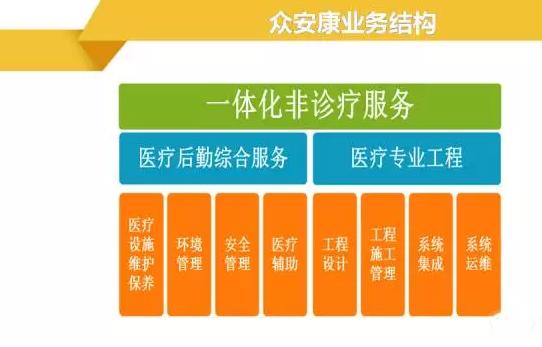
Offline, Yihua Health expanded its portfolio of comprehensive medical logistics services and specialized medical engineering through the acquisition of Zhongankang. With the acquisition of Dazi Sailekang—which operates Jiangxi Fengxin No. 2 Traditional Chinese Medicine Hospital, Hefei Renji Oncology Hospital, Phase II of the 455 Hospital project (2014–2022), the PET-CT project at Ningbo Mingzhou Hospital, and the PET project at the General Hospital of the Chinese People’s Armed Police Forces—the company has assembled a team of medical experts with extensive clinical experience. Centered on hospitals and leveraging diagnostic and treatment centers as key entry points, it has actively expanded into chronic disease management, health management, and elderly care services. Meanwhile, shareholders of Dazi Sailekang have committed to injecting all hospitals under their control into the listed company.
Aioluo specializes in the manufacturing of point-of-care testing (POCT) medical devices and consumables, such as those for blood pressure and blood glucose monitoring. It is one of the first manufacturers in the industry to launch remote blood pressure monitors and blood glucose meters, with its test strips demonstrating greater stability in biochemical indicators compared to similar products. Through the acquisition of Aioluo, Yihua Health successfully leveraged years of industry and technical expertise in the chronic disease medical device sector to enter the niche market of chronic disease treatment and management.
Online, Yihua Health further acquired a 20% equity stake in Youdeyi through capital increase and equity transfer, thereby further refining the company’s strategic layout in healthcare services and enhancing its sustainable profitability.
Subsequently, Yihua Health further recognized that the intensifying issue of population aging was driving an increasingly substantial demand in the “silver-haired” market. Consequently, in 2016, the company acquired a 58.33% equity stake in Qinyuan Group Co., Ltd. (hereinafter referred to as “Qinyuan”) for RMB 408 million, formally entering the elderly care industry.
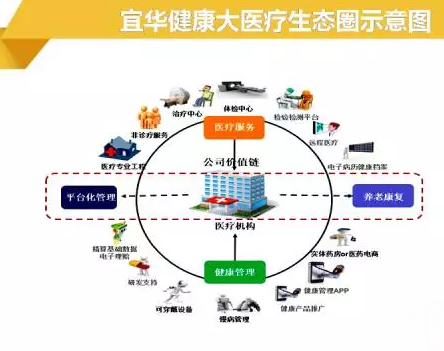
Currently, Yihua Health owns four wholly-owned and holding subsidiaries and three equity-participating subsidiaries, with 60 affiliated hospitals and eight cooperative oncology centers, providing a total of 30,000 medical and nursing beds. It also manages 25 hospitals on behalf of third parties, offering 10,000 medical and nursing beds. Additionally, it operates 20 mid-to-high-end elderly care communities and 8,000 senior living apartments.
Its subsidiaries include: Zhongan Kang Logistics Group, ranked No. 1 in China for logistics management service scale, which has undertaken the construction of over 100 large and medium-sized hospitals nationwide and provides non-clinical services and consumables supply to more than 120 hospitals; Dazisailekang Medical Investment Management Co., Ltd., a leader in the field of Gamma Knife therapy for tumors and ranked among the top three private hospital enterprises in China by bed count; “Qinheyuan,” a benchmark enterprise in China’s elderly care industry and the leading brand that pioneered the membership-based model in this sector; and Aioluo Medical Devices, a globally leading integrator of medical device products and services, specializing in mobile medical equipment and chronic disease management.
On July 14, 2017, Yihua Health released its earnings forecast, estimating that the net profit attributable to shareholders of the listed company for January–June 2017 would range from RMB 90 million to RMB 120 million, representing a year-on-year decline of 90.36% to 87.15%. The average net profit growth rate for the medical device services industry was -24.17%.
Meanwhile, the Company made the above forecast based on the following reasons: its business scope has expanded from comprehensive medical logistics and medical engineering to elderly care services, investment and operation of medical institutions, and sales of medical devices, with rapid growth in the performance of each of these segments during the first half of this year. The net profit attributable to shareholders of the listed company was approximately RMB 90 million to RMB 120 million, all derived from the main business income of the medical segment. This represents a significant year-on-year decline, primarily due to the substantial investment income generated from the transfer of equity in Guangdong Yihua in the first quarter of 2016.
Both the acquired hospital targets and the POCT targets are subject to five-year performance valuation adjustment mechanisms (VAMs), demonstrating strong profitability. Aioluo committed to achieving after-tax net profits attributable to shareholders of the parent company, excluding non-recurring gains and losses, of no less than RMB 20 million, RMB 35 million, RMB 45 million, RMB 50 million, and RMB 55 million for the years 2016, 2017, 2018, 2019, and 2020, respectively;
Dazisailekang committed to achieving after-tax net profits attributable to shareholders of the parent company, excluding non-recurring gains and losses, of no less than RMB 60 million, RMB 120 million, RMB 156 million, RMB 202.8 million, RMB 223.08 million, and RMB 245.39 million for the years 2015, 2016, 2017, 2018, 2019, and 2020, respectively.
Zhongankang achieved annual revenue of RMB 1.006 billion, with a net profit attributable to shareholders after deducting non-recurring gains and losses of RMB 104 million (exceeding the performance commitment of RMB 101 million). Aiaole was consolidated into the financial statements in May 2016, generating revenue of RMB 104 million during the consolidation period, with a net profit attributable to the parent company after deducting non-recurring gains and losses of RMB 20.24 million (exceeding the performance commitment of RMB 20 million). Dazisailekang was consolidated into the financial statements in April 2016, recording revenue of RMB 176 million during the consolidation period, with a net profit attributable to the parent company after deducting non-recurring gains and losses of RMB 127 million (exceeding the performance commitment of RMB 111 million) and a gross profit margin of 61%.
Qinheyuan was consolidated into the financial statements in November 2016, generating RMB 17.18 million in revenue and a net profit attributable to shareholders of the parent company after deducting non-recurring gains and losses of -RMB 29.18 million (exceeding the performance commitment of -RMB 30 million). The Company has approved the proposal to acquire the remaining 41.67% equity interest in Qinheyuan, with consolidation expected to be achieved in the second half of the year. To date, the Company directly or indirectly owns or manages more than 12 hospitals, with over 5,000 beds in total, including more than 2,000 nursing care beds. With the Company’s continuous expansion in Jiangxi, Jiangsu, and Zhejiang provinces across its hospital and elderly care segments, its four core businesses are projected to maintain strong growth momentum in 2017.
In 2017, Yihua Health was committed to building an integrated healthcare ecosystem combining medical care and elderly care. It made comprehensive investments in specialized oncology hospitals, medical logistics services, medical device manufacturing, and elderly care services. A comprehensive health industry chain has gradually taken shape, with continuously strengthening synergies among its various business segments.
On the other hand, Yihua Health plans to invest more than RMB 7 billion in building a high-end general hospital—the Shantou Yihua Overseas Chinese Hospital—in the Shantou Overseas Chinese Economic and Cultural Cooperation Pilot Zone, integrating medical care, preventive healthcare, rehabilitation, teaching, and clinical research.
Leveraging proton and heavy ion therapy equipment, the hospital is building the “Yihua Health Medical and Elderly Care Industrial Park,” an international-level headquarters enterprise for medical care, rehabilitation, and elderly care that is the largest in the province, the most advanced in China, based in Eastern Guangdong, with a nationwide reach, catering to overseas Chinese, and covering Southeast Asia. The park aims to attract 4,000 elderly residents for long-term stays and can accommodate nearly 10,000 seniors annually for rehabilitation and convalescent care.