

Berry Genomics: The Pioneer of Non-Invasive Prenatal Testing — An 8-Year Journey of Innovation and Industry Transformation
Lu Xun once said:“The first person to eat crabs is truly admirable.”In the field of non-invasive prenatal testing (NIPT), this “person” is undoubtedly Berry Genomics.。

Looking back on the past decade of development in the field of non-invasive prenatal testing (NIPT), from the inception of the technology to its initial commercialization and subsequent growth into a global market valued at tens of billions, Berry Genomics has been present at every stage.How Did This Company Revolutionize an Industry?
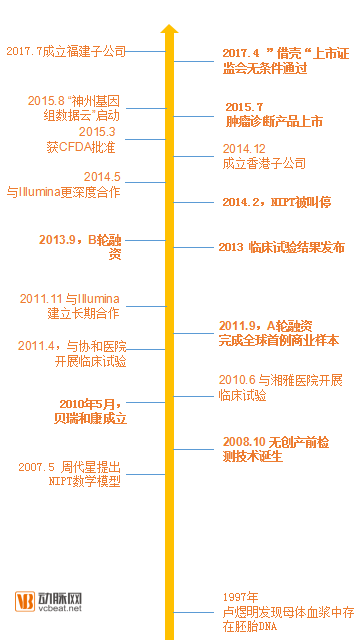
Berry Genomics Development History
In 2007, Dr. Zhou Daixing, CEO of Berry Genomics, served as the Head of the Asia-Pacific High-Throughput Sequencing Department at Illumina, a role that was largely unrelated to prenatal testing. However, as his wife was of advanced maternal age, Dr. Zhou had firsthand experience with the pain points associated with traditional Down syndrome screening technologies.
At that time, the only available technique for assessing the likelihood of fetal Down syndrome was ultrasound measurement of nuchal translucency thickness. This method had a detection rate of only 60%–80% and poor predictive value. The only way to achieve 100% certainty was through amniocentesis, but this procedure carried a miscarriage risk of 0.5%–1%.
The root cause of Down syndrome lies in chromosome 21, where affected individuals have an extra copy of this chromosome compared to the typical pair. At this point, Zhou Daixing began to consider whether gene sequencing could be leveraged to develop a non-invasive screening method with higher accuracy.

Zhou Daixing, Founder and CEO of Berry Genomics
Unfortunately, major corporate platforms at the time did not strongly support this idea. Illumina was challenging the $3,000 Human Genome Project; Life Technologies, after investing heavily in market research, saw greater promise in the oncology market; and BGI Genomics directed its efforts toward the scientific research sector.
Repeated setbacks only strengthened Zhou Daixing’s conviction that this technology was unprecedented. Consequently, he decided to launch a startup and personally lead the development of a technology for the direct detection of chromosome copy numbers.
As early as 1997, Professor Dennis Lo of the Chinese University of Hong Kong published a paper on the presence of fetal DNA in maternal plasma, but significant progress in clinical translation and application had not been achieved. Zhou Daixing believed this could be a promising avenue and decided to travel directly to Hong Kong to speak with him in person.
In May 2007, aboard a flight from San Francisco to China, Zhou Daixing proposed the earliest mathematical model for non-invasive prenatal testing (NIPT). Perhaps even he did not anticipate at the time that this rudimentary model would spark a revolution in prenatal screening just a few years later.
In September of the same year, Zhou Daixing met Lo Yuk-ming for the first time. At that time, Lo’s laboratory did not have next-generation sequencing (NGS) equipment, nor did it conduct basic applied research in this area. Zhou informed Lo that the coefficient of variation (CV) of NGS was only 0.05%.
These data made Lo Yuk-ming realize that next-generation sequencing was feasible.
Subsequently, building on the previously established digital model, Zhou Daixing and Dennis Lo began a long-term collaboration in this area, conducting early laboratory validation of non-invasive prenatal testing (NIPT) technology and publishing their results in the October 2008 issue of PNAS.

"Father of NIPT" Professor Dennis Lo
Thus, non-invasive prenatal testing (NIPT) technology was born., Dennis Lo has been hailed by industry insiders as“Father of NIPT”, Zhou Daixing was the first to introduce this technology to China.
Based on this technology,2010Year5Month18On that day, Zhou Daixing, Hou Ying, and Gao Yang established a biotechnology company, which is widely known as Berry Genomics.
Since prenatal testing is being conducted, the most suitable setting is a hospital. How can it be introduced into clinical practice? Berry Genomics initially adopted a broad outreach strategy, aiming to enter clinical settings as quickly and extensively as possible.
However, this process was not smooth. After all, such technology had never been heard of in China at the time, and some hospitals even suspected it to be a scam.
How to Open the Doors of Hospitals: The Challenge Berry Genomics Had to Solve at the Time. Ultimately, Zhou Daixing proposed collaborating first with the most authoritative and cutting-edge hospitals in China, thereby penetrating hospital channels from the top down.
In June 2010, Berry Genomics and Xiangya Hospital launched a clinical prospective trial in this area. This was the earliest and most comprehensive clinical trial of its kind internationally. Subsequently, a Phase II clinical trial with Peking Union Medical College Hospital was conducted in 2011. In 2013, the results of these two trials were published in the journal Prenatal Diagnosis, demonstrating sensitivity and accuracy both approaching 100%.
These data immediately alleviated the concerns of other top-tier hospitals and physicians.
The development and advancement of non-invasive prenatal testing (NIPT) technology owe much to two renowned teams: the team from Peking Union Medical College Hospital led by Professor Bian Xuming and Professor Liu Juntao, and the team from Xiangya Hospital of Central South University led by Academician Xia Jiahui and Professor Wu Lingqian. These two teams are representatives in the fields of prenatal diagnosis and genetic disease diagnosis.
Xiangya Hospital believes that since the accuracy of this technology has reached 99.9%, it is virtually a diagnostic-grade product.
However, Peking Union Medical College Hospital maintains that cell-free fetal DNA is derived from maternal peripheral blood, which also contains maternal DNA. Therefore, even if a pregnant woman’s test result is positive, amniocentesis is still required for final confirmation. More importantly, the hospital believes that while ensuring accuracy, products should also control testing costs to benefit a broader population.
In 2011, at the invitation of Zhou Daixing, the two teams jointly attended a symposium in Beijing. Prior to this, early prenatal testing initiatives had emphasized diagnosis, namely Non-Invasive Prenatal Diagnosis (NIPD). At this conference, Professor Liu Juntao proposed the concept of Non-Invasive Prenatal Testing (NIPT), defining it as an auxiliary testing method for clinical diagnosis.
From then on, non-invasiveDNAPrenatal testing products have found their precise positioning in China. Berry Genomics also embarked on the commercialization journey of non-invasive prenatal testing (NIPT) in the same year.
In March 2011, the Health Department of Hunan Province granted Hunan Jiahui Genetic Specialist Hospital the first approval for clinical pilot implementation of NIPT. In September, the first NIPT testing product, “Beibei’an,” was launched, making Berry Genomics the world’s first provider of NIPT testing services. In December, the company successfully established a long-term partnership with Illumina, the former employer of Zhou Daixing.
In the same year, Berry Genomics received funding from Legend Capital.Around of financing.
This round of financing amounted to as much as RMB 60 million. According to Cai Daqing, a partner at Legend Capital, “This is likely the first investment ever received by a NIPT company worldwide.”In the healthcare sector, first-mover advantage serves as a highly effective moat for companies.
Gao Yang believes that this is a good time for them to expand their market.After securing this investment, Gao Yang quickly recruited nearly 200 sales representatives, bringing the company’s team size to 400 by the end of 2012.
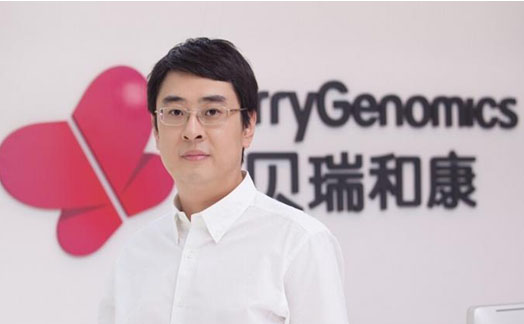
Gao Yang, Founder and Chairman of Berry Genomics
The pilot program in Hunan Province served as the starting point for the company’s market expansion, and BGI Genomics also launched its NIPT project in late 2011.
CompetitionIt has emerged: an industrial revolution is brewing.
Following its established strategy, Berry Genomics spent two years forging partnerships with over 30 provinces and 150 hospitals across China. In 2012, it processed more than 50,000 samples, becoming one of the two largest companies in the field alongside BGI Genomics.
2012In the year, Berry Genomics successfully completed2500in ten thousand US dollarsBround of financing.
In 2014, while Berry Genomics and BGI Genomics were still cultivating their respective market segments,CFDAand the National Health and Family Planning Commission suddenly issued a joint document to halt allMedical Testing Based on High-Throughput Sequencing TechnologyItem, NIPT is the first to be affected。
Like everyone else, the team was completely bewildered when the news broke. According to the original plan, we had intended to go all out this year and double our market share. However, just after the Lunar New Year, we were dealt a severe blow.
"Deal with challenges as they come." After calming down, the team decided to thoroughly study this policy.
As stated in the announcement at that time, institutions with pilot qualifications were permitted to conduct non-invasive prenatal testing (NIPT) programs.This is a very important piece of information, indicating that the industryDevelop under government guidance and regulation, while exploring how to implement the new technology of high-throughput sequencing in clinical settings.As expected, the National Health and Family Planning Commission promptly issued the rules for pilot program applications.
By 2014, the NGS industry had been experiencing rapid growth in China for seven years. It is inevitable that any sector will enter a phase of regulatory oversight once it reaches a certain level of development; this is not necessarily a negative development, as it indicates that the state has begun to pay serious attention to this industry.
A temporary halt will inevitably give way to a release of momentum. Many have sensed the opportunity, and a large number of new players have begun to enter the market. Subsequently, the landscape of this field has become nuanced: non-invasive prenatal testing (NIPT), once merely a subfield of liquid biopsy, has now emerged as a major battleground in the next-generation sequencing (NGS) industry.
This year, as national regulation officially commenced and a wave of entrepreneurship erupted,NIPTThe industry has taken initial shape.
Under the regulatory announcements issued by the government, institutions engaged in non-invasive prenatal testing (NIPT) are required to hold pilot qualifications, and related products used for testing must undergo approval and registration before they can be utilized.
For hospitals, applying for pilot program qualifications on their own is feasible, but having them complete product registration filings is impossible. This also made Berry Genomics realize thatThe product model may bring about new transformations.
Previously, Berry Genomics operated under a service-oriented model, primarily relying on physician referrals to partner testing laboratories or having pregnant women submit samples collected at hospitals to these facilities. In this process, hospitals served as the patient intake point, while Berry Genomics acted as the testing service provider, delivering technical reports to the hospitals, which in turn provided the final step of medical care to the pregnant women.
This LDT service model operates with straightforward logic: Berry Genomics handles centralized sample management and testing, while hospitals manage the user-facing end.
However, as the overall competitive landscape of the non-invasive prenatal testing (NIPT) industry shifts and more players enter the market, if Berry Genomics continues to adopt this model, its relationship with all other market participants may be reduced to one sole dynamic: competition.
However, if we adopt a different approach—shifting from a service-centric model to providing approved sequencing instruments and reagent consumables to healthcare institutions in the market—the situation appears to be quite different.
As previously mentioned, the China Food and Drug Administration (CFDA) mandates that products used for non-invasive prenatal testing (NIPT), including reagents and instruments, must obtain regulatory approval before they can be utilized. Hospitals purchase equipment from manufacturers that have already secured product approval certificates and continuously procure reagents for testing purposes.
Meanwhile, these instruments and reagent consumables can also be sold to other enterprises, making nearly all competitors potential partners of Berry Genomics.
This model enables rapid scaling of the industry, which has long been the aspiration of our entire team; moreover, as more players enter this sector, Berry Genomics’ market opportunity continues to expand.
This kind ofIVDThe model has fundamentally reshaped the competitive landscape.
In May 2014, Berry Genomics established a closer partnership with Illumina. Leveraging years of technological accumulation, the team developed its product model in just over a year.
In March 2015, with the NextSeq CN500 sequencer and the fetal chromosomal aneuploidy (T13/T18/T21) detection kit (reversible terminator sequencing method) receiving CFDA medical device product registration approval, Berry Genomics became one of the few companies globally to possess NIPT products.
This year, Berry Genomics was selected for the first time by the internationally renowned financial media outlet Forbes magazine.“China's Unlisted High-Potential Enterprises100Strong”。
Before Berry Genomics received its CFDA approval, NIPT products from BGI Genomics, Daan Gene, and CapitalBio had already been approved by the CFDA in succession. Although their approval came slightly later, they quickly demonstrated a competitive edge over rivals due to their rapid transformation in business models and the well-established channel advantages built in the early stages.
Since the application of Berry Genomics’ IVD product model to commercial testing achieved success, multiple international institutions have planned to promote it globally.
In January 2016, shortly after Zhou Daixing attended the J.P. Morgan Healthcare Conference, Berry Genomics received invitations from multiple countries:
In late January, the Singapore government requested materials from Berry Genomics through the organizers of the J.P. Morgan Healthcare Conference to study the feasibility of implementing the IVD product model in Singapore;
In February, American counterparts came for an inspection;
In March, Russian counterparts visited Berry Genomics to learn about IVD-based NIPT.
In April, the World Bank organized medical testing professionals from multiple countries to hear a detailed presentation by Berry Genomics.
2016In [year], Berry Genomicsin the NIPT IVD product modelMarket share as high as70%, ranking first in China.
2017In [Year], Berry Genomics was listed on the capital market,Marking the Entry of High-Throughput Sequencing Applications in Medical Laboratory Medicine into a New Era。
In July 2015, Onconi launched its oncology molecular diagnostic products based on cSMART technology, marking Berry Genomics’ first entry into the field of non-invasive tumor DNA testing.
As early as 2012, Berry Genomics conceived the idea of venturing into the oncology field. The company’s technical team, which originally specialized in non-invasive prenatal testing (NIPT) for chromosomal abnormalities, naturally expanded its focus to include NIPT for monogenic diseases. Shortly after the company’s establishment, the team began developing technologies for non-invasive prenatal detection of monogenic disorders, which later evolved into the cSMART technology.
During the validation of cSMART technology, the team realized that since this technique can detect gene mutations in fetal DNA present at extremely low levels in maternal plasma, it could similarly be applied to the non-invasive detection of tumor DNA. After all, cell-free tumor DNA is also present in the peripheral blood of cancer patients, albeit at very low concentrations, and tumor DNA mutations are predominantly point mutations and fusion mutations. Therefore, the researchers concluded that applying cSMART to non-invasive tumor detection is highly feasible.
Subsequently, Berry Genomics and Kangning initiated small-scale clinical studies in collaboration with internationally renowned pharmaceutical companies and cancer hospitals. The highly promising results paved the way for the subsequent launch of the OncoEase brand.
OncoYi’s first diagnostic application is targeted therapy testing for non-small cell lung cancer (NSCLC), as the targeted genes in NSCLC have been thoroughly characterized, and clinicians are highly familiar with the relationship between specific gene mutations and drug selection.
In 2014, Berry Genomics officially established its Oncology Division and subsequently launched testing products for gynecologic cancers, colorectal cancer, and other indications.
In the past, the companyEstablishmentof7YearChina, Berry Genomics has devoted nearly all of its resources toInfusionAtNIPTIn this regard, both the regulatory framework for policies and public acceptance of genetic testing have now improved.SignificantlyIncrease.Technological and industry advancements have also brought new opportunities. Berry Genomics has gradually shifted its focus to the next major subsector of genetic testing—tumor detection and treatment—which may represent a market ten times larger than that of NIPT.
In addition to the field of tumor detection, Berry Genomics has also intensified its strategic layout in the big data sector since 2015.
Big data is no longer unfamiliar to industry practitioners or the general public; in the field of genomics, it has become the foundation for precise interpretation. In April 2015, after Professor Yu Fuli from Baylor College of Medicine in the United States joined Berry Genomics as Chief Information Officer (CIO), he assumed the critical responsibility of establishing a genomic big data center.
Through years of accumulation, Berry Genomics has leveraged the 400,000 Chinese female genomic datasets collected in its first phase to develop and establish big data resources. In simple terms, this involves analyzing these data using genetic methods, uploading them to the cloud, and building a large-scale cloud-based database for the Chinese population.
This is the collaboration with Alibaba Cloud.“Shenzhou Genomics Big Data Cloud”Project.

In addition, in July 2017, Berry Genomics established a subsidiary in Fujian Province with the aim of building an industrial park centered on medical collaboration and intelligent data, leveraging a big-data repository of pathogenic gene information from the Chinese population as one of its core components.
By leveraging cloud computing, gene sequencing, gene editing, artificial intelligence, and other technological tools to build an ecosystem encompassing the four major sectors of industry, academia, research, and capital, Berry Genomics aims to establish China’s first complete life science industry cluster.
Of course, these are still relatively basic databases. Berry Genomics’ ultimate vision is to layer emerging technologies such as artificial intelligence onto this data foundation, creating a globally oriented data center that can be accessed quickly and conveniently from anywhere in the world.
In the future, humanity may enter the long-awaited “era of universal genomics.” At present, cost is no longer a barrier. By then, the value of sequencing will no longer lie in the data and information it provides at the time of completion, but rather in the meaningful guidance it offers, grounded in a profound understanding of both human biology and genomic data.
Following its IPO, Berry Genomics will enter a new phase of development and encounter greater opportunities in the capital market. What role will such a company, which has brought innovation to an entire industry, play in the future of healthcare?
Let's wait and see!