12 Healthcare Financing Deals Globally and State Council Issues Guidelines on Establishing a Modern Hospital Management System | Eggshell Weekly No.38
Arterial Headlines

#ArtificialIntelligence #BigData
On July 20, 2017, the State Council issued the “Development Plan for New-Generation Artificial Intelligence,” reigniting heightened interest in artificial intelligence and big data.It clearly states that laws, regulations, ethical norms, and policy frameworks for artificial intelligence, as well as big data infrastructure systems, will be gradually established.
Thus, big data and artificial intelligence will no longer be regarded as conceptual technologies; instead, they have been formally incorporated into national planning and implemented as strategic technologies.
In the healthcare sector, this new policy specifically calls for leveraging emerging technologies such as artificial intelligence, big data, and the Internet of Things (IoT) to establish intelligent healthcare systems, intelligent health management systems, and intelligent elderly care systems.
This holds profound significance for professionals in healthcare-related technologies. In the heavily regulated medical sector, the establishment of norms and standards for big data and artificial intelligence signifies that these technologies have officially garnered industry attention and recognition. Therefore, the current juncture can be regarded as the dawn of China’s new generation of digital and intelligent future healthcare.

#Pharmaceutical E-commerce #Traditional Chinese Medicine
Wang Guoqiang, Director of the National Administration of Traditional Chinese Medicine, has stated on multiple public occasions that traditional Chinese medicine may be undermined by Chinese herbal medicines.
His argument is that traditional Chinese medicine (TCM) differs fundamentally from Western medicine in its heavy reliance on the quality of herbal materials. However, issues such as non-standardized cultivation practices and contaminant residues have raised serious concerns about the quality of TCM herbs. Like a river cut off from its source, this quality crisis has become a latent threat to the inheritance and development of TCM.
As a precious legacy bequeathed by our ancestors, Traditional Chinese Medicine (TCM) has evolved into a massive industry worth hundreds of billions. However, if quality issues remain unaddressed, the consequences could be dire, with even the slightest oversight leading to significant failure.
However, the current situation is not entirely pessimistic. The industry has recognized this issue, and many modern traditional Chinese medicine (TCM) enterprises have begun to prioritize the quality of medicinal materials by collaborating with authentic herb production bases or establishing their own cultivation centers to ensure quality control.
More significantly, the innovative “Internet + Chinese Herbal Medicines” model has emerged. By leveraging internet-based tools, this model provides services such as standardized cultivation of Chinese herbal medicines, traceability of authentic (Daodi) herbs, publication of supply and demand information, and financial support, thereby addressing various challenges across the entire value chain from cultivation to distribution. Among its branches, e-commerce for Chinese herbal medicines is one of the most influential and mature.
VCBeat (WeChat ID: vcbeat) has compiled a list of projects related to e-commerce for traditional Chinese medicinal materials. It aims to provide a comprehensive analysis of the current state of this market from perspectives such as market supply and demand, the number of enterprises, and the competitive landscape, thereby exploring the vitality of the “Internet + Traditional Chinese Medicinal Materials” model.

#Chronic Disease Management#Blood Glucose Monitoring
For patients with diabetes, blood glucose testing is as essential as eating, forming an indispensable part of their daily routine. Currently, the most widely used device for this purpose is the capillary blood glucose meter. However, this method has certain limitations: it only provides a snapshot of blood glucose levels at a specific moment and cannot continuously monitor fluctuations during activities such as exercise, meals, or sleep. Furthermore, the finger-prick procedure causes discomfort to patients, and the resulting measurement may not accurately reflect their true glycemic status.
To comprehensively understand the 24-hour dynamic fluctuations in a patient’s blood glucose levels, a novel glucose monitoring device—the Continuous Glucose Monitor (CGM)—has been introduced!
CGM (Continuous Glucose Monitoring), or continuous glucose monitoring system, refers to a monitoring technology that indirectly reflects blood glucose levels by measuring the glucose concentration in subcutaneous interstitial fluid via a glucose sensor.
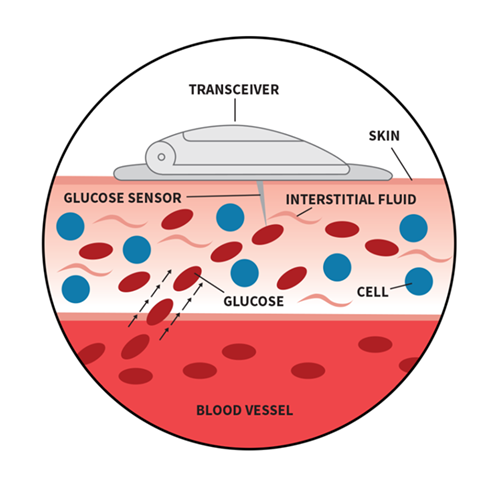
The CGM device industry can be categorized by product into sensors, transmitters, receivers, and insulin pumps. A sensor inserted subcutaneously generates an electrical signal when glucose in the patient’s interstitial fluid undergoes an oxidation reaction. This electrical signal is then converted into blood glucose readings and transmitted wirelessly to a receiver. Guided by these data and visual graphs, clinicians can comprehensively assess the patient’s 24-hour blood glucose fluctuations and, if necessary, administer insulin via an insulin pump.

#ArtificialIntelligence #DiabeticRetinopathy
Diabetic retinopathy, abbreviated as "DR," is a common retinal vascular disease and the leading cause of blindness among patients with diabetes. China has the largest number of type 2 diabetes patients globally. As the diabetic population continues to grow, both the prevalence and blindness rate of diabetic retinopathy have been rising year by year, making it the leading cause of blindness in the general population.
Evidence-based medical studies have demonstrated that hyperglycemia, hypertension, and hyperlipidemia are significant risk factors for the development of diabetic retinopathy.
Because diabetic retinopathy often presents no clinical symptoms in its early stages, by the time symptoms appear, the condition has usually progressed to a severe stage, making it easy to miss the optimal window for treatment. Therefore, the therapeutic efficacy for diabetic retinopathy depends on the timeliness of intervention. However, due to a shortage of ophthalmologists and low public awareness in China, the current screening rate for diabetic retinopathy remains below 10%.
Since 2016, artificial intelligence has experienced explosive growth in the healthcare sector, surpassing most physicians in capabilities such as radiological imaging, pathological image analysis, intelligent speech recognition, and text entry. Particularly in the field of medical imaging, leveraging advantages in AI algorithms and computational power, certain AI-based imaging products have achieved accuracy rates exceeding 95%.
Meanwhile, some startups have applied AI to the screening of diabetic retinopathy and achieved certain results. VCBeat has compiled a list of nine such companies to examine how they are attempting to address diabetes screening challenges and assist in the management of patients with diabetes.

#Private Hospitals# Management
At the Hospital Development Conference hosted by DXY recently, when asked about her views on the rapid growth of private healthcare in China, United Family Healthcare founder Li Bijin said, “I am very afraid.”
She stated that healthcare is inherently a “slow investment.” If hot money floods into private healthcare in pursuit of short-term returns, it will inevitably disrupt the ecosystem of private healthcare, a trend that warrants caution.
In recent years, the private healthcare sector has maintained sustained high growth, with significant increases in the number of market entrants, healthcare institutions, and patient visits. Meanwhile, private healthcare providers are striving to shed labels such as “exorbitant profits” and “over-treatment,” making brand building a key focus of their development. With favorable policies and the reshaping of industry value, the private healthcare sector is at a critical juncture for transformation and upgrading.
Capital Dynamics
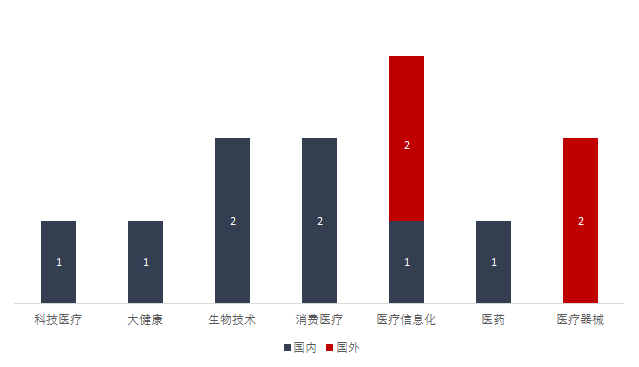
This Week in the Domestic and International Healthcare Sector:12A financing event.
Yasen Technology

#Quantitative Analysis Service Provider for Medical Imaging#
Recently, VCBeat learned that Beijing Yasen Technology Development Co., Ltd. (hereinafter referred to as “Yasen Tech”) has secured tens of millions of yuan in Series A+ financing, with QK Intelligent Robot Technology Co., Ltd. (hereinafter referred to as “QK Intelligent Robot”) as the investor.
In its early startup phase, Yasen Technology secured RMB 4.5 million in angel financing. On December 12, 2016, the company completed a Series A funding round amounting to tens of millions of RMB, with investors including Fangzhong Gu Group’s Shunxi Fund and Huqiu Medical Technology (Suzhou) Co., Ltd.
Following this financing round, Yasen Technology will further advance the comprehensive development and market promotion of its platform products in the field of medical artificial intelligence. Its product portfolio will also expand from neurology, hematology, and pulmonology to pathology and endocrinology.
In terms of market strategy, Yasen will focus on two target segments: first, medical consortium hospitals, where a lead hospital covers other healthcare institutions within its region, thereby establishing a data foundation; second, tiered diagnosis and treatment, by providing primary care institutions with an intelligent analysis platform for common conditions such as pulmonary diseases, breast disorders, and fractures.
Duomu Health
# Japanese Premium Medical Tourism Service Provider #
VCBeat (WeChat ID: vcbeat) has learned that Duomu Health, a cross-border medical service platform specializing in high-end Japanese medical tourism, recently secured angel-round investment from Jiawo Capital.
Due to its proximity, affordable costs, and dietary habits similar to those in China, Japan has become the top destination for Chinese medical tourists. According to a report by the Development Bank of Japan, the number of Chinese visitors traveling solely for health checkups was projected to exceed 310,000 annually by 2020. Japan’s cancer prevention and early detection system is among the most advanced globally, with a comprehensive health screening costing between RMB 20,000 and 30,000.
Duomu Health, established in 2015, is a cross-border medical consulting service firm founded by Chinese professionals who returned to China after studying in Japan. The founder of Duomu Health graduated from Waseda University and previously worked at Nomura Securities. The core team members all have over ten years of experience studying and working in Japan, possessing profound understanding and insight into Japanese medical institutions and healthcare systems.
Policy Updates
July 25, 2017 / General Office of the State Council / Guo Ban Fa [2017] No. 67
General Office of the State Council Issues "Guiding Opinions on Establishing a Modern Hospital Management System"
The General Office of the State Council recently issued the “Guiding Opinions on Establishing a Modern Hospital Management System.”
The Opinion points out that the leadership, guarantee, management, and supervisory responsibilities of Party committees and governments over public hospitals should be implemented; the public welfare nature of public hospitals should be upheld; policies on financial input into public hospitals should be fully implemented; and long-term debts of public hospitals should be gradually repaid and resolved.
Adhere to the separation of government functions from institutional operations and the separation of regulatory oversight from hospital management, gradually abolish the administrative ranks of public hospitals, and prohibit heads of health and family planning administrative departments at all levels from concurrently holding leadership positions in public hospitals.
Implement the autonomy of public hospitals in personnel management, establish a compensation system adapted to the characteristics of the medical industry, and allow hospitals to explore the implementation of target annual salary systems and negotiated compensation in accordance with relevant regulations. Strictly control the bed capacity, construction standards, and allocation of large-scale medical equipment in public hospitals, and strictly prohibit debt-financed construction and luxurious renovations. By 2020, basically establish a modern hospital management system.
July 21, 2017 / General Office of Chongqing Municipal People's Government / Yu Fu Ban Fa [2017] No. 103
General Office of the Chongqing Municipal People’s Government Issues “Implementation Opinions on Promoting the Construction and Development of Medical Consortia”
On July 21, the Chongqing Municipal People’s Government website published the “Implementation Opinions on Promoting the Construction and Development of Medical Consortia” issued by the General Office.
“The Opinions” specify that all tertiary public hospitals must participate in the construction of medical consortia and play a leading role this year, and each district, county, Liangjiang New Area, and Wansheng Economic and Technological Development Zone must establish at least one medical consortium with demonstrable effectiveness.
“The Opinions” point out that the basic principles for building medical consortiums in our city are: government-led and coordinated planning; adherence to public welfare with innovative mechanisms; decentralization of resources to enhance capabilities; and convenience and benefits for the public, ensuring that people benefit. “Facilitate access to nearby medical services for the public, reduce patients’ financial burdens, prevent poverty caused or exacerbated by illness, promote the development of the health industry and economic transformation and upgrading, and enhance the public’s sense of gain.”
More Content
#Conference Updates# #Industry Trends# #In-Depth Reports# #Company Spotlight#
Please scan the QR code to join as a member and view the complete weekly report.