

West China Hospital and SeedsMed Establish Joint Medical AI R&D Center, Filing IPO Prospectus
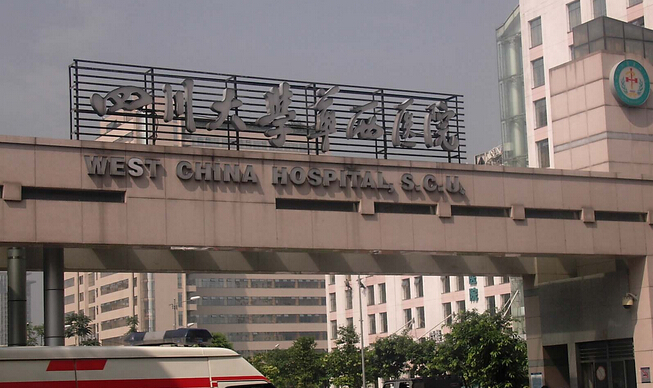
Recently, VCBeat learned that West China Hospital will jointly establish the West China-Cisi Medical Artificial Intelligence R&D Center with Sichuan Cisi Yigou Medical Technology Co., Ltd. (hereinafter referred to as “Cisi Yigou”), leveraging its high-quality multidisciplinary medical resources and technological strengths. The center will carry out systematic research, development, translation, application, and promotion of medical artificial intelligence, covering AI technologies in disciplines such as digestive endoscopy, pathology, CT, MRI, and ultrasound.
According to VCBeat, as early as March 2017, West China Hospital had already entered into preliminary collaboration with Cisi Yigou on the research and development of artificial intelligence technologies for digestive endoscopy, achieving phased progress.
Professor Li Weimin, President of West China Hospital, stated at the press conference: “The West China-Hirsch Medical AI R&D Center serves as a major technological translation platform for collaborative innovation in industry, academia, research, and clinical application at West China Hospital, Sichuan University,”It is also an important sign of West China Hospital releasing its hospital resources with an open attitude.
"West China Hospital will play a more significant role in the development and application of medical artificial intelligence in China, fostering open collaboration with industry, academia, research, and clinical practice entities to jointly build the 'Chinese force' in medical AI."
China’s Two Major Advantages in Developing Medical AI
In May this year, China’s newly released “13th Five-Year Plan for Special Projects in Health and Medical Science and Technology Innovation” designated medical artificial intelligence technology as a key priority for advancement. On July 20, the State Council issued the “Development Plan for Next-Generation Artificial Intelligence,” providing guidance and regulatory frameworks for the development of AI.
Medical artificial intelligence was also a key focus of the Ministry of Science and Technology’s Major Special Project in 2018. Medical AI technologies will effectively address the shortage of medical resources, particularly physicians, and the limited healthcare capabilities of primary care institutions, while simultaneously enhancing the quality and efficiency of medical diagnosis, thereby exerting a significantly positive impact on national economy and people’s livelihood.
As a major power in science, technology, and healthcare, China possesses unique advantages in the field of medical artificial intelligence.
First, with the continuous strengthening of national power, China’s medical science and technology have advanced by leaps and bounds, while extensive experience has been accumulated in disease diagnosis and treatment. Meanwhile, as a country with a vast population, China’s large comprehensive hospitals, such as West China Hospital of Sichuan University, possess world-class resources in terms of medical technical proficiency, the number of cases with research value, and the variety of diseases covered.
Second, in the field of AI technology, China and the West are essentially at the same starting line, and Chinese scientists' research achievements in this area lead those of the West.
Leveraging these two major advantages, China has the potential to become a global leader in the field of medical artificial intelligence.
XiShi YiGou to Launch the World’s First AI-Powered Digestive Endoscope by Year-End
West China Hospital of Sichuan University is a renowned medical center in China and worldwide, ranking second nationally in overall strength and first in scientific and technological influence and research capabilities. As one of the earliest large-scale medical centers in China to engage in AI technology research and development, it has achieved world-leading progress in the R&D of artificial intelligence for digestive endoscopy.
Given West China Hospital’s robust multidisciplinary medical resources and technological prowess, its chosen partners must inevitably possess considerable strength as well.
Hisi Heterogeneous Medical Technology was established in Beijing in 2015. Shortly after its founding, the team of Dr. Wu Ren, a top international artificial intelligence scientist (from NOVUMIND, Heterogeneous Technology), joined through an equity partnership, thereby securing world-class AI training technology and propelling the company into a phase of rapid development.
Wu Ren is one of the earliest experts to leverage GPUs for massive-scale parsing and is a renowned international expert in computer game theory. He previously served as a Senior Scientist at HP Labs and Principal Investigator at the CUDA Research Center. Later, he joined AMD, where he led the R&D team for heterogeneous systems and served as AMD’s Chief Software Architect for Heterogeneous Systems.
In September 2013, Dr. Wu Ren left AMD and, at the invitation of Mr. Robin Li from Baidu, joined Baidu’s Institute of Deep Learning (IDL).
Dr. Wu Ren’s team possesses proprietary algorithms with independent intellectual property rights and its own dedicated supercomputing center, with algorithmic sophistication and computational power that are several to more than ten times greater than those of typical research institutions in the field.
Since Wu Ren joined the company, it has achieved remarkable accomplishments in multiple medical subspecialties through collaborations with healthcare institutions such as Beijing Friendship Hospital. Notably, the company is at the international forefront in the research and development of artificial intelligence for digestive endoscopy.
In 2017, attracted by the Sichuan Provincial Government’s policy prioritizing the development of the biomedical industry, Cis Healthcare relocated to Sichuan. In March 2017, Sichuan Cis Heterogeneous Medical Technology Co., Ltd. was established in Chengdu Medical City (Wenjiang), and Cis Medical Technology (Beijing) Co., Ltd. was dissolved, with all its operations transferred to the newly formed entity.
Through collaboration with the government, valuable channels for applying medical AI technologies in healthcare services are expected to be provided, enabling rapid commercialization of these technologies; meanwhile, progress has been made in the application of certain technologies in medical devices.
The partner manufacturer has been identified as Shanghai Chengyun Medical Instrument Co., Ltd. (whose relevant equipment has long obtained national approval, thus exempting it from complex regulatory submission processes), and together they are launching the world’s first AI-powered gastrointestinal endoscope.
Accuracy of AI-Based Recognition Technology in Digestive Endoscopy Exceeds 90%
By uploading a set of gastroscopic images via mobile cloud transmission, physicians were able to accurately screen for three common findings in digestive endoscopy—polyps, neoplasms (gastric cancer), and varices—in under 10 seconds, with diagnostic accuracy exceeding 90% for each. This represents the preliminary research achievement of West China Hospital and CiiT over the past few months.
The collaboration between West China Hospital and Xishi Yigou Company was launched in April this year. Through the research and development of artificial intelligence recognition technology for digestive endoscopy images, the project has completed the organization and screening of more than 200,000 digestive endoscopy image datasets covering three common gastrointestinal diseases: polyps, neoplasms (tumors), and varices, thereby establishing data training and deep learning for artificial intelligence models.
Currently, the initial accuracy rates of this intelligent recognition technology for polyps, neoplasms (tumors), and varices have reached 92.7%, 93.9%, and 96.8%, respectively.
AI-Based Recognition Technology for Digestive Endoscopy Images integrates high-quality endoscopic image data and expert diagnostic conclusions to create an intelligent big-data repository. This technology intelligently replaces the current reliance on physicians’ empirical visual assessment by providing automated prompts and interpretations for both static images and dynamic videos, thereby facilitating high-level, high-quality diagnosis of various digestive diseases observed during endoscopy.
Wu Ren, head of the technical team behind this R&D effort, stated that in the next phase, the accuracy and speed of intelligent recognition technology will be more precisely optimized through “learning” from larger volumes of high-quality data, as well as advancements in computer algorithms and computing power.
Professor Tang Chengwei from the Department of Gastroenterology at West China Hospital, Sichuan University, stated: “By leveraging the West China–C-Lab Endoscopic Imaging and Video Intelligence System to provide alerts and assessments for both static images and dynamic videos, we can not only assist physicians at all levels in making rapid diagnoses to improve work efficiency, but more importantly, significantly enhance the quality of gastroscopic diagnosis and treatment guidance provided by primary-care and junior physicians. This will substantially reduce clinical misdiagnosis rates and greatly facilitate the rapid professional development of physicians. We hope to implement this system in clinical practice within the next two to three years.”
Property rights issues have not yet been defined
In addition, Liao Zhilin, Head of the Publicity Department at West China Hospital, told VCBeat: “At present, West China Hospital and Hisense Heterogeneous have not clearly defined the intellectual property rights of the product. After all, this type of medical artificial intelligence is still in the early exploratory stage. West China Hospital has provided medical experts and medical data, while Hisense Heterogeneous has contributed AI technology and technical expertise. The issue of intellectual property rights will be addressed in the future, but the current focus remains on research and development.”
Meanwhile, West China Hospital and Xi Shi Yi Gou have no plans to apply for CFDA approval. They believe that the product only provides recommendations to doctors without making decisions; therefore, they are not considering CFDA certification at this stage. Once the laws and regulations governing medical AI are further refined in the future, they will comply with the legal requirements.