

Zhuojian Tech, Technology Provider Behind China's First Ophthalmic Internet Hospital, Files IPO Prospectus
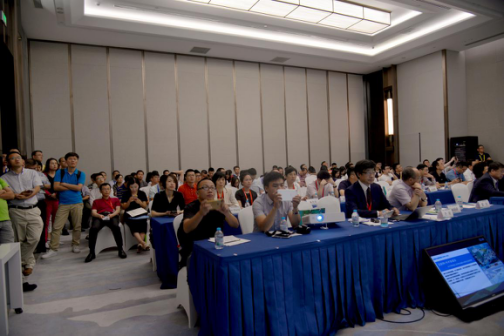
From July 27 to 30, 2017, the venue of the G20 Hangzhou Summit hosted the “2017 International Forum on Innovative Development of Visual Health” (Vision China 2017), along with academic conferences including the 2017 National Optometry and Ophthalmology Academic Conference, the Vision Care Industry Development Forum, and the 3rd China Myopia Research Conference.
At 8:00 a.m. on July 29, amid great anticipation, the “Internet + Ophthalmology” sub-forum, themed “Hotspots and Opportunities,” grandly opened at the G20 venue. The event was exclusively titled by Hangzhou Zhuojian Information Technology Co., Ltd., and jointly supported by Dr. Wang Qinmei, Director of the Zhijiang Campus of the Eye Hospital of Wenzhou Medical University, and Mr. Wei Jianfeng, CEO of Hangzhou Zhuojian Information Technology Co., Ltd.
Renowned experts and scholars in the fields of ophthalmology, optometry, and vision science from China and abroad have gathered to jointly explore new technologies, developments, trends, and concepts closely related to visual health.
China’s current healthcare resources face several challenges: insufficient overall volume and scarcity of high-quality resources; fragmentation, with no scientifically structured system in place; uneven distribution; and heterogeneity, including disparities in physicians’ competence levels.
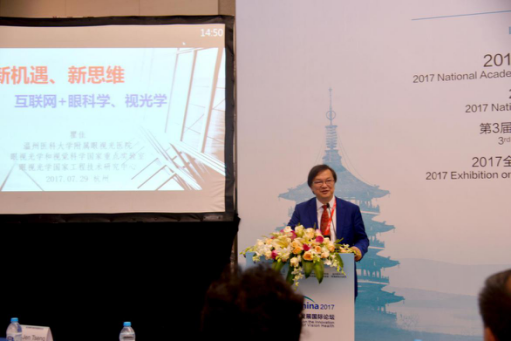
Dean Qu Jia of the Affiliated Eye Hospital of Wenzhou Medical University Delivers a Brilliant Speech
As a supplement to regional medical consortia, specialized medical consortia can address issues of resource allocation by fully mobilizing the existing stock of specialized resources nationwide. By collaborating with influential disciplinary institutions, they facilitate coordinated development in medical practice, education, and research, thereby enhancing primary healthcare capabilities. This involves various aspects, including disease-specific management within specialized consortia, specialized technologies, standardized residency training for specialists, industry consensus, standardized diagnosis and treatment protocols, promotion of standards, and homogenization of specialty development. In this context, big data and information technology play a crucial role.
Dr. Zeng Zhiren, President of Chung Shan Medical University Hospital, stated that the development of hospital informatization must be led by clinicians with practical experience, and the development of internet hospitals is an inevitable path. In the future, many patients may not necessarily visit hospitals in person. The development of ophthalmology internet hospitals should adopt a segmented approach: prioritize services that are easier to implement and more accessible to the general public before tackling more complex challenges.
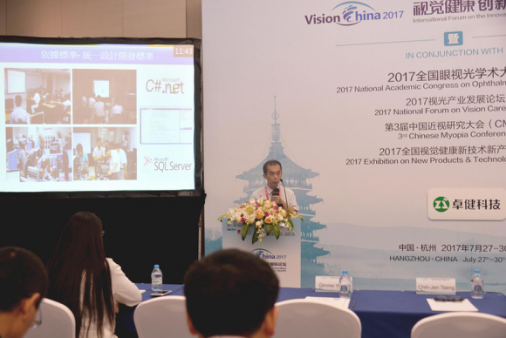
President Tseng Chih-Jen of Chung Shan Medical University Hospital Delivered a Speech at the Conference
“Leveraging the internet can enhance the influence of internet hospitals, facilitate online consultations for the public from the comfort of their homes, and save human and financial resources. More importantly, the internet enables the public to access eye care knowledge earlier and more rapidly, thereby promoting the development of population-wide health,” stated Dr. Wang Qinmei, Dean of the Zhijiang Campus of the Eye Hospital of Wenzhou Medical University.
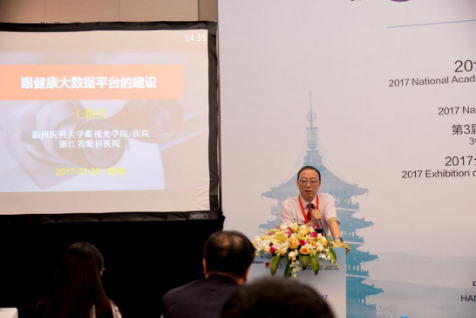
Dean Wang Qinmei of the Zhijiang Campus of the Eye Hospital of Wenzhou Medical University Delivered a Speech at the Conference
China’s First Online Ophthalmology Hospital—Zhejiang Provincial Online Ophthalmology Hospital, supported by Zhuojian Technology, has migrated traditional offline multidisciplinary consultations to an online platform, enabling on-demand appointment scheduling, consultation requests, remote consultations, and follow-up visits. This meets the needs of specialists at different hierarchical levels for providing remote diagnoses to patients anytime and anywhere. Furthermore, it facilitates information sharing and interoperability between hospitals at different tiers, enhancing real-time remote guidance by experts and promoting the rational allocation of medical resources.
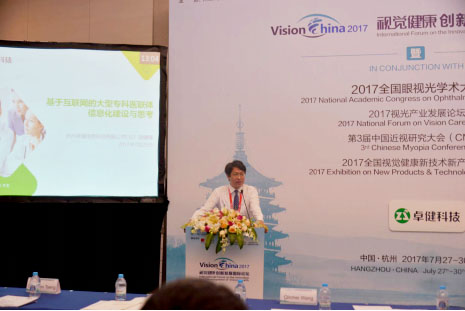
Mr. Wei Jianfeng, President of Zhuojian Technology, Delivers a Brilliant Speech at the Conference
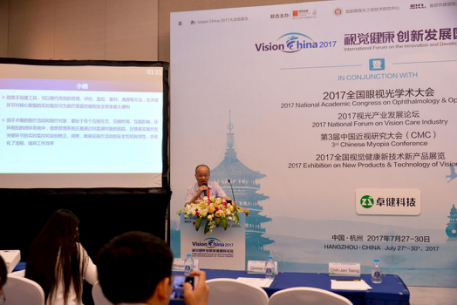
President Lin Xiaofeng, Zhongshan Ophthalmic Center, Sun Yat-sen University
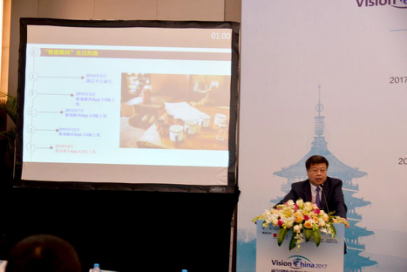
Dean Zhao Mingwei, School of Optometry and Vision Science, Peking University
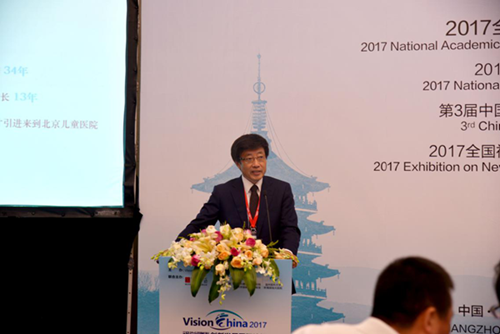
Mr. Yu Gang of Meihe Medical Group
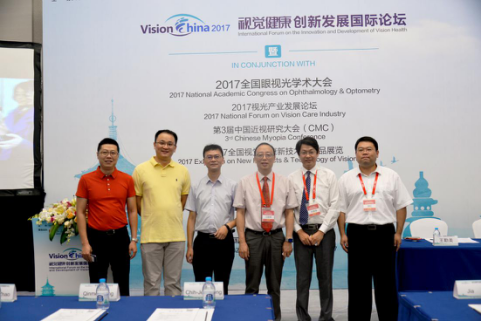
Forum Group Photo