

Global 56% of Healthcare Institutions to Invest in Blockchain by 2020, with Life Sciences and Pharma Poised for Early Benefits
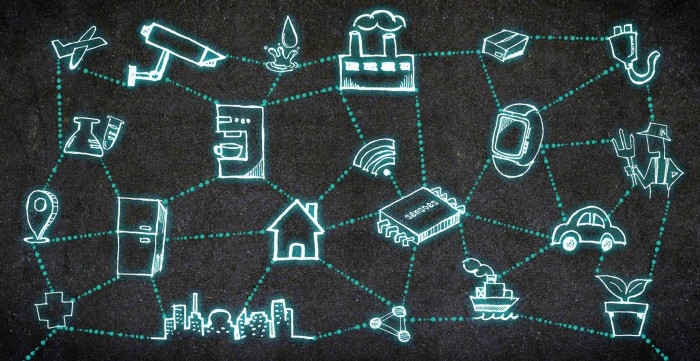
Blockchain technology is an internet database technology characterized by decentralization and open transparency, allowing everyone to participate in recording database entries; hence, it is also known as distributed ledger technology.
So how can blockchain be integrated with machine learning and the Internet of Things to address healthcare challenges? VCBeat (WeChat ID: vcbeat) has translated the latest insights from Frost & Sullivan, the Pistoia Alliance, and industry analysts for our readers.
Frost & Sullivan, a global corporate growth consulting firm, is dedicated to helping clients accelerate their business growth and achieve benchmark status for growth, innovation, and leadership within their industries. For over 50 years, Frost & Sullivan has leveraged a global perspective to provide reliable market financing, investment, and strategic and management consulting services to Fortune 500 companies, emerging enterprises, and investment institutions worldwide.
In the “2017 Top ICT Analysis Report” released by Frost & Sullivan, the company listed the ten most transformative information and communications technologies (ICT) of today, namely artificial intelligence, blockchain, 5G, cybersecurity, mixed reality, natural language interaction, small data, hyperconverged systems, everything-as-a-service, and robotic process automation. The report’s analysis pointed out that the potential of blockchain technology is continuously extending into more industries, with funding volumes increasing substantially.
In the healthcare sector, blockchain technology is converging and integrating with technologies such as the Internet of Things (IoT) and machine learning, emerging as a fresh force driving industry advancement.
It is foreseeable that over the next five to ten years, healthcare institutions will adopt a series of integrated information management platforms based on the aforementioned technologies to enhance the efficiency and quality of medical administration.
Blockchain Technology: Making Digital Health Platform Interoperability Safer and More Convenient
The integration of the aforementioned big data analytics and access methods enablesFacilitating more convenient and secure access to information for all members of the patient care team, enhancing engagement and interoperability among them, thereby accelerating data decentralization and expanding consumers’ access to their personal health information.。
Kamaljit Behera, an analyst at Transformational Health Industry, explained: “Blockchain-based systems will enable unprecedented collaboration, strengthen innovation in medical research, and implement broader healthcare concepts such as precision medicine and population health management.”
Blockchain leverages a distributed ledger system, enabling every community member to maintain an identical record of all transactions among them.
Before any changes are made to the dataset, approval must be obtained from every entity holding a copy of the ledger, thereby enhancing data security and ensuring that each access and edit is authorized.
As more sensitive data is exchanged and integrated more rapidly across a larger number of devices, organizations, platforms, and machine learning applications, blockchain can offer a simpler and more comprehensive strategy to ensure mutual trust between different platforms, maintain data integrity, and provide better control over how information is utilized.
Behera continued, “The booming proliferation of various connected medical devices and the imperative for all stakeholders to prevent data breaches have made blockchain technology and its ubiquitous security infrastructure the foundation for enabling emerging digital healthcare workflows and advanced healthcare interoperability.” Through its unique distributed network, blockchain employs cryptographic techniques to mitigate cyber threats and create an additional layer of trust.
“Blockchain technology is not necessarily a panacea for addressing challenges in the healthcare industry, but by optimizing current workflows and eliminating some high-cost intermediaries,It indeed holds the potential to save the healthcare industry billions of dollars.。”
Life Sciences and Pharmaceutical Industries Are the First to Benefit
Behera pointed out that blockchain technology can help people track and manage transactions more comprehensively, and the life sciences and pharmaceutical industries may be among the first to benefit from it.
Blockchain can improve pharmaceutical supply chain management through tamper-proof recording technology, faithfully documenting how each tablet, bottle, or patch moves among various stakeholders until it reaches the patient.
“If applied in the pharmaceutical industry, this technology is expected to curb the circulation of counterfeit and substandard drugs, thereby saving the industry $200 billion.”
Behera’s assertion is supported by a recent report from the Pistoia Alliance, a non-profit organization in the life sciences industry dedicated to helping companies eliminate R&D barriers. According to the findings of its released report, the Pistoia Alliance predicts that the majority of the life sciences industry will adopt blockchain-based data management tools within the next five years.
Participants in the online survey for this report were executives from the pharmaceutical and life sciences industries, 22% of whom stated that their companies were already using or piloting blockchain technology.
The figures derived by the Pistoia Alliance are also consistent with a survey conducted by IBM in early 2017.IBM Survey Finds That 16% of Healthcare Organizations Globally (Including Payers and Providers) Have Clear Plans to Begin Implementing Blockchain Tools Within the Next 12 Months。
In this survey, IBM also predicted that,56% of Healthcare Institutions Worldwide to Invest in Blockchain Technology by 2020。
Blockchain can provide standardized, comprehensive, and highly complete datasets
Blockchain can unify disparate datasets, breaking down the data “silos” that make it difficult for machine learning algorithms to access them.”, providing machine learning with standardized, comprehensive, and high-integrity datasets required for performing advanced analytics.
If blockchain technology can assure healthcare organizations that the data they hold is universal, accurate, and untampered, machine learning can be applied more effectively across China and even on a larger scale toConduct predictive analytics, clinical decision support, and medical research。
IBM stated in its survey that true collaboration among parties can only begin when data is trusted and protected.
Blockchain can replace the intermediaries that were once used to protect these data. Even smaller healthcare organizations can compete against larger rivals by joining such an ecosystem. Private companies can also leverage blockchain technology to acquire and create new data sources, such as health data collected from personal devices and information gathered from home caregivers.
To achieve these goals, the healthcare industry needs to rapidly come together to define blockchain technology and its adoption standards. However,When medical digitalization was just emerging and electronic health records (EHRs) began to be adopted, stakeholders had not yet reached a full consensus on the definition and standards of EHRs.。
Behera emphasized, “The healthcare industry needs to establish blockchain consortia to foster partnerships among stakeholders and develop corresponding standards for the future large-scale implementation of blockchain technology in healthcare scenarios.”
Trends in the Integration of Machine Learning, IoT Data, and Artificial Intelligence
Several alliances focused on introducing blockchain into the healthcare sector already exist. For instance, the Pistoia Alliance, which is dedicated to fostering innovation in the life sciences as mentioned above, is one of the leading organizations facilitating collaboration among various healthcare entities.
Hyperledger is an open-source project launched by the Linux Foundation in 2015 to advance blockchain digital technology and transaction verification. Its members include dozens of diverse stakeholders such as ABN AMRO, Accenture, and Hashed Health. The goal is to foster collaboration among members to build an open platform that addresses various use cases from multiple industries and simplifies business processes.
Such cross-industry collaborative efforts are helping transform blockchain from a cryptographic tool into a mainstream strategy for information sharing, while also attracting growing interest from an increasing number of participants in the healthcare sector.
Brian Behlendorf, Executive Director of Hyperledger, told the media earlier this year: “We hope that blockchain can truly be integrated into the fabric of the Internet.”
“We believe that establishing such an alliance can help facilitate the aforementioned process. Blockchain enables us to transform existing data-sharing practices, allowing secure and private access to data in a decentralized and equitable manner.”
Recently, SAP (a global provider of enterprise application software and solutions, founded in 1972 and headquartered in Walldorf, Germany) and Change Healthcare, a leading U.S. healthcare IT company, have officially joined the Hyperledger project. Other members include IBM, Kaiser Permanente, Intel, NTT Data of Japan, and other companies with an interest in healthcare operations.
Gem is a blockchain technology startup founded in California, USA, and a highly regarded blockchain API provider praised by Frost & Sullivan. Last April, Gem officially announced the launch of its Gem Health project to promote collaboration and development of emerging technologies in the healthcare sector, and joined Hyperledger.
Another European company under Behera’s observation is Guardtime. Founded in Estonia in 2006, the company is headquartered in Singapore and currently maintains a representative office in China. In 2016, Guardtime partnered with the Estonian government to deploy the world’s first blockchain-based medical record management system.
Other companies observed by Frost & Sullivan include API providers such as PokitDok, Patientory, and iSolve.
Microsoft has also recently announced the open-sourcing of the Coco framework, enabling users to build enterprise-grade blockchain networks. In a blog post, Mark Russinovich, CTO of Microsoft Azure, wrote, “Healthcare companies are well-suited to leverage Coco’s data confidentiality, scalability, and security, paving new ways for health data interoperability between EHRs and other software systems.”
On August 17, Alibaba Health announced a pilot project with Changzhou City to integrate medical consortiums with blockchain technology. By incorporating cutting-edge blockchain technology into the underlying technical architecture of Changzhou’s medical consortium system, the project has achieved secure and controllable data interoperability among certain local medical institutions. This low-cost, high-security approach addresses the long-standing challenges of “information silos” and data security that have plagued healthcare institutions.
Machine learning and Internet of Things (IoT) data are increasingly becoming fundamental requirements for big data analytics in healthcare, while blockchain offers innovative and effective solutions to ensure the proper use and storage of all such big data.
Secure and reliable distributed ledger systems represent a promising new technology for industries still struggling to ensure data integrity and quality, such as medical research, patient safety, and population health management.
If industry insiders’ optimistic forecasts for blockchain prove true, then within a few years, blockchain, machine learning, the Internet of Things (IoT), and other big data analytics domains could converge into seamless, interoperable, and trustworthy powerful tools. These tools would provide the healthcare industry with various highly feasible insights and ensure high-quality patient care services.
References:
https://healthitanalytics.com/news/by-2025-blockchain-iot-machine-learning-will-converge-in-healthcare
https://healthitanalytics.com/features/explaining-the-basics-of-the-internet-of-things-for-healthcare