

VoxelCloud Files IPO Prospectus: IEEE Fellow-Backed AI Medical Imaging Innovator Led by Redpoint Ventures

VoxelCloud
Developer of Intelligent Imaging Systems
In China, over 200 million people suffer from cardiovascular diseases of varying severity, with more than three million deaths annually attributed to these conditions. Worldwide, cardiovascular diseases claim more than 19 million lives each year. Among them, coronary heart disease, as a common cardiovascular condition, is the leading cause of death globally.
Currently, the most commonly used clinical diagnostic approach for such conditions involves low-risk, non-invasive imaging examinations. However, due to the limited diagnostic value of this method, patients typically require further evaluation under general anesthesia using digital subtraction angiography (DSA), an interventional procedure associated with higher risks and greater invasiveness. Subsequently, physicians manually analyze the vascular images and formulate a treatment plan based on a comprehensive assessment of the patient’s individual condition.
Meanwhile, VoxelCloud, an AI healthcare company, has products under its brandIt enables comprehensive, quantitative 3D analysis of coronary lumen and plaque components directly from non-invasive contrast-enhanced cardiac CT data. Its accuracy is comparable to that of invasive procedures, yet at a significantly lower cost.
Massive Data Empowers Medical Diagnosis and Drives the Precision Medicine Revolution
VoxelCloud was founded in Suzhou in early 2016. It has established branch offices in Shanghai and Beijing, and a research institute in Los Angeles. Its founder is Ding Xiaowei.
The company is dedicated to leveraging artificial intelligence and cloud computing technologies to mine and interpret vast amounts of medical imaging and clinical data, enabling physicians to conduct accurate, efficient, and timely diagnostic analyses, guide clinical intervention strategies, and drive the revolution in personalized precision medicine.
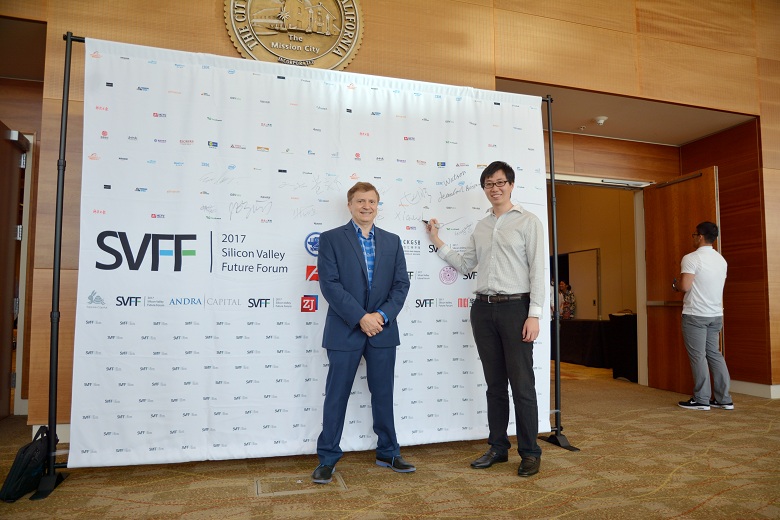
From left to right: Demetri Terzopoulos, Chief Scientist at VoxelCloud; Ding Xiaowei, CEO of VoxelCloud
In early 2017, VoxelCloud secured a tens-of-millions-of-dollars Series A financing round led by Sequoia Capital. The funds will be primarily used to develop automated medical imaging analysis services for major diseases, provide medical semantic-level knowledge graph APIs for medical imaging, and collaborate with top-tier medical centers in China and the United States to seamlessly integrate end-user products into next-generation clinical workflows.
Currently, VoxelCloud’s business scope covers application areas such as lung cancer diagnosis, ophthalmic disease screening, and coronary artery disease analysis. By leveraging artificial intelligence models and cloud computing systems, and integrating clinical and imaging data, the company achieves quantitative disease analysis and risk prediction, thereby highly optimizing clinical workflows. Addressing specific clinical needs, VoxelCloud provides end-to-end solutions for clients including hospitals, health examination centers, medical insurance companies, and physician groups.
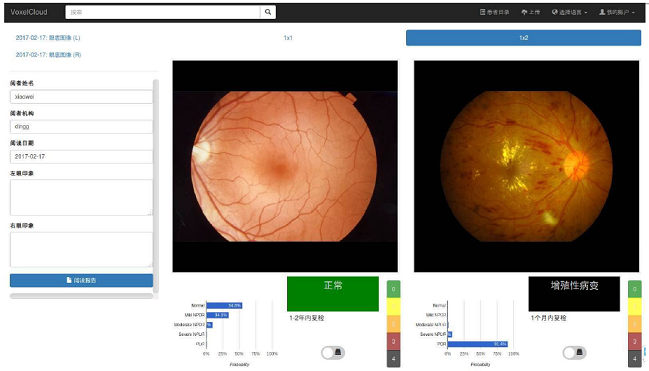
VoxelCloud Fundus Disease Screening Solution Operation Interface
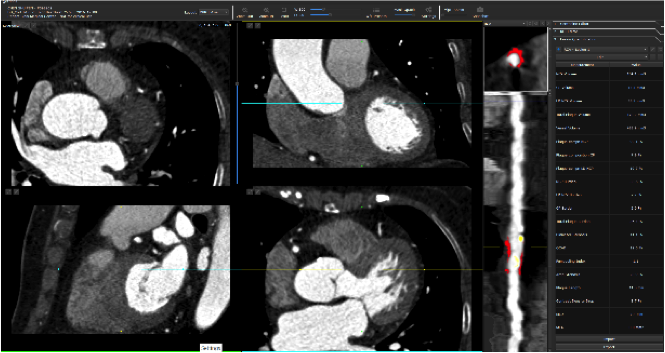
VoxelCloud Autoplaque Fully Automated Cardiovascular CT Image Analysis Platform Interface
In addition to leveraging its lung cancer diagnostic product, VoxelCloud Autoplaque, for fully automated cardiovascular CT image analysis, VoxelCloud also employs three or even seven independent teams to perform cross-reading on data that require manual annotation and subjective interpretation, thereby ensuring accuracy.The objectivity and accuracy of VoxelCloud’s conclusions are derived from comparisons based on extensive experimental data and invasive diagnostic procedures.
A portion of the experiments were conducted internally at Cedars-Sinai Medical Center, while the remainder were carried out globally by third-party institutions through more than 75 single-center or multi-center clinical trials to demonstrate its efficacy.
In addition, the VoxelCloud Autoplaque fully automated cardiovascular CT image analysis platform can comprehensively analyze multiple critical parameters, including plaque composition, vessel wall remodeling, and simulated hemodynamics, enabling early identification of vulnerable plaque features. It accurately assesses the risk of coronary artery disease events before severe stenosis occurs, breaking through the limitations of traditional diagnosis that relies solely on luminal stenosis. This enhances diagnostic efficiency, accuracy, and objectivity.
The company’s future product portfolio will primarily consist of three categories: first, web-based client applications that provide analytical services to hospitals, health examination centers, and insurance companies; second, cloud computing service interfaces developed in collaboration with medical imaging equipment manufacturers and medical image management system software vendors; and third, a cloud computing platform designed for third-party medical data analysis applications.
Dr. Ding Xiaowei, CEO of VoxelCloud, believes that the current product portfolio configuration is the most efficient and rational arrangement, based on the team’s understanding of the R&D processes for various diseases. This is because securing research collaborations, obtaining FDA clearance, and collecting and annotating data all entail significant time costs. Meanwhile, pursuing multiple product lines simultaneously allows the team to fully leverage its R&D capabilities and resources.
Disrupting Traditional Business Models by Embedding into Hospital Clinical Workflows
For a long time, the complex relationships within the healthcare industry have deterred many companies from attempting to capture a share of the market. In particular, AI healthcare companies have remained in an exploratory phase regarding their business models. VoxelCloud’s multi-tiered collaboration model may offer valuable insights for reference.
VoxelCloud currently maintains close collaborations with the following three types of institutions:
The first category includes healthcare institutions and large medical centers, as well as national-level disease screening programs.
The second category comprises platform-based service institutions. VoxelCloud integrates its services or technologies into third-party platforms, thereby maximizing the utilization and validation of its products across a wide range of scenarios.
The third category comprises medical device manufacturers, which leverage analytical algorithms to add value to their devices, thereby introducing product differentiation in a highly homogeneous market.
Regarding the above three types of collaboration, Ding Xiaowei stated: “It is relatively limited to merely add on to existing clinical workflows and information systems.”
Adhering to the mindset of traditional, fully manual workflows restricts innovative processes due to legacy system constraints, often relegating new products to merely one module within a broader solution. However, as AI enhances its disease analysis capabilities, it is increasingly capable of influencing and reshaping existing clinical workflows.
VoxelCloud’s products do not draw on the frameworks of any existing healthcare information systems; instead, they are built on an entirely new system design.
Furthermore, Ding Xiaowei is more optimistic about service providers that offer efficient diagnostic analysis through human-AI collaboration, such as third-party imaging centers, secondary and primary hospitals in fourth-tier cities or townships, and community health centers. Equipping these institutions with the capability to detect early-stage diseases is the top priority for VoxelCloud’s future market promotion.
High-Caliber Technical Team
VoxelCloud’s core team members hail from the University of California, Los Angeles; Cedars-Sinai Medical Center; Mayo Clinic; Carnegie Mellon University; Arizona State University; Northwestern University; GE; Philips; Siemens; Elsevier; and SAP. They are highly active scientists and medical experts in the fields of medical image analysis, computer vision, machine learning, and medical-grade solutions.
Cedars-Sinai Medical Center is the No. 1 hospital in the United States for cardiac imaging and cardiac surgery, with a long-standing history and extensive expertise in cardiac research and artificial intelligence technologies.
Regarding future planning, Ding Xiaowei believes that the most critical priority is to continuously refine the product portfolio, ensuring that clinical applications for specific diseases are no longer rigid or mechanical, but instead function as a comprehensive diagnostic analysis. From a service perspective, VoxelCloud needs to build an integrated medical diagnostic service ecosystem that facilitates the seamless flow of medical resources both upstream and downstream. This strategy aims to transcend traditional software and cloud-based offerings, transforming them into readily accessible AI-driven services.
Currently, VoxelCloud’s partner hospitals are primarily concentrated in East and South China, including the Beijing-Tianjin-Hebei region, the Yangtze River Delta region, and major cities across Guangdong Province. The number of hospitals collaborating with VoxelCloud has exceeded 40. Most of these collaborative projects have completed the R&D phase and entered the trial and procurement stages.
Ding Xiaowei asserted, “In the nascent stage of the medical AI industry, when industry barriers have yet to be established, the depth of medical expertise and innovative research will determine the competitive advantage of AI teams.”
Founding Team
Demetri Terzopoulos
Demetri Terzopoulos, Chief Scientist at VoxelCloud, is a Distinguished Professor at the University of California, Los Angeles (UCLA) and Director of the Computer Vision and Graphics Laboratory. He is a Fellow of the Royal Society, the Canadian Academy of Sciences, the Guggenheim Foundation, the Association for Computing Machinery (ACM), and the Institute of Electrical and Electronics Engineers (IEEE). Ranked by ISI and Google Scholar among the world’s most cited engineering scholars with over 50,000 total citations, he has received numerous awards, including the 2005 Academy Scientific and Technical Award, the IEEE Outstanding Research Award, the Artificial Intelligence Journal Award, the 2013 Helmholtz Prize, the 1987 Marr Prize, the 1996 NICOGRAPH Award, and the International Society for Medical Informatics Awards in 1999 and 2003. He has served on committees for the U.S. National Science Foundation (NSF) and the National Institutes of Health (NIH), and as an advisory board member for the Max Planck Institute. He is a founding editorial board member of the renowned medical imaging journal *Medical Image Analysis*, and has served as a reviewer, editor, and area chair for numerous medical information technology conferences and journals.
Jianming Liang
Dr. Jianming Liang, Vice President of Research and Development, is an inaugural Mayo Clinic Visiting Professor and an Associate Professor of Biomedical Informatics and Computer Science at Arizona State University (ASU). His research focuses on leveraging tools from computer vision, machine learning, visualization, mathematics, and statistics to address major challenges in medical image analysis, as well as in computer-aided diagnosis, surgery, and therapy. He has published over 70 papers and holds 13 patents (with 31 pending). His research underpins several FDA-approved medical applications. He is also a recipient of the ASU President’s Innovation Award.
Xiaowei Ding
Dr. Xiaowei Ding, Chief Executive Officer, is an expert in medical image analysis and machine learning research. He earned a Bachelor’s degree in Information Engineering from Shanghai Jiao Tong University in 2012 and a Ph.D. in Computer Science (with a minor in Applied Mathematics) from the University of California, Los Angeles (UCLA) in 2015. In 2016, he joined the Department of Computer Science at UCLA as a Research Assistant Professor. He previously worked on artificial intelligence healthcare projects and at the Biomedical Imaging Research Institute at Cedars-Sinai Medical Center in the United States, where he was directly involved in the research and development of multiple AI-based medical image analysis systems approved by the U.S. Food and Drug Administration (FDA). Dr. Ding also serves as a reviewer and editorial board member for numerous industry academic conferences and journals.