

HealthPower Files IPO Prospectus to Disrupt China's Medical Equipment Asset Management Market
The importance of medical equipment in clinical examination and treatment is self-evident. Ensuring the proper operation of equipment and minimizing the occurrence of risks and failures are critical components of hospital operational management. However, hospitals possess tens of thousands of devices, ranging from simple IV poles to large-scale CT scanners, making effective management a formidable challenge. Consequently, how to manage these capital-intensive assets, often valued at hundreds of millions of yuan, has long been a persistent dilemma for hospitals.
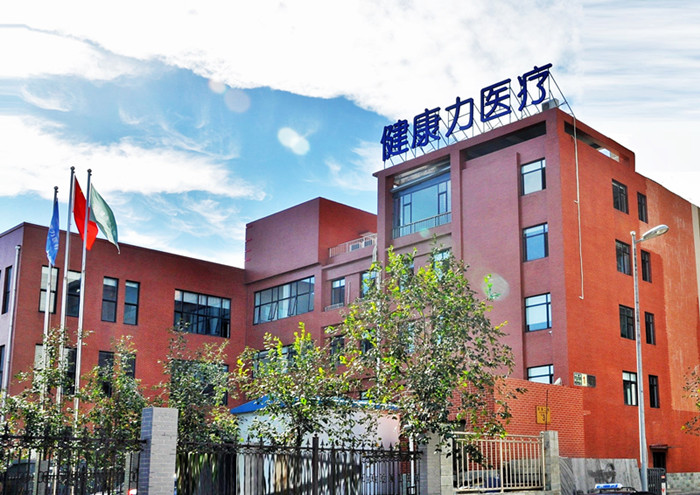
HealthForce (Beijing) Medical Technology Co., Ltd. (hereinafter referred to as “HealthForce”) is a service provider dedicated to helping hospitals address challenges in asset management, offering third-party medical equipment maintenance services, asset management solutions, and training programs. On July 28, 2017, marking the company’s second anniversary, Mr. Zhu Haiwen, Founder and General Manager of HealthForce, was interviewed by a reporter from VCBeat (WeChat ID: vcbeat) to discuss how they manage hospital equipment assets.
The Monopolization of the Medical Device Service Market Drives the Emergence of HealthPower
There are currently three main groups providing medical equipment maintenance services in China: first, the original manufacturers; second, in-house engineers from hospital equipment departments; and third, third-party medical equipment maintenance service providers represented by Jiankangli.
Among these three groups, original equipment manufacturers (OEMs) undoubtedly possess the strongest competitiveness, as they have the most comprehensive understanding of issues related to their self-produced devices, technologies, and components. However, due to the severe monopolistic nature of China’s medical device industry—exemplified by the absolute dominance of the “GPS” trio (GE Healthcare, Philips, and Siemens Healthineers) in imaging equipment—the quality and pricing of after-sales services for medical devices have become highly unreasonable. This has led a growing number of hospitals to question the OEMs’ after-sales service model.
Relying on their monopoly advantages, original equipment manufacturers (OEMs) reap substantial profits from maintenance services and are reluctant to provide core technologies and spare parts to hospital engineers. Furthermore, within the public hospital system, biomedical engineers in hospital equipment departments often lack sufficient motivation. Consequently, the in-house maintenance capabilities of these departments have developed very slowly, making them entirely incapable of supporting the upkeep of the thousands of medical devices deployed across the hospital.
The strong monopoly held by original equipment manufacturers (OEMs), coupled with the insufficient in-house maintenance capabilities of hospitals, has given rise to a large number of third-party medical device repair service companies. Third-party medical device maintenance and management services have become an essential need, presenting significant market potential. Therefore, after leaving GE in 2011, Hai Wen established a small third-party company specializing in after-sales services for medical devices.
At that time, there were numerous similar third-party enterprises in the market, which was rather chaotic. Hospitals had low acceptance of third-party institutions, and state support in this area was insufficient. Consequently, there were hardly any truly influential third-party service companies in the industry. Amid such a less-than-ideal market environment, Zhu Haiwen nonetheless identified a growth opportunity. He believed: “This market is neither too large nor too small; with a capacity nearing RMB 100 billion, there is ample opportunity for a major company to emerge.“Thus, in 2015, he co-founded Jiankangli with several other founders, aiming to build a company capable of transforming the current state of the industry.”
Covering 23 provinces and municipalities across China within two years, enabling dual online and offline repair reporting.
After two years of development, Jiankangli has grown from a small team of a few individuals into an enterprise with over 100 employees, and its market influence continues to expand. In terms of strategic layout, Jiankangli has been expanding its market coverage through a point-to-area approach, achieving business presence in 23 provinces and municipalities across East China, North China, Northwest China, and Northeast China. Zhu Haiwen stated, “Given our relatively short history and the high entry barriers characteristic of the healthcare industry, we have adopted a cautious approach to business expansion, prioritizing key regions before extending our reach nationwide. Throughout this process, maintaining high service quality remains our top priority.”
Compared to large tertiary Grade A hospitals in major cities, hospitals in more remote areas have a greater demand for third-party services. Therefore, Jiankangli’s primary clients are currently county-level hospitals and standard tertiary Grade A hospitals, to which it provides equipment maintenance and asset management services through an online-to-offline (O2O) model.

Regarding fault reporting, customers have two options: the 24/7 hotline and the Jiankangli APP platform. Depending on the nature of the fault, Jiankangli will promptly dispatch the nearest engineer to the site for repair, ensuring service quality and timeliness. Customers who report faults via the APP can even check the location of spare parts online and monitor the repair progress, achievingOne-stop service for repair requests, order acceptance, spare parts dispatch, and maintenance outcome monitoring. Hospitals that have signed managed service agreements with HealthPower can also enjoy round-the-clock equipment management and maintenance services provided by on-site service engineers.
HealthLi Pioneers the First Standard for Medical Equipment Managed Services
In addition to after-sales maintenance services for medical devices, HealthPower also provides hospitals with more comprehensive asset management solutions. At the anniversary celebration on the 28th, HealthPower launched its standardized service specifications for medical device custodianship, marking the industry’s first release ofMed·Pro Device Management Service SolutionandIntelligent Remote Device Monitoring System。
HealthPower Med·Pro Equipment Management Service System is China’s first customer-centric equipment management service solution that strictly adheres to industry standards. It provides hospitals with standardized and normalized services across all stages of the equipment lifecycle, including planning and assessment, budget management, feasibility studies and procurement, acceptance and installation, preventive maintenance, repair management, metrology and quality control, decommissioning and disposal, as well as training.
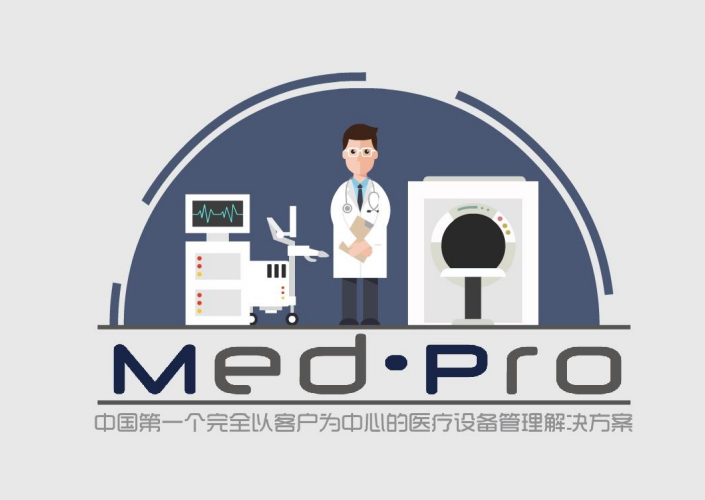
Med·Pro Equipment Management Service System derives its high efficiency from powerful intelligent big data processing capabilities. The system integrates HealthPower’s self-developedMedical Equipment Maintenance Management System, APP Dynamic QR Code Repair Reporting, and Large Medical Equipment Dynamic Monitoring System, effectively integrating equipment management data from all hospital departments and providing professional analytical services combined with real-time data to deeply uncover the value behind the data. Ultimately, this achieves intelligent, data-driven dynamic management for every piece of medical equipment.
In addition, HealthPower’s self-developed medical equipment monitoring system leverages advancements in internet and IoT technologies to interconnect hospital devices, enabling remote observation of their real-time operational status. Once any anomalies are detected, engineers will promptly dispatch to the site for maintenance or calibration, thereby achievingPreventive Maintenance. If on-site conditions permit, engineers can even leverage advanced VR technology to remotely guide the troubleshooting of complex faults, ensuring precision and efficiency.
With the assistance of this system, it is possible to enhance the service efficiency of health capabilities while reducing the failure rate of hospital equipment, thereby decreasing the time required for each maintenance operation.
HealthPower Medical Equipment Academy: Committed to Cultivating Industry Elites
Engineer quality is the technical guarantee of the Jiankangli maintenance service system.By 2016, Health Power had established a regional layout for its technical team construction with a “two-hour response time.”. In addition to Jiankangli’s in-house engineering team, the Jiankangli Medical Equipment Maintenance Fund and the Jiankangli Medical Equipment College not only provide services and support to third-party engineers but also help assemble a larger pool of engineers for the Jiankangli platform.
HealthForce maintains close collaborations with major Chinese institutions (such as Qilu Medical University [in preparation], Ya’an Vocational College, and Beijing Health Vocational College). It is dedicated to providing maintenance funds, as well as technical and career development training services, to a broad range of medical device companies and freelance engineers, thereby delivering a continuous stream of technical support capabilities to the industry.
“There is a talent gap of at least several hundred thousand in this industry. We hope to cultivate more practical professionals for the sector through these training programs.” This is Zhu Haiwen’s vision for HealthPower Medical Equipment Academy. Although HealthPower was established only two years ago, it is evident from our conversation with Mr. Zhu that he is determined to lead the development of this industry.