

Stanford Tenured Professor Joins Huiying Medical to Launch Global Interdisciplinary Talent Program
HY Medical
Provider of Medical Imaging and Oncology Radiotherapy Platforms
From whether it will replace doctors, to being merely a “partner” for physicians, and now to potentially replacing the majority of radiologists... It is undeniable that, whether you embrace or oppose artificial intelligence, it is here, gradually transforming the healthcare industry.
However, while the industry remains fixated on the question of “Will AI replace doctors?”, HY Medical, a healthcare AI company specializing in medical imaging, has extended its focus to the core of AI development in healthcare: talent cultivation.
Gathering Talent: Implementing the Global Medical Excellence Program
Professor Lei Xing, Director of the Division of Medical Physics in the Department of Radiation Oncology at Stanford University School of Medicine, announced that he will officially assume the role of Chief Advisory Scientist at HY Medical on August 6.Lei Xing is a tenured professor at Stanford University in the United States, holding joint appointments in the Department of Electrical Engineering, the Molecular Imaging Program, the Biomedical Informatics Program, and Bio-X. With over two decades of experience in teaching and research in medical imaging, medical physics, and medical informatics, he has published nearly 300 peer-reviewed articles. He has served as principal investigator for major research projects funded by the National Institutes of Health (NIH), the Department of Defense (DOD), the National Science Foundation (NSF), the American Cancer Society (ACS), the Radiological Society of North America (RSNA), and other institutions. His accolades include the American Cancer Society Research Scholar Award, the Best Paper Award from the American Association of Physicists in Medicine (AAPM), and the Google Research Award. He is a Fellow of both the AAPM and the American Institute for Medical and Biological Engineering (AIMBE), and was selected for China’s Thousand Talents Plan.
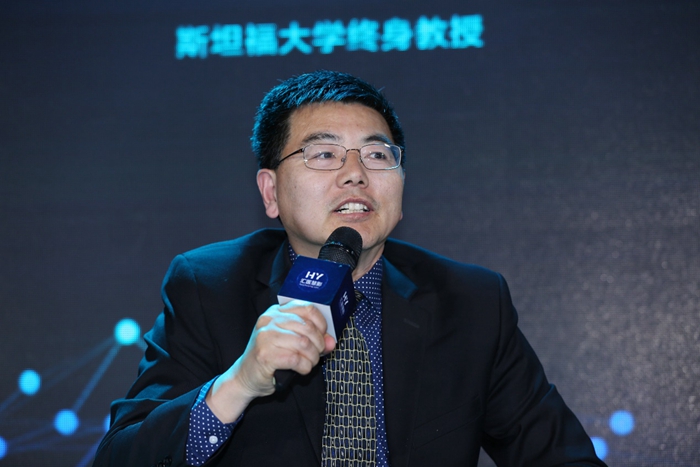
According to VCBeat (WeChat ID: vcbeat), after assuming the role of Chief Advisory Scientist at HY Medical, Xing Lei will provide directional guidance and support for the research and development of HY Medical’s medical imaging product series, pooling the company’s resources to focus on interdisciplinary research and clinical applications of artificial intelligence in medical imaging.
By the second half of 2017, Xing Lei will guide HY Medical’s R&D team in the development and upgrading of systems for tumor radiotherapy and chemotherapy, missed-diagnosis prevention, and imaging big-data research platforms (including radiomics analysis platforms). Meanwhile, centered on medical imaging, he will conduct in-depth scientific research and market exploration in computer vision, speech recognition, natural language processing, and machine learning. Leveraging imaging data mining as a foundation, he will provide precise imaging and artificial intelligence support and guidance for clinical cancer diagnosis and treatment.
"Sharing joy is better than enjoying it alone."In addition to Xing Lei’s joining, HY Medical will also launch the Global Interdisciplinary Excellence Program in Medicine, in collaboration with more than ten world-class universities and under the guidance of Professor Xing Lei.
This will be the world’s first interdisciplinary and cross-professional talent development program focused on medicine, designed to provide outstanding professionals in medicine and computer science with opportunities for advanced study at top-tier global universities. The initiative aims to align China’s medical professionals with international standards, enhance the global competitiveness of China’s AI-in-healthcare talent, and further promote deep integration among industry, academia, and research, thereby continuously unleashing innovation dividends.
Empowering the Focus on Big Data Mining in Medical Imaging
With the continuous advancement of medical informatization, healthcare data has become increasingly abundant. In May this year, Internet analyst Mary Meeker stated in her "2017 Internet Trends Report" that healthcare and wellness have reached a digital tipping point, with the healthcare industry experiencing explosive growth in both data input volume and data accumulation. More than 80% of complex medical data originates from medical imaging. Historically, these data were primarily analyzed manually by radiologists; however, many physicians lack sufficient time or expertise in professional database management, resulting in the underutilization and dormancy of valuable medical data.
In recent years, with the development of high-performance computing environments (CPU/GPU/FPGA/TPU) and advancements in image storage and processing technologies, artificial intelligence (AI) in medical imaging has made significant progress, attracting numerous players to this sector. As an AI company providing full-service-chain solutions for medical imaging, HY Medical covers the mobilization, digitization, and intelligentization of medical imaging. The company has built an intelligent medical imaging cloud platform, a tumor radiotherapy cloud platform, and an imaging big data research cloud platform. Furthermore, it has developed an intelligent imaging screening system, a missed-diagnosis prevention system, and AI-assisted diagnosis and treatment systems that deeply apply imaging technology to specific diseases such as tumors, cardiovascular conditions, and acute abdominal disorders.
When asked why he has a particular preference for HY Medical and serves as its Chief Advisory Scientist, Xing Lei stated that there are three main reasons:
First, I have been committed to exploring international industry-academia-research collaboration in medical imaging and to cultivating interdisciplinary professionals, with the aim of applying my expertise to clinical practice. “It is a major direction and trend for academic research to move out of the laboratory and into clinical applications.”
Second, since its inception, HY Medical has completed scientific research and clinical collaborations with more than 400 hospitals, accumulating a wealth of high-quality data samples and expertise. High-quality data is the foundation of artificial intelligence.
Third, Chai Xiangfei, the founder of HY Medical, was once his postdoctoral fellow. With over a decade of deep expertise in medical imaging, he is quick-witted, down-to-earth, and dedicated. Under his leadership, HY Medical has achieved remarkable progress in just two years. Whether it is advancing the digitization, mobilization, and intelligentization of medical imaging, or pursuing the vision of enhancing clinical research capabilities, HY Medical’s contributions will be uniquely significant to the medical community.
Xing Lei candidly stated that he and HY Medical will focus on the qualitative and quantitative analysis of imaging data, with particular emphasis on radiomics analysis and exploration. “In China’s current healthcare market, despite substantial state investment, the uneven distribution of medical resources remains a prominent issue, with a large proportion of patients seeking care at primary-level institutions. There are 57 million misdiagnoses annually in the field of medical imaging, including a 60% misdiagnosis rate for tumors. Automated lesion detection powered by deep learning can effectively assist primary-care physicians in initial tumor screening, making the expertise of top-tier doctors scalable, significantly improving diagnostic efficiency, and reducing missed diagnoses.”
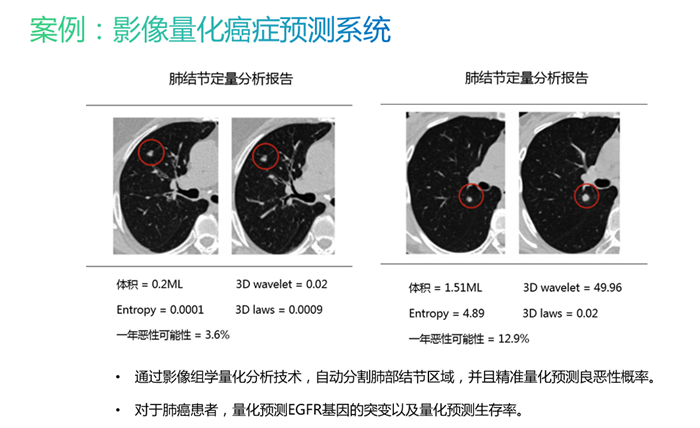
According to VCBeat, over the past few months, HY Medical has successfully launched its radiomics analysis platform. Its Imaging Big Data 1.0 Research Platform has completed co-design and joint testing with more than 40 top-tier Grade A tertiary hospitals across China, achieving an upgrade and transformation from version 1.0 to 2.0.
This cloud-based research platform for imaging big data offers functionalities including research project management, imaging and clinical big data management, multi-center collaboration management, and radiomics analysis. It employs distributed storage for imaging and clinical big data, leverages high-performance GPU cloud computing to extract feature values from thousands of imaging datasets, and integrates big data analytics methods such as Logistic Regression (LR), Support Vector Machine (SVM), k-Nearest Neighbors (kNN), and XGBoost. This enables the seamless conversion of existing imaging and clinical data into high-value research assets, empowering medical data utilization and enhancing the efficiency of clinical trials.
Version 2.0 optimizes system functionalities based on Version 1.0, accelerates the import speed of imaging data, and enables multi-sequence, multi-ROI delineation. It has been utilized by hundreds of outstanding young physicians for clinical research projects, earning recognition and acclaim from the medical imaging community.It is understood that this is the first product-based radiomics analysis platform in China.
Zhiyuan: Interdisciplinary Talent Accelerates the Development of Chinese Medicine
Undeniably, the future of medicine will deeply integrate computational science and data science, requiring substantial participation from interdisciplinary professionals.
Currently, China faces a severe shortage of interdisciplinary talent in this field, lagging significantly behind other developed countries. It is therefore critically important and urgent to cultivate such interdisciplinary professionals.
“How to continuously enhance the comprehensive capabilities of domestic medical and biomedical engineering talent is a question I have been contemplating. The Global Interdisciplinary Talent Program can help more young grassroots healthcare professionals in China gain admission to top-tier global universities, broaden their horizons, and strengthen their interdisciplinary knowledge and skills,” said Xing Lei. He stated that the primary objective of the Talent Program is to attract outstanding individuals and highly skilled professionals. Through specialized and systematic talent development and placement initiatives, the program aims to boost the global competitiveness of China’s multidisciplinary healthcare professionals and accelerate the implementation of smart healthcare solutions in China.
It is reported that the program is scheduled to officially launch on January 1, 2018. Focusing on interdisciplinary exchange and learning for outstanding medical talents, the initiative will send qualified healthcare professionals to top-tier global institutions for study and exchange periods ranging from one month to three years. Young engineers and physicians holding a master’s degree or higher in computer science, medicine, or related fields are eligible to apply through HY Medical.
Chai Xiangfei, CEO of HY Medical, stated that with the maturation of technology, artificial intelligence will undoubtedly bring disruptive changes to healthcare and people's daily lives. However, due to policy constraints and the overall environment, China's medical AI currently lags significantly behind international standards. The purpose of launching this initiative is to leverage the strengths of renowned international academic institutions and industry peers to jointly promote the development of medical AI in China. “This is a mutually beneficial endeavor.”
Currently, the specific implementation details of the Talent Program are still being finalized.For details, please email: shichang@huiyihuiying.comConsultation.