

Wanda Establishes Big Health Group with $21.6B Investment, Pursuing Light-Asset Strategy to Capture China's Trillion-Dollar Healthcare Market
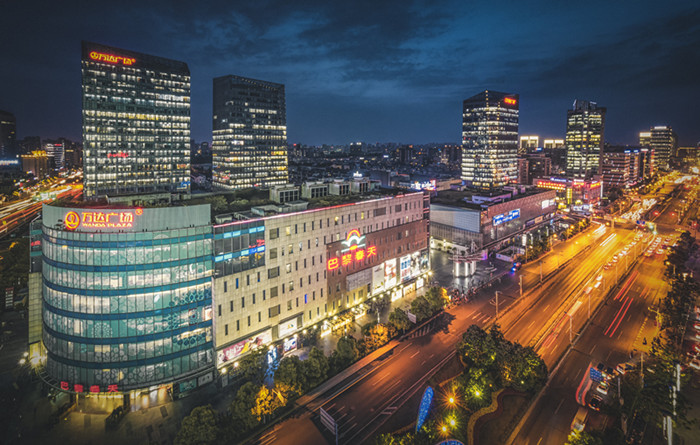
On the evening of August 2, major media outlets raced to report on Wanda’s establishment of a new health and wellness group.
Following Wanda Commercial, Wanda Culture, Wanda Network, and Wanda Financial, this new addition to the Wanda Group signals a clear strategic focus on the big health industry and asset-light operations. It also clarifies recent uncertainties surrounding Wanda’s asset reallocation, including stalled overseas mergers and acquisitions and domestic asset divestitures.
On the other hand, according to incomplete statistics from VCBeat (WeChat ID: vcbeat),There are 30 companies in China that have transitioned from the real estate sector to the big health industry, including Wanda, Vanke, Poly, and Evergrande. As a leading player in the real estate industry, Wanda’s pivot toward the big health sector marks a turning point for China’s real estate industry. It also indirectly demonstrates that the dividend period of the real estate sector is waning, while the future of the big health industry holds immense promise.
Previously, the China Commercial Industry Research Institute released a set of data indicating that, with the full implementation of the two-child policy and the Healthy China 2030 strategy,By 2021, China's total healthcare service expenditure is projected to increase to RMB 8.8368 trillion.
Faced with a vast healthcare market, how will Wanda Group carve out its share of the trillion-yuan medical market following the establishment of its new Big Health Group? How will its asset-light strategy be applied to the big health industry? As a company adept at commercial real estate operations, how will Wanda break through the high barriers inherent in the healthcare sector? What transformation pathways have other real estate developers pursued? What noteworthy experiences can be drawn from Wanda’s big health model? Are there any successful overseas real estate enterprises that have undergone similar transformations and serve as benchmarks?
In 2015, Wanda Group began to propose a transformation, no longer acting as a real estate developer and taking the initiative to adjust. In a public speech,Wang Jianlin, Chairman of Wanda Group, stated that he hopes to remove “real estate” from Wanda’s business within three to five years.
To facilitate the transformation, Wang Jianlin proposed the “2211 Strategy,” which aims to achieve total assets of $200 billion and a market capitalization exceeding $200 billion within five years, along with annual corporate revenue of $100 billion and net profits of at least $10 billion, while reducing the proportion of revenue derived from real estate to below 30%.
After determining the “de-real-estate” strategy, Wang Jianlin did two things:First, resolutely divest asset-heavy projects., namely projects independently invested in by Wanda that include residential sales. Even with land acquisition already secured, this signifies Wanda’s decision to forgo a portion of development profits and asset appreciation in order to “travel light.”
Although in May 2016, Wang Jianlin challenged Disney on CCTV’s “Dialogue” program, claiming that the presence of Wanda’s cultural tourism projects would prevent Disney from turning a profit in the mainland China market for 20 years, he sold off these projects just 14 months later.
On July 10, 2017, Wanda Commercial and Sunac China issued a joint announcement stating that Wanda Commercial would transfer 91% of the equity and debt of its 13 cultural tourism projects to Sunac for RMB 29.575 billion. Also included in the divestiture were 76 hotels, valued at RMB 33.595 billion.
This is the largest M&A transaction in the history of China's real estate sector, yet Wanda Group has provided little further official interpretation. What many fail to realize is that Wang Jianlin had already mapped out this move as part of his strategy to de-emphasize real estate, formulated two years ago.
Second, focus resources on building an asset-light business.The so-called asset-light model involves investing with other people’s money, which can be done through two approaches: direct investment and crowdfunding. Wanda Group once launched a RMB 5 billion crowdfunding project that was fully subscribed within seconds. This demonstrates that there is substantial excess capital in Chinese society seeking outlets, while there is a shortage of investment products offering relatively high and stable returns.
According to Wanda Group’s 2017 semi-annual performance report released on July 6, 2017, the group’s revenue in the first half of the year reached RMB 134.85 billion, achieving 51.1% of its annual plan and 116.2% of its first-half target, representing a year-on-year increase of 12.4% (excluding the impact of the transfer of Wanda Tourism assets to Tongcheng Network at the beginning of 2017, the year-on-year increase was 17.9%).
Based on the revenue composition of Wanda Group, in 2016, Wanda Cultural Group achieved a revenue of RMB 64.1 billion, a year-on-year increase of 25%; the film industry generated a revenue of RMB 39.19 billion, up by 31.4% year-on-year; the tourism industry recorded a revenue of RMB 17.43 billion, representing a year-on-year growth of 37.1%; and children's entertainment brought in a revenue of RMB 520 million, surging by 137.8% year-on-year.
In 2016, the service sector accounted for 55% of Wanda Group’s revenue, surpassing real estate for the first time in its history. The service sector also contributed over 60% of net profit, exceeding profits from property development. Furthermore, Wanda successfully transitioned to an asset-light model by partnering with fund companies to export its brand and management expertise. Of the 50 Wanda Plazas opened in 2016, 21 were operated under this asset-light model.
This year, Wanda’s real estate and service sector revenues have seen more significant changes, with these two businesses currently accounting for 42.1% and 57.9% of total revenue, respectively.
Nevertheless, it is undeniable that real estate revenue remains significantly higher than that of all other business segments of the company.Real estate operations generated RMB 56.34 billion in revenue in the first half of the year, a year-on-year increase of 11.3%. Associated rental income amounted to RMB 11.69 billion. Other business segments, including the Culture Group (RMB 30.8 billion), Financial Services (RMB 20.6 billion), and Internet Operations (RMB 2.56 billion), showed significant disparities in their respective revenue contributions.
Although Wanda Group has not completely completed its de-real-estate transformation, it is actively laying out its strategic presence in the big health industry.
In other words, in addition to its real estate and commercial operations, the hospital sector is becoming another hallmark of Wanda Group’s external identity.
Recently, at the "2017 Winter Davos" annual meeting, Wang Jianlin stated that China's healthcare sector has been opened to private enterprises, foreign physicians are permitted to practice in China, and domestic doctors may conduct private consultations upon approval to supplement their income. These developments have created favorable conditions for the growth of private hospitals. Wanda Group’s greatest advantage lies in its hundreds of large commercial centers and construction teams across China, providing the capability and confidence to pivot into the broader health and wellness sector.
As early as the beginning of 2016, Wanda Group signed a cooperation agreement with International Hospitals Group Limited (hereinafter referred to as “IHG”) in Beijing. Wanda will make a total investment of RMB 15 billion to build three comprehensive international hospitals in Shanghai, Chengdu, and Qingdao, which will be operated and managed by IHG under its brand. It is understood that IHG is a leading global international healthcare group. Founded in 1978 and headquartered in the United Kingdom, IHG manages more than 450 healthcare projects in over 50 countries worldwide.
It is reported that the project known in Chinese as “Yingci Wanda International Hospital” in Shanghai has 1,000 beds with an investment of RMB 8 billion; Chengdu Yingci Wanda International Hospital has 500 beds with an investment of RMB 5 billion; and Qingdao Yingci Wanda International Hospital has 200 beds with an investment of RMB 2 billion. All three hospitals are designed and built according to top international standards, and IHG will ensure that their operations obtain accreditation from international healthcare organizations such as the Joint Commission International (JCI).
Regarding this investment, Wang Jianlin stated that the introduction of international hospitals represents an innovation by Wanda in China. This initiative not only meets the healthcare needs of high-end clientele but also elevates the local medical standards to a world-class level, thereby driving the advancement of premium healthcare services in China.
On April 6, 2017, Wanda Group and the Chengdu Municipal People’s Government formally signed a strategic cooperation memorandum of understanding. Under the agreement, the two parties will invest RMB 70 billion to build a world-class medical industry hub. The hub will be divided into two zones: Zone A, designated as the general hospital area, where Wanda will be responsible for introducing two top-tier international general hospitals and eight first-class international specialized hospitals; and Zone B, designated as the medical industrial park, which will attract 30 healthcare-related enterprises.
Furthermore, Wanda Group has signed a strategic cooperation agreement with the West China School of Stomatology, Sichuan University, planning to invest RMB 9 billion to open 300 dental clinics across Wanda Plazas nationwide.
On July 3 of the same year, Wanda Group signed three new investment projects in Kunming. Among them, Wanda plans to invest RMB 50 billion in Kunming to build a world-class medical and general health industrial park centered on healthcare and wellness, while integrating functions such as sports, regenerative care, vacationing, commerce, business, and residential living.
To date, Wanda’s total investment in the healthcare industry has accumulated to RMB 144 billion. Meanwhile, real estate enterprises such as Evergrande Real Estate, Lujing Holdings, and Shirong Zhaoye have entered the healthcare sector.
The underlying reason is that the strong synergy between the real estate and healthcare sectors has become a key driver for numerous real estate companies to enter the healthcare industry. Real estate projects benefit from complementary healthcare facilities, enhancing their overall value. Against the backdrop of scarce resources in public hospitals and the widespread challenges of difficult and costly access to medical care, companies with real estate assets possess inherent advantages in undertaking hospital construction projects.
Meanwhile, policy dividends such as the new healthcare reform, population aging, and the “universal two-child” policy have brought more direct benefits to the medical industry.
Wang Jianlin has stated that Wanda’s large-scale entry into the healthcare industry stems from China’s substantial market demand, the opening of national industrial policies, and Wanda’s nationwide portfolio of owned properties. He even went so far as to say that within five years, the healthcare sector will become a new pillar industry for Wanda.
To this end, Wang Jianlin merged the Medical Business Division into the Big Health Group, andAppointmentWang Shun serves as Vice President of Wanda Group Co., Ltd. and President of Wanda Health Industry Group, while Liu Wei serves as Vice President of Wanda Health Industry Group.
There are three pathways for existing real estate developers to transform: mergers and acquisitions, partnerships, and self-development.What are the current market entry strategies available to Wanda Group? Which approach is most suitable for Wanda and aligns with its asset-light strategy?
Take mergers and acquisitions (M&A) as an example. For real estate developers, funding is not the issue. The key question is what targets they can actually acquire. Can they acquire Peking Union Medical College Hospital? From the perspective of medical institutions themselves, those with high brand recognition are generally not available for acquisition. Conversely, institutions that are open to M&A often have relatively weak brand equity.
Therefore, Wanda Group initially continued to operate under an asset-light strategy, opting to collaborate with professional medical teams or healthcare groups. Leveraging its inherent expertise in commercial real estate operations and generating revenue through rental income, Wanda’s Health Division would thus function as a platform.. Perhaps one day in the future, when users walk into Wanda Plaza, they will not be there for dining and entertainment, but to visit a large medical group capable of treating various diseases.
Based on the current partners of Wanda Group, these include government entities, hospitals, and enterprises.. For instance, under the cooperation model with IHG, Wanda Commercial Properties was responsible for project investment and development, while IHG handled hospital management, with both parties fulfilling their respective duties and jointly operating the facility. A case in point is the Qingdao Yingci Wanda International Hospital, planned with an investment of RMB 2 billion, which is located within the Qingdao Oriental Movie Metropolis. The medical and charitable land use rights for this project were acquired in August 2014 at a floor price of only RMB 150 per square meter. Notably, Qingdao Wanda Oriental Movie Metropolis Investment Co., Ltd., which was responsible for land acquisition and overall development, is a wholly-owned subsidiary of Wanda Commercial Properties.
The affordability of medical land reduced Wanda’s costs in building hospitals, making self-built hospitals another avenue for the Wanda Group to enter the big health industry.
Whether through self-built facilities or partnerships, Wang Jianlin believes that the healthcare industry is characterized by rapid growth, substantial demand, and relatively high gross margins; if executed effectively, its profit potential is immense. Publicly available data indicate that efficiently managed hospitals can achieve gross margins of 30%–40%, and even attain net profit margins of 15%–20%, a performance level reached by many private hospitals.
What’s more, Wang Jianlin aims to develop high-end healthcare services.From the perspective of industry insiders, high-end hospitals face a limited target audience and must contend with competition from the international departments and special-needs units of Grade 3A hospitals, as well as from high-end specialized hospitals. The latter are more widely recognized by patients. Furthermore, as multi-site practice for physicians has not been fully liberalized, these high-end hospitals struggle to achieve their desired profitability.
According to previous statistics from the National Health and Family Planning Commission, by the end of August 2015, the number of hospitals across China reached 27,000. Among these, there were 13,314 public hospitals and 13,475 private hospitals. For the first time, the number of private hospitals exceeded that of public hospitals, accounting for half of all hospitals. However, in terms of the volume of diagnostic and treatment services, private hospitals accounted for only 10.9% of patient visits and 12.9% of discharges, indicating a significant disparity compared to public hospitals in service volume.
In fact, it is not only IHG, which collaborates with Wanda, but also U.S. institutions such as the Mayo Clinic and Massachusetts General Hospital that have entered China’s high-end private hospital sector in the past two years. However, behind this investment boom lies an issue that cannot be overlooked: most large-scale high-end hospital projects are currently suffering severe losses, with some even shutting down within three years.
Wanda Group’s foray into the broader healthcare sector closely mirrors the development trajectories of Singapore’s Parkway Pantai and the U.S.-based Health Care REIT (which was renamed Welltower in 2015; ticker symbol: HCN).
Regarding Singapore’s Parkway Pantai, a classic rumor has long circulated: many years ago, Parkway Holdings was merely a small real estate company in Singapore. It transitioned into healthcare by leasing rooms to physicians for establishing their individual practices. Under this model, doctors could share the hospital’s facilities and services, while the hospital supported clinics in purchasing expensive equipment through equity participation. The clinics frequently interacted and collaborated, including joint consultations, thereby creating far greater value than a simple physical aggregation would yield. This flexible, mutually beneficial “Parkway Model” propelled Parkway to become the leading private healthcare provider in Southeast Asia.
This model is characterized by its pioneering “private clinic + hotel management” approach. In just 30 years, Parkway Pantai has become the largest medical group in Asia and the second-largest globally by market capitalization.
Wanda Group also possesses advantages in hotel management. Meanwhile, with the relaxation of regulations on physicians’ multi-site practice, an increasing number of doctors are resigning to establish their own clinics. Entrepreneurs in the internet healthcare sector are highly optimistic about the shared office model for physicians, which can be integrated with Wanda’s mall leasing and operational characteristics.
Given the strength of Wanda Group, it is clearly superior to the “Parkway Model.”Furthermore, its tenants are not individual physicians or small and medium-sized clinics, but rather world-class institutions such as IHG. A Wanda manager described it this way: “Our seven core business segments will not operate in silos; instead, they are closely interconnected. Health check-up services and health management can be ‘bundled’ with Traditional Chinese Medicine (TCM) wellness programs, and their clients can also access overseas medical services. Medical aesthetic clinics can share customers with postpartum recovery centers… All of these can drive patient traffic to the medical institution offices. Just as a comprehensive physical examination center can facilitate patient flow circulation, our various business segments will form a resource ecosystem and a closed-loop industry chain, delivering substantial benefits to every tenant.”
Unlike domestic real estate companies that invest in and primarily operate medical institutions, the U.S. real estate sector mainly adopts the form of "Real Estate Investment Trusts" (REITs).This refers to companies that own and operate income-generating real estate projects. The owned and operated real estate projects span various industries, with the healthcare sector being just one component.
“Healthcare Real Estate Investment Trusts” primarily operate in the following areas:
1. Senior Living Real Estate: Includes mutual-aid senior living and independent senior living, both providing medical services;
2. Hospital Projects: The majority of hospital projects are long-term care facilities and long-term continuous medical nursing homes;
3. Skilled Nursing Facilities: Primarily provide long-term care for elderly patients, covering items that do not require acute hospital support and services;
4. Medical Office Buildings: Medical office buildings are among the few pure healthcare-related assets invested in by Healthcare Real Estate Investment Trusts (REITs), including physician clinics, ambulatory surgery centers, and more;
5. Biotechnology Parks: A very small number of healthcare real estate investment trusts (REITs) operate laboratory projects in life science parks, which is not the mainstream of healthcare real estate.
Its operations primarily involve two models for managing its property portfolio: the net lease model and the entrusted operation model.Under the net lease model, the net rental yield/gross rental yield can exceed 80%. REIT companies lease senior care/medical properties to operators and collect fixed annual rent (the gross rental yield for senior living communities is typically 8–12% of the property value, adjusted upward based on the CPI index), while all direct operating expenses, community maintenance costs, taxes, insurance premiums, and other related fees are borne by the lessee.
Under the entrusted operation model, REITs companies entrust their properties to operators. The operators charge an annual management fee equivalent to 5%-6% of operating revenue, but they do not bear the risk of operational losses nor do they receive residual earnings. All operating revenue belongs to the REITs company (the operating revenue per unit in U.S. senior living communities is approximately $3,000–$4,000, which is 3–4 times the rental income), and all operating costs are borne by the REITs company. Correspondingly, the REITs company receives rental income and residual operating earnings, while assuming the majority of operational risks.
Under the net lease model, REITs face the lowest risk and enjoy the most stable returns; therefore, to reduce capital costs, traditionally, the majority of properties held by REITs are operated under net leases, while a minority are operated under entrusted management models.
Among them, the most representative is HCN, a U.S.-based company with a 46-year history, a portfolio of 1,328 properties, and a market value of $27.3 billion. Eighty-seven percent of its revenue comes from self-pay medical institutions.Therefore, changes in the government medical insurance system have had limited impact on it. Emphasizing the diversification of investment channels and types, a “5×5” investment model was proposed, which involves investing through five channels (rental properties, investment management platforms, development and redevelopment, debt investments, and Down REITs [Umbrella Partnership Real Estate Investment Trusts]) into five asset classes (senior living communities, life science properties, medical office buildings [MOBs], skilled nursing facility properties, and hospital properties).
From an operational perspective, HCN in the United States rarely engages directly in the development and redevelopment of senior living communities. However, in other healthcare real estate sectors, such as life science laboratory buildings or medical office buildings, HCN will participate moderately in development projects if pre-leasing rates exceed 50%. Overall, the total value of its land bank and properties under construction does not exceed 5% of its total assets.
In terms of debt investments, HCN held bonds of several senior housing and healthcare real estate companies during the financial crisis. As a major creditor, HCN seized favorable opportunities for distressed acquisitions in the subsequent debt restructuring processes. For instance, when acquiring HCR ManorCare in 2010, it leveraged its position as a creditor (prior to the acquisition, HCN held $1.72 billion in debt issued by HCR ManorCare). By the end of 2010, its $2 billion portfolio of debt investments generated $160 million in interest income for the company. By 2015, the company’s total real estate investments had exceeded $30 billion.
From the perspective of Wanda’s persistent asset-light strategy, the trust model has long been involved.As disclosed in the 2016 annual report, Wanda signed seven investment cooperation agreements with investors. Among these, two agreements involved CITIC Trust as the investor, and one involved Minsheng Trust. Each agreement corresponded to an asset package comprising four to five Wanda Plazas, covering a total of approximately 29 projects, all located in second- and third-tier cities. Within the framework of its grand strategy, drawing on the path of U.S. real estate’s transition into healthcare may offer some inspiration to Wanda.
Of course, the Wanda model we currently see is merely the tip of the iceberg. The curtain has only just risen on the large-scale transformation of Chinese real estate developers into the healthcare sector. Determining how to align with China’s national conditions and explore a suitable path is a lengthy process that requires repeated deliberation and exploration. As a dedicated chronicler of the industry, VCBeat will continue to closely monitor the evolution of this field. We look forward to seeing even greater synergy between the real estate and healthcare industries!