

Tencent Enters AI Medical Imaging with Launch of 'Miying' System
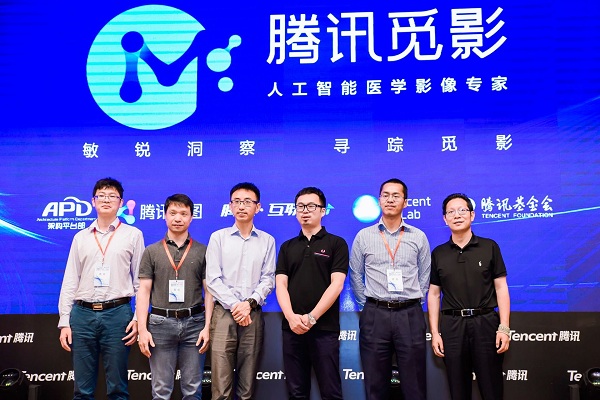
On August 3, Tencent officially launched its AI medical imaging product, Tencent Miying.
This is Tencent’s first AI product applied in the medical field. Tencent Miying comprises six artificial intelligence systems, covering diseases such as esophageal cancer, lung cancer, diabetic retinopathy, cervical cancer, and breast cancer.Among these, its intelligent screening system for early-stage esophageal cancer is the most mature, with a laboratory accuracy rate of 90%, and it has now entered the preclinical trial phase. According to VCBeat (WeChat ID: vcbeat), this system has been deployed at Shenzhen Nanshan Hospital for over a month, screening dozens of patients daily.
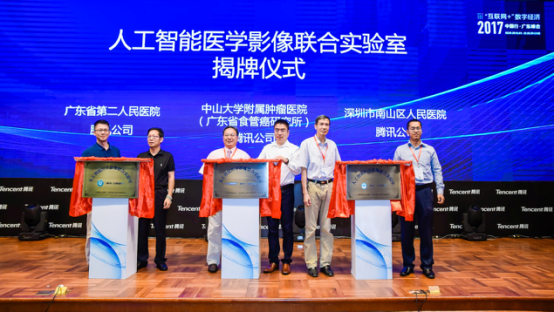
In addition, Tencent has established the Joint Laboratory for AI Medical Imaging and launched the clinical pilot study of the world’s first AI-based medical imaging project for early screening of esophageal cancer. Sun Yat-sen University Cancer Center (Guangdong Esophageal Cancer Institute), Guangdong Second Provincial General Hospital, and Nanshan District People’s Hospital of Shenzhen have become the first partner hospitals to join the joint laboratory.
Connecting Six Major AI Healthcare Application Scenarios
Tencent Miying comprises six medical AI systems, namely:
Intelligent Screening System for Early-Stage Esophageal Cancer
Early-Stage Lung Cancer Screening System
Intelligent Screening System for Diabetic Retinopathy
Intelligent Auxiliary Diagnosis and Treatment System
Intelligent Auxiliary System for Cervical Cancer Screening
Breast Cancer Lymph Node Dissection Pathological Image Recognition System
1. Intelligent Screening System for Early-Stage Esophageal Cancer
Esophageal cancer is a common malignant tumor in China. According to the survey results published in the Chinese Journal of Oncology in 2016, there were 286,700 new cases of esophageal cancer in China in 2012, with an incidence rate of 21.17 per 100,000 population. Esophageal cancer has become one of the top five cancers in China.
It is well known that early diagnosis and treatment of cancer facilitate patient recovery. Professor Fu Jianhua, Director of the Hospital Administration Department at Sun Yat-sen University and Director of the Guangdong Esophageal Cancer Institute, stated that endoscopic treatment for early-stage esophageal cancer is highly effective and minimally invasive, allowing patients to be discharged within 3–5 days after the procedure. The cost of this surgery is only one-third of that for treating advanced esophageal cancer, with few postoperative complications and superior long-term outcomes. However, due to insufficient public awareness and a lack of effective early screening methods, the detection rate of early-stage esophageal cancer in China currently remains below 10%.
Miying’s intelligent screening system for early-stage esophageal cancer completes the analysis of an endoscopic examination in under 4 seconds, achieving a detection accuracy rate of up to 90% for early-stage esophageal cancer. It is alsoThe World's First AI-Powered Screening System for Esophageal Cancer。
2. Early-Stage Lung Cancer Screening System
What sets Miying’s system apart from those of some startups is that,It achieves precise localization of suspicious nodules and provides comprehensive benign-malignant differentiation for patients.. However, some startups can only detect nodules but cannot determine whether they are benign or malignant.
According to Sun Xing, a senior researcher at Youtu Lab,Currently, this system is under development. The training and test datasets each comprise samples from thousands of individuals, with over 500,000 suspected nodules identified., and the algorithmic models are also ready. Leveraging Tencent Cloud's powerful computing capabilities, we expect results to be available soon.
3. Intelligent Screening System for Diabetic Retinopathy
To train this system, the Miying team analyzed hundreds of thousands of diabetic retinopathy staging data sets to develop a screening tool for the early detection of diabetic retinopathy.
4. Intelligent Assisted Diagnosis and Treatment System
This system, built on the analysis and learning of massive medical big data, serves a broad base of physicians with the aim of improving diagnostic and treatment efficiency as well as enhancing diagnostic accuracy among primary-care doctors. It generally consists of three steps:Construction of Medical Knowledge Graphs → Machine Learning of Diagnostic Capabilities and Experience → Expert Validation. Although senior researchers at Tencent AI Lab have not disclosed their research progress or medical data, Tencent is well-endowed with AI talent and computational power; once sufficient data is available, the emergence of results is only a matter of time.
5. Intelligent Auxiliary System for Cervical Cancer Screening
The Miying System has conducted data analysis on nearly 10,000 endoscopic classification datasets to develop an intelligent screening tool for cervical cancer detection. This tool is designed to identify cervical positional types, assisting physicians in rapidly determining the location of cervical lesions and thereby formulating appropriate treatment plans. Currently, Miying has not disclosed the research and development progress of this product.
6. Pathological Image Recognition System for Lymph Node Dissection in Breast Cancer
The Miying System is primarily applied in breast cancer screening. Yan Kezhou, a senior engineer from the TEG Architecture Platform Department, revealed that they encountered certain challenges during the research and development process, such as insufficient data volume and annotation, as well as issues like "different diseases presenting with similar imaging features, and the same disease manifesting with different imaging patterns." However, solutions have now been identified, and the project is progressing smoothly.
AboveAmong the six products we examined, most are positioned for disease screening. Although Chang Jia, head of Tencent’s “Internet + Healthcare” initiative, did not disclose their commercial strategies this time, such clear product positioning has set the tone for future exploration of business models.。
Tencent Speed: Model Training Completed in 2 Months
Concurrently with the launch of the Miying system, Dr. Luo Kongjia, an attending physician at Zhongshan Hospital, revealed that the intelligent screening system for early-stage esophageal cancer achieved an accuracy rate of 90% in just two months from the start of training to product release. This rapid progress was driven not only by the strong support of physicians at Zhongshan Hospital (with 19 doctors participating in the R&D effort) but also highlighted Tencent’s strengths in AI talent and medical data resources.
According to the “Report on Talent Development in the AI Sector at BAT” released by eCheng Technology, Tencent’s AI talent reserves accounted for 2.03% of its total workforce. With a total employee count of 17,446 in 2016, this implies that Tencent had approximately 354 AI professionals. This figure is equivalent to 1.5 times the combined number of master’s and doctoral students at the State Key Laboratory of Intelligent Technology and Systems at Tsinghua University.
In terms of data, the dataset used to develop the intelligent early screening system for esophageal cancer comprises 600,000 images from 48,740 patients across six Grade A tertiary hospitals. These images were annotated by physicians at the partner hospitals and subsequently used for model training. Additionally, to enhance product accuracy, a separate test set was employed, consisting of data validated against the gold standard of pathological examination, to evaluate the model’s accuracy.
According to Zhu Susong, Director of the Information Center at Nanshan District People’s Hospital in Shenzhen, the intelligent esophageal cancer screening system has been on trial at Zhongshan Hospital for over a month, screening dozens of patients daily. The hospital is highly anticipating the clinical data outcomes of this product. Currently, Changjia holds strong confidence in Tencent’s product.
The business model is still under consideration.
Regarding commercialization, Chang Jia stated, “Tencent is in no rush when it comes to commercial applications, as the company is committed to long-term investment in medical AI. We believe that AI is still in its early or early-to-mid stages. After a period of accumulation and end-to-end product development, there will be greater room for growth. At this current stage, we are not yet considering commercialization. Instead, we are primarily focusing on two products: one dedicated to scientific research, and the other involving public welfare screening initiatives conducted in collaboration with our foundation.”
Alibaba and Tencent Enter the Medical AI Arena: Should Startups Be Worried?
At the Apsara Conference Shenzhen Summit on March 29, 2017, Alibaba’s ET Medical Brain was officially launched. Now, Tencent has also entered the medical AI sector with six product systems. Will the entry of these tech giants deliver a fatal blow to entrepreneurs in the medical AI space? Here is our perspective:
First,China’s healthcare market is vast and cannot be captured by just one or two companies;
Secondly,Although tech giants such as Tencent and Alibaba hold significant advantages in AI talent and computing power, the founders of startups are either master’s or doctoral graduates from national-level laboratories or experts returning from overseas studies—all of whom are highly competent AI professionals. These startups entered the healthcare sector 1–2 years earlier than Alibaba and Tencent, resulting in relatively more mature products.
Furthermore,, hospitals, as key stakeholders in medical AI, will not solely rely on AT. Currently, many medical AI startups have established collaborations with numerous large Grade-A tertiary hospitals. With hospitals as partners, there is a continuous influx of medical data. Furthermore, many startups’ products are already in clinical trials or even certification stages, and their systems are continuously collecting data on their own. Therefore, these startups are not overly concerned about data availability.
Finally, in terms of funding, although startups do not have the deep pockets of AT (Alibaba and Tencent), the recent investment boom in AI has enabled most artificial intelligence enterprises to secure substantial financing. In China, there have been 93 publicly disclosed financing events in the medical AI sector, with 57 of them explicitly revealing the amounts raised. Domestically, financing rounds at the tens-of-millions and hundreds-of-millions (RMB) levels account for more than 65% of these cases. Therefore, medical AI companies are not short of cash in the short term.