

VGo Telepresence Robot Brings Remote Expert Consultations to Rural Chinese Hospitals
China’s vast territory and complex topography have led to an uneven distribution of medical resources. Particularly in remote areas, where medical resources are severely scarce, grassroots physicians often need to seek assistance from specialists at major tertiary hospitals when encountering critically ill patients. However, inviting these specialists for on-site consultations is no easy task, as the workload of doctors in large hospitals is already saturated, leaving them unable to spare time for external consultations.
What, then, is the solution? Physicians at primary-care hospitals are left with no choice but to consult specialists by telephone or to advise patients to transfer to another facility. However, for critically ill patients, both inter-hospital transfer and remote consultation via telephone carry significant drawbacks. First, they impose an additional financial burden on patients; second, they increase the risks associated with transport during transfer; and third, telephone consultations prevent specialists from directly observing the patient’s clinical condition, thereby hindering the most accurate assessment and decision-making.
U.S. Teleconsultation Robots Serve China’s Primary Hospitals
VCBeat (WeChat ID: vcbeat) has learned that a physician assistant—the VGo telemedicine robot—has recently been introduced at Luanchuan County People's Hospital in Luoyang, Henan Province. Leveraging network communication technologies, the robot enables video consultations with specialists from higher-level hospitals, bringing significant benefits to both grassroots medical staff and patients.
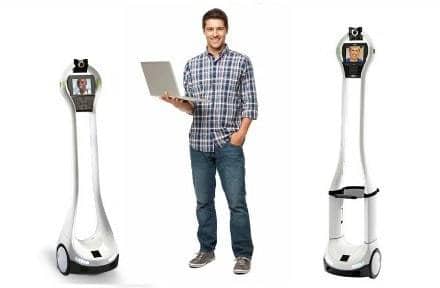
Standing approximately 1.2 meters tall, this robot is equipped with a display screen, four wheels, and a high-definition camera capable of 360-degree rotation. Leveraging modern network communication technologies, it connects with other hospitals requesting consultations. It then facilitates activities such as medical consultations, advisory services, and medical education through network transmission, video conferencing, and other means.
Duan Na, Deputy Director of the Emergency Department at Luanchuan County People’s Hospital, commented on the robot: “This robot is equipped with a 360-degree rotatable camera, enabling remote physicians to observe every subtle movement of the patient, including eye movements and skin conditions. Furthermore, we can capture images of CT scans and laboratory results using the robot, similar to electronic eye snapshot technology. These captured images can be transmitted directly to off-site specialists for further analysis and assessment, thereby providing us with more effective guidance.”
The emergence of this robot has not only improved the accuracy of patient diagnosis but also saved patients' consultation time.
Robots’ Pilot Applications in Remote Consultations, Education, and Business
VGo is an intelligent robot launched in 2011 by VGo Communications, a U.S. company (acquired by Vecna Technologies in 2015), for use in telemedicine and home health management. Its functions are designed to serve as a physician’s personal assistant, a healthcare specialist’s aide, a family member’s companion, and a health partner.
VGo can assist healthcare professionals in conducting remote disease monitoring and consultations, thereby facilitating personalized medical services and health management between doctors and patients. For instance, it enables remote consultations between physicians at lower-tier hospitals and specialists at higher-tier institutions. Additionally, in specialized medical settings such as intensive care units (ICUs), isolation wards, and delivery rooms, VGo facilitates virtual visits by family members. Beyond the hospital setting, VGo serves as a health companion in home environments, assisting health management experts in monitoring patients’ conditions and addressing health-related and medical inquiries.
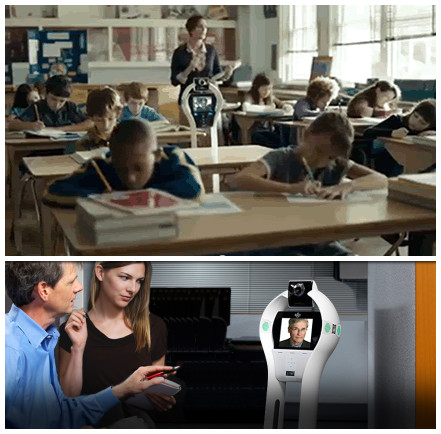
In fact, VGo’s applications extend far beyond the healthcare sector. Its use in education and business has also been well received. In education, some students in the United States with severe allergies or chronic illnesses are using VGo for remote learning, allowing them to attend classes from home without needing to go to school. Additionally, some individuals with disabilities are using VGo to access office environments, collaborate with teams, and work remotely. Company managers can also leverage VGo to connect with employees, facilitating remote management.
The Entrepreneurial Story of the VGo Team
VGo Communications was founded in 2007 by Grinnell More, Tim Root, and Thomas Ryden. Tim Root, who serves as the company’s CTO, previously held the position of CTO at both Polycom and PictureTel and has been engaged in video conferencing research for many years. Through daily interactions with clients, he identified an emerging need: to extend video conferencing beyond the office environment into other fields, such as remote management and telemedicine.
In 2004, Tim left PolyCom with the ambition of starting his own business. While refining his entrepreneurial vision, he joined a video security company, where he met iRobot co-founder Grinnell More and Director of Marketing and Sales Thomas Ryden. After discussing the idea with them, the three reached a consensus to collaborate on the venture. Consequently, in 2007, they founded VGo Communications. Leveraging iRobot’s technological expertise and market experience in robotics, VGo quickly launched its product and achieved widespread popularity.
In 2015, Vecna Technologies, a well-known U.S. developer of logistics robots and innovative healthcare solutions, announced the acquisition of VGo Communications. The acquisition was widely regarded as adding a new dimension to Vecna’s hospital logistics systems and enhancing its warehousing capabilities.
Daniel Theobald, Co-founder and CTO of Vecna, stated, “Vecna and VGo share highly aligned philosophies; we believe that robotics can enhance people’s quality of life. VGo brings a strong product portfolio and an associated customer base, which complements Vecna’s existing business. Customers from both companies will benefit from the combined offerings of VGo and Vecna, with applications spanning healthcare, hospitality, manufacturing, distribution, and education. Vecna and VGo have been partners for many years, and this acquisition is expected to make a significant impact in the market.”