

China's First Colorectal Cancer Big Data Center, BACC, Files IPO Prospectus
On August 5, 2017, the inauguration ceremony of the Bigdata Alliance for Colorectal Cancer (BACC), under the Chinese Society of Clinical Oncology (CSCO), was successfully held at the Guangzhou Baiyun International Convention Center. As the first big data center for colorectal cancer in China, BACC was jointly established by the CSCO Colorectal Cancer Expert Committee, the Sun Yat-sen University Cancer Center, and Yidu Cloud (Beijing) Technology Co., Ltd. More than 400 experts in the field of colorectal cancer from over 20 Grade A tertiary hospitals across various provinces and municipalities in China attended the event to witness the launch.
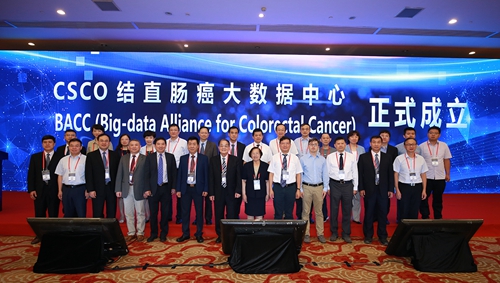
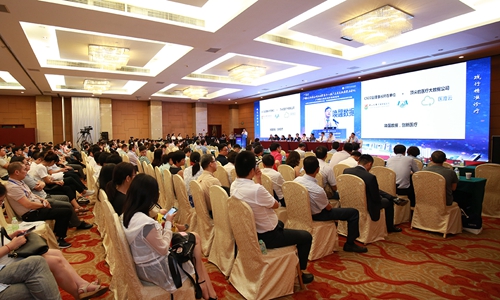
(Inaugural Conference of BACC, China’s First Big Data Center for Colorectal Cancer)
At the inauguration ceremony, Professor Xu Ruihua, President of Sun Yat-sen University Cancer Center and Designated Chairman of the CSCO Colorectal Cancer Expert Committee, presented an overview of the current development of big data for colorectal cancer in China and outlined the upcoming initiatives to be undertaken following the establishment of BACC.
Professor Xu Ruihua pointed out that colorectal cancer is one of the most common malignant tumors worldwide, with more than 600,000 deaths annually. In China, the incidence of colorectal cancer ranks among the top five cancers, making its treatment a critical issue in the field of oncology that cannot be overlooked.
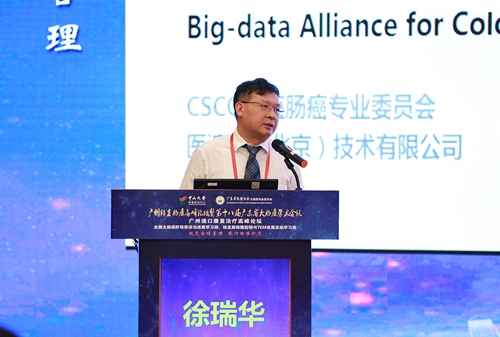
(Professor Xu Ruihua, President of Sun Yat-sen University Cancer Center and Designated Chair of the CSCO Colorectal Cancer Expert Committee, delivered a speech at the inaugural meeting.)
With the rapid development of information technology, medical big data has played a significant role in the diagnosis and treatment of many diseases. Currently, there are global oncology big data centers abroad, including the Surveillance, Epidemiology, and End Results (SEER) multi-cancer database in the United States and the ACCENT colorectal cancer data center in Europe. These medical big data platforms help physicians summarize clinical experience, improve the level of disease diagnosis and treatment, and achieve the goal of precision medicine.
Taking the SEER database as an example, this cancer registry established by the U.S. National Cancer Institute in 1973 contains extensive data on malignant tumors, including those of the breast, digestive system, reproductive system, respiratory system, urinary system, as well as lymphoma and leukemia. Thousands of studies and articles have been published based on queries, analyses, and utilization of these tumor data from the SEER database.
In China, there is currently no national big data center dedicated to a single oncology subspecialty. Medical institutions across the country that treat colorectal cancer each store patient data within their respective regions. However, varying data storage methods among hospitals have created “information silos,” preventing the effective integration and utilization of these valuable medical records. To address this, the Colorectal Cancer Expert Committee of the Chinese Society of Clinical Oncology (CSCO) has partnered with Yidu Cloud (Beijing) Technology Co., Ltd. This collaboration aims to combine Yidu Cloud’s technical expertise in big data processing with specialized medical knowledge to establish China’s first colorectal cancer big data center, thereby enhancing the diagnosis and treatment of colorectal cancer.
The CSCO Colorectal Cancer Expert Committee, in collaboration with multiple leading hospitals in China’s colorectal cancer field, leveraged Yidu Cloud’s data platform standardization process to first establish a series of data standards and specifications for colorectal cancer. Clinical information dispersed across different hospitals and information systems was integrated into a cloud-based data center through steps including data collection, cleaning, storage, and consolidation.
Furthermore, by leveraging advanced machine learning and artificial intelligence technologies—such as natural language normalization, data structuring, and Enterprise Master Patient Index (EMPI)—medical data related to colorectal cancer is standardized, integrated, deeply mined, and comprehensively utilized, laying the foundation for big data analysis, mining, and translational applications in medicine. To address data security concerns, BACC currently offers solutions covering privacy security, network security, data transmission security, and user access control. In alignment with the international HIPAA regulations, BACC has de-identified 18 categories of sensitive data, including names, national ID numbers, and phone numbers, to prevent the leakage of patients' sensitive information through its system platform.
The establishment of BACC helps improve the diagnosis and treatment of colorectal cancer in China. First, BACC can provide a large dataset containing demographic characteristics, physical signs, examination and test results, cost data, and treatment efficacy data for a significant number of colorectal cancer patients. This enables physicians to compare the effectiveness of different treatment modalities, identify optimal therapeutic regimens tailored to individual patients, reduce overtreatment or undertreatment, and deliver optimized treatment plans with minimal side effects while avoiding excessive medical costs.
Secondly, the data platform provided by BACC can assist physicians in conducting intelligent follow-up for colorectal cancer patients after treatment, including collecting vital signs and laboratory test results through remote monitoring systems, and sending timely reminders to post-treatment patients for scheduled hospital visits.
Furthermore, the use of BACC can improve public health monitoring. By applying big data analytics for colorectal cancer, it is possible to identify individuals within the health examination population who are at risk of developing colorectal cancer, enabling them to receive preventive healthcare and undergo cancer screening at an earlier stage. This approach reduces the risk of colorectal cancer and facilitates early diagnosis and treatment.
Furthermore, the establishment of BACC facilitates the investigation of genetic variations in tumor cells and their correlation with responses to specific drugs, thereby opening new avenues for translational medical research into tumor etiology, pathogenesis, and therapeutic targets. BACC also accelerates the selection of appropriate sites for new drug clinical trials, expedites the assessment and recruitment of patients for clinical studies, and enables real-time summarization and analysis of drug indications and adverse effects, thus promoting the completion of clinical research and the market launch of new pharmaceuticals. These efforts provide support and assistance in advancing the standard of care for colorectal cancer.
The establishment of BACC, China’s first big data center for colorectal cancer, marks the formal entry of colorectal cancer discipline development in China into the era of big data. Leveraging high-quality real-world clinical big data, BACC will continuously optimize diagnostic and therapeutic decision-making for colorectal cancer.