

Yinggu Network Launches 'E-True Cloud', Redefining PACS in the Era of AI and Big Data
For a long time, the scarcity and unequal distribution of medical resources, low levels of data sharing and openness, and lagging development of healthcare informatization have severely constrained the industry’s growth. With the“Internet+”Healthcare Becomes a National Strategy, State CouncilAlsoA series of policies have been issued successively, all clearly pointing out the necessity and direction of healthcare industry reform.。
Technologies such as cloud computing, big data, and artificial intelligence have become indispensable elements in healthcare reform. The cloud transformation of the healthcare industry and the adoption of medical AI are also inevitable trends. In Xi’an, a premier conference centered on these themes, bringing together top talent from the healthcare and information technology sectors, has just been held.
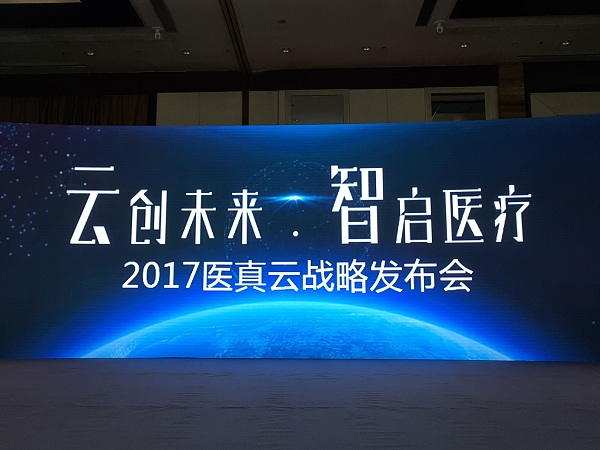
400 Guests Convene at “Cloud · Intelligence” Forum to Discuss the Future of Healthcare
August 5,VCBeat (WeChat Official Account: vcbeat) reports,The “Yizhen Cloud” Strategic Launch Conference, themed “Cloud Innovation for the Future, Smart Healthcare Initiation,” was held in Xi’an. More than 400 distinguished guests from across China, including industry leaders, medical experts, healthcare IT specialists, and sector executives, gathered at the event.
More than a dozen invited guests participated in discussions under the themes of “Cloud Innovation” and “Intelligent Initiation.” Centering on big data, cloud computing, and artificial intelligence, they engaged in vigorous debates and in-depth explorations covering national policies, industry status, development trends, and existing challenges. Below are the highlights of their insights.
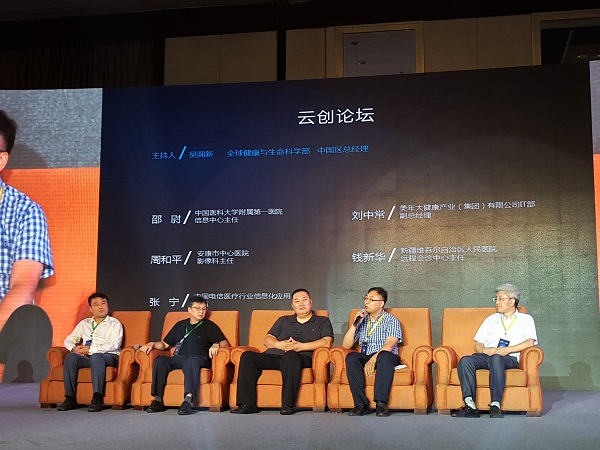
On the Application of Yizhen Cloud in Remote Consultation,Qian Xinhua, Director of the Telemedicine Center, People's Hospital of Xinjiang Uygur Autonomous RegionHe stated that Xinjiang has been exploring remote consultations since 2008, with a consistently strong demand for imaging technology. In the past, doctors could only transmit files by taking photos or scanning them, resulting in severe distortion of image quality. After partnering with Yinggu Network, Yizhen Cloud has, after years of development, expanded its reach to 126 medical institutions across Xinjiang. By the end of the year, we aim to further extend our coverage to 1,063 township health centers and 224 community service centers, achieving comprehensive coverage.
When it comes to the cost-effectiveness of cloud platforms,Shao Wei, Director of the Information Center, The First Affiliated Hospital of China Medical UniversityIt was stated that as hospitals embrace cloud computing, they consider return on investment (ROI) when evaluating traditional health IT solutions. In this regard, collaboration between health IT enterprises and telecommunications operators is essential to achieve optimal partnership among all stakeholders.
For the Development of Imaging Informatics in Impoverished Regions,Zhou Heping, Director of the Department of Medical Imaging, Ankang Central HospitalIt is believed that for hospitals in impoverished areas, implementing a hospital-wide PACS using traditional information technology methods is financially very challenging. Compared to traditional PACS systems, Yizhen Cloud requires a significantly lower upfront investment, making it highly suitable for use by primary care hospitals.
Regarding the collaboration between health checkups and Yizhen Cloud,Liu Zhongchang, Deputy General Manager of IT at Meinian OnehealthIt was stated that Meinian Onehealth currently has several projects planned for its cloud platform. The first is an imaging information platform, where radiology, ultrasound, and other imaging-related services will be stored on the cloud. Second, the electrocardiogram (ECG) information platform will also be migrated to the cloud. Third, information such as laboratory test results and structured data will leverage the cloud platform to facilitate information exchange.
As the technical partner of Yinggu Network,Director of China Telecom's Healthcare Industry Informatization Application Base, Zhang NingIt is mentioned that China Telecom adopts object storage for cloud-based data storage. Data is split into multiple chunks and stored across different servers. When a user requests access, the data is rapidly reassembled and transmitted to the user’s device for use. In this way, storing data on the cloud platform is akin to depositing money in a bank.
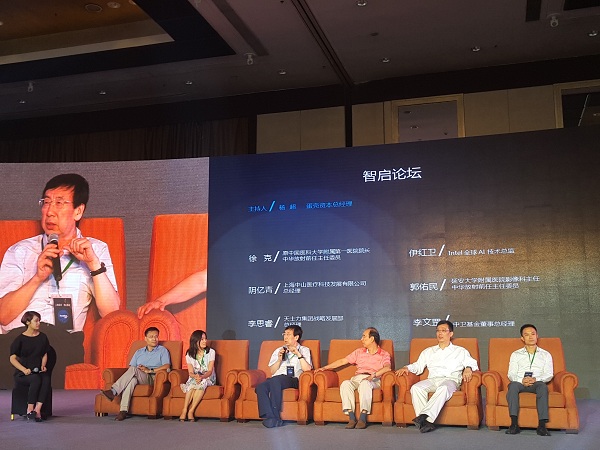
Regarding the application of artificial intelligence,Xu Ke, Former President of the First Affiliated Hospital of China Medical UniversityIt is stated that, in terms of volume, data from hospital radiology departments constitutes “big data within big data.” Merely storing these data holds no significance. Without organizing, mining, and computing the data, and without integrating it with artificial intelligence, big data serves no purpose.
The Complexity of Artificial Intelligence in Medical Applications,Yin Yiqing, General Manager of Shanghai Zhongshan Medical Technology Development Co., Ltd.Perspective: In the healthcare industry, whether involving artificial intelligence or non-AI systems, there is always a need for input and output. The input and output processes in healthcare AI are highly complex. When both input and output are clearly defined, we can easily implement AI applications through algorithms, as demonstrated by AlphaGo’s application in the game of Go. Therefore, current AI applications in healthcare require identifying clear objectives to achieve better outcomes.
For the acquisition of high-quality data for artificial intelligence,Guo Youmin, Director of the Department of Imaging, Affiliated Hospital of Yan'an UniversityIt was stated that within China’s current multi-layered, multi-structural healthcare framework, it is difficult to obtain highly standardized data. There are very few companies capable of structuring multidimensional and high-dimensional data. Pre-structuring imposes a significant burden on physicians, while post-structuring often yields data of suboptimal quality. When data quality is poor, the accuracy of artificial intelligence is compromised. In the future, these issues should be addressed from both regulatory and physician-needs perspectives.
Attitudes toward investment in artificial intelligence,Managing Director, Zhongwei Fund: Li WengangIt is suggested that AI investment in the healthcare industry should be approached with cautious optimism. The key lies in assessing the maturity of AI algorithms and identifying appropriate entry points for medical applications. By leveraging these factors to seek effective solutions, breakthroughs in healthcare may be achieved. During this process, AI algorithms will continuously evolve and self-improve. Only in this way can AI play a significant role in the healthcare sector.
Regarding the investment logic of artificial intelligence,Li Sirui, General Manager of the Strategic Development Department of Tasly GroupOn the investment logic for AI in healthcare, two factors must be considered: First, technological maturity, as artificial intelligence requires high-quality, medical-grade data. Second, commercial value depends on the availability of mature application scenarios. To encourage physicians to generate high-quality structured data, effective clinical application scenarios are essential. Through such scenarios, enterprises can acquire advanced medical technologies and provide efficient services to hospitals and physicians, thereby fostering collaborative synergy between both parties.
Regarding the current fervor surrounding artificial intelligence,Intel’s Global Director of AI Technology, Yi Hongweistated,The fervor surrounding artificial intelligence is actually due to the lowered barriers resulting from open-source data. I refer to this phenomenon as "data brute force" or "data deluge." With the abundance of data, enterprises can leverage it to enable the application of deep learning. At the current stage, artificial intelligence has not yet entered a phase of exponential growth. For enterprises, it is essential to identify objectives within specific scenarios and focus on improving efficiency in solving single, well-defined problems.
Yizhen Cloud: A New Generation of Information Technology Products
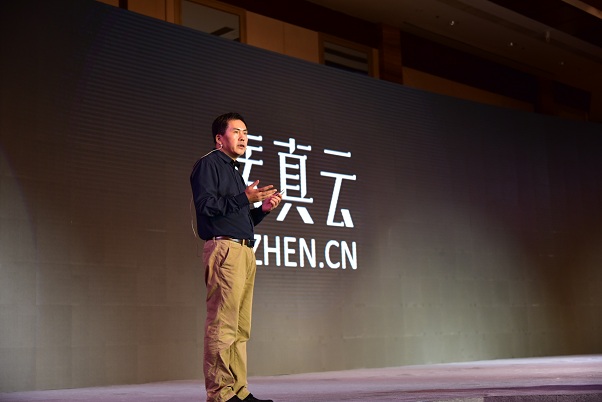
At 16:00, Yinggu Network officially launched “Yizhen Cloud.” Integrating a business and collaborative cloud platform, a big data platform, and the AI All medical artificial intelligence platform, Yizhen Cloud leverages its unique understanding of medical imaging (such as edges, textures, grayscale, and advanced operations) and its robust data processing capabilities (including data integration, visualization, and mining) to empower medical services through imaging and data. By deploying Yizhen Cloud across diverse healthcare scenarios, it aims to create borderless, symmetrical applications that utilize network infrastructure to deliver tangible medical value.
According to VCBeat, YiZhen Cloud integrates ten major services: clinical imaging collaboration, a precise full medical technology workflow and collaboration system, a clinical imaging big data (research) platform, medical consortium and regional medical technology collaboration platforms, medical consortium and regional healthcare platforms (telemedicine), an independent imaging center cloud platform, YiZhen•YouYi expert services, imaging data cloud services, and YiZhen•Doctor Social.
Through the organic integration of multiple services, Yizhen Cloud achieves unified service delivery via a single interface, enabling users to perform operations across diverse scenarios with a single ID. This approach breaks down limitations imposed by time, space, experience, and devices, meeting the medical service needs of healthcare institutions of any scale in areas such as data management, workflows, scientific research, and education. Consequently, it fosters a comprehensive medical cloud ecosystem that integrates work, research, learning, and social interaction, holding profound significance for the nation’s transition toward cloud-based healthcare.
As a key service category of Yizhen Cloud, the Precision All-Medical-Technology Work and Collaboration System enables cloud-based storage for all devices and data, as well as cloud computing for comprehensive processing and analysis. It achieves cross-terminal and cross-platform functional applications, facilitating precise handling anytime and anywhere, 24/7 triage, and collaborative consultations, thereby effectively realizing the sharing and integration of medical resources.
Currently, whether in Ali, Urumqi, Wuxi, Yan'an, Ankang, Jining, Tangshan, or Changzhi, Yizhen Cloud is ubiquitous, providing tens of thousands of high-quality medical cloud services to various healthcare institutions every day.
Meanwhile, the currently booming artificial intelligence will be integrated throughout Yizhen Cloud’s service ecosystem. Taking pulmonary nodules as an example, with the assistance of Yizhen AI, the screening process that previously required over 10 minutes of manual work has been reduced to just 5–17 seconds, significantly improving diagnostic efficiency.
Furthermore, Yinggu Network announced that its AI service for pulmonary nodules will remain free of charge indefinitely. In the future, automated detection of nodule characteristics, such as benign versus malignant status, will become a top priority for Yizhen AI. In 2017, Yizhen Cloud expects to launch five AI services, with a plan to develop 100 AI services within two years. The platform is projected to eventually integrate a total of 300 diverse AI services, thereby benefiting a broader range of physicians and patients.
The Making of Yizhen Cloud: Unveiling 16 Years of Innovation at Yinggu Network
As a pioneer in medical imaging and artificial intelligence, Yingu Network has consistently maintained a low-key and enigmatic presence within the industry. For 16 years, it has been dedicated to the visualization, intelligentization, networked integration, and systematic application of medical imaging.
In 2006, Huang Yedong, founder of Yinggu Network, became aware of technologies related to “Cloud Computing” and foresaw the emergence of big data in medical imaging. He gradually embarked on an exploratory path in imaging and medical data mining, starting with intelligent visualization and processing of medical images, which led to the formation of the “VINS” concept.
In 2005, a product under Yinggu Network obtained the CFDA (then known as the SFDA) certification for China’s first advanced medical image processing software system.
In 2006, the cloud computing project was launched, and in 2014, the world’s first medical image processing engine based on the integration of cloud computing and supercomputing (also known as cloud supercomputing) was successfully developed and received CFDA certification.
At the 2010 Radiological Society of North America (RSNA) Annual Meeting, Yinggu Network unveiled for the first time its globally pioneering and transformative cloud computing-based advanced clinical imaging solution—the @iMAGES image processing and analysis engine.
Partnering with Industry Giants to Build a Global Healthcare Collaboration Platform
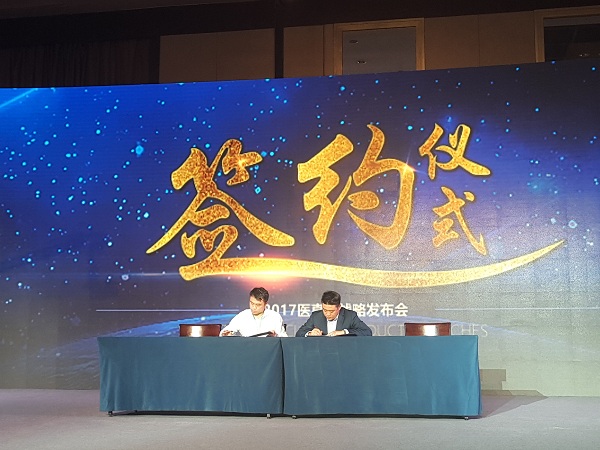
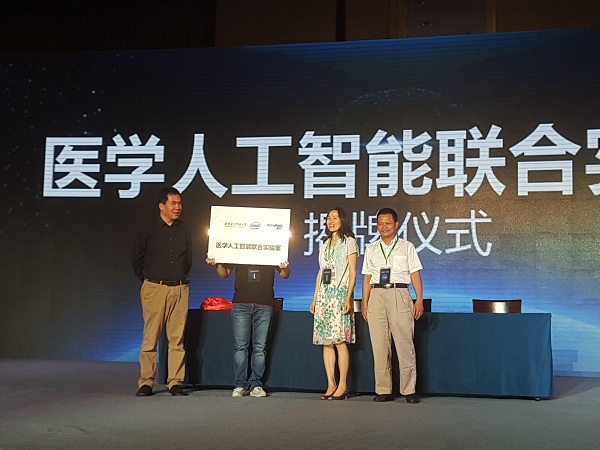
Following the press conference, Yinggu Network entered into strategic cooperation agreements with Meinian Onehealth Healthcare Industry (Group) Co., Ltd. and Xinjiang Xieyi Wanbang Information Co., Ltd. Meanwhile, it will jointly establish a Medical Artificial Intelligence Joint Laboratory with Intel (China) Co., Ltd. and the School of Electronic Engineering at Xidian University.
Regarding future plans, founder Huang Yedong stated that the company has already initiated its global expansion and will jointly establish a global medical collaborative cloud service with Huawei.