

AiShen Medical Secures Tens of Millions in Series A Funding to Build China's Leading Independent Dialysis Center Chain
Morningside Ventures
Well-known early-stage venture capital institution
VCBeat has learned that iKidney Medical recently completed its Series A financing round, raising tens of millions of RMB. The round was led by Morningside Ventures, with Yunxi Capital participating as a co-investor. This comes just nine months after iKidney Medical’s Pre-A financing round.
Currently, there is a significant gap in China's hemodialysis market. In June this year, VCBeat published a detailed research report on hemodialysis centers (see “450,000 Hemodialysis Patients, a RMB 33.5 Billion Market: Will You Take Your Share?》), the report shows that since the end of December 2016, when the National Health and Family Planning Commission successively issued basic standards and management specifications for four categories of independently established medical institutions, including hemodialysis centers and pathology diagnostic centers, along with regulations encouraging the opening of hemodialysis centers to private capital, private hemodialysis centers have ushered in a new round of growth.
In 2014, the number of patients with end-stage renal disease (ESRD) in China approached 2 million, while the current number of patients undergoing hemodialysis exceeds 500,000. By 2030, the ESRD patient population is projected to reach 3.15 million. To meet this demand, the market will require more than 10,000 hemodialysis centers; however, China currently has only around 5,000 such centers, leaving a substantial gap.
What are Aishen Medical’s plans following its successful fundraising? To find out, VCBeat interviewed Gao Xing, CFO of Aishen Medical.
Building a Kidney Disease Ecosystem, Striving to Become the Leading Independent Chain Dialysis Brand
Aishen Medical currently consists primarily of its online platform, Aishen.com, and its offline chain dialysis center operating platform, Hainan Aishen Hospital Investment Management Co., Ltd. It is committed to providing patients with comprehensive medical services ranging from chronic disease management to dialysis treatment by integrating the online Aishen.com platform with its offline dialysis centers.
AiShen.com, established in late 2014, is currently a well-known internet platform in China dedicated to providing science popularization and chronic disease management services for patients with kidney disease. More than 20% of nephrologists and nurses in China have joined the platform. As a professional online medical platform for kidney diseases, AiShen.com provides patients with round-the-clock information on kidney disease knowledge and nutrition, as well as nutritional management services.
AiShen Hospital Investment Management Co., Ltd., established in 2016, is dedicated to establishing a chain of independent dialysis centers in China and is the first private institution to establish a specialized nephrology hospital in Haikou. In addition, AiShen Medical’s dialysis center in Sanya has already commenced construction, while dialysis centers in other provinces are mostly under approval or in the preparatory stages.
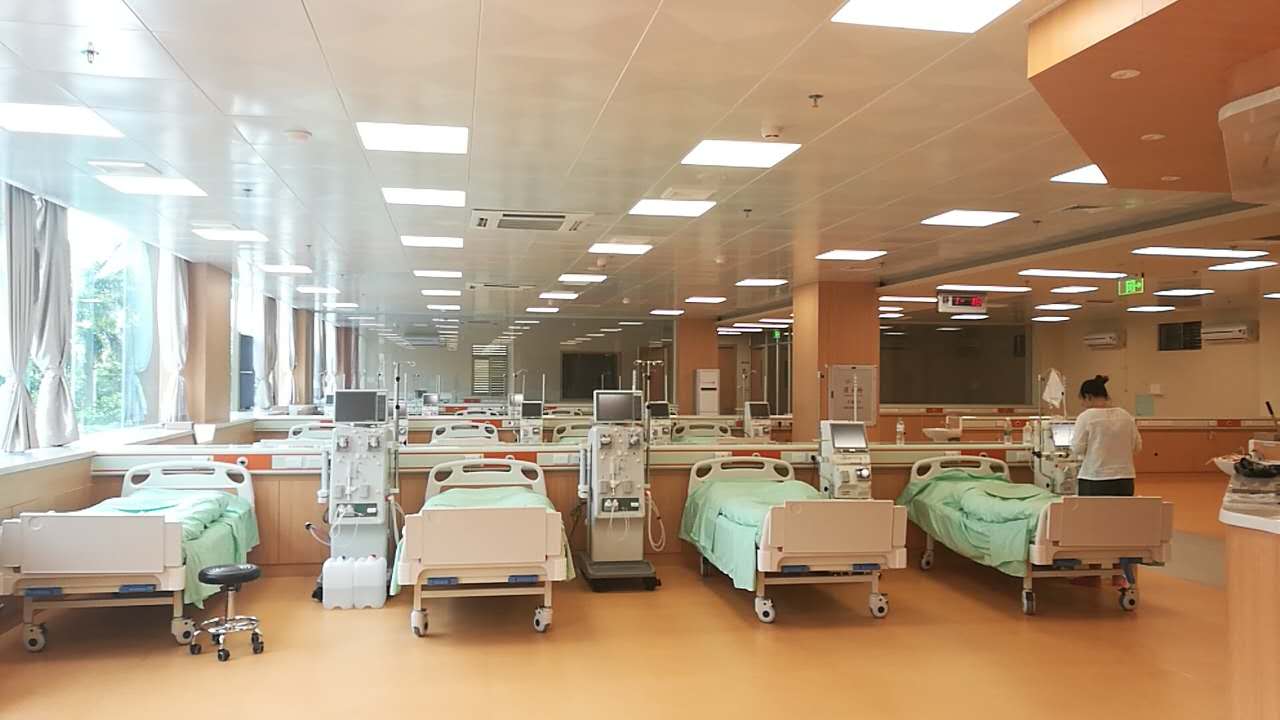
According to Gao Xing, CFO of Aishen Medical, the barriers to entry may appear relatively low when considering the operation of standalone dialysis centers in isolation, and numerous institutions are currently seeking to launch such projects. However, for most players, there are significant obstacles and hurdles spanning the entire lifecycle—from initial regulatory approval and facility design and construction to post-completion operational management.
Aishen Medical possesses one of the few complete teams in China capable of constructing and operating a chain of independent dialysis centers. The Aishen Haikou Nephrology Specialty Hospital took only three months from the commencement of construction after the 2017 Spring Festival to final completion. In the future, as numerous dialysis centers emerge, competition will undoubtedly hinge on shorter construction timelines, relatively lower investment costs, and higher operational efficiency.
As a team with roots in industrial companies and among the earliest in China to operate independent dialysis centers, AiShen’s advantages will gradually become evident. Furthermore, AiShen Medical’s integration of its accumulated online medical resources and chronic disease management services with offline dialysis centers represents a future direction for healthcare service delivery.
Future Plan: Establish a presence in second- and third-tier cities to provide comprehensive care across the entire kidney disease lifecycle.
The funds raised by Aishen Medical in this round will continue to be used for the expansion of its offline hemodialysis centers. After establishing a specialized nephrology hospital in Haikou, Aishen Medical will focus its primary market on second- and third-tier cities that suffer from insufficient dialysis center coverage and scarce medical resources. According to Gao Xing’s analysis, “Our expansion strategy is more inclined toward second- and third-tier cities. First-tier cities and provincial capitals have abundant medical resources, where local patients have ample choices of healthcare institutions for dialysis. In contrast, second- and third-tier cities lacking dialysis centers represent markets with greater demand for the entry of private dialysis providers.”
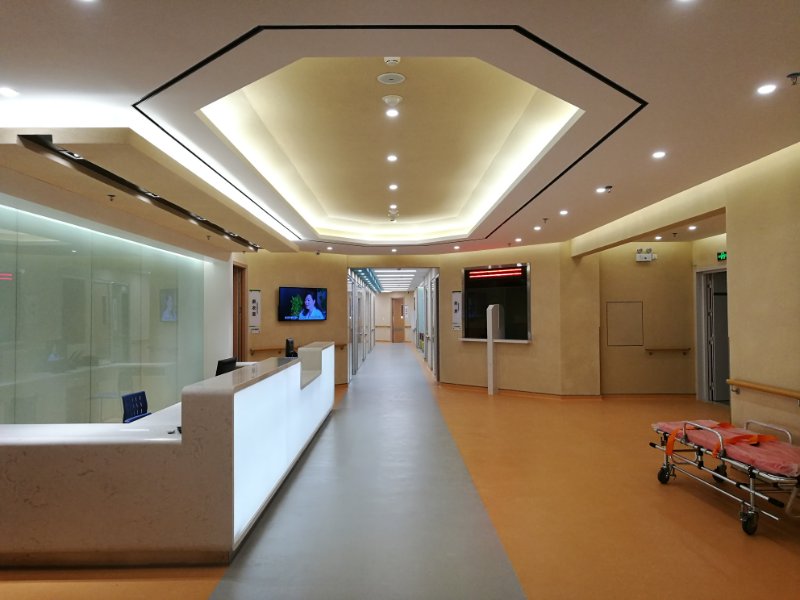
In its future plans, Aishen Medical aims to become a leading operator of nephrology specialty clinics and hemodialysis centers in China within two to three years. In terms of business model, dialysis centers compete primarily through operational management and economies of scale, generating returns via meticulous operational excellence. According to a previous report by VCBeat, the budget for an independent hemodialysis center with a minimum configuration of 20 machines is approximately RMB 4–5 million. Gao Xing told reporters, “Hemodialysis centers are not a high-gross-margin business.”
Currently, Aishen Medical has reached cooperation intentions with numerous industry companies, listed companies, and Fortune 500 foreign enterprises in China. We aim to become the leading chain dialysis center operation service provider in China within the next three to four years through collaborations with more industry companies, physician groups or teams, and traditional medical commercial companies, and to become the first company in this field to go public in China.
Investor Perspectives
AiShen Medical Has the Opportunity to Become a Major Player in China’s Private Chain Hemodialysis Centers
The team at Aishen Medical hails from leading companies in the nephrology industry. Jie Renxiang, the company’s CEO, previously served as Deputy General Manager of Weigao Blood Purification Group, where he was responsible for marketing operations and sales since its inception. He later served as Managing Director of Weigao Terumo Medical Company and is one of the earliest practitioners in China’s hemodialysis industry. Zhang Yongqiang, a founder of the company, served as the project lead in Shandong Province and applied for China’s first independent private dialysis center in 2011. He also participated in formulating standards for the establishment of dialysis centers with relevant regulatory authorities. Gao Xing, another founder, is a lawyer who previously served as Investment Director at a publicly listed company.
According to Jing Xutian, Investment Manager at Morningside Ventures, since the initial pilot opening of private hemodialysis centers in China, Aishen Medical’s core team has been deeply engaged in the field of nephrology, accumulating years of successful experience in both the establishment and operation of chain hemodialysis centers.
“Such teams are scarce in China. We believe that Aishen Medical can leverage its team’s successful experience as a first-mover advantage, focus on the hemodialysis service sector, and grow into a leading private chain of hemodialysis centers in China within a few years,” commented Jing Xutian on Aishen Medical.
The Hemodialysis Market Shows Promising Prospects, with Industry Barriers Yet to Be Overcome
Currently, the core setting for hemodialysis services in China is the hemodialysis units within public hospitals. Of all hemodialysis centers nationwide, 97% are located in public hospitals, with most units already operating at or beyond capacity. Meanwhile, both the proportion of uremia patients receiving dialysis and the frequency of their treatments remain far behind those in developed countries. According to Jing Xutian, there will inevitably be explosive growth on the supply side of hemodialysis services in the future.
Hemodialysis services are inherently standardized, replicable, and scalable. Therefore, as hemodialysis centers open up to private capital, it is reasonable to expect that large chain hemodialysis providers akin to DaVita in the United States will emerge in China.
While the prospects are promising, Jing Xutian also pointed out that the challenge in the hemodialysis market lies in the fact that, as a provider of serious medical services, there is a strict set of technical know-how required in the early stages, covering pre-approval for hemodialysis centers, site construction, integration with medical insurance, daily operations, and quality control. This constitutes the core barrier to entry for startups in this industry. In the mid-to-late stages of chain expansion, improving overall operational efficiency and the prudent use of financial leverage will become the key elements for stable operations and rapid growth.
About Morningside Ventures
Morningside Ventures is one of the earliest institutions in China to engage in early-stage venture capital. Currently, it manages four USD-denominated funds and one RMB-denominated fund, with assets under management totaling approximately $1.7 billion. Its limited partners include internationally renowned sovereign wealth funds, family offices, funds of funds, and university endowments. Over the past two decades of working together, the Morningside Ventures team has been dedicated to identifying, supporting, and inspiring solitary entrepreneurs, sharing their exceptional vision, and providing them with our insights, industry expertise, and comprehensive support ranging from spiritual encouragement to all aspects of business operations. Notable success stories include Sohu, Ctrip, The9, China Distance Education Holdings, Xunlei, Phoenix New Media, UCWeb, YY, and Xiaomi. Morningside Ventures maintains offices in Shanghai, Beijing, and Hong Kong.
About Yunxi Capital
Yunxi Capital is an industry-led asset management firm currently focusing on the healthcare and new energy vehicle sectors. Its fund products cover venture capital, private equity, private placement funds, M&A funds, actively managed securities investment funds, value-oriented securities investment funds, and derivatives investment funds. The team members possess extensive experience in investment banking, mergers and acquisitions, restructuring, and securities investment. Over the past two decades, the founding partners have aligned with China’s economic development by identifying, nurturing, and incentivizing entrepreneurs in China’s advantageous and strategic industries. They share these entrepreneurs’ exceptional spirit and capabilities, providing professional banking services, industrial research insights, and comprehensive support ranging from industry expertise to capital throughout the companies’ growth journeys. Notable success stories include Bank of Communications, Industrial Bank, China Nuclear Industry 23 Construction Co., Ltd., China National Fisheries Corporation, Foshan Lighting, Shaoguan Iron & Steel Group, CIMC Group, Chenming Paper, Fujian Jinsen Forestry Development Co., Ltd., China Animal Husbandry Industry Co., Ltd., EVE Energy, and Modern Investment. Yunxi Capital maintains offices in both Shenzhen and Beijing.