

XiXi Maternity Aims to Build a Full-Service Maternity Platform with 50 Outlets via Direct and Franchise Operations
The business acumen of Zhejiang natives is vividly embodied in Xu Yun, Founder and CEO of XiXi Maternal & Infant.
Listed on the NEEQ, XiXi Maternal and Infant Care, established 10 years ago, has gradually developed a mature single-store operational system. It has opened nearly 50 postpartum care centers, including 10 directly operated stores, across more than 20 cities in China. The company is transitioning from a standalone postpartum care provider into a comprehensive maternal and infant service platform covering the entire online and offline industry chain, including services such as confinement nannies.
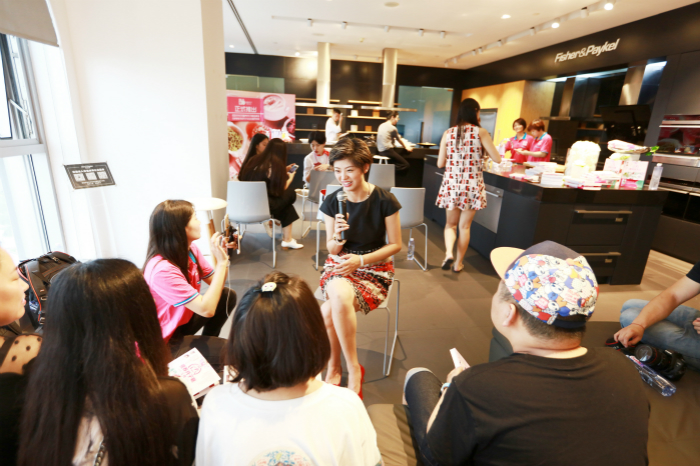
XiXi Maternal and Infant Founder and CEO Xu Yun in an interview with the media
XiXi Maternal and Infant aims to operate 50 directly-owned stores and 500 franchised stores within the next three years. How does XiXi Maternal and Infant plan to achieve this goal? What are its competitive advantages, and how has it established its standardized service system? To address these questions, VCBeat (WeChat ID: vcbeat) conducted an exclusive interview with Xu Yun.
1. Provide basic daily services; postpartum recovery has significant profit potential
In 2007, Xu Yun was first exposed to the postpartum care center industry during her pregnancy. “It was only after searching online that I discovered the market for postpartum care centers in Taiwan was already highly mature, with many new mothers opting for these facilities. For most women in Shanghai who traditionally observed postpartum confinement at home, this was still a novel concept in its infancy.”
Postpartum care centers rarely provide medical services; over 95% of their offerings are nursing care. The fundamental aspects of this care revolve around the mother’s and baby’s daily living needs—specifically diet, accommodation, and maternal-infant care.
“We serve individuals who have just been discharged from the hospital after giving birth. As their care may involve certain medical issues, professional healthcare personnel are required. However, since postpartum care centers are not classified as medical institutions, therapeutic services cannot be provided on-site. We can only conduct limited observations and offer recommendations, along with providing risk alerts or referral channels for disease management,” Xu Yun first explained to reporters regarding the nature of postpartum care centers.
XiXi Maternal and Infant Care currently operates four core business segments: postpartum care centers, HanTong lactation support, ZiXin postpartum recovery, and the Sao e-Sao confinement nanny platform. With postpartum care centers as its foundation, the company has developed a range of value-added services, including postpartum meals, painless lactation initiation, postpartum rehabilitation, confinement nanny services, and maternal-infant photography.
Consumer services are standardized across the board, with variations limited to postpartum meals due to regional differences.
Fees are structured as package deals. Each city and individual branch offers different packages, resulting in varying pricing standards. A search on Dianping revealed that the Xixi Postpartum Care Center’s Yangpu River View Branch offers three packages: the 28-day “Xiang Ai” package at RMB 59,997, the “Xin Ai” package at RMB 81,997, and the “Zun Ai” package at RMB 121,997. Prices in other regions are slightly lower.
“The profitability of standalone postpartum care centers is inherently holistic, encompassing basic services such as accommodation, meals, and nursing care. It is not feasible to isolate which specific component contributes most to profits, as clients purchase a bundled service package.”
Maternal and neonatal care places significant emphasis on breast management, such as lactation initiation and duct clearance. For the newborn, the focus is primarily on daily living care. “Babies typically feed seven to eight times a day. Each morning, we provide bathing, facial feature cleaning, umbilical cord care, and diaper area care. We also offer infant SPA treatments and swimming sessions to promote the baby’s physical, mental, and emotional development.”
However, the extended services offered by postpartum care centers—such as postpartum recovery, including meridian unblocking, pelvic restoration, perineal repair, and body contouring management—represent a highly profitable segment, as mothers primarily focus on restoring their physical constitution and ensuring their baby’s health during the confinement period.
After the confinement period, women have more opportunities to focus on how to return to their pre-pregnancy state, and at this time, the demand for postpartum recovery is quite urgent. “A mother may have a budget of 50,000 yuan during her confinement period, but spend 200,000–300,000 yuan on postpartum recovery,” said Xu Yun.
2. Hotel Property Model, Asset-Light Operation
Currently, the physical models of postpartum care centers in China mainly include hotel-style, standalone building, hospital-affiliated, and community-based types.
“Community-based models, which resemble family-run guesthouses, emerged during the nascent stage of the postpartum care center industry. ‘With only 3–5 rooms, these facilities offer limited privacy and lack professional-grade equipment and infrastructure. As postpartum care centers become increasingly prevalent across China, such models are finding it difficult to survive,’ said Xu Yun.”
The other three models are predominantly hotel- and serviced apartment-style facilities, with 70%–80% of postpartum care centers on the market located in hotels. Hospital-affiliated and standalone villa-type centers each account for roughly half of the remaining share, approximately 10%–15% each.
Xixi Maternal and Infant Care also adopts the hotel property model, leasing floor space from hotels rather than engaging in joint operations. This is because there is a significant disparity between the professional expertise required for hotel management and that needed for postpartum care centers, and their operational management models differ substantially.
Recalling the situation a decade ago, Xu Yun said, “Back then, it was difficult to negotiate with hotels. They were hesitant to adopt this model, viewing it as an emerging industry that had never been tried before. For instance, hotels were most concerned that their lobbies would become crowded with pregnant women, resembling hospitals, and worried that children staying on-site might disturb guests on other floors.”
However, postpartum care centers must transition from extensive to refined management. Addressing accommodation needs is the specialty of hotels, which are more adept at handling standardization issues; the core mission of postpartum care centers is to provide optimal care for both mothers and infants.
Additionally, for investors, adopting a hotel property model involves a relatively asset-light approach, requiring less upfront capital and shorter preparation time. Post-operational management is also streamlined, as services such as security, engineering maintenance, and housekeeping can be outsourced to the hotel operator. Family members can enjoy the hotel’s breakfast and share access to its fitness center and swimming pool facilities, offering greater convenience and enhanced security.
Of course, the public areas of postpartum care centers must also undergo certain standard-compliant renovations, such as infection control measures within hotel-like facilities, the use of medical-grade materials and testing equipment, and secure access control systems.
Xixi Maternal and Infant Care opened its first store in a hotel apartment in Lujiazui, Shanghai. Since Xu Yun’s husband, Zuo Guilin, the current chairman, was operating a serviced apartment at the time, the company gained first-mover advantage and certain geographical conveniences. “Nowadays, it has become common practice for hotels to proactively approach our postpartum care centers for investment promotion and bidding, inviting us to set up operations within their premises.”
3. Dual-Engine Growth: Direct Operations and Chain Franchising
To facilitate further expansion, XiXi Maternal and Infant Care completed its Series A financing round in 2012, raising RMB 9 million from Zhejiang Hongrong Capital.
"For the first eight years since its founding, Xixi Maternal and Infant Care operated exclusively under a direct-operated model. 'During this period of direct operation, we conducted explorations in standardization, including multi-tiered management within single regions and cross-regional management models. The direct-operation system allowed us to accumulate extensive experience,' stated Xu Yun."
In terms of standardization, XiXi Maternal and Infant’s internal standardized manual comprises over 300,000 words, detailing even the precise number of movements required to change a diaper. It provides exhaustive protocols for handling every conceivable emergency, such as infant milk aspiration, including specific response procedures and reporting lines to supervisors. The postpartum care center’s ERP system records data across nursing, catering, marketing, sales, and staff management, with all information stored on the platform for real-time user access.
In March 2014, XiXi Maternal and Infant Care held a strategic seminar and opened its franchise program. Why launch a franchise model? While standardization in the postpartum care center industry can be refined over time through accumulated experience, the most critical factors—on-the-ground execution and on-site management—remain difficult to control.
“When our brand expands into new regions, it takes considerable effort to secure local property and industrial resources that cover the upstream and downstream segments of the maternal and infant industry chain. As a result, we are at a disadvantage compared to locals who intend to enter this sector. However, their weakness lies in the lack of operational experience, absence of an established brand, and uncertainty about management practices, making them ideal candidates for franchising.”
Currently, Xixi Maternal and Infant provides franchisees with services including site selection, renovation consulting, team guidance, and ERP systems. Each store is supported by a business plan and profitability analysis, along with supervisory and management support services. The franchise fee ranges from RMB 800,000 to over RMB 1 million for a five-year term. Currently, there are three franchise models available—brand franchising, entrusted management, and technical franchising—to meet the diverse needs of different franchisees.
Currently, 20% of XiXi Postpartum Care Center’s outlets are company-operated stores, while the remaining 80% are franchised locations. Store sites are selected in areas that offer convenient local transportation and a relatively quiet environment. Looking ahead, XiXi’s urban development strategy is to continue expanding company-operated and entrusted-management stores in first-tier cities, while launching technical franchise stores in second- and third-tier cities.
While expanding its offline presence, XiXi Maternal and Child completed a Series B financing round of over RMB 50 million in 2015, and was listed on the National Equities Exchange and Quotations (NEEQ) in March 2016.
4. Sao E Sao’s in-home confinement nannies: Building a full-industry-chain platform for maternal and infant care
Currently, the largest cost expenditures for XiXi Maternal and Infant Care are personnel and rent, followed by marketing expenses and procurement of items such as postpartum meals and diapers, which also account for a significant proportion. In terms of customer acquisition, Baidu and Dianping remain the primary channels in major cities, while local forums and community platforms tend to be more effective in smaller cities.
In the interview, Xu Yun also shared with reporters the development of postpartum care centers in South Korea and Taiwan, China. “The market penetration rate in South Korea is very high, with over 70% of mothers staying at postpartum care centers for their confinement period, most of whom stay for only two weeks.”
“Taiwan’s postpartum confinement meals are highly distinctive. Consumers there hold very mature views; postpartum care centers provide only specialized services, while routine tasks such as breastfeeding and diaper changing are performed by the mothers themselves. Since these basic caregiving duties would also be handled by mothers at home, they do not expect them to be included in professional care packages. It is also rare for Taiwanese centers to assign multiple medical staff members to attend to a single mother, unlike the model commonly seen in our postpartum care centers,” said Xu Yun.
Postpartum care centers cater to clients who seek professional confinement services outside the home, providing comprehensive, specialized, and systematic care. These clients represent the high-end segment at the apex of the maternal and infant market pyramid; however, the majority of mothers still choose to observe their postpartum period at home.
To address this segment of its business, Xixi Maternal and Infant Care launched the "Sao E-Sao" platform. The platform aims to resolve information asymmetry by providing online data to support offline operations, enabling customers to more conveniently and intuitively select qualified confinement nannies with guaranteed service quality.
The Sao-e-Sao platform brings certain services of postpartum care centers online, allowing customers to select and place orders via the internet. This approach reaches a broader audience than traditional postpartum care centers, as its service area is not constrained by geographical limitations.
It has been reported that Sao e Sao currently has over 10,000 contracted confinement nannies, with self-employed nannies accounting for 10% to 20% and the remainder being partner nannies. To enhance the user experience, the platform provides insurance coverage for both the nannies and their clients.
Sao e Sao adopts a broker model, wherein brokers can recommend postpartum care specialists (Yuesao) to the platform. After undergoing training and assessment by the platform, these specialists become affiliated partners. Brokers manage their own teams of Yuesao and earn a commission from each order.
In Xixi Maternal and Infant’s industrial layout, offline operations remain the focal point, while Sao E-Sao serves as an online platform for maternal and infant health management and lifestyle services.
Xu Yun is confident about the future chain development of postpartum care centers, stating, “For a new industry, it must undergo a transition from initial disorder and chaos to government-driven regulation and standardization, ultimately forming standardized systems and industrial structures.”
By analogy, it is akin to the hotel industry, where family-run guesthouses have been entirely replaced by branded chain budget hotels and boutique hotels. Postpartum care centers will similarly evolve toward standardization, regulation, and branding.