

Sowin Bioscience Files IPO: Powering 2,700 Clinical Departments with Disease-Specific Medical Cloud Platform Endorsed by Over 3,000 Experts
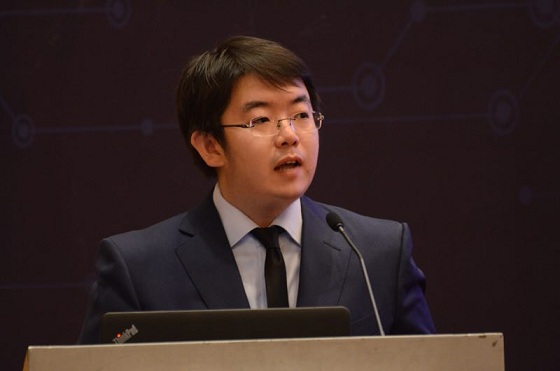
Guo Yulan, Founder and CEO of Suowen Boshi
Having missed the first and second waves of entrepreneurship in electronic medical records, Guo Yulan caught the wave of medical big data. This time, he did not let the great opportunity slip by.
In recent years, the Chinese government has frequently issued policies on national health and medical big data. With a massive influx of capital, “big data + healthcare” has gradually become a trendy buzzword that companies eagerly discuss. Despite the apparent prosperity, few products have truly evolved into practical tools for clinicians.
Suowen Boshi’s independently developed Boshi Medical Cloud stands out among its peers, thanks to its comprehensive and cutting-edge technology system.
Dilemma Awaits Breakthrough
In China, the field of disease diagnosis and treatment has evolved to a stage where there is a severe shortage of specialized diagnostic tools.The more specialized the field, the greater the scarcity of effective data tools. As the primary platform for clinical data in hospitals, current electronic medical record (EMR) systems are outdated in both design philosophy and usability, making them ill-equipped to meet physicians’ rapidly evolving data needs in the management of major diseases.
Guo Yulan believes: “The new generation of electronic medical records (EMR) must align with the clinical needs of multidisciplinary development in hospitals, offering more comprehensive functions and broader applicability. From a definitional perspective, it is more accurate to refer to it as a disease-specialized information platform.”
Disease-Specialized Information Platform: Meeting the Needs for Iterative Clinical Data in Hospitals. By categorizing diseases, it enables hospitals to achieve personalized and standardized data integration, ultimately bridging the gap between patient health data and clinical treatment data, thereby forming true healthcare big data.
For now, there is still a long way to go to realize this ideal.
The Starting Point of a Dream: Boshi Is Founded
In April 2014, Suowen Boshi was officially established under the leadership of Guo Yulan.
Unlike many companies that first package concepts and then secure financing to develop products, after the company’s establishment, Guo Yulan and the technical team conducted extensive and in-depth research into the complexities of experts’ clinical needs.
Through comprehensive research combined with years of software development experience, the Boshi team has clearly recognized that integrating patient data throughout the diagnosis and treatment process to achieve more efficient, multi-dimensional data structuring and disease-specialized processing, thereby meeting the needs of experts, would be a highly valuable endeavor.
According to Guo Yulan, the Boshi team visited many of China’s top clinical academic experts, conducting individual interviews with physicians ranging from department directors to attending physicians across different disease areas to understand their real-world needs.
In this process, the Boshi team understood and addressed the complex scenarios and needs of physicians across various departments during diagnosis and treatment, incorporating clinicians’ perspectives into the product’s conceptual design.
The Boshi team spent a year and a half continuously refining and perfecting the entire product ecosystem, from underlying tools to the front-end interface. After rigorous development, the final product, Boshi Medical Cloud, is an all-in-one solution capable of meeting the complex needs of various medical departments. It was officially launched and put into operation at the end of 2015.
“Boshi Medical Cloud’s decision to develop disease-specialized electronic medical records is based on the underlying informatics needs of disease diagnosis and treatment. Its significance lies in the fact that, once the system achieves a certain level of adoption, it will help establish next-generation standards and guidelines for disease diagnosis,” Guo Yulan told VCBeat.
According to Guo Yulan’s vision, Boshi Medical Cloud initially focuses on critical illnesses before expanding into general practice. Once its capabilities in managing critical illnesses are sufficiently refined, it will naturally evolve into a specialized electronic medical record (EMR) research tool covering all disease categories across the entire hospital. In pursuit of this goal, key departments at Grade A tertiary hospitals in first-tier cities have become the primary focus of Boshi Medical Cloud’s current partnerships.
“Experts’ needs are the most difficult to satisfy. It is not simply a matter of how much funding has been raised or how many engineers are employed that determines whether one can adequately serve a lung cancer specialist in China. Due to the complexity of clinical scenarios, their data requirements are highly variable, making it challenging to meet personalized needs through traditional technical development approaches,” said Guo Yulan.
The Highway by the Roadside
Will Boshi Medical Cloud conflict with hospitals’ existing electronic medical record (EMR) systems? When VCBeat posed this question, Guo Yulan answered confidently, “Not at all!”
His conclusion is based on two real-world scenarios.
Scenario 1: Due to the lack of capacity in hospital electronic medical record (EMR) systems to handle disease-specific data, only relatively simple patient information can be recorded. As a result, when using traditional EMRs, physicians compromise on data structuring by documenting information that could otherwise be directly structured in free-text format. This is akin to writing a report in Microsoft Word, where lengthy natural language paragraphs make subsequent utilization and analysis by physicians highly inconvenient.
Scenario 2: As core backbone members of their departments, senior chief physicians have more multidimensional and specialized needs for the use of medical data. However, traditional electronic medical record (EMR) systems fail to rapidly iterate in step with advances in medical knowledge while simultaneously meeting physicians’ personalized data dimensional requirements. This often leaves senior chiefs and experts lacking adequate tools, causing them to fall behind their international counterparts in scientific research.
Therefore, the Boshi Medical Cloud not only avoids imposing additional burdens on physicians but also empowers them to effectively transform the status quo in the aforementioned two scenarios.
Data Sharing Under Rules
The "Regulations on the Management of Medical Records in Medical Institutions (2013 Edition)," issued by the National Health and Family Planning Commission in 2013, explicitly states that medical institutions and their medical personnel shall strictly protect patient privacy and are prohibited from disclosing patients' medical record data for non-medical, non-teaching, or non-research purposes. This also implies that the research-oriented sharing of electronic medical records between hospitals for medical purposes falls within the scope of reasonable application.
Conversely, even if certain companies obtain data and then commercialize it after de-identification, such practices remain non-compliant.
Over the past decade, many experts have established their own single-disease databases for clinical research through public network systems developed by software companies. During this process, departments retained independent operational access rights.
On this basis, Boshi Medical Cloud can seamlessly collaborate with hospital departments and access their clinical data for non-commercial purposes.
Currently, Boshi Medical Cloud has successfully completed the filing for China’s Multi-Level Protection Scheme (MLPS) for information systems, achieving a Level 3 classification.
Jiefang Doctor Clinical Information Search
Liu Chen, Director of the Department of Imaging and Interventional Diagnosis and Treatment, International Medical Center, Peking University Cancer Hospital.
“In the past, we relied on tools like Excel spreadsheets for data statistics. Physicians had to manually enter all patient diagnosis and treatment information into Excel sheets, then search, locate, and analyze the data, which was extremely cumbersome.”
As the Director of the International Diagnosis and Treatment Center at Peking University Cancer Hospital, Liu Chen’s experience is highly representative.
From his perspective, if physicians wish to break down data into distinct research topics—for instance, focusing solely on the correlation between pathological subtypes and treatment efficacy—they must first strip away all irrelevant information, then construct a table to analyze the useful data.
“The disease-specialized information platform we are currently using (Boshi Medical Cloud) enables physicians to obtain desired information for each case based on different input fields. When doctors search for small nodules or early-stage lung cancer, all previously entered data can be automatically analyzed and retrieved through this system.”
Li Shaolei, Attending Physician, Department II of Thoracic Surgery, Peking University Cancer Hospital
Starting in 2008, Li Shaolei’s department began attempting to establish a clinical database. Like Liu Chen, they used Excel spreadsheets at that time.
Later, the department engaged an IT company to design a software system. However, due to the IT team’s lack of medical background, communication was highly inefficient. Coupled with their conventional technical development approach, the design failed to meet clinical requirements. Consequently, despite substantial investment, the project was ultimately not implemented.
Two years ago, Peking University Cancer Hospital adopted the Boshi Medical Cloud. The Department of Thoracic Surgery, where Dr. Li Shaolei works, began designing customized forms tailored to the department’s specific needs and implemented them using the Boshi Medical Cloud platform.
“We use it every day now. A medical record is created for each case, containing diagnostic information from physicians across different departments, enabling every doctor to gain a comprehensive understanding of the patient’s condition. Every week, we also convene to conduct multidisciplinary team (MDT) discussions using the Boshi Medical Cloud.”
A Great Aid for Hospital Scientific Research
With the assistance of the Boshi Medical team, thoracic surgeons at Peking University Cancer Hospital spent over a year entering all cases from the past decade or more into the Boshi Medical Cloud.
“In the past, when we conducted a study, retrospective data review was the first step. During this process, physicians would collect data from hundreds or even thousands of patients, consuming 80% of the entire research cycle, while the actual output phase accounted for only 20% of the time. After adopting the Boshi Medical Cloud, this ratio has been completely reversed, resulting in a fundamental improvement in efficiency,” said Li Shaolei.
It is understood that clinicians often spend a significant amount of time on data statistics, yet the final analysis results are frequently meaningless. Once physicians need to identify new research directions, the time and cost involved are prohibitively high.
Boshi Medical Cloud not only inputs incremental data but also integrates existing data for physicians. This eliminates the need for manual data organization, significantly shortening the research cycle.
Empowering Hospital MDT
For the same patient, physicians from different specialties focus on different aspects. Each physician’s documentation becomes part of a data collection within the Boshi Medical Cloud, ultimately enabling data sharing.
As an interventional radiologist, Liu Chen not only diagnoses patients but also closely monitors their surgical outcomes and responses to pharmacological therapy, extending his follow-up to assess various clinical parameters at six months and even one year post-procedure.
During this process, because he was not responsible for follow-up visits, it was difficult to gain a comprehensive understanding of the patient’s subsequent treatment outcomes. Second- and third-line treatments involve numerous healthcare professionals. If every individual involved in each step granted him access rights, Liu Chen would have a clear and complete overview of the patient’s entire treatment course.
Different physicians adopt distinct observational perspectives and document different information. Consequently, when reviewing records from other departments, physicians can easily transcend their existing cognitive boundaries.
“Every doctor using the Boshi Medical Cloud can individually set access permissions for medical cases; even different components within a single medical record—such as images, text, and videos—can be authorized separately,” said Liu Chen.
Traditional information system permission settings are largely determined at the hospital level. From an administrative perspective, hospitals define the corresponding access rights for each department, with centralized management handled by the IT department. These administrative constraints are difficult to break. However, individual physicians can achieve a maximum degree of autonomy.
Currently, ten departments and over 100 physicians at Peking University Cancer Hospital are using the Boshi Medical Cloud.
The complexity of tumors cannot be addressed by a single department alone. MDT provides an opportunity for multidisciplinary discussion of diagnostic and treatment plans, but this is only the diagnostic phase of the disease.
Boshi Medical Cloud, organized by departments and academic groups, enables physicians to form flexible teams, ensuring information coverage throughout the patient’s entire treatment cycle. This approach is broader and more generalized than the traditional concept of Multidisciplinary Team (MDT).
Make Follow-Ups Easy
Patients with complex and critical conditions often seek care at multiple hospitals. Physicians typically conduct follow-ups with patients or their families via telephone to assess recovery progress. However, due to a lack of medical expertise, the accounts provided by patients or their families often deviate significantly from the actual clinical situation.
Leveraging the cross-institutional data sharing capabilities of Boshi Medical Cloud enables physicians from different hospitals to consolidate information, ultimately yielding the most authentic and comprehensive patient data.
“Big data, as it is often discussed at this stage, frequently refers merely to large data volumes. Peking University Cancer Hospital performs approximately 20 to 30 interventional minimally invasive surgeries per day, resulting in a substantial volume of clinical data annually. However, the key issue lies in determining how many patients generate authentic, continuous, and traceable clinical diagnosis and treatment records. This is a question that every hospital and every physician should contemplate,” stated Liu Chen.
Currently, tertiary hospitals across multiple provinces and cities, including Wuhan, Dalian, Hangzhou, Shanghai, and Guangzhou, are leveraging the Boshi Medical Cloud to achieve data sharing. Spatially and temporally, the Boshi Medical Cloud enables data to form a complete, continuous continuum.
Standardizing Genetic Testing Services
Many lung cancer patients at Peking University Cancer Hospital have a need for genetic testing. Upon learning of this, Boshi Medical Cloud quickly established partnerships with third-party genetic testing companies.
Through this collaboration, the Boshi Medical Cloud Platform has incorporated a one-click ordering feature, allowing patients to submit requests to their physicians for assistance with online purchases.
Furthermore, Boshi Medical Cloud connects to the testing company’s database via its API interface, extracts the clinically relevant portions from the generated reports, and integrates them into the corresponding patient records on the platform.
As a result, the genetic testing process undergone by patients becomes fully transparent. Physicians can monitor the progress and results of the tests in real time, thereby facilitating medical decision-making.
In the past, physicians would directly contact genetic testing platforms and refer patients to them for further coordination. During this process, not only were physicians unable to track the testing progress, but the lack of familiarity with these platforms on the part of both physicians and patients also posed unnecessary risks.
All testing centers on the Boshi Medical Cloud platform are certified enterprises; only companies with the requisite qualifications are permitted to provide services on the platform, thereby maximizing the protection of patients’ personal safety.
Going forward, continuing to be technology-driven
Currently, “Boshi Medical Cloud” has become a cloud-based database and electronic medical record platform in China, featuring disease specialization and structured data. Its products cover major disease areas including oncology, hematology, orthopedics, neurosurgery, and neurology.
Bosera Medical Cloud’s product marketing initiatives encompass various strategies, including specialty-specific promotion and cancer-type-focused promotion. The solution has been implemented in over 2,700 clinical departments across more than 400 Grade A tertiary hospitals nationwide in China. Among these, over 1,200 departments are oncology-related (including hematologic oncology).
After securing a multi-million RMB Series A financing round from Matrix Partners China, Guo Yulan stated, “We will continue to upgrade our products and services, integrate professional resources across various disease areas, and leverage deep learning algorithms and data science technologies to provide better and more convenient services to a broader range of clinicians, ultimately improving patient health.”