

Yueyin Healthcare Fund Announces Over RMB 1 Billion Investment in Anhui Hetian Hospital Management Co., Ltd.
VCBeat (WeChat ID: vcbeat) recently learned that Yueyin Medical Fund has announced an investment of over RMB 100 million in Anhui Hetian Hospital Management Co., Ltd., a leading domestic chain brand of general hospitals.Hetian Medical Management has been operating in the comprehensive hospital management sector since 2005 and is the largest private healthcare chain group in Anhui Province with cross-regional operations. The company previously secured Series A financing from CMIG International and Yida Capital.
Looking at the series of companies previously invested in by Yuyin Medical Fund, including Lanhai Zhilue, Zhenluo Technology, Ruihua Kangyuan, Puenrui Biotechnology, Genetron Health, HealthJie, Mingyi Zhudao, and The Lancet Doctor, it has consistently followed the logic of “focusing on professionalism.” With the completion of this Series B financing round from Yuyin Medical Fund, Hetian Medical Management’s future development blueprint has also become more clearly defined.
A Professional Medical Chain Group Rooted in Primary Care
As the largest cross-regional medical chain group in Anhui Province, Hetian Medical Management currently owns two secondary general hospitals (Lu’an Shili Hospital and Bengbu Wuhe Hospital) and also manages five community health service centers or township health centers; among them, Lu’an Shili Hospital is one of the largest private general hospitals in Anhui Province.
“Only a professional team can deliver high-quality specialized services,” said Zheng Yufen, founder of the Yueyin Medical Fund. “The professionalism of the Hetian Medical Management team and its focus on primary healthcare services are precisely what guarantee future competitiveness.” Li Fangjun, founder of Hetian Medical Management and holder of a Doctorate in Hospital Administration, is the leading figure of the professional team referenced by Zheng Yufen and is a typical “scholar-practitioner.”
Currently, Hetian Medical Management, positioned in the “primary healthcare services market,” is planning to gradually establish a chain group of general hospitals featuring specialized disciplines such as hemodialysis centers, maternal and child health centers, oncology centers, and cardiology centers, through the model of “platform-based general hospitals and chain-based specialized development.” This strategy aims to extend medical services down to the county (district), township, and village levels, thereby effectively strengthening primary healthcare service capabilities.
“A key strategic positioning of Hetian Medical Management is that its operations are primarily focused at the grassroots level, where healthcare service capacity is relatively weak, while its specialized departments emphasize areas such as hemodialysis and cardiology, where chronic disease management is of paramount importance,” remarked a market analyst. “This aligns perfectly with the overarching direction of China’s national healthcare reform, which prioritizes chronic disease management at the grassroots level and necessitates strengthening primary healthcare service capabilities.”
In fact, Hetian Medical Management is precisely positioned to “refine and specialize county-level general hospitals.” Taking Lu’an Shili Hospital, a subsidiary of Hetian Medical Management, as an example, the hospital is located in Lu’an City, which lies within the Dabie Mountain range. As a nationally designated poverty-stricken area bordering Henan Province, Lu’an has a large population and inconvenient transportation. The number of hospital beds per 1,000 residents is only 3.5, ranking among the lowest across all cities and counties in Anhui Province in terms of medical resource distribution. For a long time, local residents have been plagued by difficulties in accessing medical care.
Since its opening and commencement of operations in August 2006, Lu’an Shili Hospital has experienced rapid development. It now boasts a team of over 1,000 staff members, including more than 70 experts with senior professional titles, and has nearly 1,000 open beds. The hospital has been honored with titles such as “National Model Brand Hospital for Healthcare Reform” and “Anhui Province ‘11th Five-Year Plan’ Economic Construction Contribution Unit.” It features one provincial-level key specialty department (Obstetrics and Gynecology) and four municipal-level key specialty departments (Obstetrics and Gynecology, General Surgery, Orthopedics, and Cardiology). In addition, its Hemodialysis Department and Neurology Department are distinctive specialties with considerable influence and reputation within the region.
“Hetian Medical Management has already established grassroots hemodialysis centers on a considerable scale and achieved the remarkable feat of ‘zero infections across 100,000 hemodialysis sessions,’ which is a testament to its professional expertise,” said Zheng Yufen. “We also hope to see this model expanded to more grassroots areas across China.”
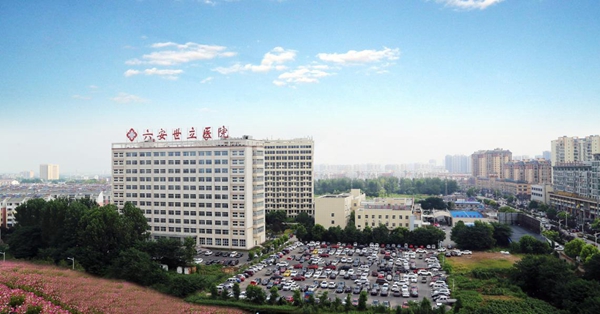
Lu'an Shili Hospital
Professional Chain Model Expected to Expand Further at the Grassroots Level
Since 2009, Hetian Group has been dedicated to enhancing its operational standards and building its human resource reserves. It has begun piloting the “specialized chain” hospital management model in more regions, with Bengbu Wuhe Hospital serving as a successful template for Hetian Medical Management’s geographic expansion and replication of its operational and management models.
“As the private general hospital with the most advanced resources in northern Anhui Province, Bengbu Wuhe Hospital has received comprehensive support from Hetian Medical Management since its opening and operation in March 2015, including department planning, specialist talent development, and critical care management,” said Li Fangjun, Chairman of Hetian Medical Management. “Since commencing operations, the hospital’s annual revenue has doubled each year, with a bed occupancy rate of approximately 80%. It currently operates 27 clinical departments, among which Respiratory Medicine, Cardiology, General Surgery, Neurology, and Obstetrics and Gynecology have established a strong local reputation.”
"Moreover, while Wuhe Hospital established a medical community with four township health centers in the region, it also formed a medical consortium with the First Affiliated Hospital of Bengbu Medical College, the largest Grade 3A hospital in northern Anhui Province, thereby creating an efficient channel for the decentralization of high-quality medical resources to the grassroots level."
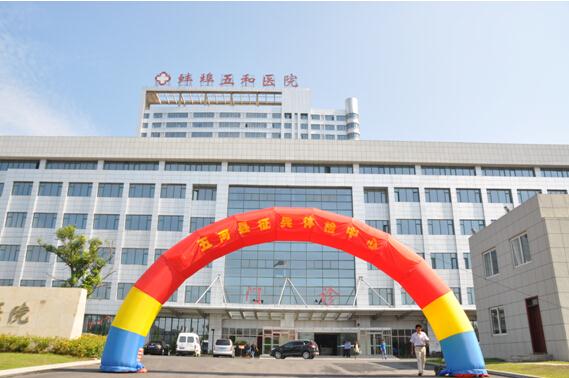
Bengbu Wuhe Hospital
Matching the professional expertise of Hetian Medical Management in hospital administration is this round’s lead investor, Yueyin Healthcare Fund, which is also regarded as one of the most specialized healthcare investment institutions in China. The fund’s founder, Ms. Zheng Yufen, previously served as Investment Director at Qiming Venture Partners and Managing Partner for Healthcare at Zero2IPO Group. With over a decade of experience in healthcare industry investment, her portfolio includes prominent healthcare enterprises such as Genetron Health, HealthJie, Mingyi Zhudao, and The Lancet Physician. Moreover, the majority of her team members possess strong educational and professional backgrounds in the medical field, including graduates from prestigious institutions both domestically and internationally, such as Johns Hopkins University School of Medicine, Peking Union Medical College, and Peking University Health Science Center.
In recent years, Yueyin has made rapid investment progress in China’s healthcare sector. The fund has currently invested in nearly 20 projects. Investment cases in 2017 alone included Zhenluo Technology, Puernrui Biotechnology, Tiankeya Biotechnology, Blue Ocean Strategy, Ruihua Kangyuan, and Jingzhun Medical.
“In the future, healthcare services will be one of the key areas for Yonyou’s strategic focus,” said Zheng Yufen. “Driven by the interplay of factors such as China’s aging population, diversified medical needs, public hospital reforms, and increased mobility of medical talent, private healthcare—particularly high-quality service providers positioned at the primary care level—will see rapid growth opportunities. The first tier of national chain brands for private general hospitals in China is taking shape.”
Supplementary Reading
Introduction to the Specialty Departments of Hetian Medical Management
Hemodialysis Specialty:Hetian Medical Management currently operates three hemodialysis centers with 173 hemodialysis machines, performing over 100,000 dialysis sessions annually. Leveraging the robust medical service system of its affiliated general hospitals, it has maintained a zero-incidence record of nosocomial infections over the past decade. The group has obtained a license for specialized nephrology hospitals and possesses the capability for specialized chain expansion.
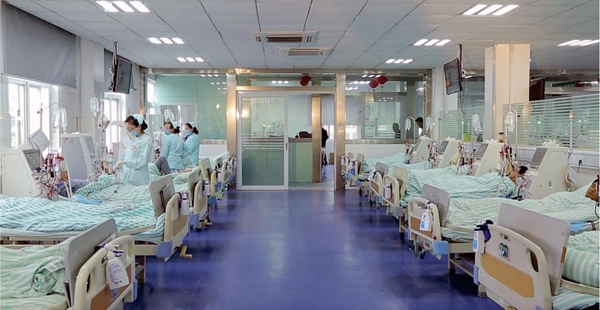
Hemodialysis Ward
Cardiology Department:Since 2010, Hetian Medical Management has vigorously developed its cardiology department, pioneering the first hybrid cardiac operating room in the western Anhui region. This facility enables the simultaneous performance of cardiac surgery, interventional therapy, and imaging examinations. Currently offered procedures include radiofrequency ablation, emergency percutaneous coronary intervention (PCI), heart valve replacement/repair, coronary artery bypass grafting (CABG), and resection of thoracic aortic aneurysms with vascular replacement. The number of cardiac surgical and interventional procedures is projected to exceed 1,400 cases in 2017. Furthermore, Hetian Medical Management has established a collaborative partnership with Professor Li Dayuan, a cardiology specialist at HealthEast Care System in Minnesota, USA. Leveraging Lu’an Shili Hospital as a foundation, the organization aims to establish mechanisms for international technical and personnel exchange and gradually roll out international diagnostic and treatment services.