

From Cultural Misfit to Brand Hospital: The Xiamen Chang Gung Success Story
In May 2008, Xiamen Chang Gung Hospital, the first hospital jointly established by the Formosa Plastics Group on the Chinese mainland, officially opened. However, its Taiwanese investment background and private status caused this new hospital, which originated from Taiwan’s most prestigious private healthcare group, to struggle with “acclimatization issues,” resulting in little significant progress in its development over the following years.
Liu Zhigang is the third general manager of the hospital, having assumed office on June 1, 2012. Three months after taking up his post, Liu stated in a media interview that Chang Gung Hospital had not yet achieved profitability at that time, and that his tenure goal was to bring the hospital to break-even by its tenth anniversary.
Five years later, Xiamen Chang Gung Hospital achieved breakthrough development. It currently has 34 departments, 1,000 open beds, and 1,300 staff members, serving over 3,000 patients on average per day. With a strong reputation, it has become a highly influential “brand hospital.”
VCBeat (WeChat ID: vcbeat) recently conducted an exclusive interview with the chief executive who revitalized Xiamen Chang Gung Memorial Hospital, discussing the “Chang Gung experience” in hospital brand building and operational management.
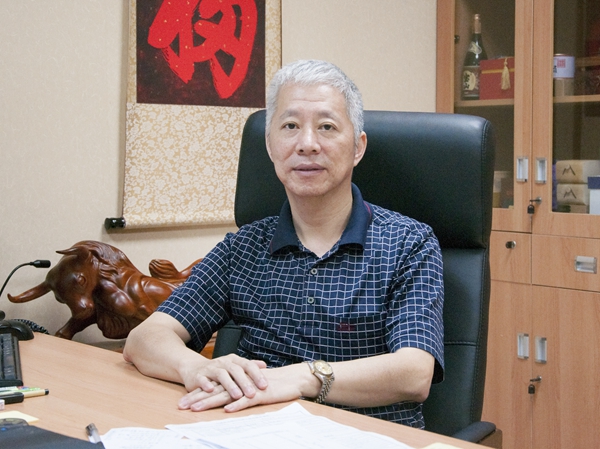
Liu Zhigang, General Manager of Xiamen Chang Gung Hospital
Sustainable Operations: Chang Gung Memorial Hospital’s “Deliberate Approach”
Liu Zhigang stated that Xiamen Chang Gung Hospital is a high-level, accessible hospital “centered on patients,” with “sustainable operation and deep-rooted development” as its mission and philosophy.
However, achieving this is no easy feat. Xiamen Chang Gung Hospital firmly believes in and adheres to the “spirit of deep cultivation,” which constitutes its greatest distinction from other institutions as well as its core competitive advantage. By taking steady, pragmatic steps, it avoids blind pursuit of metrics and scale, instead focusing on laying a solid foundation and delivering high-quality services.
Liu Zhigang believes that this is a principle Chang Gung Hospital must adhere to in pursuit of long-term vision. The accumulation of reputation, operational management, brand promotion, and cultural substance for a private hospital are all inseparable from medical quality. Healthcare institutions need to focus on steadily advancing medical technology and quality, providing excellent service, and building a strong reputation. This requires “patience,” and one should never seek “shortcuts.”
In terms of specific operations, Xiamen Chang Gung Hospital implements the “Attending Physician Responsibility System,” under which a single physician provides continuous care for patients throughout the entire process, including outpatient visits, hospitalization, laboratory and imaging tests, surgery, postoperative care, and follow-up consultations. The hospital prioritizes the introduction of select advanced medical technologies from Taiwan’s Chang Gung Medical Foundation to Xiamen, thereby developing differentiated medical specialties and addressing local healthcare gaps.
Since commencing formal operations, Xiamen Chang Gung Hospital has introduced a range of practical medical technologies and services, including cochlear implantation, cleft lip and palate repair, pediatric dentistry under general anesthesia, radiofrequency ablation (RFA), computer-assisted navigation, pediatric orthopedics, and pediatric cardiology. These initiatives have all garnered strong reputations and achieved notable success. Notably, the Cochlear Implantation Center has been designated as a surgical site for China’s “Hearing Reconstruction and Hearing Activation Initiative” and the “Colorful Dream” Action Plan. By developing internationally cutting-edge minimally invasive cochlear implantation techniques via small incisions, the center has successfully established a specialized brand, becoming a distinctive feature of Xiamen Chang Gung Hospital.
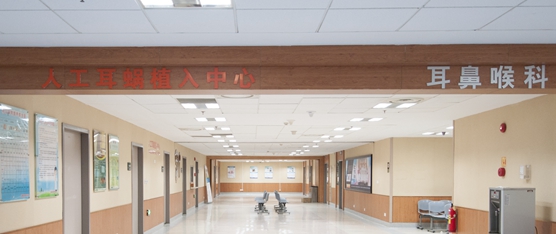
The Cochlear Implant Center is a specialty department of Xiamen Chang Gung Hospital.
Meanwhile, Xiamen Chang Gung Memorial Hospital actively serves as a bridge for the exchange of medical resources across the Taiwan Strait by establishing the Cross-Strait (Taiwan) Medical Referral Center. The center provides services such as cross-strait remote consultations, on-site consultations by Taiwanese experts in Xiamen, joint diagnosis and treatment, and green-channel referral services. These initiatives primarily cater to patients who face difficulties traveling to Taiwan, while also facilitating visits by designated renowned specialists to Xiamen, thereby creating a convenient and reliable green channel for mainland patients to access Taiwanese medical services.
In terms of service, Chang Gung Hospital adheres to patient-centered, refined care. It provides 365-day, round-the-clock outpatient, examination, and surgical services, along with warm, differentiated service features such as Saturday afternoon clinics, convenience clinics, holiday surgeries, green channels, and elderly care nursing homes.
In addition, Chang Gung Hospital has established Fujian Province’s first adult vaccination clinic, facilitating easier access to influenza and pneumococcal vaccines for adults aged 15 and above. In response to the national “two-child” policy, the hospital has launched services including a postpartum care center, a postnatal recovery center, a children’s play area, and a well-child clinic, ensuring that pregnant women and children in Xiamen receive comprehensive medical care.
To date, Xiamen Chang Gung Memorial Hospital has garnered increasing recognition. At the “China Hospital Development Conference” recently hosted by DXY, it was shortlisted for the “Top 100 Private Hospitals in Communication Impact” and appeared on both the “Online Popularity Ranking” and the “New Media Influence Ranking,” placing it alongside industry leaders such as United Family Healthcare among private hospitals.
“Separation of Medical Administration and Hospital Management”: A Modern Hospital Management Model
Talent management in private hospitals has long been a persistent and challenging issue. However, Chang Gung Hospital has addressed the difficulties of recruiting, retaining, and developing talent in the private healthcare sector through its own exploratory efforts.
Liu Zhigang told VCBeat that, in addition to external brand building targeted at patients, Xiamen Chang Gung Hospital also places great emphasis on employee-level management. Only by achieving alignment of internal values within the hospital, and fostering synchronized growth and development between employees and the institution, can hospital operations, management, and brand building remain vibrant.
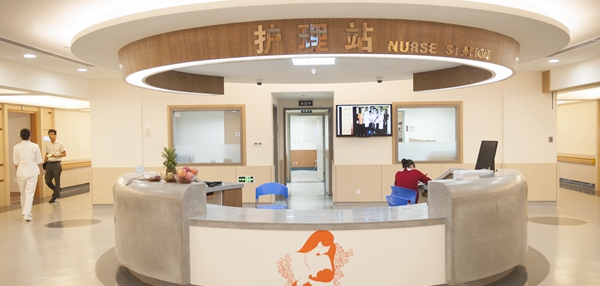
A Glimpse of the Nursing Station at Xiamen Chang Gung Memorial Hospital
Chang Gung Memorial Hospital has always prioritized serving its employees well in its internal culture building, striving to meet their needs. For instance, it organizes hospital-wide cultural activities each month with different themes, such as lectures, book-sharing sessions, and calligraphy clubs, to enhance employees’ capabilities in career planning and service management. The hospital implements a “elite workforce, high compensation” policy and establishes various incentive mechanisms, including retention bonuses, promotion awards, and long-service rewards. Even employees who wish to end their maternity leave early and return to work are eligible for incentives.
In terms of corporate culture, Chang Gung Memorial Hospital cultivates a “Happy Chang Gung” atmosphere and enhances employee satisfaction by placing special emphasis on staff’s living needs and physical well-being. The hospital’s labor union has established childcare facilities and summer programs for employees’ children, arranges regular health check-ups and travel opportunities, and provides additional benefits such as a fitness center, a nutritional dining hall, a weight-management clinic, and various sports clubs.
In terms of management, the modern hospital management model of “separating medical practice from administration” has helped Chang Gung Hospital optimize the allocation of medical resources, scientifically control costs, and enhance the quality of medical services as well as operational management efficiency.
Chang Gung Hospital is an integrated healthcare institution, but unlike typical integrated models, it places greater emphasis on its open-system approach. Liu Zhigang stated that this is a necessary strategy for private hospitals, as the urgent need for talent makes it difficult to gradually build up key specialties in the short term.
Chang Gung Memorial Hospital has made substantial investments in talent development and mentorship. The hospital maintains its own teaching curriculum and serves as a standardized residency training base. Every physician is expected to focus on clinical practice, research, and teaching, with ample opportunities provided for professional training and advancement. Furthermore, Chang Gung Memorial Hospital enforces strict standards regarding medical ethics and professional conduct, maintaining a zero-tolerance policy toward the acceptance of red envelopes (cash gifts) or kickbacks; any such misconduct results in immediate dismissal upon discovery.
Shaping the Brand: Differentiated Paths for Private Hospitals
“Seeking reputation externally and strengthening management internally” is an effective path that Xiamen Chang Gung Hospital has explored in its brand-building process. Today, as private healthcare rapidly develops and leverages the momentum of healthcare reform to become a vital pillar of the medical system, the experience of Xiamen Chang Gung Hospital offers practical insights for reference.
Liu Zhigang stated that “brand” is not equivalent to a hospital’s exposure rate; rather, it is a comprehensive reflection of the hospital’s medical technology, disciplinary standing, differentiated specialties, respect from peers and society, and the ability to provide patients with a positive experience. Performance in these areas determines the hospital’s overall brand value.
He suggested that each hospital should begin with the design of its Corporate Identity (CI) system, encompassing elements such as the hospital’s mission, core values, spirit, motto, emblem, architectural design, interior furnishings and layout, and various printed materials. A distinctive corporate identity system can help convey the hospital’s image and essence, enabling it to establish unique characteristics and advantages in terms of philosophy, behavior, and visual presentation. This facilitates recognition and acceptance by society and the public, leaving a lasting impression and marking the first step in brand building.
Regarding the differences in brand building between public and private hospitals, Liu Zhigang believes that public hospitals hold absolute advantages in medical resources, patient base, and patient trust, thereby taking a leading position in branding. In recent years, gaps among public hospitals in terms of technology, service, pricing, and environment have been gradually narrowing. With the formation of “medical consortia,” the influence of the public healthcare sector continues to grow and strengthen.
For private healthcare providers, the current medical policy and environment, still dominated by public hospitals, first results in an "unequal footing." Private hospitals face constraints in developing "hard" capabilities such as talent, technology, and scientific research. Coupled with the public's (and media's) "absolute trust" in public healthcare, it is significantly more challenging for private hospitals to build their brand or core competitiveness compared to their public counterparts. To secure a place in the medical industry, or even to stand out with widespread acclaim, private hospitals must forge a distinctive brand path, leverage their unique advantages to develop differentiated highlights, and enhance patient and employee loyalty and trust.
From the perspective of Xiamen Chang Gung Hospital’s own experience, the biggest problem it encountered in building its brand was cultural differences—which can also be viewed as a challenge.
Liu Zhigang believes that a hospital’s brand is rooted in diverse cultural contexts. As a newly established private, Taiwanese-funded hospital, Xiamen Chang Gung Hospital will inevitably confront the deeply entrenched societal and public preference for “public/state-owned” healthcare providers in mainland China—namely, the pervasive belief that public hospitals are inherently superior while private hospitals are inherently inferior. Compounding this challenge, years of various incidents involving the Putian-affiliated hospital network have tarnished the reputation of private hospitals, underscoring the need to strengthen public trust in non-public healthcare institutions.
He stated that in the Taiwan region, it took two to three decades for private healthcare providers, represented by the Chang Gung system, to build their brand identity, whereas in mainland China, this process may require fifty years or even longer. Nevertheless, private healthcare institutions need not be overly pessimistic in the face of such challenges. The younger generation is becoming increasingly rational, and their perceptions of public and private hospitals are no longer entirely constrained by traditional views. In the future, private hospitals will have greater room for development.
From “Acclimatization Challenges” to a “Branded Hospital”: Xiamen Chang Gung Hospital, as a privately owned hospital with Taiwanese investment, has overcome a series of challenges, including cultural differences, talent shortages, management complexities, and brand building. The reasons behind Xiamen Chang Gung Hospital’s success offer a valuable case study for the rapidly expanding private healthcare sector in China. Its achievements also underscore the promising prospects for socially invested and private medical institutions, all of which hinge on the operators’ strategic vision and their ability to effectively execute and implement these strategies.