

Daheng Puxin Launches IPO: Pioneering Ophthalmology Medical Consortium Platform Connecting Over 160 Hospitals
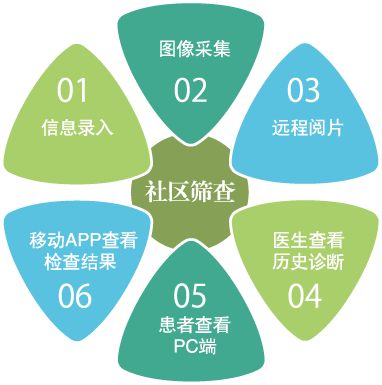
Within the ophthalmology medical consortium model, after patients undergo ophthalmic examinations, their medical records and examination data are uploaded to the cloud. The “Huiyan” software, developed by Daheng Puxin, then performs initial AI-based triage. Following triage, physicians at primary care hospitals provide preliminary diagnoses for patients identified with conditions. Cases involving complex or rare diseases that exceed the diagnostic and therapeutic capabilities of primary care facilities are referred to tertiary Grade A central hospitals for in-person diagnosis or remote consultation. Subsequently, patients can access their medical records and examination results via a mobile client application. Based on the physician’s diagnosis or recommendations, patients can then proceed with further treatment.
The above describes the ophthalmology medical consortium that Daheng Puxin is vigorously developing, which also represents the concrete implementation in the specialty of ophthalmic diagnosis and treatment of the medical consortium model proposed by Premier Li Keqiang. At the State Council’s executive meeting held on April 12, Premier Li Keqiang deployed for the first time at such a meeting a series of initiatives for the development of national medical consortia, encouraging all regions across China to comprehensively launch the construction of medical consortia in various forms.
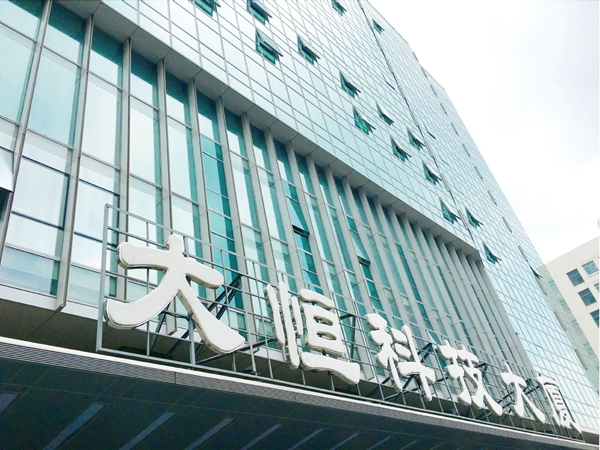
Within the Ophthalmology Medical Consortium Platform established by Daheng Puxin for Beijing Tongren Hospital, ophthalmic diagnostic and treatment services have extended to more than 160 primary healthcare institutions across China. The annual number of remote consultations exceeds 100,000 cases, with over 400,000 remote image interpretations conducted to date. By leveraging the “Internet Plus” model to redistribute high-quality medical resources, this initiative has addressed the shortage of ophthalmic medical resources in primary healthcare facilities.
Undertaking national projects and launching China's first "Ophthalmology Medical Consortium Service Platform"
As the entity responsible for science and technology projects under the “11th Five-Year Plan” and “12th Five-Year Plan,” Zhao Lei, General Manager of Daheng Puxin, stated candidly that this achievement was clearly not due to luck, but rather the result of “consistently engaging in specialized work and accumulating substantial industry expertise, which enabled us to undertake the National Science and Technology Support Programs during the 11th and 12th Five-Year Plan periods.”
As a subsidiary of the listed company Daheng New Epoch Technology, Inc., Daheng Puxin embarked on its exploration of ophthalmic informatics more than a decade ago. Evolving from the development of single ophthalmic software products to providing comprehensive solutions, this team—integrating expertise in computer science and medicine—has become a leader in ophthalmic industry informatization and is the first high-tech enterprise in China dedicated exclusively to ophthalmic informatics.
16 years ago, Daheng entered the field of ophthalmic informatization through its collaboration with Beijing Tongren Hospital, gradually developing projects such as ophthalmic PACS, outpatient electronic medical records, remote consultations, and diabetic retinopathy screening, thereby establishing and refining the hospital’s IT infrastructure. Meanwhile, leveraging Beijing Tongren Hospital as a pilot site, it established China’s first ophthalmic medical consortium center.
During the “11th Five-Year Plan” period ten years ago, Daheng and the Beijing Institute of Ophthalmology jointly undertook the Ministry of Science and Technology’s project titled “Demonstration Project for Digital Regional Collaborative Healthcare in Ophthalmology,” collaboratively establishing a shared platform for regional medical services among government agencies, healthcare institutions, and communities. Through this project, Daheng Puxin assisted the Beijing Institute of Ophthalmology in pioneering the establishment of an internet-based ophthalmic Picture Archiving and Communication System (PACS), a Clinical Information System (CIS), and a teleconsultation network linking ophthalmology experts across China. The ophthalmic PACS and community screening systems were among the first products introduced by Daheng in China during this period.
During the 12th Five-Year Plan period, Daheng Puxin, in collaboration with Beijing Tongren Hospital, the Beijing Institute of Ophthalmology, Tsinghua University, and other institutions, successfully secured a Ministry of Science and Technology support project titled “Research on Key Technologies and Application Demonstration of Third-Party Specialized Impact Services.” As the lead entity, Daheng Puxin embarked on the exploration of innovative healthcare models, including internet-based medical services and ophthalmology medical consortia. After several years of dedicated efforts, the company successfully completed the research project and launched China’s first “Ophthalmology Medical Consortium Service Platform.”
Ultimately, Daheng Puxin established a solution for the “Ophthalmology Medical Consortium Service Platform,” comprising multi-campus data centers, remote ophthalmology consultation centers, ophthalmic PACS/electronic medical records (EMR), Huiyan intelligent software, eye disease screening systems, and patient-facing mobile applications.
Big Data + Specialty Imaging: Ophthalmology Informatics Becomes Feasible
As a superficial organ, the eye’s direct visualization and imaging constitute the most critical components in the diagnosis of ocular diseases. Meanwhile, the increasing prevalence of portable examination devices equipped with high-definition cameras has made clinically valuable ocular images among the most readily accessible medical imaging data.
Professor Xu Liang from Tongren Hospital, a partner of Daheng Puxin, stated: “Currently, the two most frequently discussed concepts in the medical community are big data and precision medicine. One of the key factors underpinning precision medicine is medical imaging, particularly specialty-specific imaging. Compared with other disciplines, ophthalmology achieves the highest imaging resolution, reaching a few micrometers (μm), which approaches histological levels, and this acquisition is non-invasive. Such imaging is not only significant for diagnosing eye diseases but also plays a crucial role in the prevention of chronic diseases.”
By leveraging mobile ophthalmic imaging acquisition and services, combined with big data and specialized image analysis, ophthalmology experts at central hospitals can provide online support to primary care physicians for diagnosis, remote consultations, training, advisory services, and proxy examinations. This approach enables front-end specialized imaging diagnosis and facilitates the decentralization of high-quality medical resources. The widespread societal demand has also accelerated the market monetization of ophthalmic informatics.
According to the Research Report on the Development of China’s Ophthalmology Industry, the market size of ophthalmology in China was approximately RMB 29 billion in 2014 and rose to about RMB 32 billion in 2015. The socioeconomic costs attributable to various visual impairments are estimated to reach around RMB 560 billion, accounting for approximately 1.1% of GDP. Meanwhile, only 5,500 hospitals nationwide have independent ophthalmology departments, representing just 23% of all hospitals. Additionally, while there are 14 million ophthalmic patients across China, there are only 30,000 ophthalmologists. Moreover, these specialist resources are predominantly concentrated in major cities, making it difficult for eye disease patients in grassroots or remote areas to access high-quality medical care. The imbalance between the distribution of medical resources and patient populations has resulted in low diagnosis and treatment rates for eye diseases in China and unmet patient needs in grassroots regions.
Tiered Diagnosis and Treatment System: One Central Hub + Multiple Primary Care Hospitals
Within the medical consortium jointly established by the central hospital and regional medical institutions, including secondary hospitals and community health centers, the central hospital provides telemedicine services, expedited referral channels, and professional assistance and training. Secondary or other partner hospitals deliver routine medical services, follow-up care for chronic diseases, and eye disease screening. As a result, the central hospital gains access to patients with complex and refractory conditions and achieves automated aggregation of medical data, thereby expanding its brand influence. Meanwhile, secondary hospitals benefit from resource allocation by the central hospital, compensating for their own limitations in medical capabilities.
In 2015, Daheng Puxin entered into a strategic partnership with the Eye Hospital of Tianjin Medical University, establishing a mature ophthalmic medical consortium center. Through this consortium, the Eye Hospital of Tianjin Medical University collaborated with more than ten primary care hospitals, each serving two to three communities. The seamless integration of these partner hospitals formed a three-tier healthcare delivery system centered on the “one hub, multiple primary care facilities” medical consortium model.
Collaborating hospitals within the medical consortium can request remote consultations from the central hospital via Daheng Puxin’s electronic medical record (EMR) system and ophthalmology PACS system during patient visits, or facilitate referrals through the green channel provided by the central hospital. Physicians at the central hospital can perform image interpretation and diagnosis or conduct remote consultations anytime and anywhere through the ophthalmology cloud service platform. Patients can access their medical records and test results using a mobile client application.
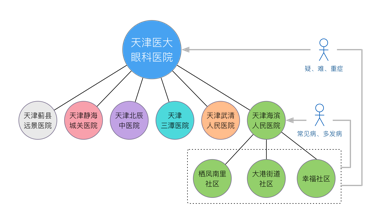
Upon full implementation of ophthalmic informatization, community health service centers, secondary hospitals, and the Medical University Eye Hospital medical consortium will be integrated into the medical alliance. This includes achieving electronic referrals between community health service centers and secondary hospitals within the district and Huanghe Hospital and Santan Hospital. As designated triage and referral institutions, Huanghe Hospital and Santan Hospital will operate based on geographic zones: Nankai Traditional Chinese Medicine Hospital, the Physical Therapy Hospital, and the Xuefu Street and Wanxing Street Southeast Community Health Service Centers will refer ophthalmic patients to Santan Hospital for diagnosis and treatment; while the Xiangyang Road Street, Jialingdao Street, Changhong Street, and Gulou Street Community Health Service Centers will refer patients to Huanghe Hospital. For complex cases that cannot be managed at these facilities, patients may be further referred to the relevant departments of the Medical University Eye Hospital. This approach truly realizes tiered diagnosis and treatment, establishes a green channel for ophthalmic referrals, and achieves vertical coordination within the field of ophthalmology.
Currently, the ophthalmology service platform established by Daheng Puxin has served over 200 hospitals and is poised to expand to more than 1,000 hospitals in the future. By leveraging tertiary Grade-A hospitals as provincial hubs to extend care to primary and secondary hospitals, the platform aims to achieve the effects of regional ophthalmology medical consortia.
According to Zhao Lei, General Manager, the establishment of a cloud platform by the Ophthalmology Medical Consortium enables hospitals to analyze stored and uploaded medical data. By extensively mining accumulated patient records, visit histories, consultation information, and surgical data, hospitals can achieve comprehensive disease monitoring, prevention, post-diagnosis management, and pharmaceutical analysis. This advancement will bring about revolutionary progress in the ophthalmic healthcare industry.