

Community 580 Achieves Profitability Within Three Months of Monetization Launch, Files for IPO
Recently, Shequ 580, a benchmark family doctor service provider in China, exclusively disclosed the latest operational data of its resident-facing app to VCBeat (WeChat Official Account: vcbeat).
Data shows that from March to June 2017, Community 580 launched a revenue conversion initiative while continuing to expand its market horizontally.In just three months, from free hospitals to paid hospitalsThe conversion rate has exceeded 7%.,Revenue has increased by more than 100% month-over-month for three consecutive months., achieveMonthly Profit Approaches One Million. This achievement has truly astonished the industry.
Since 2015, in just two years, through three stages of development, Xincheng Technology has signed contracts with2,610 Community Hospitals. Service CoverageChina's 23 Provinces,114 Cities. SigningOver 3 million residents, with more than50,000 Family DoctorsServices are provided through the Community 580 platform.
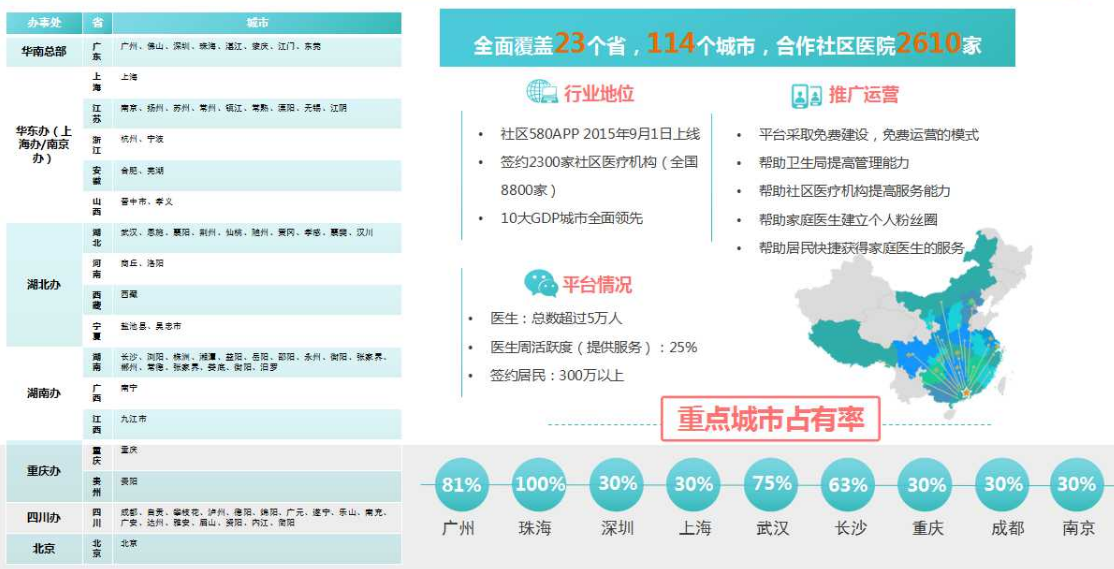
In a dialogue with Liu Bo, CEO of Shequ 580, VCBeat not only learned about the key factors behind Shequ 580’s achievement of monthly profitability, but also summarized from the company’s operational data the currentFive Current Realities of the Family Doctor Contract Service Market。
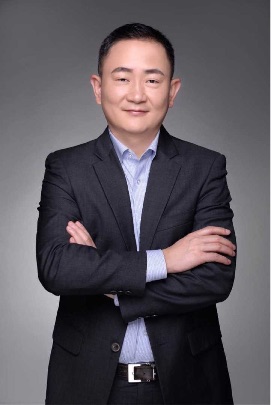
Liu Bo, Founder and CEO of Shequ 580
5 Key Current Trends
Status Quo 1: Rapidly establishing a family doctor service system is an essential need for community hospitals. As long as high-quality platforms and tools are provided, community hospitals demonstrate a strong willingness to pay.
Current Situation 2: Subsidies for family doctor contract signing and hospital performance evaluations are the most critical drivers in promoting family contract services.
Current Situation 3: Family doctor contract services should integrate online and offline channels, with online platforms generating value and offline services generating revenue. In the future, every community hospital will establish a Family Doctor Contract Service Center.
Current Situation 4: Patients with chronic diseases, pregnant and postpartum women, and children are currently the core populations for family doctor contract services. Providing effective, personalized services to these key groups is the key to the success of family doctor practices.
Current Situation 5: The management of subsidies for family doctor contracts, performance management, and health management by family doctors will generate significant demand for information technology.
The following is an exclusive interview with VCBeat:
Community 580 Achieved a 7% Service Conversion Rate in Just 3 Months—How Was It Done?
Liu Bo:First, this is because Community 580 has an existing base of over 2,600 community hospital clients. By leveraging differentiated services and products to stimulate purchasing intent and implementing tiered conversion strategies for these clients, revenue and profitability can be rapidly achieved.
Community 580’s Revenue Conversion Model categorizes customers into three groups: A, B, and C. Group A customers form the foundation, comprising over 2,600 free system users acquired through internet platforms. Group B customers require standardized value-added products and services, with an average transaction value of approximately RMB 150,000. The sales follow-up cycle is about 15 days, the fulfillment cycle is roughly one week, and the payment collection cycle is around 30 days; this segment is managed by the existing internet business team. Group C customers are high-end customized clients, with an average transaction value of approximately RMB 3 million. The sales follow-up cycle lasts about three months, and the company has established dedicated sales and service teams specifically for these clients.
Class A Users: In the initial phase of family doctor program implementation, Shequ 580 provided free internet-based tools to help hospitals rapidly roll out family doctor contract services. At that time, the market was in its nascent stage; although policy directions were clear, community hospitals lacked sufficient experience, funding, and motivation during implementation. They sought to leverage a free tool to quickly establish close doctor-patient relationships and manage contract sign-ups.
Class B Users: Starting from late 2016, cities across China began to clarify the detailed rules for family doctor contract services, setting explicit requirements for both the quantity and quality of contracts, while providing subsidies for these services. During this period, community hospitals needed to offer more standardized value-added tools on their existing internet platforms, such as contract service center development, contracted service packages, wearable health devices, and health management centers. These solutions addressed urgent hospital needs, enabling rapid revenue conversion and fostering stronger user stickiness. This segment currently accounts for 70% of our revenue.
Class C Users: Community hospitals in certain developed cities seek to refine the details of family doctor contracting services, such as personalized contracting offerings and elderly care services. Meanwhile, municipal Health and Family Planning Commissions in some cities expect Community 580 to provide more comprehensive and personalized data management capabilities, including data integration between contracting services and existing Hospital Information Systems (HIS) and public health systems. These expectations have generated demand for higher-end customized solutions. This segment currently accounts for 30% of our revenue.
Therefore, based on an analysis of market demand and payment capacity, we launched a revenue generation initiative in community hospitals starting this March, with the three most critical conversions being:
First, product conversion.Rapidly develop paid services and products based on free internet tools.
Second, the transformation of the sales team.Through training and strong execution capabilities, the original internet business operations team rapidly transformed into the responsibility team for B-side businesses and quickly established a high-end customized service team tailored to C-side users.
Third, customer conversion.Addressing key business pain points, the platform rapidly converts its accumulated base of free hospital clients into paying customers for value-added services.
The operational model of Community 580 has broken through the long-standing predicament of internet companies that focus solely on user growth while failing to achieve profitability. In terms of conversion scope, this includes cities in East China, South China, and Central China, such as Guangzhou, Zhuhai, Shanghai, Nanjing, Yangzhou, and Wuhan.Due to the better operational performance of community hospitals, the conversion process is relatively faster.。
What customized services does the client expect Community 580 to provide through its family doctor service platform?
Liu Bo:There are three main types of such customers.
The first category of clients has higher expectations for the contracted services themselves, such as some community hospitals in East China. They hope that contracting will not only involve member management but also include management of the member service process, service quality, and preferential benefits.
For example, Guangling District in Yangzhou has successfully signed contracts with over 40,000 residents to provide out-of-pocket personalized service packages. The district aims to deliver enhanced VIP services to this premium segment of more than 40,000 contracted individuals.
The second category of clients consists of cities, such as Chongqing and Wuhan, which are establishing city-wide unified family doctor contracting platforms. The offline components of the Community 580 Family Doctor Platform (including contracting centers, service management, green channels, and health management) are provided as customized value-added services, while the online components, such as the mobile app, are offered free of charge as standardized products.
The third category of users consists of larger community hospitals, such as the University Hospital of Wuhan University and the Qingling Street Community Hospital in Wuhan, which are among China’s top 100 community hospitals. These institutions seek to integrate family doctor contracting services with their existing management systems, for example, by linking family doctor contracts with public health systems and electronic health record (EHR) establishment systems.
What Is a Standardized Family Doctor Contracting Center, and How Is Its Standardization Defined?
Liu Bo:Family Doctor Contracting Center, akin to helping community hospitals establish a new “Contracted Services” department.
It encompasses various components, including publicity, equipment, management, systems, health management tools, and personalized services. From the perspective of community hospitals, there is a desire to utilize a tangible and visible medium to disseminate the concept of family physician contract services. This concept is referred to as membership-based service, which entails differentiated services.
Currently, Shequ 580 has established over 50 standard contract signing centers across China and plans to complete more than 400 by the end of the year, which will effectively support the national promotion of family doctor contract services.
Community 580 provides the contracting center with a complete suite of health examination equipment, a contract management system, a health management system, self-service contracting kiosks, mobile contracting service kits, and a user-facing mobile app. The entire system can be fully deployed and go live at the hospital within just one week.
These 50+ contracted centers add an average of over 5,000 new signed-up users daily on the Community 580 Platform, with each center averaging more than 100 users.
There are three methods for signing up: one is online signing, which can be done directly through the Community 580 Resident App. Another method is for residents to sign up at an offline signing center. By using ID card readers and photo scanners at the signing center, the entire process is digitized. The third method involves self-service kiosks where patients scan their ID cards, select a doctor, and complete the registration with a handwritten signature.
As the physician management system of Community 580 has achieved data interoperability, residents can sign up for services at any location. Through the registration database, the system can quickly identify their enrollment status, thereby preventing patients from registering multiple times across different community hospitals.
Therefore, from a comprehensive perspective, a standard family doctor contracting center refers to the standardization of the service process for signing contracts, from online to offline.
Data shows that there are 1,200 active community hospitals participating in the Community 580 service. How is their activity level determined? In your opinion, what are the differences between active and inactive hospitals?
Liu Bo:Community 580 evaluates the activity level of community hospitals based on the number of signed contracts and the frequency of doctor-patient interactions. If a community hospital secures more than 50 new sign-ups per month and generates hundreds of doctor-patient interaction records, we consider its physicians and user base to be active.
Active vs. Inactive Hospitals: Primarily a Phased Disparity Driven by General Practitioners. Key Factors for Effectively Activating Family Doctor Contract Services Include:
First, the hospital director’s requirements. The director aims to facilitate patient enrollment through the platform, thereby establishing a connection between the hospital and patients upon completion of the enrollment process. The hospital will provide feedback to physicians through performance evaluations, linking a portion of their performance-based bonuses to the number of enrolled patients, thus enhancing the hospital’s enrollment activity.
Second, the District Health and Family Planning Commission provides payment for contract signings. For instance, in Wuhan’s Qingshan District, the Health and Family Planning Commission pays physicians a signing fee of 20 yuan for each resident they enroll. Under this mechanism, physicians are naturally more willing to promote contracted services.
In the early stages, the rollout of family doctor contract services was driven by directors of well-known community hospitals. Currently, such initiatives are increasingly supported by regional health and family planning commissions through subsidies provided to hospitals and physicians. Incentives and performance evaluations constitute the most critical components in promoting family doctor contract services within community hospitals.
From the perspective of click-through rates, contracted physicians and community features are the two core functions with the highest engagement, while other extended features lag significantly behind. What does this indicate?
Liu Bo:MainCauseIt is the entrance.CommunityThe download and access portal for the 580 app is community doctors.Recommended andassisting residents with downloading and installation. Therefore, during this process, the conversion rate for resident downloads and contract signings is approximately80%。
After signing the contract, doctors will further introduce the use and operation of the APP to residents, focusing on guiding and training users to access hospital services through the APP.
From the perspective of extended functionalities, blood pressure management, parenting management, blood glucose management, and prenatal care management have received higher click-through rates. Does this indicate that individuals with chronic diseases and pregnant or postpartum women constitute the primary groups signing up for these services?
Liu Bo:This data is consistent with the primary patient population currently served by community hospitals.
Currently, the key populations served by community hospitals have consistently been patients with chronic diseases and maternal and child health groups. This includes individuals with hypertension, diabetes, pregnant and postpartum women, newborns, and the elderly. Therefore, the initial core user base for community hospitals primarily consists of these groups. With the advancement of the community-based first-contact diagnosis system and the family doctor program, the app’s user base will eventually expand to cover the entire population.
Based on current operational data, in which areas will Community 580 focus its efforts in the future, and where will it work to address its shortcomings?
Liu Bo:We have divided the development of Shequ 580 into two phases: the first phase focuses on physician empowerment, and the second phase centers on the growth of consumer-end users.
When enterprises leverage the internet to acquire users, the prerequisite is that service providers can deliver mature and high-quality services. To date, however, family doctor services have not yet fully established their recognition and brand equity among residents. For companies like ours, this presents both a challenge and an opportunity.
Furthermore, due to limitations in diagnosis, treatment, examinations, and medications at community hospitals, the capabilities of family doctors have not been fully leveraged. Therefore, Shequ 580’s primary objective over the past two years has been to empower community hospitals and family doctors.
Community 580 places greater emphasis on the value its platform provides to physicians in terms of clinical care and health management, such as family doctor contract management, doctor-patient interaction, health management between physicians and enrolled residents, and online payment and appointment services at hospitals. These services will be the key focus areas for Community 580 over the next two years.
Furthermore, Shequ 580 does not place significant emphasis on information-based, social, or utility-oriented products for end-users. This is because there is currently an oversupply of information and utility capabilities on the internet; the quality of the end-user experience depends more on the service capability and willingness of B-side physicians.